

Cluj-Napoca
The name Napoca was added back to the city only in 1974, after the 2nd-century Roman fort its centre stands on; today Babeș-Bolyai University, founded in 1581, enrols about 45,000 students.
- When to go
- October 10° · 5 rainy days
- Per day
- ~22 · 45 · 47 €budget · mid · comfort, per person · checked 21 Sep 2026
- How many days
- 2days
- For you
- 6 questions →
- Nearest airport
- 7 km Cluj-Napoca · 70 km Recea
- Right now

Cluj-Napoca sits on the Someș river in northern Transylvania, with a historic centre that fits into a day and a half on foot: Union Square and St Michael's Church on one side, Museum Square and the 16th-century Reduta palace, now the Ethnographic Museum, on the other. Day two crosses the river to the viewpoint on Cetățuia hill and the Botanical Garden below Babeș-Bolyai University, founded in 1581. A third day, if there is one, goes to the Turda Salt Mine or the Turda Gorge.
A settlement on this site existed even before the Roman conquest of Dacia in 106 AD, when a Roman fort rose here and later the municipium of Napoca; the name Napoca was added back to the city only in 1974, when the communist authorities attached it to the Hungarian name Cluj for nationalist reasons. The city has been the seat of Babeș-Bolyai University since 1581, today the largest in Romania with about 45,000 students, and that number is still why the city reads as the country's university centre.
Cluj airport has its own bus line into the centre: route 5 (or A1E/8) takes about 26 min, on an ordinary fare of €0.66. The centre itself is walked — Union Square and Museum Square sit a few minutes apart — and a bridge over the Someș leads to the foot of Cetățuia hill, with a view over the whole Old Town.
Guides for Cluj-Napoca
Shorter, practical pages for one concrete question each — how many days, how much money, where to sleep, where to escape the city.

Cluj-Napoca in 2 days
→The centre on foot on day one, then across the Someș to Cetățuia and the Botanical Garden on day two — two sides of the…

Day trips from Cluj-Napoca
→Turda Salt Mine and the Turda Gorge are half an hour by car, Pădurea Hoia is reachable by city bus, Rimetea only by car…

Where to stay in Cluj-Napoca
→In Cluj-Napoca it isn't a district you're picking but a distance from Union Square: the old centre keeps everything…

What Cluj-Napoca costs
→A mid-range day in Cluj-Napoca is €45–60 per person — a 3-star hotel, a set lunch, a restaurant dinner and a 24-hour…

Cluj-Napoca beyond the big six
→The birthplace of King Matthias Corvinus, the city's last surviving tower, a Secession-era street and a square built…

What to eat in Cluj-Napoca
→Ciorbă de burtă is a thick soup eaten as lunch, kürtőskalács is a fairground sweet turned everyday treat, and a langoș…

The best time to visit Cluj-Napoca
→Cluj-Napoca has a continental climate, with a cold winter and a warm summer; May, June, September and October strike…

Getting around Cluj-Napoca
→Cluj Airport sits inside the city, bus line 5 runs straight to the centre, and the same CTP ticket covers every city…

Mistakes everyone makes in Cluj-Napoca
→Cluj-Napoca still runs on lei, not euro, the Ethnographic Museum is shut on Mondays and Tuesdays, and St Michael's…
What to see in Cluj-Napoca
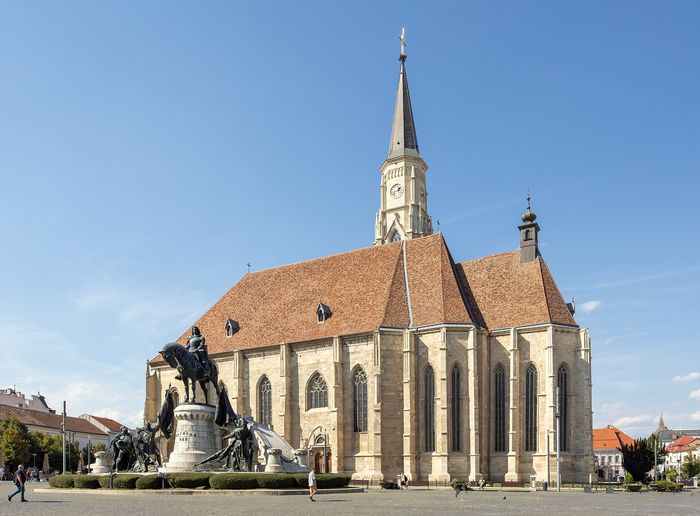
Union Square
St Michael's Church is the second-largest Gothic church in Transylvania, after the Black Church in Brașov — construction ran from 1316 to 1487, its oldest part is the altar from 1390, and the Gothic Revival clock tower was only added in 1837–1862, standing 76 metres tall, the tallest in the region. King Matthias Corvinus, born in this city, was baptised here in 1443. Entry to the church is free; climbing the tower runs occasionally and needs no booking (no).
free
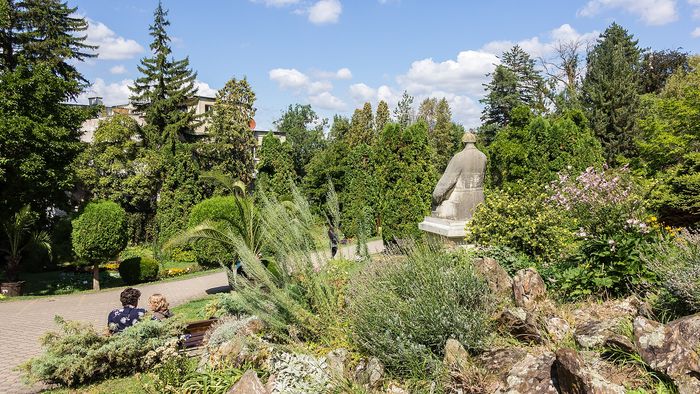
Botanical Garden
The garden now run by Babeș-Bolyai University was founded in 1920 by Professor Alexandru Borza, though the ground for a public garden had already been rented in 1872; across 14 hectares it holds about 10,000 plant species and has been a protected historical monument since 2010. Entry €2.85, open daily 9–20 (greenhouses 9–18), a visit takes 1–2 h.
€2.85 · 1–2 h
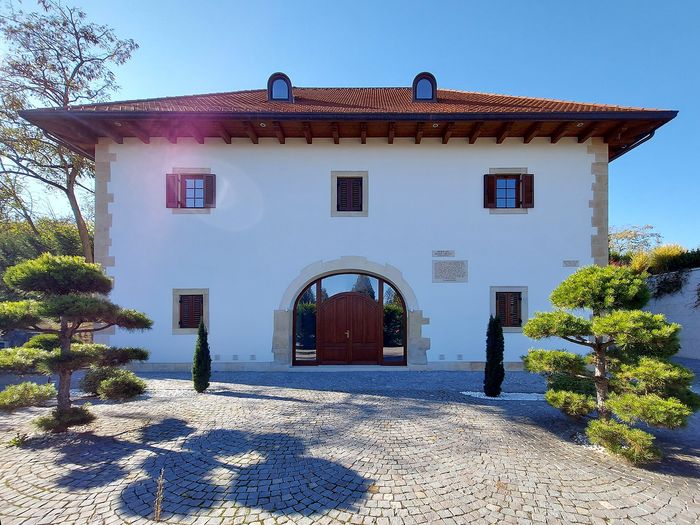
Cetățuia Hill
The star-shaped fortress on the hill above the Someș was built by the Habsburgs between 1715 and 1735, to a design by Giovanni Morando Visconti, to keep the city under control; for nearly two centuries afterwards it served as a prison, where the Saxon pastor Stephan Ludwig Roth was executed after the 1848 revolution. Today it is a public park with a viewpoint over the whole Old Town, entry free.
free
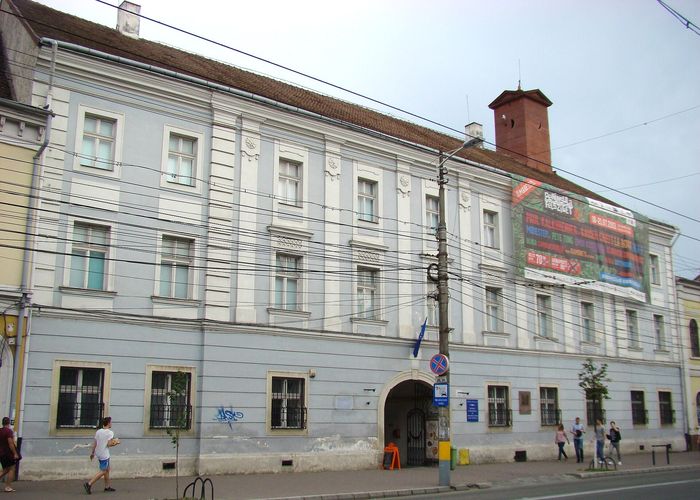
Ethnographic Museum
Romania's first ethnographic museum, founded in 1922 and opened in 1923, has been housed since 1957 in the 16th-century Reduta palace, where the Transylvanian Diet once met and where Franz Liszt and Johannes Brahms performed in the 19th century. Entry €2.01, open Wed–Sun 10–18 (last entry 17), closed Monday, Tuesday.
€2.01 · closed Monday, Tuesday
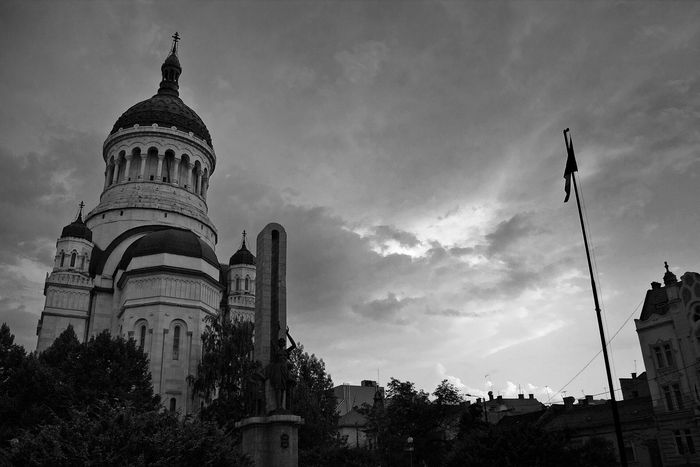
Metropolitan Cathedral
Built between 1923 and 1933, after Transylvania's union with Romania in 1918, and consecrated on 5 November 1933; its main dome takes after Istanbul's Hagia Sophia, and the interior gained a Byzantine-style Murano-glass mosaic in a 1996–1999 renovation. Entry free, recommended visiting hours recommended 12–18 (services 8–12, 18–20).
free
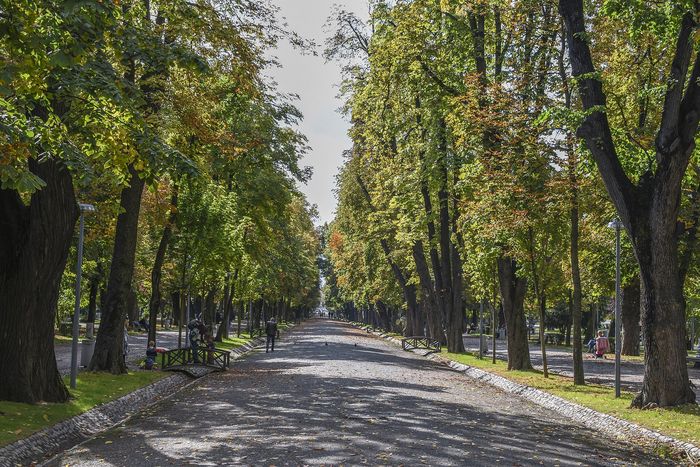
Central Park
The city's oldest park, laid out from 1827 as a promenade run by the Women's Charity Organisation and officially opened in 1838; it was renamed after 1989 for the philosopher and revolutionary Simion Bărnuțiu. Its 1897 casino building, designed by architect Lajos Pákey, now operates as an Urban Culture Centre. Entry free.
free


Ready for Cluj-Napoca?
Within reach from here
Places sorted by straight-line distance from Cluj-Napoca — day trips or weekends.


All 277 places we write about sit on one page — narrow them down by continent, country, price or what you are travelling for.
Front row for the next trip
Leave your email and we'll let you know when a new destination or story goes up.