

Brașov
A city Saxon guilds once defended with seven bastions, and inside those walls a street too narrow for a pair of shoulders — cut in the 15th century as a shortcut for firefighters.
- When to go
- November 4° · 11 rainy days
- Per day
- ~34 · 72 · 75 €budget · mid · comfort, per person · checked 24 Sep 2026
- How many days
- 2–3days
- For you
- 6 questions →
- Nearest airport
- 9 km Brașov
- Right now
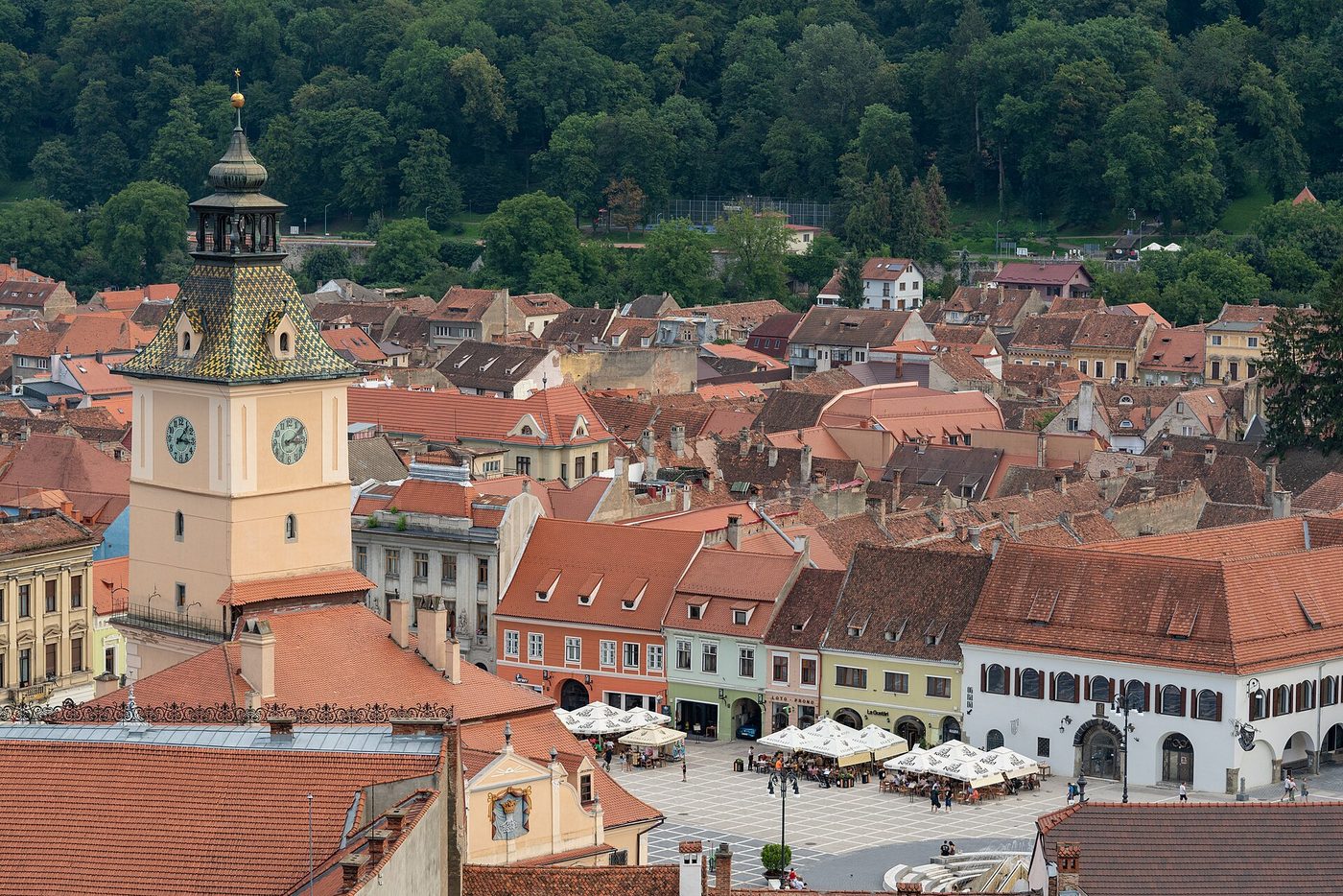
Brașov is a Transylvanian city at the foot of Mount Tâmpa, with a medieval Old Town ringed by walls and seven bastions. Two days split the city by elevation: the lower part around Council Square and the Black Church, the upper part along the walls towards Tâmpa. A third day, if there is one, goes on a day trip — to Bran Castle or the fortress hill in Râșnov.
The city was fortified in 1211 by the Teutonic Knights, on the order of the Hungarian king Andrew II, to defend the kingdom's border; they were expelled by 1225, but the Saxon colonists they had brought stayed and built a settlement around the Church of St Mary, later renamed the Black Church. That is why the same city carries three names, all meaning 'crown': German Kronstadt, Hungarian Brassó and Latin Corona. Under Saxon rule, from the 13th to the 17th century, Romanians were barred from owning property inside the walls, so they settled the Șchei district outside the city — their only way through was Șchei Gate.
Saxon guilds ringed the city with stone walls and seven bastions, each defended by a different craft; the best preserved is the Weavers' Bastion. Brașov–Ghimbav airport opened in 2023, the city's first of its own, and from 2026 Wizz Air flies from there to about 29 destinations; the A1 bus to the centre takes about 30–40 min, for €5.
3-star hotel, double room, per person per night
Timed-entry tickets and guided tours in one place.
Both sites fill in your nearest airport for you; change it in one click.
Guides for Brașov
Shorter, practical pages for one concrete question each — how many days, how much money, where to sleep, where to escape the city.

Brașov in 2 days
→Day one is the centre around Council Square and the Black Church, day two is the walls, Șchei and the cable car up Tâmpa — an order that follows the city's climb up the hill, not a checklist of sights.

Day trips from Brașov
→Bran and Râșnov go by bus and fit into half a day; Peleș in Sinaia wants a train and a full day, and Poiana Brașov is the closest — twenty-five minutes by bus to the foot of the gondola.

Where to stay in Brașov
→In Brașov the area is chosen by how far it is on foot from Council Square: the Old Town has everything close, Șchei is quieter and cheaper, and the district by the train station trades a bus ride for a lower price.

What Brașov costs
→Romania is outside the eurozone, but every price on this page is already converted to euro — a hostel bed is €15–18, a restaurant main course €6.84–8.55.

Brașov beyond the six main sights
→The Council House in the middle of the square, a triumphal gate into Șchei, the first school to teach in Romanian, and a hilltop citadel — four places the six main sights leave to one side.

What to eat in Brașov
→Tripe soup opens the meal, sarmale and tochitură carry the main course, and papanași with soured cream and sour-cherry jam close the table.

The best time to visit Brașov
→Brașov sits in a basin below Mount Postăvarul, so summer can run hot and crowded down in the valley, and winter brings snow and ice to the steep Șchei lanes.

Getting around Brașov
→Brașov has had its own airport since 2023 (GHV) with the A1 bus line into the centre, and a train that reaches Bucharest in about two and a half hours.

Mistakes everyone makes in Brașov
→Romania pays in lei, the citadel's interior isn't open most days, and Rasnov fortress is shut for restoration — mistakes that cost time or money here.
What to see in Brașov
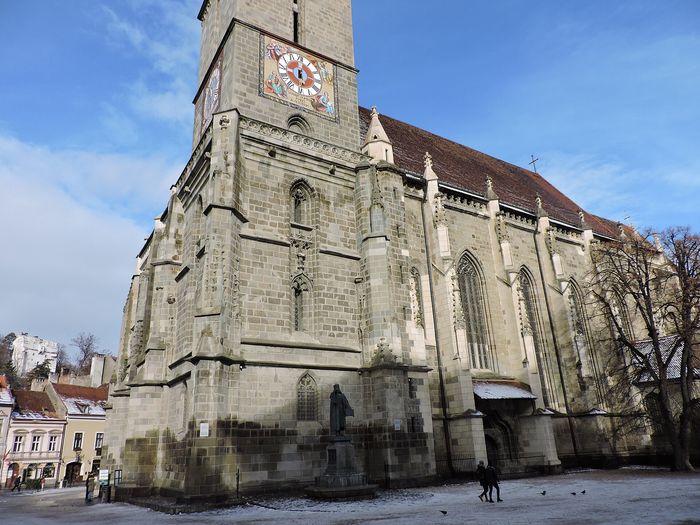
Black Church
A Gothic church begun in the late 14th century as the Catholic Church of St Mary; it only took its present name after the great fire of 1689 blackened its walls. Entry €5.70, open Apr–15 Oct: Sun–Mon 12–19, Tue–Sat 10–19; rest of year until 18; it also closes temporarily during concerts or weddings.
€5.70 · 30–45 min · closed 1 January, 25 December
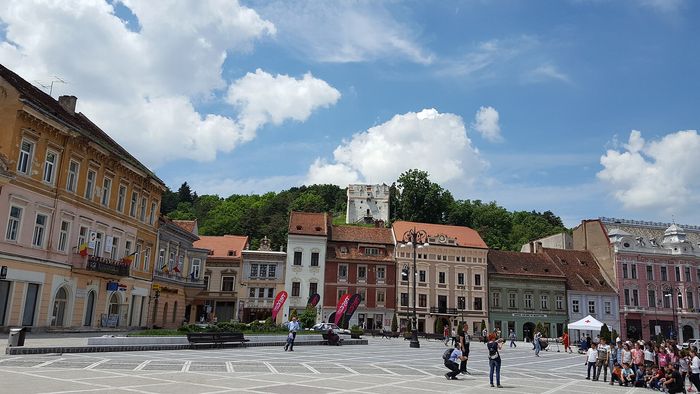
Council Square
The main square of the Old Town, ringed by Baroque and Gothic houses; at its centre stands the Council House, once the town administration and now a history museum. Walking the square and its side streets takes 1–2 h, entry free.
free · 1–2 h
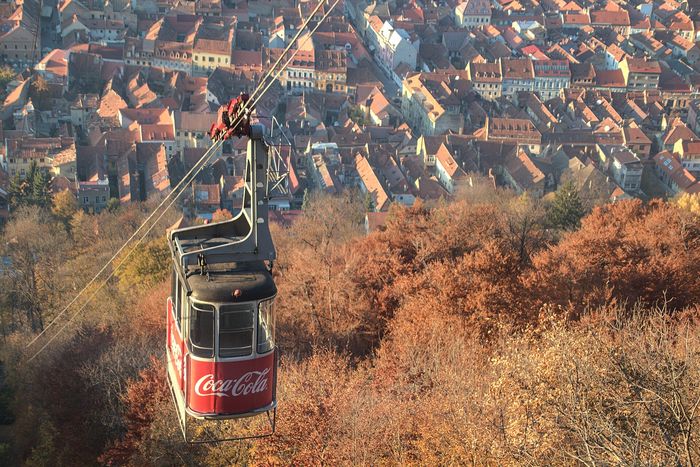
Tâmpa Cable Car
A cable car runs to the top of Tâmpa, the mountain that rises straight out of the Old Town, to a viewpoint over the whole city and its walls. Return ticket €8.55, open Tue–Sun 9:30–17, closed Monday and occasionally in high wind or storms.
€8.55 · 20–30 min · closed Monday
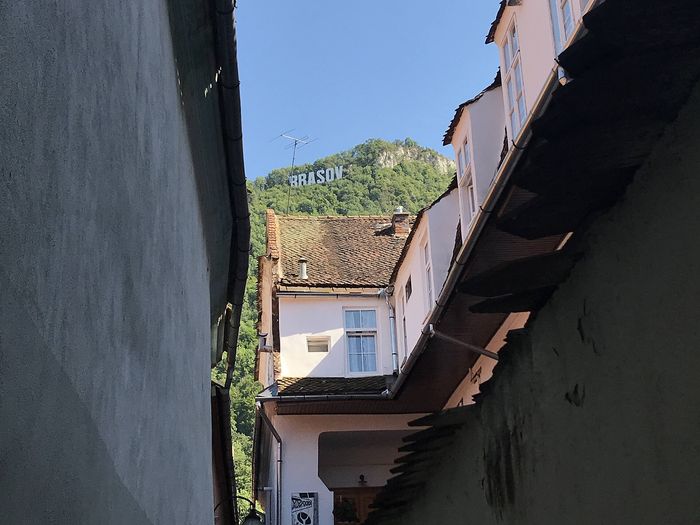
Rope Street
Romania's narrowest street (Strada Sforii), cut in the 15th century as a firefighters' shortcut between two main streets; at its tightest point it measures 111 centimetres, and it takes its name from a rope factory that once stood nearby. Walking it takes 5–10 min, entry free.
free · 5–10 min
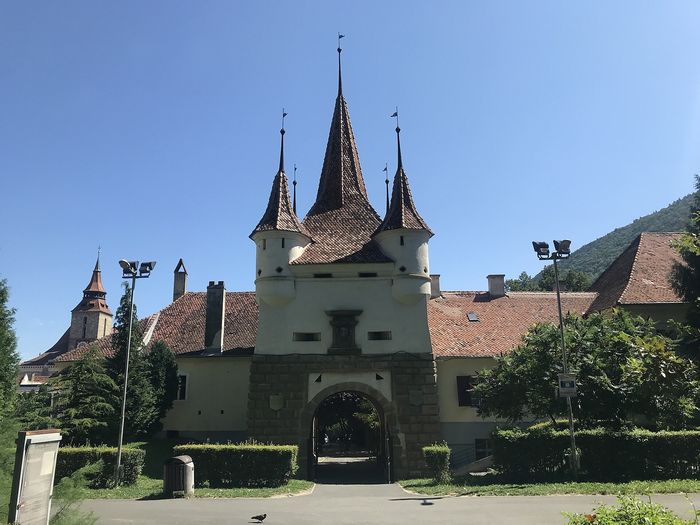
Catherine's Gate
The only surviving medieval town gate; built by the Tailors' Guild in 1559 on the site of an older gate swept away by a flood in 1526. Its four corner turrets symbolised the town's own judicial rights, including the right to pass a death sentence. Entry free, open at any time; a visit takes 10–15 min.
free · 10–15 min
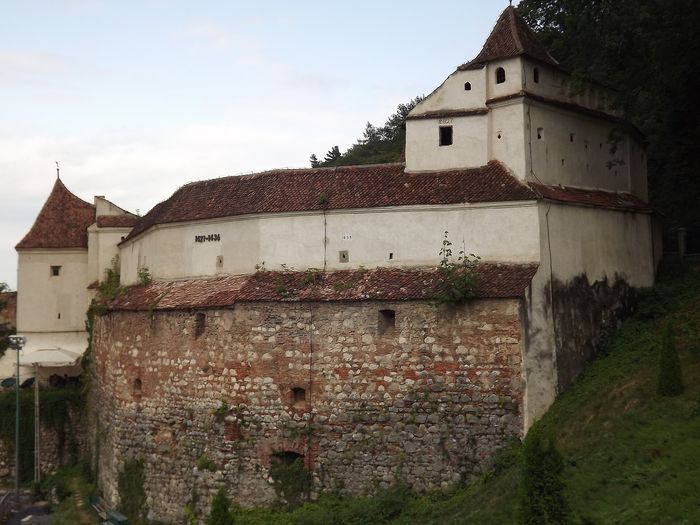
Weavers' Bastion
The best preserved of the seven bastions with which the guilds defended the city, each held by a different craft; inside is a permanent exhibit on Brașov's fortifications. Entry €1.33, open Tue–Sun 10–18 (last entry 17:30), closed Monday; a visit takes 30–45 min.
€1.33 · 30–45 min · closed Monday


Stories from Brașov
How it actually was when we were there, and what was worth it.

New Year's Eve in Brașov: laser lights instead of fireworks
→Brașov's New Year's Eve is an open-air DJ party on Council Square with lasers at midnight, and no fireworks. This page covers the 2025/26 edition and a mountain alternative for a quieter night.
Nomadinho scores out of 100, the same ones behind “Where to go”.
If you like Brașov
Three places with the closest scores, from any country.


Before you go
Short answers to what people ask most before setting out.
How many days do you need in Brașov?
Two days cover the Old Town, split by height. A third, if you have it, goes out of town to Bran, 45 min by bus, or Râșnov, 48 min by bus; both lie in the same direction and can be combined into one day.
How do you get from Brașov airport to the centre?
Brașov–Ghimbav airport (GHV), opened in 2023, is the city's first airport of its own. Bus A1 runs to the centre in about 30–40 min for €5, stopping at Livada Poștei and at the railway station.
What is closed on Mondays in Brașov?
On Mondays the Tâmpa cable car, the Weavers' Bastion, Casa Sfatului and the First Romanian School are closed. The cable car also stops at times in strong wind or a storm.
Ready for Brașov?
Within reach from here
Places sorted by straight-line distance from Brașov — day trips or weekends.


All 292 places we write about sit on one page — narrow them down by continent, country, price or what you are travelling for.
Within reach from here: Sibiu, Bucharest and Cluj-Napoca
See how much of that actually suits you — or pin Brașov if you have been.
Front row for the next trip
Leave your email and we'll let you know when a new destination or story goes up.