

01
Ljubljana
The capital on the Ljubljanica has had a car-free centre since 2007. The Triple Bridge, the market arcades by Plečnik and a castle on the hill all lie within walking distance of each other.
Alpine peaks, a capital with no cars in its centre and 47 kilometres of Adriatic coast in a country under twenty thousand square kilometres
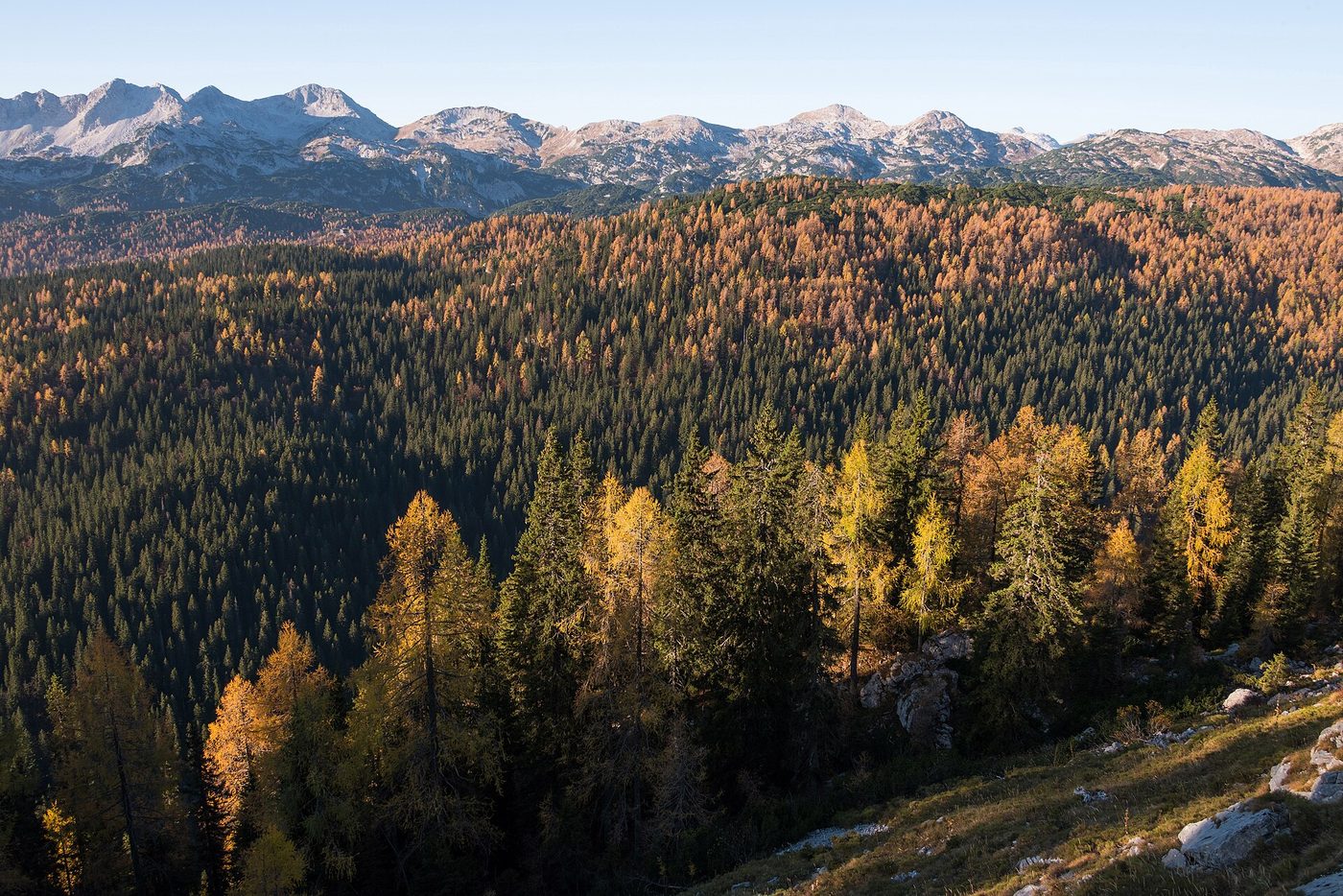
Slovenia works as a trip of three places: Ljubljana for the city, Bled for the lake and Piran for the coast, each with a page of its own. The country covers about 20,272 km² and counts 2,136,385 residents (a 2025 estimate). Triglav rises to 2,864 m, the Adriatic coast runs for 47 km, and forest covers 60.4% of the territory (2020).
Slovenia joined the European Union on 1 May 2004 and adopted the euro on 1 January 2007, so the currency is the euro (EUR). Paying is easy in the towns and harder in the countryside. The rule in one line: cards almost everywhere, cash in villages. Mountain huts and village shops are where it bites, and so is the intercity bus network run by Arriva, which takes cash apart from a card pilot on the airport line that started in February 2026. Keep some notes for the bus out of town. Tipping follows one habit: about 10% in restaurants.
Each place has its own page — what makes it worth the detour, and how long you need.
All 292 places we write about sit on one page — narrow them down by continent, country, price or what you are travelling for.
Entry is a matter of passport, and Slovenia applies the Schengen rules, summed up as: Schengen; EES active, ETIAS delayed. The Entry/Exit System, which registers travellers from outside the EU at the external border, has been phased in since 12 October 2025, so the airport is where most travellers meet it. On 11 June 2026 the government ended the temporary controls on the borders with Croatia and Hungary, although the police still carry out random checks, so keep your passport within reach whenever you cross.
Motorways and expressways, the ring road around Ljubljana included, charge by e-vignette, bought online from DARS. The vignette is tied to the number plate, and a vehicle without a valid one may not enter a toll road. For a short stay the price is €16 (7 days), and a month costs €32. A year costs €117.50 for a passenger car (class 2A). Since 1 January 2026 the coastal expressway, sections H5 and H6, needs no vignette at all. The sockets are types C and F, 230V.
The country divides easily around Ljubljana. The capital is the base, with Bled about 50 km to the north-west and Postojna Cave as the other excursion. Piran sits on the coast and works as a full day or a night. Slovene is the official language everywhere, and in some municipalities Italian and Hungarian stand beside it, so the signs in Piran carry two languages. Choose two of the three places for a first visit and add the third once the others have been seen.
Both sites fill in your nearest airport for you; change it in one click.
Check the same room on both sites: price and cancellation terms can differ.
How it actually was when we were there, and what was worth it.

Ljubljana's Advent market runs as a string of stalls along the river, from Prešeren Square to Breg.

Ljubljana spreads its New Year's Eve over four free squares in the old town instead of one stage.
Triglav is the highest peak in the country, and at 2,864 metres it gives Slovenia its alpine character.
In 2020 forest covered 60.4% of the territory, so more than half of the country is wooded.
Slovenia declared independence on 25 June 1991, entered the European Union on 1 May 2004 and adopted the euro on 1 January 2007. Those dates mark the country's place in Europe today.
The works of Jože Plečnik in Ljubljana have been on the UNESCO list since 2021, from the bridges to the market arcades.
This isn't a ranking — it's a route. Any one of these could carry a whole trip.
The capital on the Ljubljanica has had a car-free centre since 2007. The Triple Bridge, the market arcades by Plečnik and a castle on the hill all lie within walking distance of each other.

A glacial lake about 2.12 km long, with an island and a pilgrimage church whose bell visitors ring for luck. It lies about 50 km north-west of Ljubljana.

A small Adriatic port that was under Venetian rule from 1283 to 1797. Fewer than four thousand people live in its 0.70 km², and Tartini Square, laid out in 1894 on a filled-in harbour, is where the town gathers.
Short answers to what people ask most before setting out.
That depends on your passport, and Slovenia applies the Schengen rules, summed up as: Schengen; EES active, ETIAS delayed. Temporary controls on the borders with Croatia and Hungary ended on 11 June 2026, though the police still run random checks.
Yes, if you drive on motorways or expressways, the Ljubljana ring road included. A month costs €32, and the shortest option is €16 (7 days). The vignette is bound to the number plate, and a vehicle without one may not enter a toll road.
For Ljubljana the count is: 2–3 for town; 4–5 with trips. Add half a day or a full day for each excursion, and remember that Bled and Piran have their own pages.
The sockets are types C and F, 230V.
Keep going — these destinations and stories pair well with this one.

A thousand islands and one road that looks down on all of them

A country where the train from a Vienna coffee house to a Tyrolean cable car takes just over four hours — so you choose the order, not the country

The cities on the high-speed line are an hour or two apart; the coast, Matera and the Tuscan hills lie off it

A capital on the Danube, a hill-country wine town, a southern city near Croatia and Central Europe's biggest lake, all in a country without the euro

Two cities, a mark pegged to the euro and mountains that were Olympic in 1984

Skopje on the Vardar, Ohrid on a UNESCO lake and about three hours of road between them
Leave your email and we'll let you know when a new destination or story goes up.
All photographs come from Wikimedia Commons and are used under the licence stated beside each one.