

01
Ohrid
A headland above the lake that carries Samuel’s Fortress and a cluster of Byzantine churches, with a wooden walkway running along the water to the fishing quarter of Kaneo and swimming from June to September.
Skopje on the Vardar, Ohrid on a UNESCO lake and about three hours of road between them
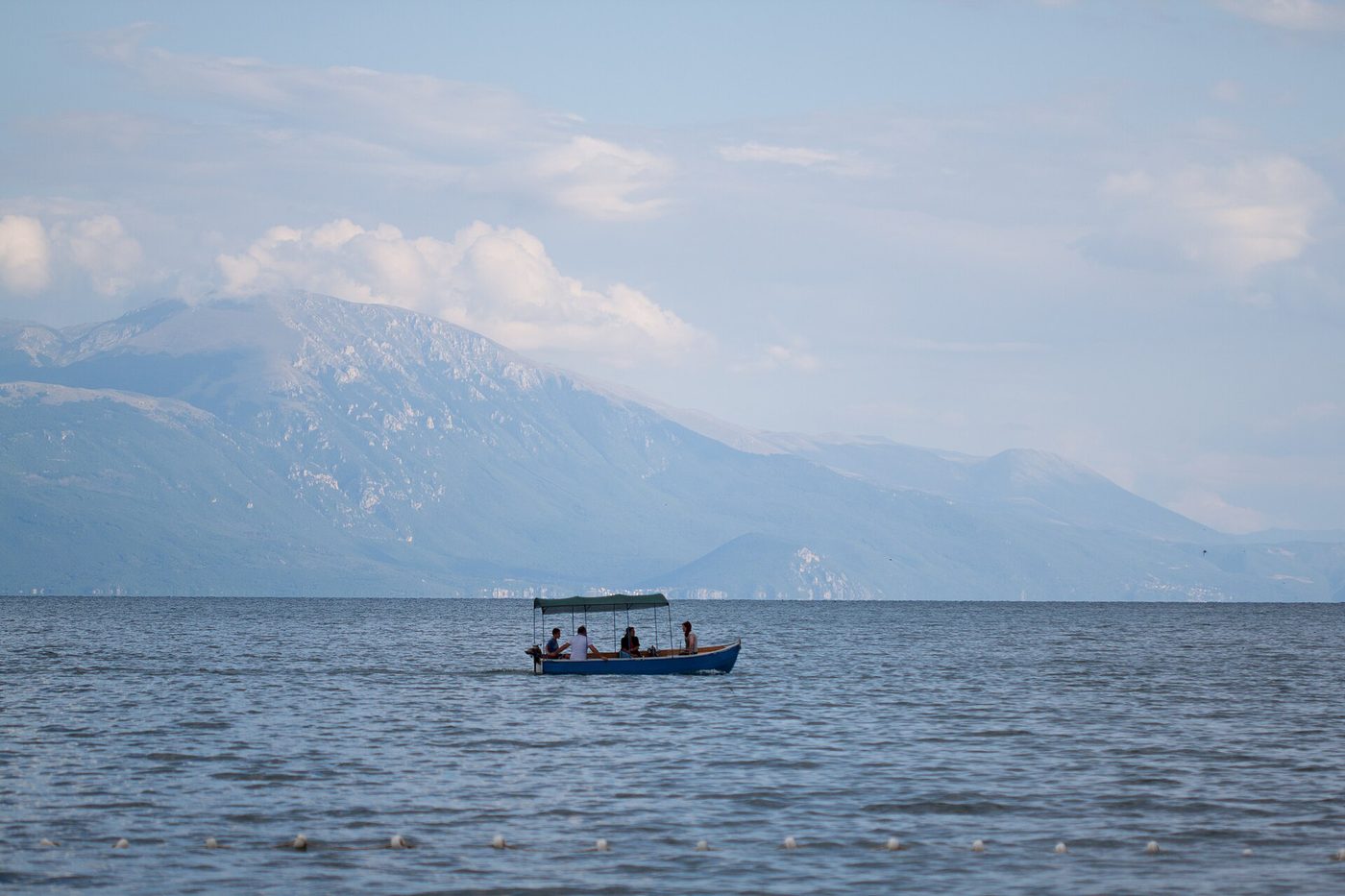
North Macedonia is best seen from two cities, Skopje and Ohrid, with a lake and about three hours of road between them. The country covers 25,436 km² and had 1,836,713 inhabitants at the 2021 census. Skopje and Ohrid each have a guide of their own, and Bitola, Struga, Sveti Naum and Galičica work as trips out of them.
Money first, because the denar (MKD) is the only legal tender and the euro is not a safe fallback. Some places take euros at a rate that favours the till, so withdraw denars and use those. Exchange rate: 1 EUR = 61.66 MKD. Cards work in hotels, larger restaurants and supermarkets, while bakeries, the market, the fortress in Ohrid and taxis want cash, so keep a few banknotes on you at all times. Tipping: about 10%, round up, in cash.
Each place has its own page — what makes it worth the detour, and how long you need.
All 292 places we write about sit on one page — narrow them down by continent, country, price or what you are travelling for.
Entry is simple for most passports, and the short version is visa-free 90 days, outside Schengen. Foreign visitors are registered with the police, and a hotel or other paid accommodation handles this on arrival, so there is nothing to queue for. If you arrive by car, a Green Card is compulsory, and winter equipment is required from 15 November to 15 March. A cold-weather trip therefore starts at the rental desk, not at the border.
Driving is on the right, with headlights on at all times, and the limit on the motorway is 130 km/h with a blood-alcohol limit of 0.5 g/L. Tolls on the motorways work like this: toll per motorway section, paid in denars, euros or by card at the toll stations. Sockets: type C/F, 230V, so bring an adapter if your plugs are of another type. Emergency number: 112 (police 192, ambulance 194).
The country divides naturally in two. Skopje, with 526,502 inhabitants at the 2021 census, is the gateway, and Ohrid lies 173 to 182 km away by road. Nine direct buses a day make the trip, between 06.30 and 19.30, and the journey takes about 3 h 20 at a fare of €15.40–15.90. Ohrid airport is seasonal, so Skopje is the year-round way in. From Ohrid, Bitola and Struga are the easy trips out, each by bus or minibus, and Galičica needs a car or a tour.
Both sites fill in your nearest airport for you; change it in one click.
Check the same room on both sites: price and cancellation terms can differ.
How it actually was when we were there, and what was worth it.
The Ohrid region has been on the UNESCO list since 1979, with the listing extended in 1980. The lake is 288 m deep and covers 358 km², with 69% of it in North Macedonia and 31% in Albania, and the site is one of only 40 in the world listed for both culture and nature.
Macedonian is the official language, with Albanian used alongside it. At the 2021 census Macedonians made up 58.4% of the population and Albanians 24.3%.
An earthquake in 1963 destroyed about 80% of Skopje. The Old Bazaar survived the quake, and it has been rebuilt.
The country has been called North Macedonia since the Prespa Agreement, and parliament voted on the change on 11 January 2019. It has been a candidate for EU membership since 2005.
This isn't a ranking — it's a route. Any one of these could carry a whole trip.
A headland above the lake that carries Samuel’s Fortress and a cluster of Byzantine churches, with a wooden walkway running along the water to the fishing quarter of Kaneo and swimming from June to September.

The capital on the Vardar, rebuilt after the earthquake of 1963 and best known for its Old Bazaar and the Stone Bridge. It is where most flights land and where the road to Ohrid begins.
Short answers to what people ask most before setting out.
Visa rules: visa-free 90 days, outside Schengen. Your hotel takes care of the police registration of foreigners.
Rarely, and not on good terms. The denar is the only legal tender, and where euros are taken the rate favours the till. Withdraw denars from a cash machine and carry some cash for markets and taxis. Exchange rate: 1 EUR = 61.66 MKD.
Ohrid takes two to three days, and day trips stretch it further. In short: 2–3 days; 4–5 with day trips. For the capital, follow the guide to Skopje, which sets its own length. Allow a half day on the road between the two.
Not between the two main cities, since nine direct buses a day connect Skopje and Ohrid at €15.40–15.90. By car the same trip takes 2.5 to 3 hours. A car helps for Galičica, where there is no bus. Drive on the right with headlights on, expect motorway tolls by section, carry a Green Card, and fit winter tyres from 15 November to 15 March.
Keep going — these destinations and stories pair well with this one.

The north an hour or two away by train, the mountains three or four by car — Serbia divides by the time you have

A capital, a Roman city, a medieval fortress and the sea — in a line that never doubles back

The north by road, the Cyclades by ferry, Rhodes by air — pick the region first and the island second

The Bay, the riviera or Ulcinj for the sea, Durmitor for July — choose the coast by its beaches and the north by the month

Three cities for one trip: a capital with bunkers and a cable car, and two UNESCO-listed towns

Two cities, a mark pegged to the euro and mountains that were Olympic in 1984
Leave your email and we'll let you know when a new destination or story goes up.
All photographs come from Wikimedia Commons and are used under the licence stated beside each one.