



01
Istanbul
Three or four days, and the one part of the country where a car only gets in the way: trams, metro, buses and city ferries all run on one Istanbulkart. For a first visit, stay in Sultanahmet or Karaköy, both on the T1 tram.
Istanbul, then one direction: Cappadocia by plane, Ephesus and Pamukkale by train, or the Lycian coast by bus

Turkey is too big for one trip: the night bus from Istanbul to Cappadocia takes ten to eleven hours. So the plan is Istanbul plus one direction — Cappadocia by plane, the Aegean loop with Ephesus and Pamukkale, or the Lycian coast from Antalya to Kaş and Kekova. Each of the three needs three to five days.
The Aegean loop is the one part of the country that works well by train. From Izmir airport a regional train reaches Selçuk, the town below Ephesus, in about an hour, and from Selçuk to Denizli, some twenty kilometres from Pamukkale, in about three; a minibus covers the rest. Both sites are stone without shade, so you see them early in the morning.
Each place has its own page — what makes it worth the detour, and how long you need.
All 277 places we write about sit on one page — narrow them down by continent, country, price or what you are travelling for.
The south starts in Antalya. From there a bus reaches Kaş in three to four hours, the base for boats to the sunken city at Kekova. Domestic flights link Antalya with Istanbul, so the south combines with the city without a long road back. Safranbolu is the northern exception: there is no airport nearby, and it is about three hours by bus from Ankara.
How it actually was when we were there, and what was worth it.
Ankara has been the capital since 1923. Istanbul is the largest city and was the Ottoman capital, but the Republic chose an inland city as the seat of government.
Dedicated as a church in 537, it was the largest cathedral in the world for nearly a thousand years; a mosque from 1453, a museum from 1934, and a mosque again since 2020.
Derinkuyu and Kaymaklı in Cappadocia were dug into soft volcanic rock over several levels, with stables, chapels and air shafts; people sheltered in them from raids.
The Turkish lira has been losing value against the euro for years, so guidebook prices date within months. That is why prices for Turkey here are given in euros.
Istanbul's covered bazaar was built in the mid-15th century, straight after the Ottoman conquest of the city, and has worked as a market ever since.
Kebab, börek, sarma and baklava travelled from Ottoman kitchens across south-eastern Europe, along with plenty of everyday words — for many visitors from the region, the trip is partly recognition.
This isn't a ranking — it's a route. Any one of these could carry a whole trip.
Three or four days, and the one part of the country where a car only gets in the way: trams, metro, buses and city ferries all run on one Istanbulkart. For a first visit, stay in Sultanahmet or Karaköy, both on the T1 tram.

Two or three days, with Göreme as the base and one spare morning for the balloon — the aviation authority approves flights each morning according to the wind, and when it says no, nobody flies. The valleys and paths between villages are walked on the days the balloons stay down.

Half a day for the basics, a full day with the Terrace Houses. If you come by train, sleep in Selçuk, right next to the site; Kuşadası is the base for anyone who wants the sea as well as the ruins.

One day: half for the white terraces, half for Hierapolis above them. Sleep in Pamukkale village by the lower gate, so you reach the travertine before the heat; shoes come off on it.

For the sea and ruins by the water: Antalya for the city and all-inclusive hotels, Kaş for the Lycian coast and the boat to Kekova. In July and August Antalya is over 35 °C with humidity, so for sightseeing choose May–June or the first half of October.
Gobekli Tepe in southeastern Turkey is around eleven and a half thousand years old, seven thousand years older than Stonehenge and the pyramids. It was raised before people began farming, which upended the assumption that temples come after villages.
In 1928 Turkey replaced the Arabic script with the Latin alphabet in three months. Ataturk toured the country himself with a blackboard and chalk, and older people became illiterate in their own language overnight.
Short answers to what people ask most before setting out.
It depends on the passport: some nationalities enter visa-free, others need an e-visa applied for online before departure. Turkey's official e-visa site and your own foreign ministry have the current list.
The plane lands at Nevşehir or Kayseri, 29 and 60 km from Göreme as the crow flies, with a transfer on from there. The night bus saves a night's accommodation but arrives in the morning after ten hours or more — with only two days in Cappadocia, fly.
In the Grand Bazaar and at markets, yes; in shops with marked prices, restaurants and transport, no.
Keep going — these destinations and stories pair well with this one.
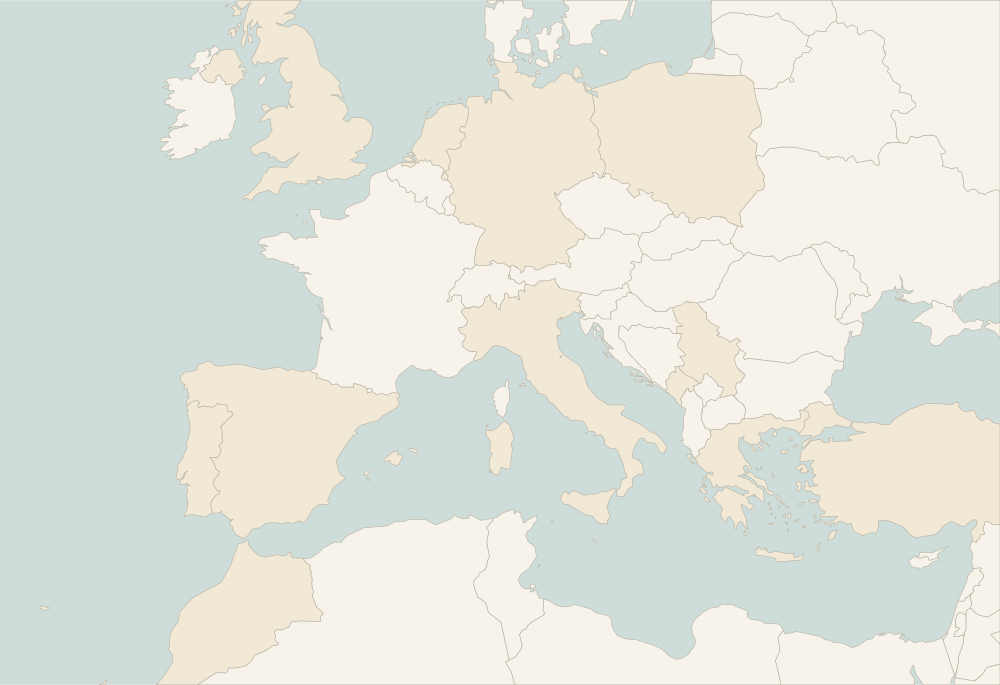
The whole of Turkey fits into one query — six questions and you know which of them suits you.
Leave your email and we'll let you know when a new destination or story goes up.
All photographs come from Wikimedia Commons and are used under the licence stated beside each one.

