



01
Sarajevo
A city in the Miljacka valley, with the Baščaršija bazaar and the City Hall, the Tunnel of Hope at Butmir and a cable car that lifts you above the rooftops.
Two cities, a mark pegged to the euro and mountains that were Olympic in 1984
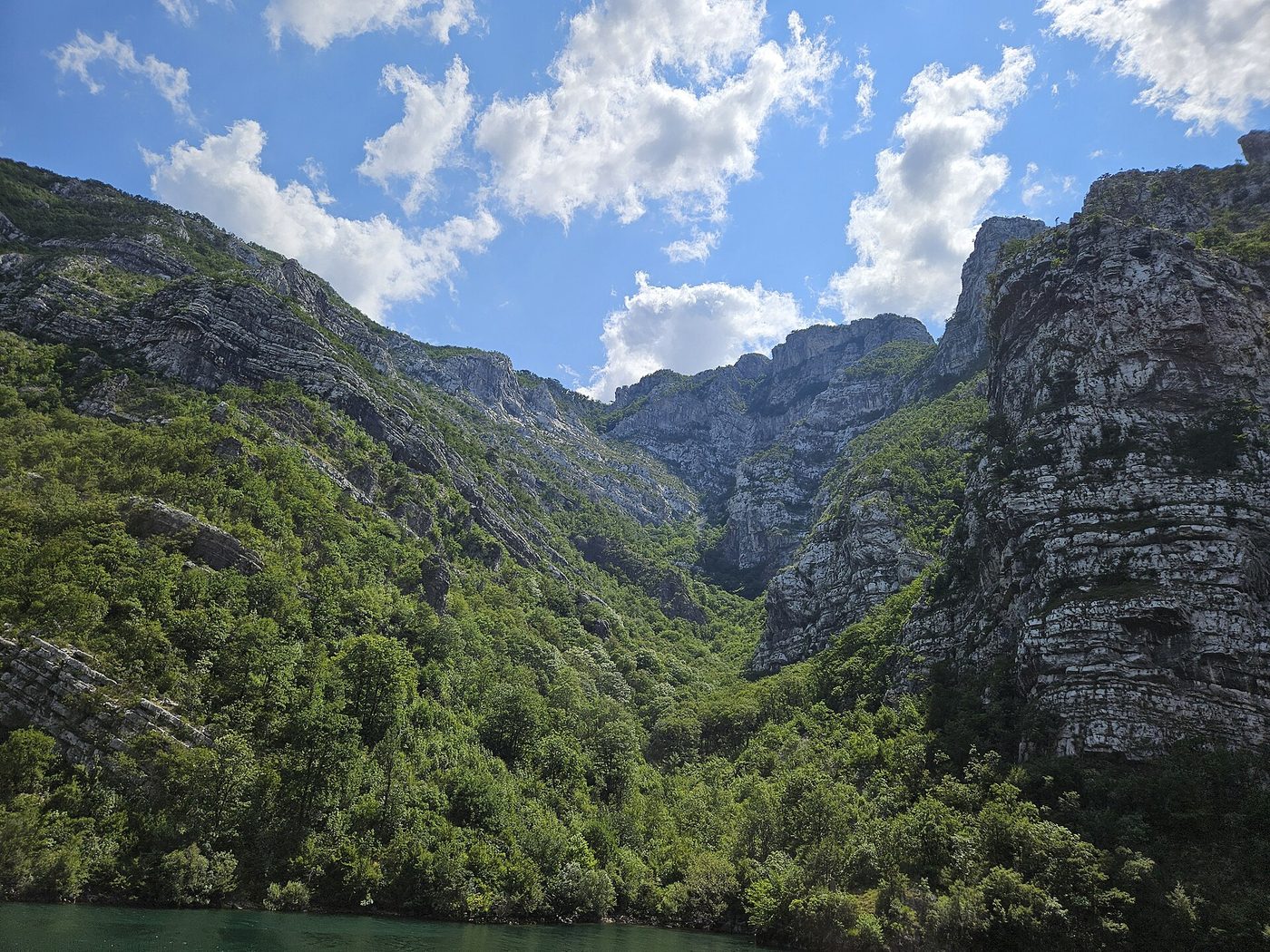
For a first trip, Bosnia and Herzegovina comes down to two cities, Sarajevo and Mostar, plus the day trips each of them supports. The country covers 51,209 km² and counted 3,531,159 people at the 2013 census, and it is split into two entities and the Brčko District. Each city has its own page on this site, so this one keeps to what applies everywhere: money, entry, the road and the way the country divides between a base in the Miljacka valley and a bridge on the Neretva.
The mark, written KM, is tied to the euro at a fixed rate, and shops, taxis and museums all quote their prices in it, at this rate: 1 EUR = 1.95583 KM. Cards work in Sarajevo, Mostar and the larger towns, but cash still rules the markets, the taxis and the country guesthouses, and the Tunnel of Hope takes neither cards nor foreign currency. Euros are sometimes accepted in tourist zones and bigger hotels, though paying in marks is the safer habit. When a card machine or a cash machine offers to charge you in your home currency, choose KM. For cards, the short answer is this: cards in cities, cash at markets, and on tipping it is this: 5–10% in restaurants.
Each place has its own page — what makes it worth the detour, and how long you need.
All 292 places we write about sit on one page — narrow them down by continent, country, price or what you are travelling for.
Bosnia and Herzegovina has been a candidate for EU membership since 2022, yet it belongs neither to the EU nor to Schengen. Time spent here does not count towards the Schengen limit, and the EES and ETIAS systems do not apply at its borders. Passport holders from the EU, the United States and the United Kingdom get 90 days in a period of six months. The entry rule in its short form: visa-free for most, 90 days.
Away from the towns, keep to marked roads and paths. Areas suspected of mines remain in places, among them the land around the old bobsled track above Sarajevo, and a bright afternoon is no reason to cut across a field. On the motorways, tolls follow a price list by section, which is why this page gives no amounts. The short answer on tolls: tolls by motorway section. Two more practical lines: the plug type is type C/F, 230V, and the emergency number is 112 (police 122, ambulance 124).
Think of the country as a base and its exits. Sarajevo carries three days and the trips from it, to the springs of Vrelo Bosne or to the mountains, while Mostar needs two. The train from Sarajevo to Čapljina leaves at 07.15 and 16.46, stops in Mostar and takes about two hours, and a bus covers the same stretch in around two and a half. Two of those mountains, Bjelašnica and Jahorina, staged the alpine events at the 1984 Winter Olympics, the men's on one and the women's on the other. The entities are an administrative line on the map, and a visitor meets them mostly as different signs at a bus station.
Both sites fill in your nearest airport for you; change it in one click.
Check the same room on both sites: price and cancellation terms can differ.
How it actually was when we were there, and what was worth it.
The exchange rate is fixed, 1 EUR = 1.95583 KM, and it stays the same every day. The Central Bank of Bosnia and Herzegovina publishes it.
The Old Bridge in Mostar went up on the order of Sultan Suleiman. It reopened on 23 July 2004 and joined the UNESCO list in July 2005.
Sarajevo was surrounded from 5 April 1992 to 29 February 1996, a span of 1,425 days. The Sarajevo Memorial Centre calls it the longest siege of a capital city in modern warfare.
Sarajevo hosted the Winter Olympics in 1984. Bjelašnica, at 2,067 m, took the men's alpine events, and Jahorina, whose summit Ogorjelica stands at 1,916 m, took the women's.
This isn't a ranking — it's a route. Any one of these could carry a whole trip.
A city in the Miljacka valley, with the Baščaršija bazaar and the City Hall, the Tunnel of Hope at Butmir and a cable car that lifts you above the rooftops.

A town on the Neretva built around the Old Bridge of 1566, about two hours from Sarajevo by train.
Short answers to what people ask most before setting out.
Visitors from the EU, the United States and the United Kingdom can stay 90 days in a period of six months. The short rule: visa-free for most, 90 days. The country sits outside the EU and Schengen, so EES and ETIAS do not apply.
The mark (KM), fixed to the euro. The rate: 1 EUR = 1.95583 KM. Cards work in the cities, euros are taken only sometimes in tourist zones and bigger hotels, and paying in marks is the safer choice.
Days for Sarajevo: 2–3 in town; 4 with trips. Mostar takes two days on its own page.
In most places that tourists use, yes. What to expect: cards in cities, cash at markets. Taxis take cash only, and so does the Tunnel of Hope.
Keep going — these destinations and stories pair well with this one.

A thousand islands and one road that looks down on all of them

The Bay, the riviera or Ulcinj for the sea, Durmitor for July — choose the coast by its beaches and the north by the month

The north an hour or two away by train, the mountains three or four by car — Serbia divides by the time you have
Leave your email and we'll let you know when a new destination or story goes up.
All photographs come from Wikimedia Commons and are used under the licence stated beside each one.