

Piran
A port under Venice until 1797: Tartini Square, the city walls and a bell tower over the Gulf of Trieste
- When to go
- October 17° · 11 rainy days
- Per day
- €€€€price 4 of 5
- How many days
- 1–2days
- For you
- 6 questions →
- Right now
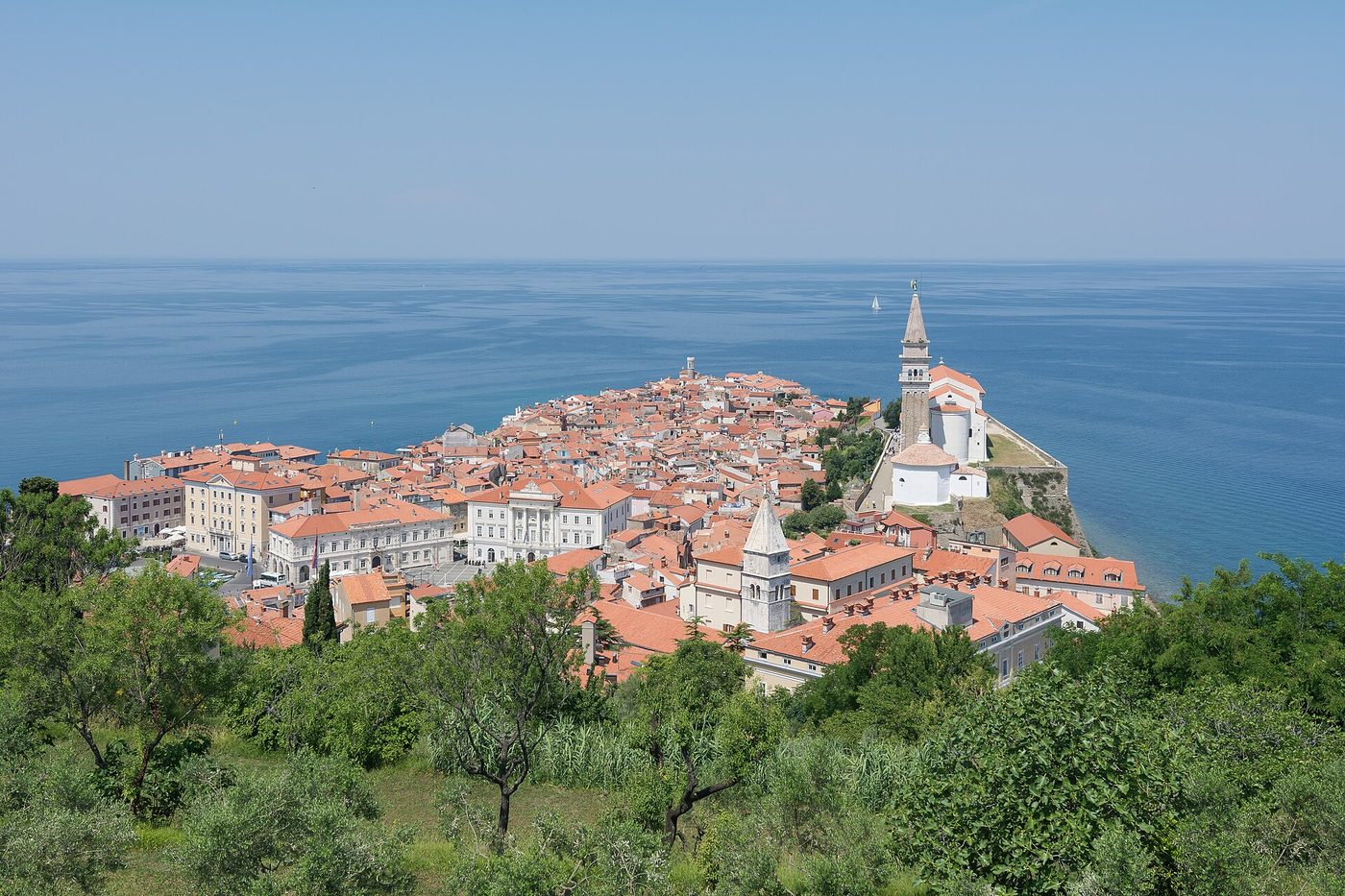
Piran takes one to two days, and the second goes to the salt pans or a beach. The town was a Venetian port from 1283 to 1797, and what remains is a bilingual old town of 0.70 km² with fewer than four thousand residents. It is small enough to cross on foot, yet the opening hours of its sights decide how the day runs.
Getting here is the first surprise, because Piran has no railway and no airport. Arriva buses run along the coast from Koper, and the old town sits at the tip of its peninsula, so plan the last stretch on foot. Slovenian and Italian are both official languages, and street signs carry both. Venice ruled here for more than five centuries, which you read in the stone before you read it on any plaque.
Start the day on the walls, which open early and cost €4. From the three towers the whole town lies below you, and the walls close in bad weather for safety, so a stormy morning is the one to spend elsewhere. Tartini Square is next. It was a harbour until 1894, when the inner basin was filled in, and the bronze of the violinist went up in 1896. The bell tower of St George's rises about 46 metres on the hill above. In the afternoon the museums take over, but they work only from Tuesday to Sunday, so Monday rearranges the plan.
Piran has no sand. The sea is reached over pebbles and concrete platforms, and the best swim for families is Fiesa, a pebble beach under pines with shallow water and no lifeguard. Salt is the other half of the coast. The Sečovlje salt pans, 650 hectares at the mouth of the Dragonja, still make salt by hand, and entry is €7 between April and October. Farther along, the Strunjan cliff climbs to 80 metres.
The car is the real planning question. The old town is closed to visitor traffic, and driving in is free only for 15 minutes to unload luggage. Leave the car in the Arze garage for €2, about ten minutes downhill from the square, or in Fornače for €3.20, where a minibus for €1 climbs to the centre. Portorož, Koper and the Škocjan Caves fit into a third day, and guided tours cover them all.
Check the same room on both sites: price and cancellation terms can differ.
Timed-entry tickets and guided tours in one place.
Guides for Piran
Shorter, practical pages for one concrete question each — how many days, how much money, where to sleep, where to escape the city.

Piran in 2 days
→Walls, square, bell tower and museums on day one, the salt pans or a beach on day two, and Monday shuts three places.

Day trips from Piran
→Portorož and Strunjan by city bus in half a day, the Sečovlje salt pans in half a day, Koper by bus and the Škocjan Caves in a full day.

Where to stay in Piran
→The old town for quiet and walking, Portorož for choice and the beach, Strunjan and Fiesa for nature, and the car stays outside the walls.

What to eat in Piran
→Sardines and grilled fish by the harbour, Istrian malvasia and refosco, and salt from Sečovlje that is still made by hand.

The best time to visit Piran
→May, June and September for sightseeing and the sea, July and August for swimming with the crowds, winter for quiet with shorter hours.

Getting around Piran
→To Piran by bus or car, into town on foot or by minibus from the garage, and to Portorož and Strunjan by city bus.

Mistakes everyone makes in Piran
→The mistakes are a car in the old town, Monday, the walls in bad weather, the bell tower in winter and cash on the city bus.

Beaches in Piran
→Piran has pebbles and concrete platforms instead of sand, Fiesa the shallow sea and pines, Portorož the managed beaches and Strunjan the rocky coast.
What to see in Piran
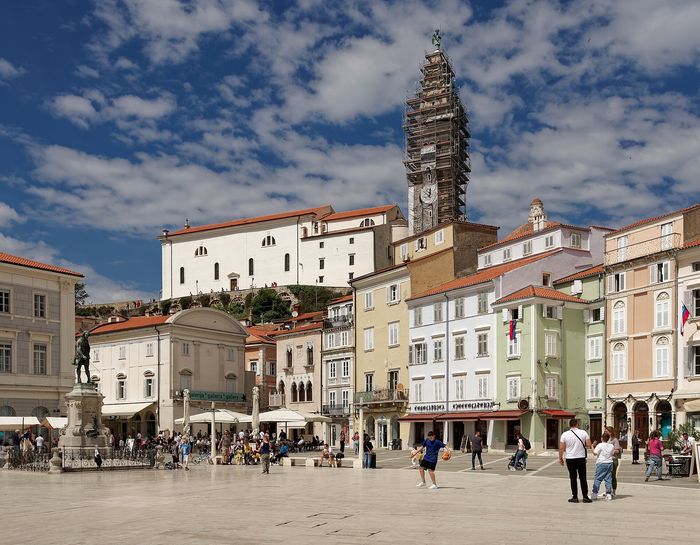
Tartini Square
The square exists because the town filled in its inner harbour in 1894, and the elliptical white stone platform now sits where boats once tied up. The bronze monument of Giuseppe Tartini dates from 1896. On one side stands the Venetian House, a Gothic building of the 15th century and the only one around the square that kept its original facade. It costs nothing to sit here.
free
- P
Piran City Walls
The walk along the walls links three defensive towers and looks out over the town and the gulf. The walls open early in the morning, which makes them the natural first stop. They are not suitable for wheelchairs, and they close in bad weather for safety reasons.
€4 · closed in bad weather
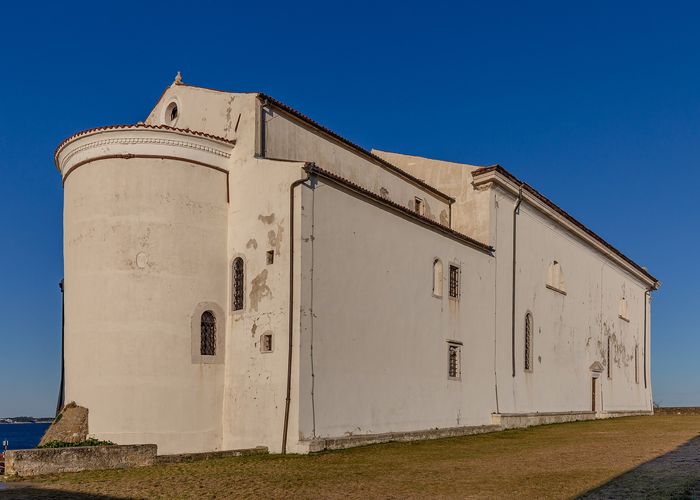
St George’s Church and Bell Tower
The tower is a smaller version of the bell tower of St Mark's in Venice, about 46 metres high, built in the 17th century. At the top an archangel Michael turns with the wind. Its visiting hours change with the season, so a winter trip needs a weekend morning.
closed bell tower on weekdays from November to March
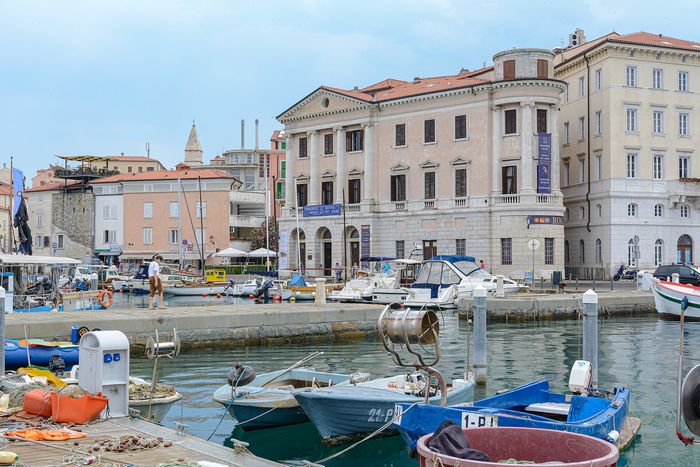
Maritime Museum
The museum fills the Gabrielli Palace and is named after Sergej Mašera. It is closed on Mondays. In July and August it keeps split hours, with a long break at midday and a second opening in the evening, which suits a hot day when you want shade.
€5 · closed Monday
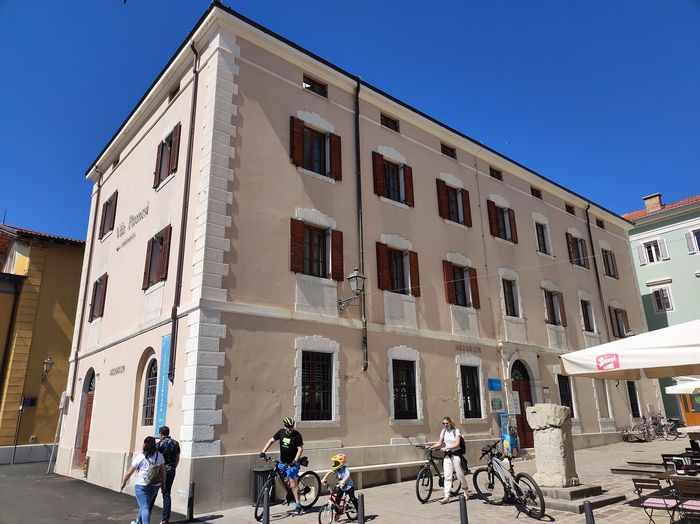
Piran Aquarium
The aquarium is the plan for a rainy afternoon, and it suits families with small children. It opens from Tuesday to Sunday and closes on Mondays, the same day as the two museums, so a wet Monday needs another idea.
€7 · closed Monday
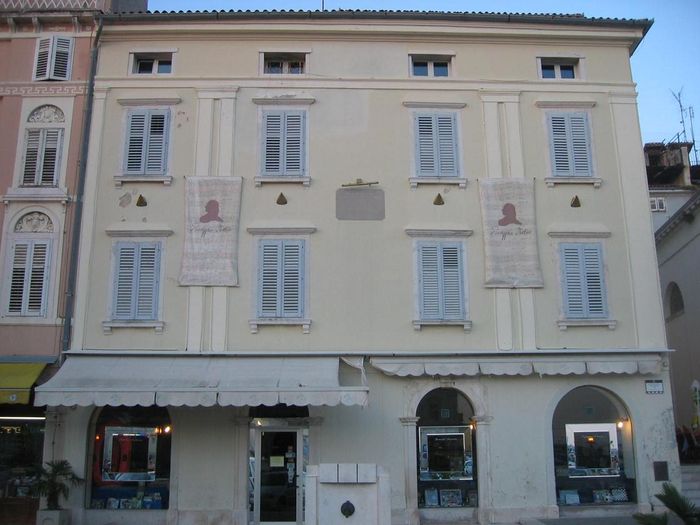
Giuseppe Tartini Museum
The museum honours the composer born in Piran on 8 April 1692, whose Devil's Trill sonata made him famous. Its hours change with the season and it is closed on Mondays. From October to May it opens for only a few hours on each day, so read the timetable before you climb.
€4 · closed Monday


Nomadinho scores out of 100, the same ones behind “Where to go”.
If you like Piran
Three places with the closest scores, from any country.


Ready for Piran?
Within reach from here
Places sorted by straight-line distance from Piran — day trips or weekends.

Slovenia
→Alpine peaks, a capital with no cars in its centre and 47 kilometres of Adriatic coast in a country under twenty thousand square kilometres

Croatia
→A thousand islands and one road that looks down on all of them

Austria
→A country where the train from a Vienna coffee house to a Tyrolean cable car takes just over four hours — so you choose the order, not the country

Italy
→The cities on the high-speed line are an hour or two apart; the coast, Matera and the Tuscan hills lie off it

Hungary
→A capital on the Danube, a hill-country wine town, a southern city near Croatia and Central Europe's biggest lake, all in a country without the euro

Bosnia and Herzegovina
→Two cities, a mark pegged to the euro and mountains that were Olympic in 1984

North Macedonia
→Skopje on the Vardar, Ohrid on a UNESCO lake and about three hours of road between them
All 292 places we write about sit on one page — narrow them down by continent, country, price or what you are travelling for.
Front row for the next trip
Leave your email and we'll let you know when a new destination or story goes up.