

Bucharest
The city is first mentioned on 20 September 1459, in a document the Wallachian prince Vlad III signed „in the citadel of Bucharest“; of that citadel only the Old Princely Court still stands, while its neighbour, the Palace of the Parliament, is the world's largest civilian administrative building.
- When to go
- October 13° · 5 rainy days
- Per day
- ~19,14 · 52 · 64 €budget · mid · comfort, per person · checked 21 Sep 2026
- How many days
- 2days
- For you
- 6 questions →
- Nearest airport
- 8 km Bucharest · 16 km Otopeni
- Right now

Two days cover central Bucharest — Lipscani and the Athenaeum on the first, the Palace of the Parliament and the parks on the second; a third day, if there is one, goes on a trip to Sinaia or Mogoșoaia. The city was first documented on 20 September 1459, in a document the Wallachian prince Vlad III, better known as Dracula, signed „in the citadel of Bucharest“ — of that citadel only the Old Princely Court (Curtea Veche), rebuilt that very year, survives today.
The city's name most likely comes from a man called Bucur — a shepherd of legend, or a historical figure who left no other trace — whose name carries the suffix „-ești“, typical of settlements named after their founder. The first written mention is from 20 September 1459; that same year Vlad III rebuilt and extended the Old Princely Court (Curtea Veche), first put up on the same site in the 14th century for prince Basarab I. In the late 19th and early 20th century, with French architects such as Albert Galleron at work, the city picked up the nickname „Little Paris“.
From Henri Coandă Airport (OTP) into the centre runs bus 100 (ex-783) or train, 40–45 min (bus), for €0.57 — the same fare as any other ride on public transport. The first two days hold the centre: Lipscani and the Athenaeum on one, the Palace of the Parliament and the parks on the other. A third day, if there is one, goes further: 1 h 34 (one way) by train to Sinaia and Peleș Castle, or half a day to Mogoșoaia Palace.
Guides for Bucharest
Shorter, practical pages for one concrete question each — how many days, how much money, where to sleep, where to escape the city.

Bucharest in 2 days
→The Old Town and the Athenaeum on day one, the Palace of the Parliament and the parks on day two — two different sides…

Day trips from Bucharest
→Sinaia and Peleș Castle want a full day by train into the mountains; Mogoșoaia and Snagov sit closer, by bus or car…

Where to stay in Bucharest
→In Bucharest a place to stay is chosen by distance to a stop, not by name — the city runs two separate transport…

What Bucharest costs
→Romania is not in the eurozone — you pay in lei (RON), but every price here is already converted to euro, line by line.

Four Bucharest stops the six main sights skip
→The oldest park in the city, a museum in a former princely palace, a contemporary-art wing inside the Palace of the…

What to eat in Bucharest
→Sarmale and mici anchor almost every menu, papanași close the meal, and tripe soup is what gets ordered when the day…

The best time to visit Bucharest
→Bucharest has a continental climate with no sea to soften it — summer can push past 30°C, winter is cold and grey, and…

Getting around Bucharest
→From Henri Coandă Airport, bus 100 or a train reach Gara de Nord; in the city, the metro and public transport run as…

Mistakes everyone makes in Bucharest
→Line 783 was retired in 2023, the Palace of the Parliament won't let you in without a booking, and a public transport…
What to see in Bucharest
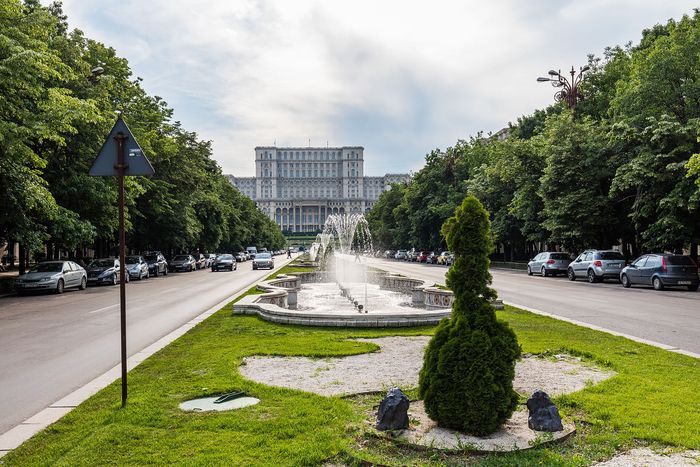
Palace of the Parliament
Construction began in 1984 under Nicolae Ceaușescu and was still unfinished when he fell in 1989; built with around 700,000 tonnes of steel and bronze and a million cubic metres of marble, it is today the world's largest civilian administrative building, according to Guinness World Records. The standard tour takes 1 h (tour); entry €11.40, Mar–Oct 9–17, Nov–Feb 10–16, guided tour only, booked ahead by phone.
€11.40 · 1 h (tour) · booking: yes, 24 h ahead (phone)
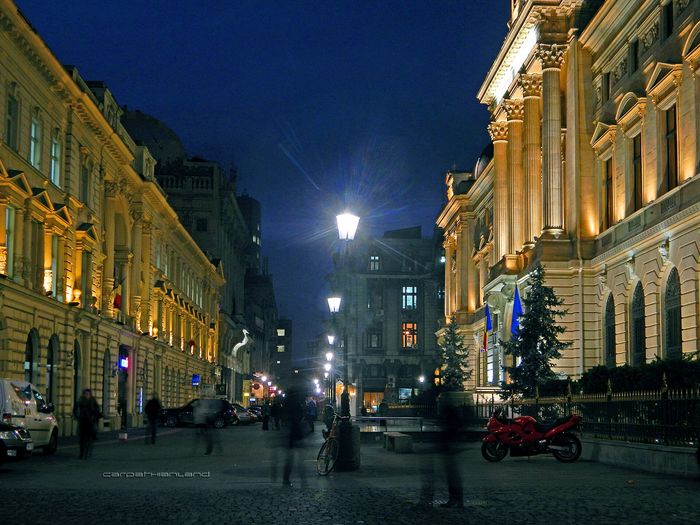
Centrul Vechi (Lipscani)
The street is named after merchants who brought goods from Leipzig (Lipsca in old Romanian), and it was first recorded as the „Broad Lane“ in 1589; from the Middle Ages to the early 19th century it was Wallachia's main trading street, lined with the guilds of goldsmiths, cobblers and tanners. The pedestrian zone is free to walk, a full loop takes 2–4 h.
free · 2–4 h
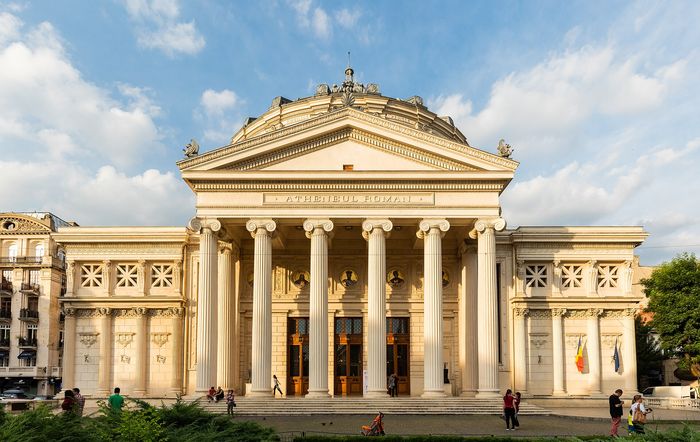
Romanian Athenaeum
The hall was designed in 1886–1888 by the French architect Albert Galleron, recommended by Charles Garnier, the architect of the Paris Opéra; part of the cost came from a 28-year public subscription under the slogan „Give one leu for the Athenaeum“. It is now home to the George Enescu Philharmonic. A self-guided look inside is possible only Mon–Thu 9–10 (before rehearsals), entry €2.85; outside that window it's concert tickets only.
€2.85 · 30–45 min · closed Fri–Sun (rehearsal/concert schedule-dependent) · booking: no (individual)
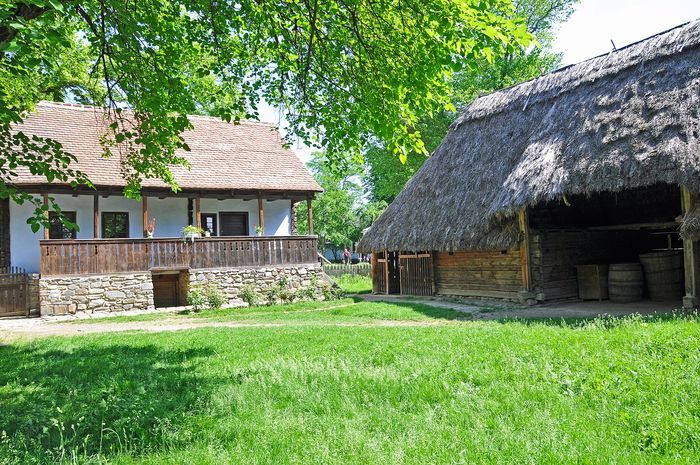
Village Museum
Opened on 10 May 1936 in the presence of King Carol II, the idea of sociologist Dimitrie Gusti — it was the fourth open-air museum of its kind in Europe, after those in Stockholm, Oslo and Transylvania. It now holds 363 monuments brought in from villages across Romania. Entry €7.60, summer Wed–Sun 9–19, winter Wed–Sun 9–17, closed Monday, Tuesday.
€7.60 · 1–3 h · closed Monday, Tuesday · booking: no (guided tour on request)
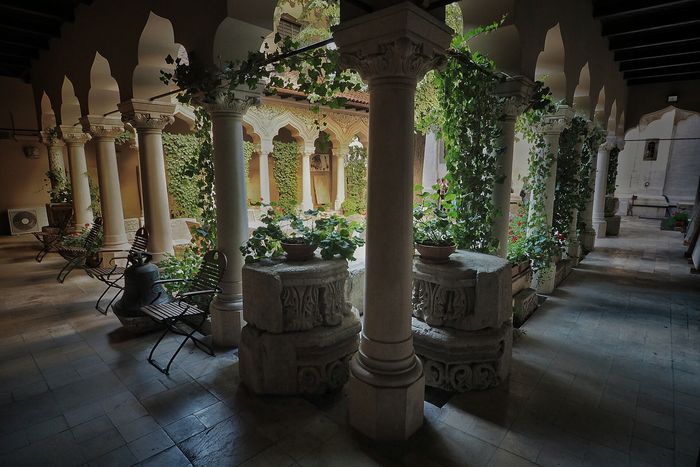
Stavropoleos Monastery
Built in 1724 by Archimandrite Ioanichie Stratonikeas, under the Wallachian prince Nicolae Mavrocordat, in the Brâncovenesc style that mixes Byzantine, Ottoman and Western European influences; the name comes from the Greek „Stavropolis“, city of the cross. It is still an active monastery, now home to nuns. Open 8–19, entry free.
free
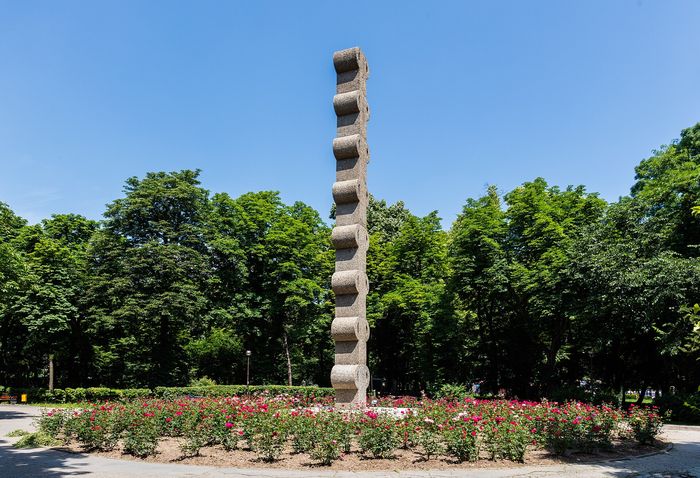
King Michael I Park
The park opened in 1936, after a marsh on the north side of the city was drained between 1930 and 1935; the lake runs 3.5 kilometres and the whole park covers 187 hectares. The name has changed several times — National Park, then after King Carol I, then after Stalin — and its current one, King Michael I, has stood since 2017, honouring the king after his death. Entry free.
free


Ready for Bucharest?
Within reach from here
Places sorted by straight-line distance from Bucharest — day trips or weekends.


All 277 places we write about sit on one page — narrow them down by continent, country, price or what you are travelling for.
Within reach from here: Brașov, Veliko Tarnovo and Varna
See how much of that actually suits you — or pin Bucharest if you have been.
Front row for the next trip
Leave your email and we'll let you know when a new destination or story goes up.