

Budapest
A city formed in 1873 by joining three towns along the Danube, with an underground line that has run the same route since 1896 — the second-oldest metro in the world.
- When to go
- October 12° · 6 rainy days
- Per day
- ~29 · 80 · 114 €budget · mid · comfort, per person · checked 21 Sep 2026
- How many days
- 3days
- For you
- 6 questions →
- Nearest airport
- 18 km Budapest
- Right now

Three days split Budapest by side of the Danube: the Buda side, with the castle and the Fisherman's Bastion above the river, and the Pest side, with the Parliament and the synagogue at street level. A fourth day, when there is one, goes north, into the Danube Bend. The city itself has only existed as one place since 17 November 1873, when the until-then separate towns of Buda, Pest and Óbuda merged into a single municipality, and the underground line built for the 1896 millennial celebrations still runs its original route.
Until 1873, Buda and Pest were two towns on opposite banks, linked only by the Danube's first permanent bridge, the Chain Bridge; Óbuda, the third town, merged in at the same time. That split still shapes a visit: the Buda side holds the castle, the viewpoints and a tight web of streets on a hill, the Pest side holds a wide boulevard, shopping and nightlife at river level.
A direct bus, 100E, runs from Liszt Ferenc Airport to the centre in 40 min with no change, for €6.90 (2,500 HUF). The Buda side holds the castle, the Fisherman's Bastion and the viewpoints above the river; the Pest side holds the Parliament, St Stephen's Basilica and the Great Synagogue, close together and all at street level. A fourth day, when there is one, goes out of town — into the Danube Bend, to Szentendre, Visegrád or Esztergom.
Guides for Budapest
Shorter, practical pages for one concrete question each — how many days, how much money, where to sleep, where to escape the city.

Budapest in 3 days
→The Pest side for the first two days, the Buda side for the third — the Parliament and the synagogue sit at street…

Day trips from Budapest
→Szentendre, Visegrád and Esztergom sit along the same river, each reachable by train or suburban rail, no organised…

Where to stay in Budapest
→The Pest side is chosen by how much you walk, District VII by how much night noise you can take, and the Buda side by…

What Budapest costs
→Hungary is not in the eurozone, so every price here is given in forint and converted to euro at the official rate — no…

Underground and out of town: four sights beyond the six main ones
→A museum in a former secret-police building, a hospital carved into rock, a park full of removed statues and a market…

What to eat in Budapest
→Lángos is fried dough piled with soured cream and cheese, goulash is a soup rather than the thick stew people expect…

The best time to visit Budapest
→Budapest has a continental climate with no sea to soften it — summer can push past 30°C, winter is cold and grey, and…

Getting around Budapest
→Budapest's airport has no metro link to the centre, but it does have a direct express bus; the rest of the city runs on…

Mistakes everyone makes in Budapest
→Hungary is not in the eurozone, exchange booths on tourist streets can run up to fifteen percent worse than the going…

Nightlife in Budapest
→The best-known night out in Budapest is in District VII: the abandoned buildings and courtyards of the Jewish Quarter…
What to see in Budapest
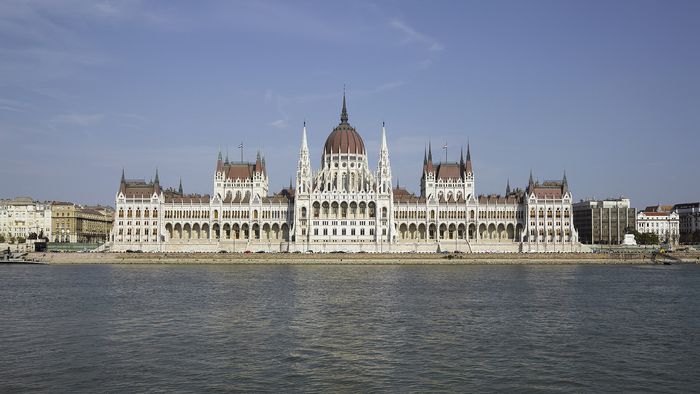
Parliament
The largest building in Hungary, with a dome 96 metres high — a number with double symbolism, 896, when the Magyars settled the Carpathian Basin, and 1896, the year of the millennial celebrations it opened for, although construction ran on until 1904. A guided visit takes 45 min, booking required, in advance (jegymester.hu).
€19.32 (EU) / €38.63 (non-EU) · 45 min · booking: required, in advance (jegymester.hu)
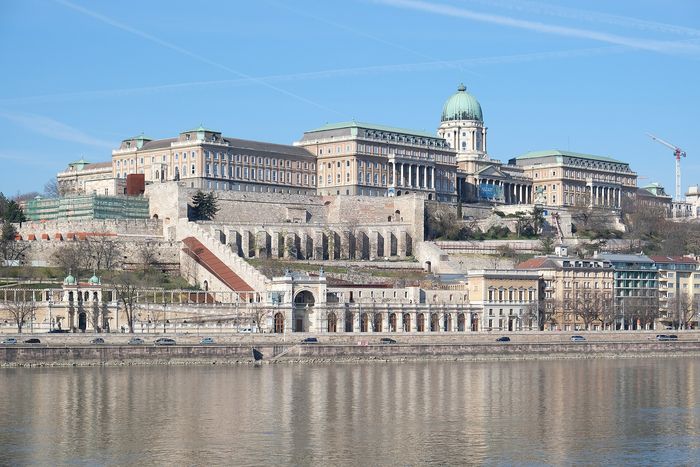
Buda Castle
The hill above the Danube where Hungary's royal residence stood from the mid-13th century — the first castle went up under King Béla IV between 1247 and 1265, after a Mongol invasion showed that the old town on the plain was not safe. Today the complex holds the Budapest History Museum; the grounds and terraces are free and open all day, the museum free (grounds); museum €10.49, museum: daily 10–18 (last entry 17:30).
free (grounds); museum €10.49 · 1–2 h · booking: no (standard ticket)
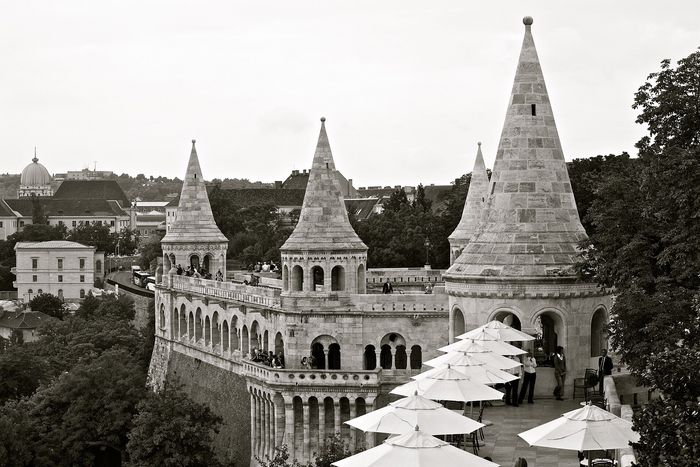
Fisherman's Bastion
Seven Neo-Romanesque towers, built between 1895 and 1902 to a design by architect Frigyes Schulek — each tower named for one of the seven Magyar tribes that arrived here under Árpád. The lower terraces are free; entry to the towers free (lower terraces); towers €4.69, towers: 9–21 (Jun–Sep), 9–19 (rest of year).
free (lower terraces); towers €4.69 · 30–60 min · booking: no (on-site only)
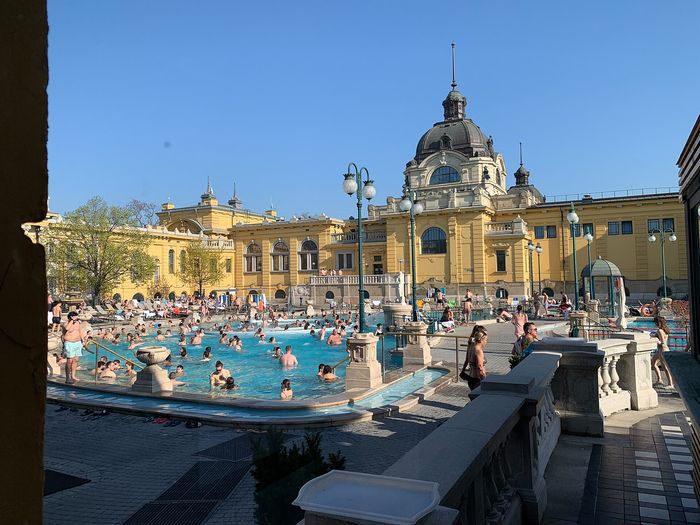
Széchenyi Thermal Bath
The largest bath complex in Europe, opened in 1913, with water drawn from 1,246 metres below ground that heats the outdoor pools even in winter, when the air is below freezing. Prices vary by day of the week, €36.42–43.60 (13,200–15,800 HUF).
€36.42–43.60 (13,200–15,800 HUF) · 1–2 h · booking: no, walk-in possible (online recommended in summer)
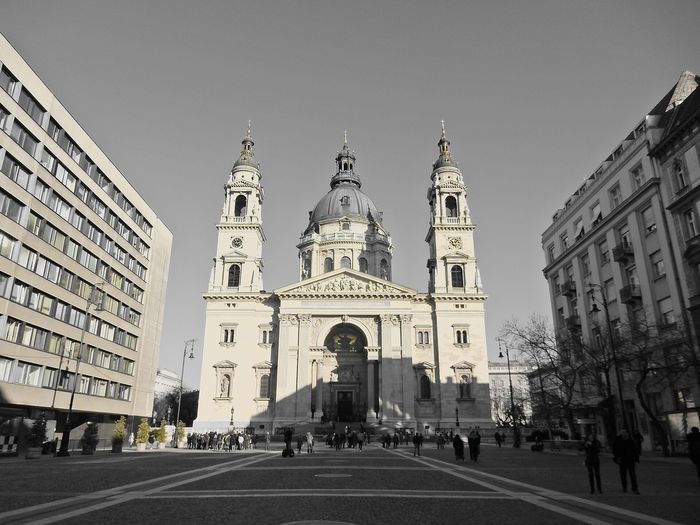
St Stephen's Basilica
The dome, like the one on the Parliament, stands 96 metres high — a 19th-century rule that no building in the city may stand taller than either. A dedicated chapel holds the Holy Right Hand, said to be the undecayed hand of Hungary's first king. Building ran from 1851 to 1905, interrupted when the original dome collapsed in 1858; church: Mon–Sat 9–18, Sun 13–18; terrace & treasury: daily 9–19.
€7.17 · 30–45 min (church); up to 1 h 30 (with dome) · booking: recommended, not mandatory
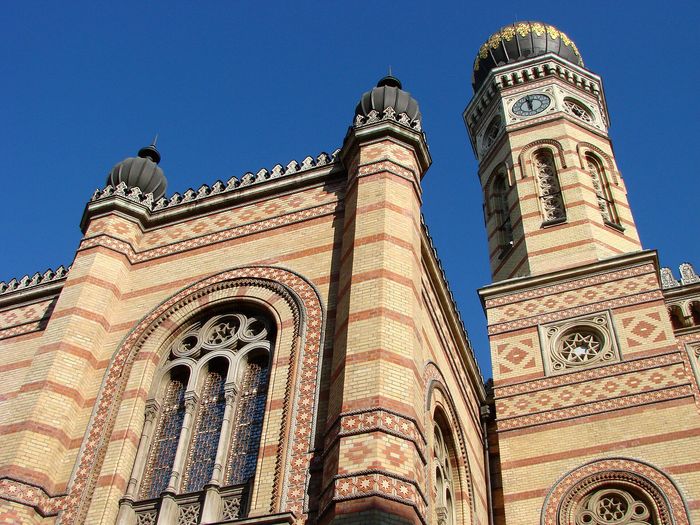
Great Synagogue
The Dohány Street Synagogue is the largest in Europe and the second-largest in the world, built 1854–1859, seating 3,000. In the courtyard behind it stands the Tree of Life, a metal willow made in 1991 by Imre Varga, its leaves carrying the names of Holocaust victims. Entry €35.87 (13,000 HUF) adult, Apr–Oct: Sun–Thu 10–18, Fri 10–16; Nov–Mar: Sun–Thu 10–16, Fri 10–14, closed Saturday.
€35.87 (13,000 HUF) adult · 45 min · closed Saturday · booking: recommended, not mandatory


Ready for Budapest?
Within reach from here
Places sorted by straight-line distance from Budapest — day trips or weekends.

Hungary
→A capital on the Danube, a hill-country wine town, a southern city near Croatia and Central Europe's biggest lake — one country, no euro

Austria
→A country crossed by train in five hours, from a Vienna coffee house to a Tyrolean cable car — so you choose the order, not the country

Croatia
→A thousand islands and one road that looks down on all of them
All 277 places we write about sit on one page — narrow them down by continent, country, price or what you are travelling for.
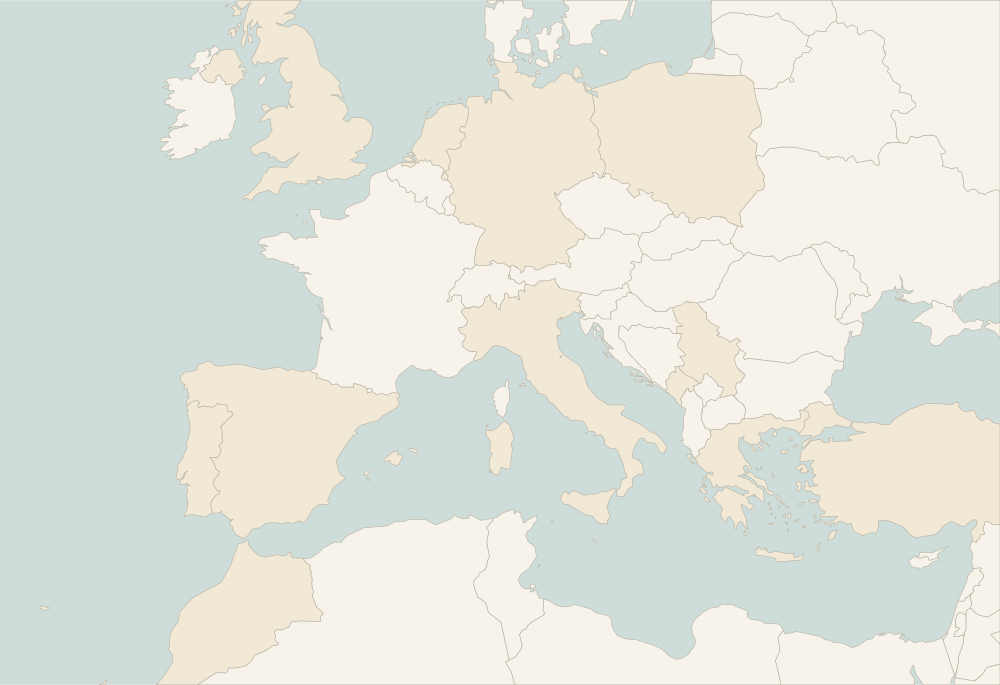
Within reach from here: Szentendre, Banská Štiavnica and Lake Balaton
See how much of that actually suits you — or pin Budapest if you have been.
Front row for the next trip
Leave your email and we'll let you know when a new destination or story goes up.