

Thessaloniki
Greece's second city, a busy port and university town where Byzantine churches, an Ottoman waterfront tower and a wide, planned centre sit side by side
- When to go
- November 13° · 8 rainy days
- Per day
- €€price 2 of 5
- How many days
- 2–3days
- For you
- 6 questions →
- Nearest airport
- 14 km Thessaloniki
- Right now
Most travellers treat Thessaloniki as a quick stop on the long road to Halkidiki, an hour for coffee before the beaches. Yet the ancient city behind that stop is two and a half thousand years old, with fifteen historic UNESCO-listed monuments and a student nightlife that only Athens can match in Greece.
On 18 August 1917 a fire burned for thirty-two hours and took a third of the city, some nine and a half thousand houses. More than seventy thousand people were left roofless, and the city was not rebuilt as it had been. The French architect Ernest Hébrard drew it afresh, with wide axes and Aristotelous Square opening onto the sea, so the lower city looks planned. Ano Poli, the one district the flames spared, keeps its old cobbled lanes and traditional houses.

Before the war about seventy thousand Jews lived here, descendants of the Sephardim expelled from Spain after 1492. For a time they were the majority of the population, so the city was called the mother of Israel. The deportations began in February 1943, and by the end of May about fifty thousand people had been taken. More than ninety per cent of the community was lost, and only about thirteen hundred remain today. Without that fact it is hard to see why a European city has so few old family shops and so many empty lots in the centre.
Thessaloniki is, above all, a city to eat in, and the traditional day begins with bougatsa, a crisp and barely sweet filo pie filled with semolina custard or cheese, eaten in the morning and standing up. Dessert is trigona, little filo triangles filled with cream that come from Panorama, the suburb on the hill above town. In the evening everyone drifts down to Ladadika, the old port quarter, which usually lasts longer than planned.
3-star hotel, double room, per person per night
Timed-entry tickets and guided tours in one place.
Both sites fill in your nearest airport for you; change it in one click.
Guides for Thessaloniki
Shorter, practical pages for one concrete question each — how many days, how much money, where to sleep, where to escape the city.

Thessaloniki in 2 days
→The lower town and three museums on day one, the churches and the upper town on day two, going up by bus and coming down on foot before sunset.

Day trips from Thessaloniki
→Philip II's tomb, the three fingers of Halkidiki, the gorge below Olympus and a town on waterfalls, all within one to two hours of Thessaloniki.

Where to stay in Thessaloniki
→In Thessaloniki the choice is between the walkable centre around Aristotelous and Ladadika and the quieter, hillier Ano Poli, and there is no serious third option.

What Thessaloniki costs
→Thessaloniki adds up item by item, from a hostel or hotel and street food to city transport, the airport fare and the tourist tax, all in euro.

Thessaloniki, past its six main sights
→A Roman mausoleum that became a church and then a mosque, a monastery with free-roaming peacocks and a five-century-old Ottoman market: three places that the hour-by-hour plan passes without explaining.

What to eat in Thessaloniki
→What Thessaloniki eats and what it costs, and why the story that it is cheaper than Athens no longer holds.

The best time to visit Thessaloniki
→Thessaloniki sits on the sea, which keeps its winters milder than its latitude suggests, though summer still tops 28°C and snow falls now and then when Vardaris, a cold wind down the Axios valley, blows through.

Getting around Thessaloniki
→Thessaloniki's metro does not reach the airport, a job done by the overground 01X bus, but the same €0.60 ticket then covers both the metro and the city buses.

Mistakes everyone makes in Thessaloniki
→Thessaloniki's metro opened only at the end of 2024, so habits have not settled: the ticket must be validated, the…
What to see in Thessaloniki
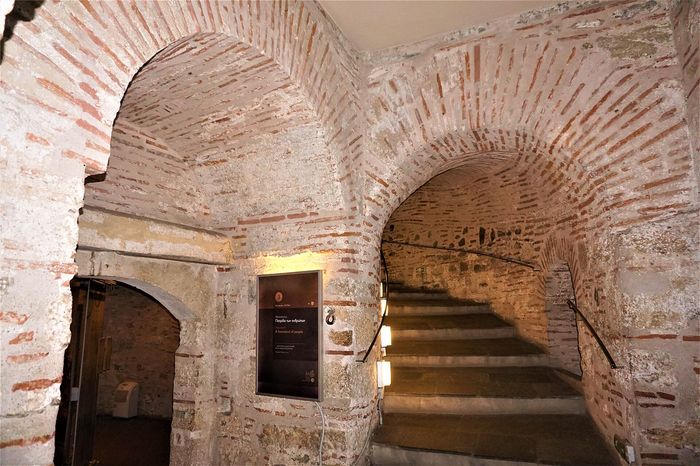
The White Tower
Thirty-four metres of stone on the waterfront, with a spiral ramp instead of stairs. The Ottomans raised it after 1430, and an inscription names 1535 and Sultan Suleiman. Inside is a six-floor museum of the city's history; from the top you see the whole gulf out to Mount Olympus.
€8
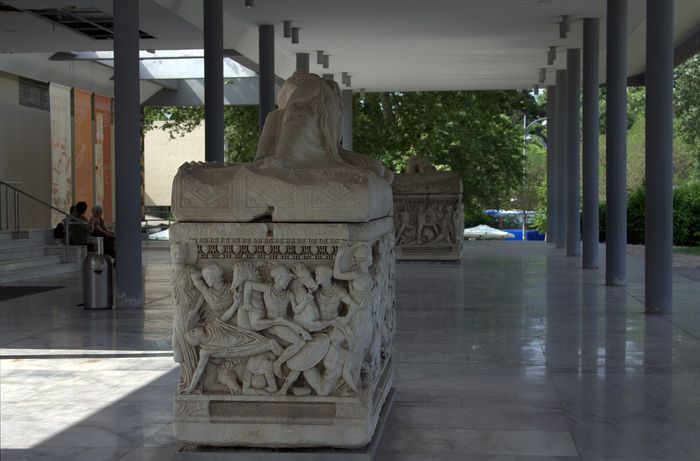
Archaeological Museum
Opened in 1962, in a building by the architect Patroklos Karantinos that is itself a landmark of post-war Greek architecture. Its centrepiece is the Derveni Krater, from around 350 BC, the most lavish bronze vessel to survive from antiquity, dug up in 1962 nearby at Derveni as a funerary urn. The collection runs chronologically, from prehistory to the Roman period, with gold jewellery from the Macedonian tombs at Sindos.
€10
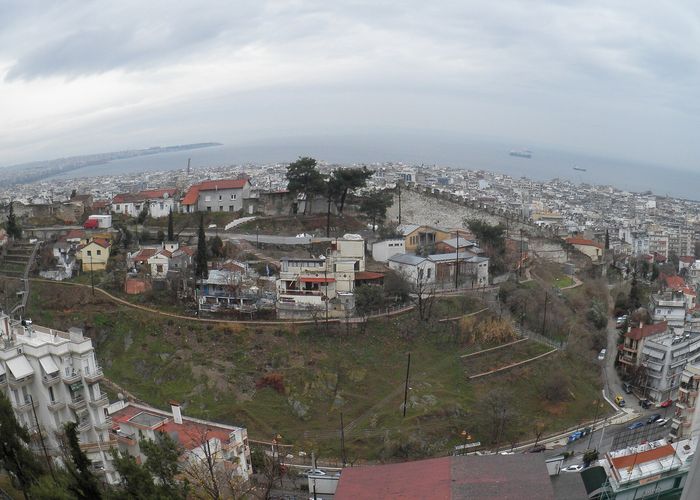
Ano Poli
The upper town inside the walls, the one part the 1917 fire never reached. Cobbles, houses with overhanging wooden storeys, and the Heptapyrgion fortress at the top. Forty minutes on foot, or bus 23; from the Trigonion tower on a clear day you see Olympus across the gulf.
free
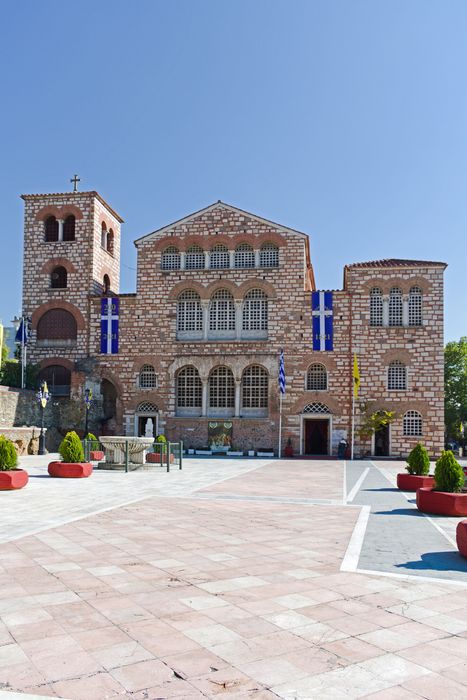
The Byzantine churches
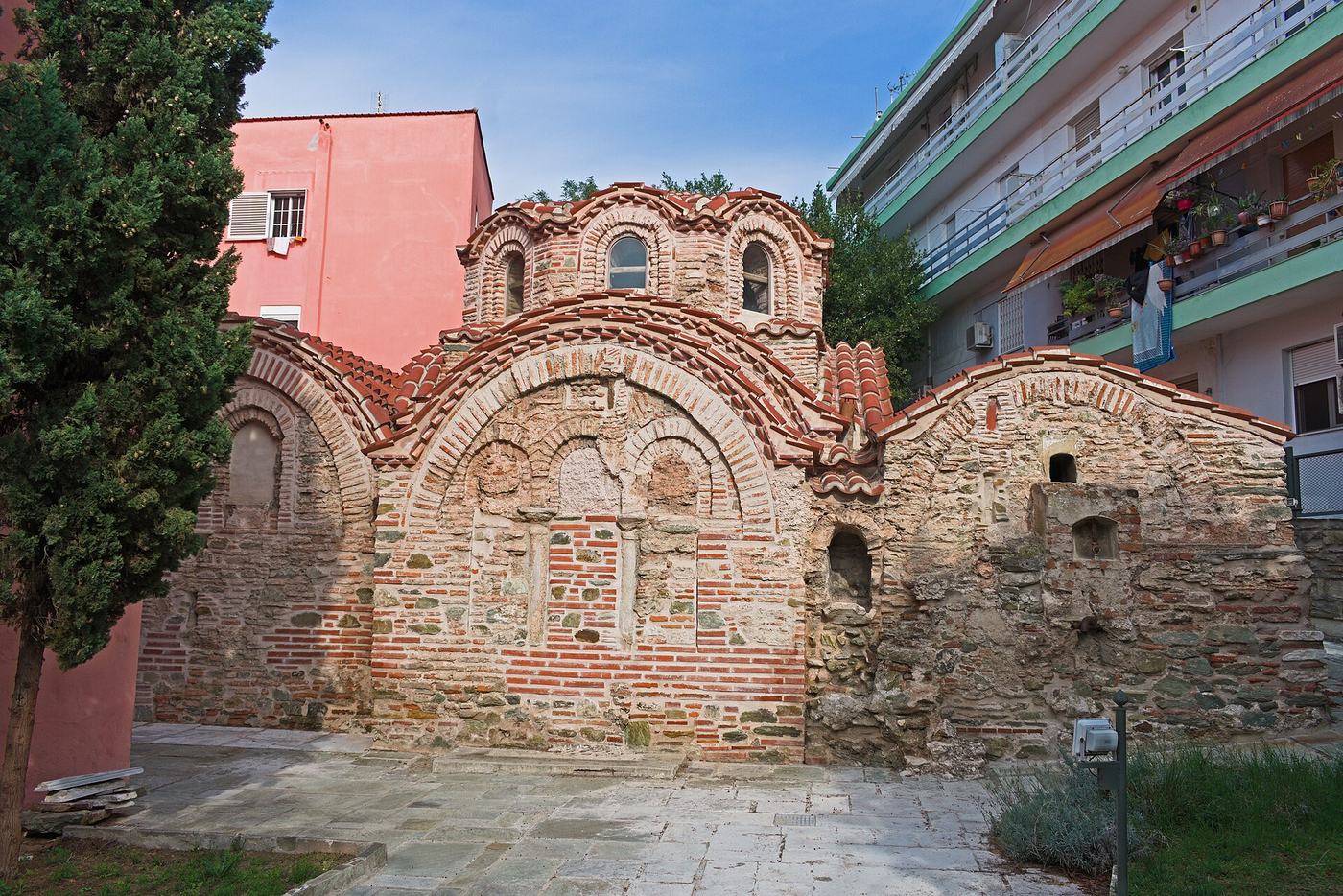
They were listed in 1988 along with four kilometres of city wall, and they span the fourth century to the fifteenth. Saint Demetrius and the Acheiropoietos are the largest, Hosios David the smallest and the one with the best mosaic. Most are free to enter, and all sit within half an hour's walk.
free
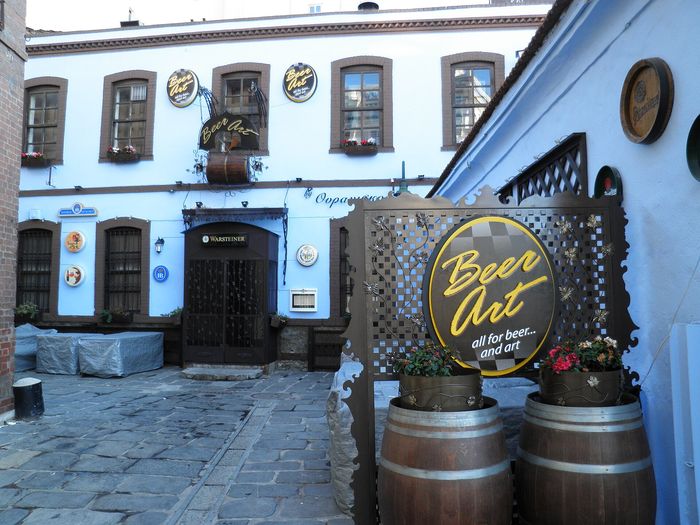
Ladadika
The quarter by the port, named after the olive-oil warehouses that stood here. It decayed after the 1978 earthquake, was protected as an ensemble in 1985, and in the nineties the nineteenth-century stores became bars. The night starts here and carries on along Valaoritou and the seafront.
free
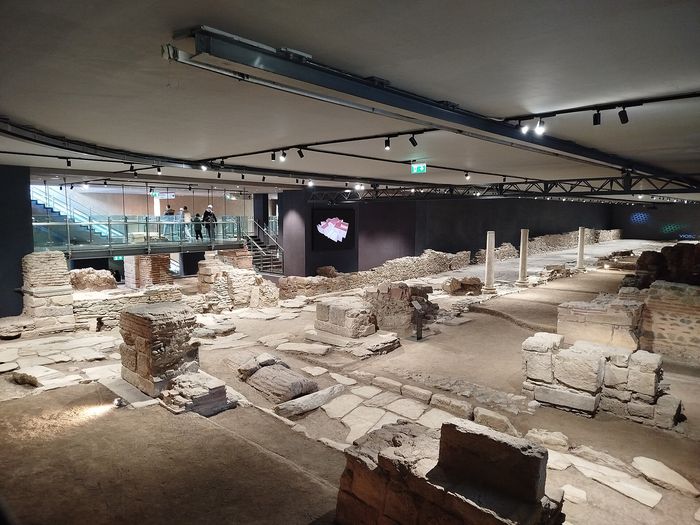
The metro and what they dug up
The metro opened on 30 November 2024, runs driverless, and the Kalamaria extension followed on 27 August 2026. At Venizelou station the builders hit seventy-five metres of a Byzantine avenue with its shops and left it where it was, so you now look down on it from the platform.
€0.60


Stories from Thessaloniki
How it actually was when we were there, and what was worth it.

Belgrade to Thessaloniki without a train: days, not hours
→The bus and the car each eat a day in every direction, while the plane takes an hour and a quarter, so a weekend of two days by coach turns into four days away from home.

New Year's Eve in Thessaloniki: the White Tower, lasers and fireworks
→Where the Thessaloniki New Year's Eve party really happens, how to reach the waterfront and get home, what to do if it is packed, and what stays shut on 1 January.
Nomadinho scores out of 100, the same ones behind “Where to go”.
If you like Thessaloniki
Three places with the closest scores, from any country.


Two things you probably did not know
The White Tower was a prison and place of execution for centuries, and was called the Bloody Tower. It was whitewashed in 1890 by a convict who was given his freedom for the job. The name changed with it.
Until the twentieth century Thessaloniki was a city where Jews were the largest community, descendants of those expelled from Spain in 1492. They spoke Ladino, and the port did not work on Saturdays because the dockers were Jewish.
Before you go
Short answers to what people ask most before setting out.
How many days do you need in Thessaloniki?
Two to three days, or four to five if you add Vergina and Halkidiki. The Byzantine churches go in the morning in the lower town, and Ano Poli is walked from the top down.
How do you get from Thessaloniki airport to the centre?
The 01X bus runs by day and the 01N at night, taking 30–45 min for €2; the metro does not reach the airport. An ordinary city ticket is €0.60 and lasts 70 minutes.
When is the best time to visit Thessaloniki?
May to June and September to October, with comfortable temperatures. July averages around 28°C, with days that regularly clear 30°C, and the rain peaks in December and March.
Ready for Thessaloniki?
Within reach from here
Places sorted by straight-line distance from Thessaloniki — day trips or weekends.

Greece
→The north by road, the Cyclades by ferry, Rhodes by air — pick the region first and the island second

Turkey
→Istanbul, then one direction: Cappadocia by plane, Ephesus and Pamukkale by train, or the Lycian coast by bus

Montenegro
→The Bay, the riviera or Ulcinj for the sea, Durmitor for July — choose the coast by its beaches and the north by the month
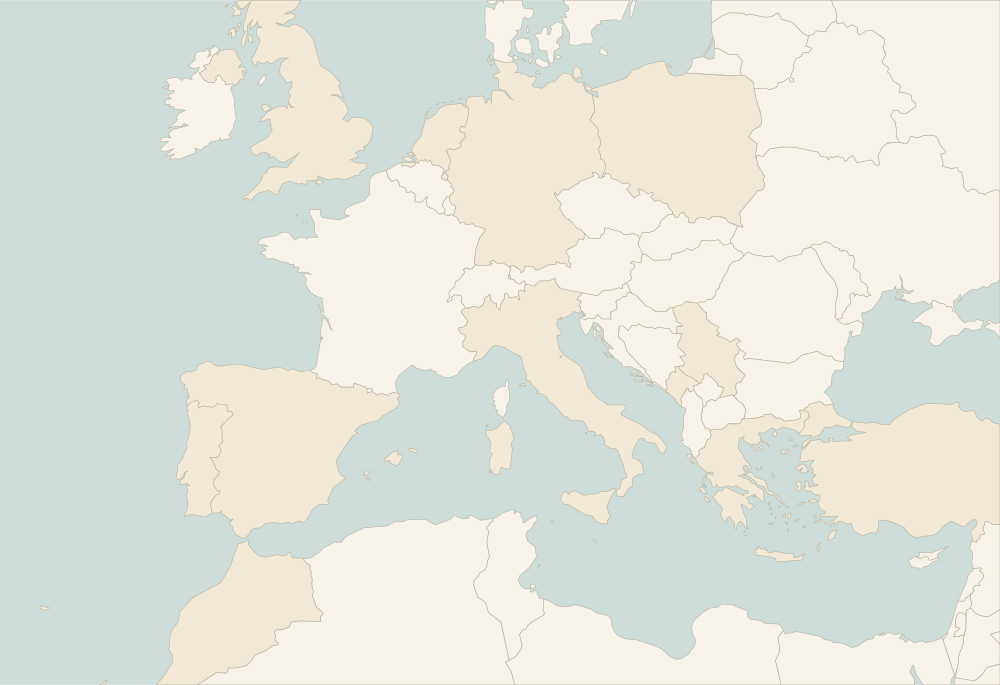
All 292 places we write about sit on one page — narrow them down by continent, country, price or what you are travelling for.
Front row for the next trip
Leave your email and we'll let you know when a new destination or story goes up.