

Wrocław
The city that turned eighties graffiti dwarfs into a thousand bronze figurines
- When to go
- October 12° · 10 rainy days
- Per day
- ~24 · 54 · 64 €budget · mid · comfort, per person · checked 24 Sep 2026
- How many days
- 2days
- For you
- 6 questions →
- Nearest airport
- 10 km Wrocław
- Right now

Wrocław was German Breslau until 1945, and after the war it received an entirely new population, largely resettled from Lviv. The city that came out of that has no single identity but several stacked ones, which is probably why a joke is taken seriously here — including the one about the dwarfs, now in its fourth decade.
The dwarfs are a residue of the Orange Alternative, an eighties street movement that mocked the authorities instead of confronting them: when the militia painted over an anti-communist slogan, someone would draw a dwarf on the blot. The first bronze one, Papa Krasnal, went up on Świdnicka Street in 2001, and the first five figurines followed in 2005. There are now over a thousand in the city, and the number grows every year.

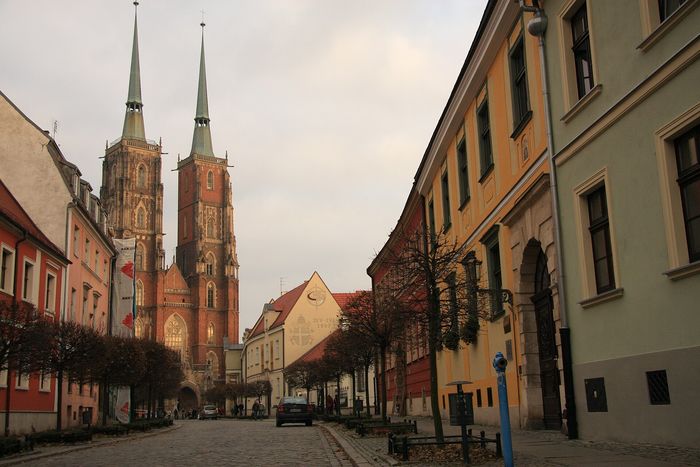
A bridge from the Rynek, where the dwarfs are thickest, leads to Cathedral Island, the city's oldest quarter. Just before dusk — as early as twenty past three in winter — a lamplighter in a top hat and cape turns up and lights around a hundred gas lamps by hand, one at a time, on a round of some three and a half kilometres that takes him just over an hour. Wrocław has had gas lighting since 1847, and the island's lamps were restored in the nineties.
Guides for Wrocław
Shorter, practical pages for one concrete question each — how many days, how much money, where to sleep, where to escape the city.

Wrocław in 2 days
→Day one is the Old Town on foot, from the Rynek past the dwarfs to the lamps on Cathedral Island. Day two goes by tram…

Day trips from Wrocław
→A sacred Slavic mountain, a wooden church bigger than any other nearby, and a castle with tunnels no one has ever fully…

Where to stay in Wrocław
→Around the Rynek you're a minute from everything in the centre. In Nadodrze you pay less and sleep among students…

What Wrocław costs
→The Rynek, Cathedral Island and the dwarfs cost nothing. The halls, the panorama and the museums are what you pay for…

Wrocław beyond the itinerary: a reservoir, a garden, a cemetery and a viewpoint
→A reservoir turned into a water museum, a garden over a century old, a cemetery with twelve thousand headstones and a…

What to eat in Wrocław
→A zapiekanka from a kiosk at noon, a set lunch, an evening that can go meat-free. Three meals that cover a day in…

The best time to visit Wrocław
→Wrocław has no sea to soften summer or winter, but it runs cooler than cities further south. The best months are the…

Getting around Wrocław
→Wrocław has its own airport, so the way into the centre is short: one bus, one station, then on foot or by tram.

Mistakes everyone makes in Wrocław
→Five mistakes that cost time or money in Wrocław, and what to do instead.
What to see in Wrocław
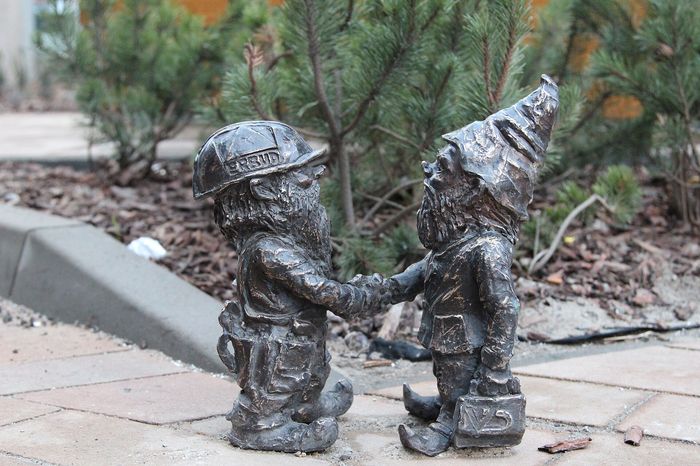
The dwarfs
Bronze figurines about twenty centimetres high, on pavements, in shop windows and up drainpipes. They are thickest around the Rynek and on Świdnicka Street, where the first one, Papa Krasnal, stands — a good place to start, after which children find the rest on their own.
free
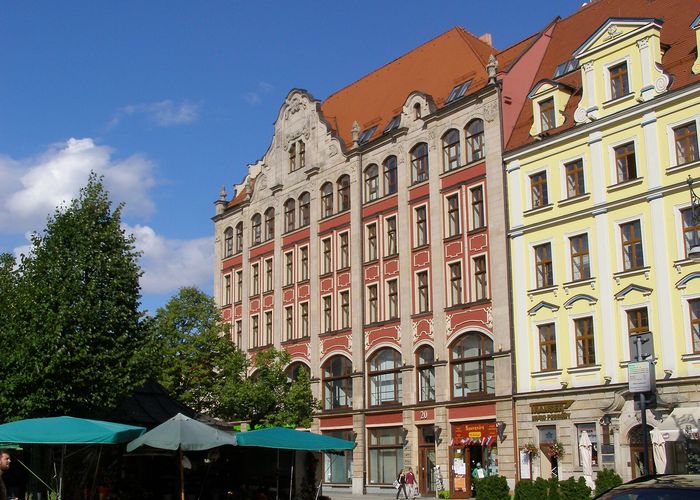
The Rynek
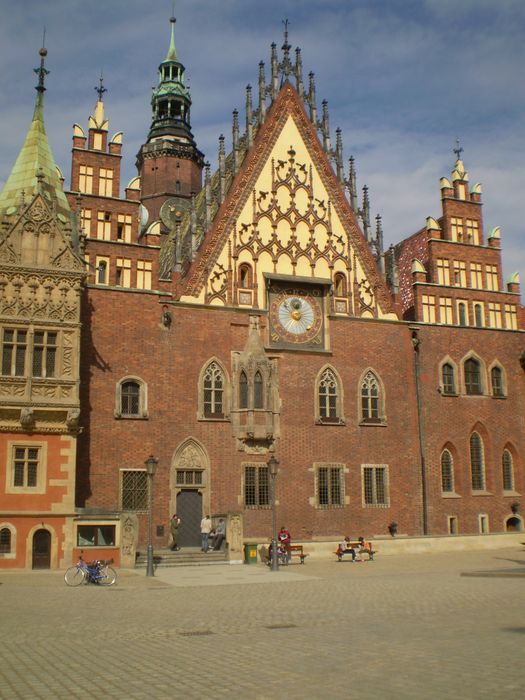
Some 3.8 hectares; the town hall on it was two centuries in the building, and its tower tops 66 metres. Unlike Warsaw, the post-war reconstruction here was partial, so old and new stand side by side in plain view.
free
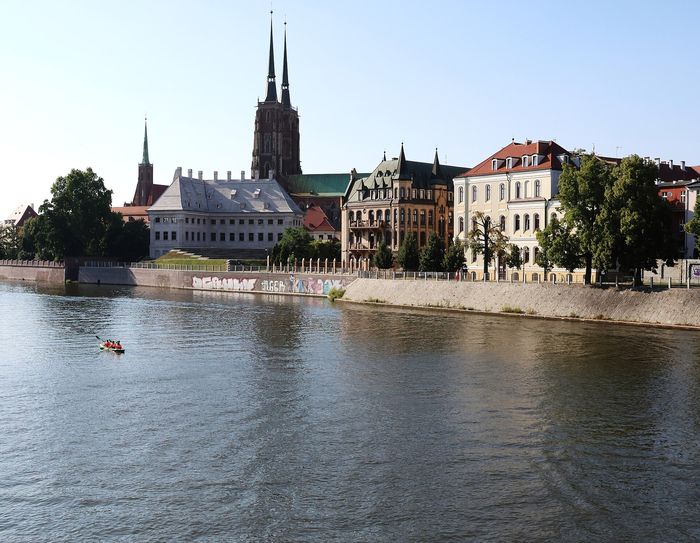
Cathedral Island
The island the city started on, with the cathedral and narrow lanes cars cannot enter. You cross on foot over Tumski Bridge, hung with padlocks; the moment to arrive is just before dusk, and to stay until the lamps come on.
free
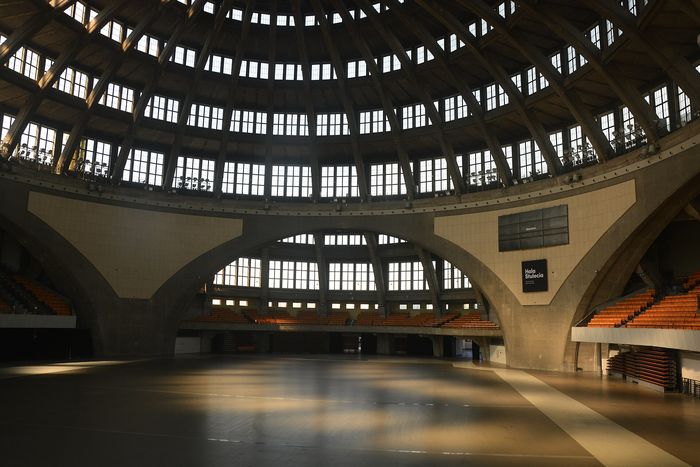
Centennial Hall
A reinforced concrete dome spanning 65 metres, built by Max Berg in 1911–1913 and the largest in the world at the time. UNESCO-listed since 2006. The visitor centre exhibition is €5.76, and from May the multimedia fountain in front of the hall plays on the hour from ten until eight in the evening, with a special night show on Fridays and Saturdays.
€5.76 · closed Monday
A student city
According to the city, more than a hundred thousand students across some thirty institutions. The rhythm follows the academic year, which in Poland starts on 1 October: that is when the city is fullest, and in summer it empties noticeably. The streets around the Rynek and in Nadodrze show it best.
free
The Racławice Panorama
A canvas 15 by 114 metres, painted in Lviv in 1894 by Jan Styka and Wojciech Kossak, of Kościuszko's army beating the Russians at Racławice in 1794. It came to Wrocław after the war, but because of its subject was not shown until 1985. You see it in a half-hour session, and the €11.52 ticket also covers the permanent exhibitions of the National Museum, the Ethnographic Museum and the Four Domes Pavilion for three months.
€11.52 · 30 min · booking: timed slot


Stories from Wrocław
How it actually was when we were there, and what was worth it.

Two days in Wroclaw and the story of a thousand dwarfs
→It starts with a smear of paint the militia used to cover slogans. What somebody drew on top of it back then now stands in bronze, a thousand times over.
Two things you probably did not know
Over a thousand small bronze dwarfs, about twenty centimetres tall, are scattered around Wroclaw. They come from the Orange Alternative, a movement that mocked the authorities in the eighties by painting dwarfs over censored graffiti.
Wroclaw lies on twelve islands joined by over a hundred and thirty bridges. Over the centuries the city belonged to Bohemia, Austria, Prussia, Germany and Poland, and today it is Polish.
Ready for Wrocław?
Within reach from here
Places sorted by straight-line distance from Wrocław — day trips or weekends.


All 277 places we write about sit on one page — narrow them down by continent, country, price or what you are travelling for.
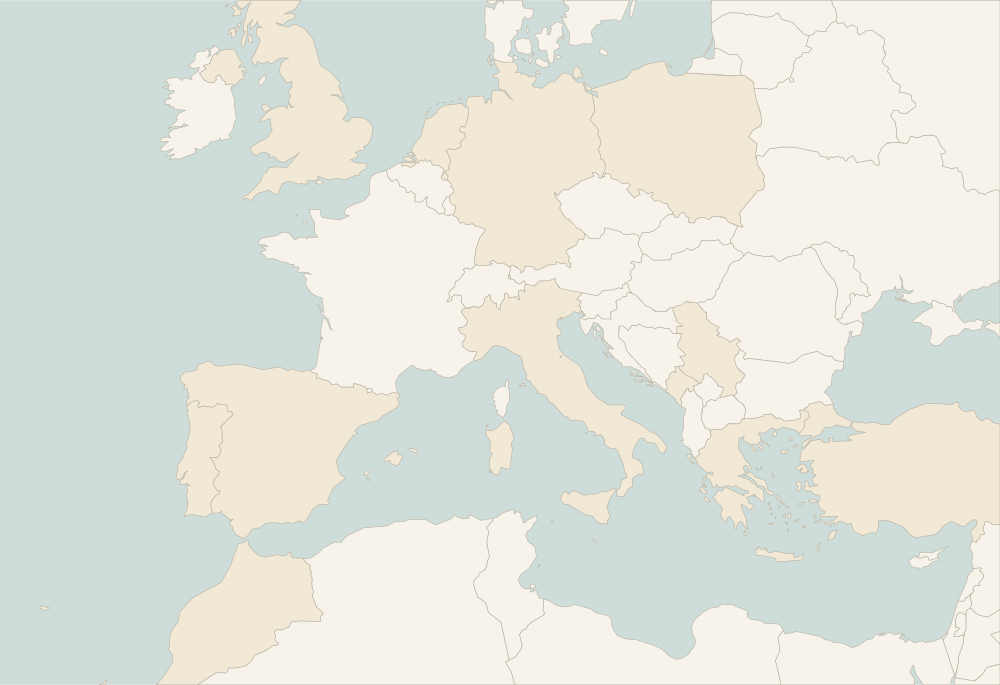
Within reach from here: Poznań, Olomouc and Kutná Hora
See how much of that actually suits you — or pin Wrocław if you have been.
Front row for the next trip
Leave your email and we'll let you know when a new destination or story goes up.