

Rtanj
The pyramid-shaped mountain that grows more legends than facts
- When to go
- November 5° · 11 rainy days
- Per day
- ~32 · 34 · 36 €budget · mid · comfort, per person · checked 22 Sep 2026
- How many days
- 1–2days
- For you
- 6 questions →
- Nearest airport
- 49 km Niš
- Right now
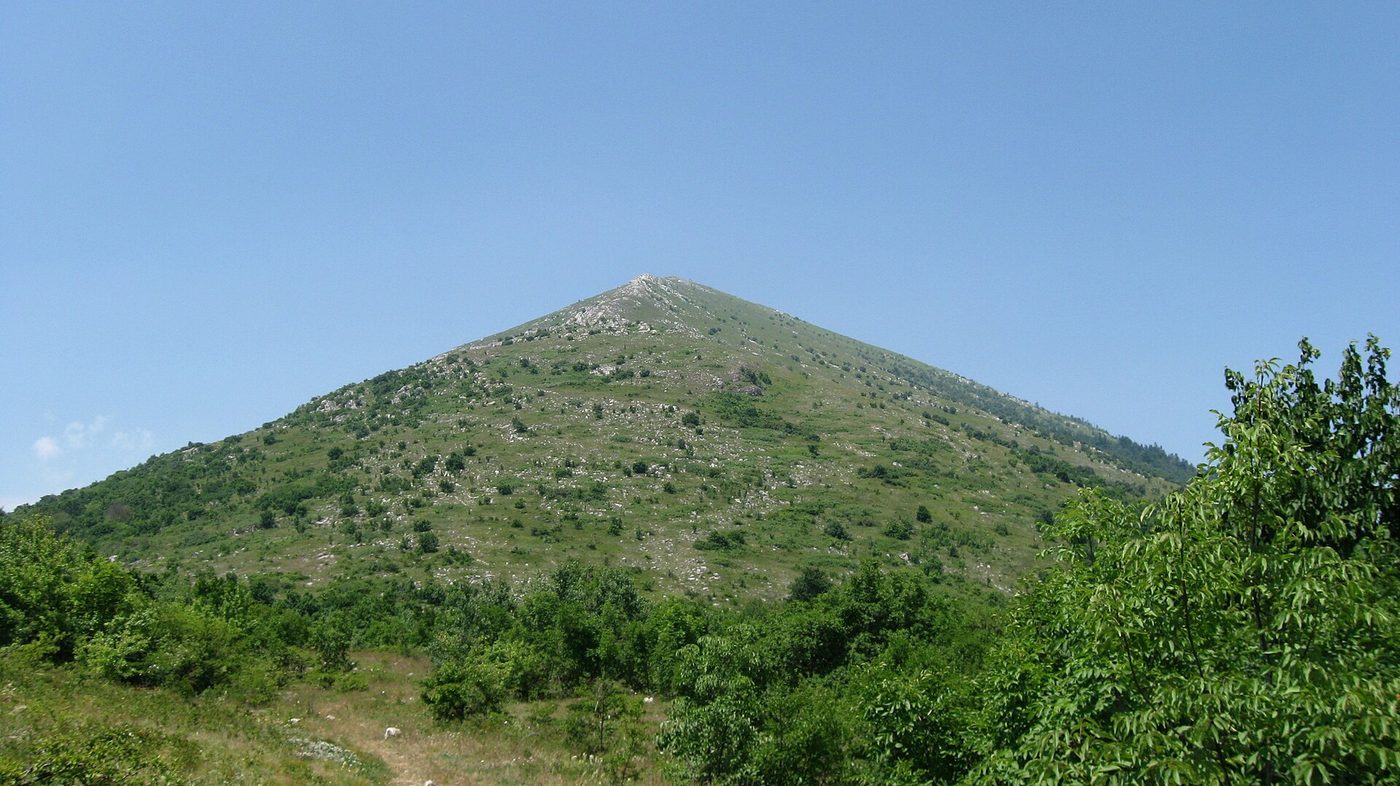
From certain angles Rtanj really does look like a pyramid, and that shape set off stories about 'energy points' and supernatural power. According to ethnologist Aleksandar Repedžić (BBC News in Serbian, 4 May 2026), those stories date only to the 1990s and were modelled on similar ones from America rather than on any older folklore. Geologists have a plainer explanation, which is that erosion cut through sandstone and limestone layers of different hardness and left the shape we see. The mountain is worth the climb whichever version of the story you prefer.
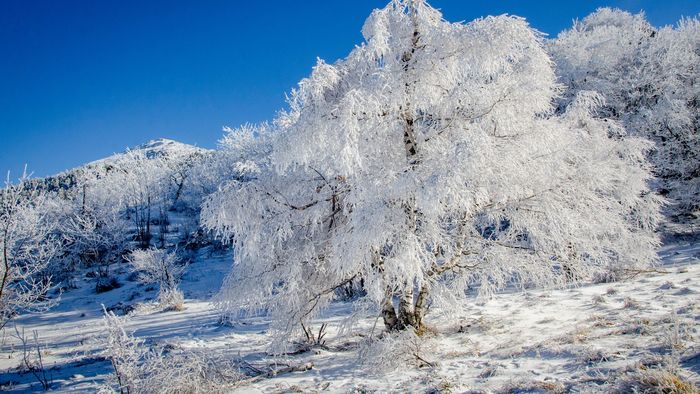
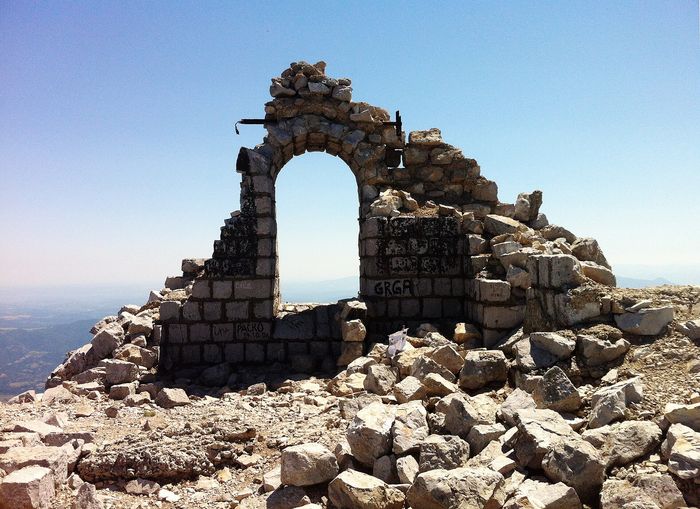
Šiljak, the peak at 1,565 metres, is reached by a forest trail that turns into a narrow rocky path with a gradient of up to sixty degrees. It is a demanding climb, best avoided on hot days, since the trail has no shade. At the summit stand the ruins of St George's chapel from 1932, with a view across all of eastern Serbia. The limestone near the top also means there is no water up there, as it all drains downhill.

Rtanj tea, an endemic medicinal plant discovered in 1974, grows only on the mountain's southern slopes and is traditionally used for respiratory complaints. Every 7 July a gathering called 'Sveti Jovan Biljober' marks the harvest.
The mountain has been a special nature reserve since 2018/2019, and fourteen caves and pits have been recorded on it, some dropping as deep as 166 metres. Unusual enough without a pyramid legend.
3-star hotel, double room, per person per night
Timed-entry tickets and guided tours in one place.
Both sites fill in your nearest airport for you; change it in one click.
Guides for Rtanj
Shorter, practical pages for one concrete question each — how many days, how much money, where to sleep, where to escape the city.

Rtanj in 2 days
→The first day keeps the whole climb to Šiljak and the ruins at the top, the second leaves Rtanj village for the tea and the Ledenica pit, with the coach back from Sokobanja.

Where to stay in Rtanj
→With a car you sleep in the village under the trail, without one in Sokobanja, because the coach from Niš goes no closer.

The best time to visit Rtanj
→The same trail all twelve months, but the temperature on the bare rock and the ice at the summit change how comfortable the climb is — the table below gives the exact numbers.
What to see in Rtanj
Climbing Šiljak
The marked trail starts from Rtanj village and runs to the 1,565-metre summit. It needs fitness and solid boots, since there is little shade along most of the route.
3–4 h (ascent)
The ruins of St George's chapel
At the very summit, built in 1932 by the widow of Julijus Minh, the mine's owner, as a memorial to him. Treasure hunters later dynamited it in search of a rumoured hoard, and only the foundations and part of a staircase remain.
Rtanj tea
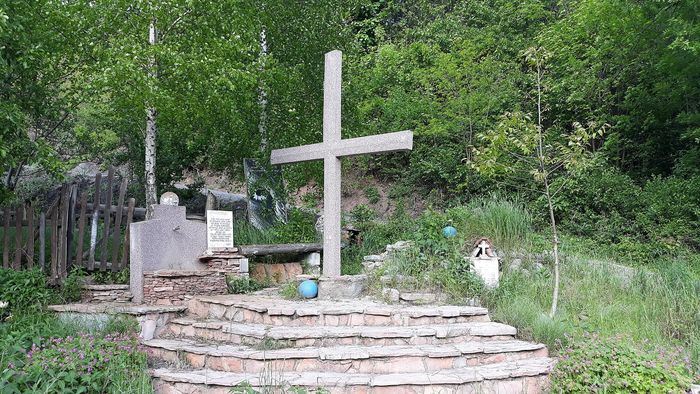
An endemic medicinal plant from the southern slopes, discovered in 1974 and confined to just a few hectares, which makes it one of Serbia's rarest endemics. It is bought from locals in Rtanj village or in pharmacies, and the harvest gathering falls on 7 July.
€2.68–2.79 (80–100 g)
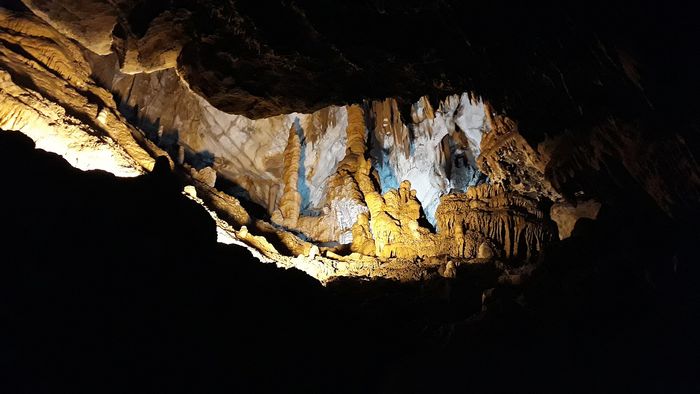
Bogovina Cave
In the village of Bogovina on the slopes of the Kučaj mountains, Boljevac municipality, there are 5,020 metres of explored passages, 550 of them fitted out for visits. In 2020 fossil teeth of an extinct Pleistocene rhinoceros turned up inside, the first record of the species anywhere in Serbia.
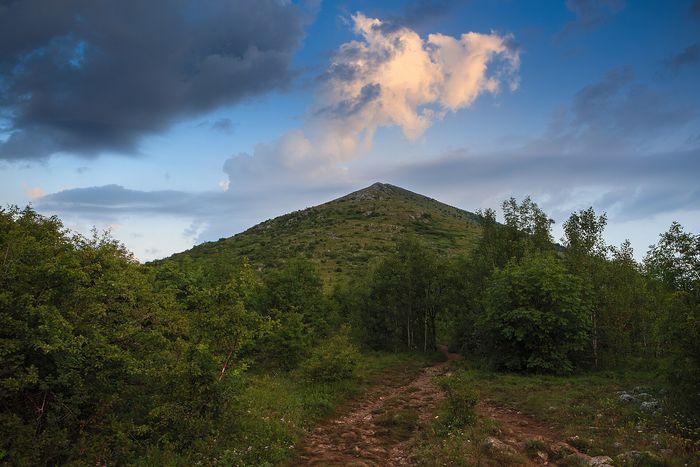
Ledenica pit
One of fourteen recorded cave and pit formations on the mountain, where ice survives even through summer, which is unusual for this part of Serbia.


Nomadinho scores out of 100, the same ones behind “Where to go”.
If you like Rtanj
Three places with the closest scores, from any country.


Two things you probably did not know
Rtanj looks like a regular pyramid from every side, though it is an ordinary limestone peak of 1,565 metres. The shape comes from the mountain rising alone out of the plain, with no neighbouring peaks to break its outline.
Rtanj tea grows on its slopes, a species of savory that in Serbia grows almost only here. It is picked in summer and dried in the shade, and the mountain is better known for it than for its peak.
Before you go
Short answers to what people ask most before setting out.
How many days does Rtanj need?
One to two days: one covers just the Šiljak climb, the second leaves time for Rtanj tea and the Ledenica pit. The trail is open without booking.
How do you reach Rtanj without a car?
By coach from Niš to Sokobanja, about 1 h 20. The last 18 km to Rtanj village, about 35 minutes, go by taxi or transport arranged in advance.
When is the best time to climb Rtanj?
In spring and early autumn. In summer the last stretch has no shade, so start before ten; in winter the limestone near the top freezes and the trail turns slippery.
Ready for Rtanj?
Within reach from here
Places sorted by straight-line distance from Rtanj — day trips or weekends.

Serbia
→The north an hour or two away by train, the mountains three or four by car — Serbia divides by the time you have

Montenegro
→The Bay, the riviera or Ulcinj for the sea, Durmitor for July — choose the coast by its beaches and the north by the month

Greece
→The north by road, the Cyclades by ferry, Rhodes by air — pick the region first and the island second
All 292 places we write about sit on one page — narrow them down by continent, country, price or what you are travelling for.

Within reach from here: Sokobanja, Niš and The Iron Gates
See how much of that actually suits you — or pin Rtanj if you have been.
Front row for the next trip
Leave your email and we'll let you know when a new destination or story goes up.