

Kilimanjaro
Africa's highest summit, 5,895 metres, climbed on foot without a rope — where the top depends not on fitness but on how slowly your sleeping height rises
- When to go
- October 24° · 4 rainy days
- Per day
- €€€€price 4 of 5
- How many days
- 7days
- For you
- 6 questions →
- Nearest airport
- 30 km Kilimanjaro · 78 km Arusha
- Right now

Kilimanjaro is one of the few summits of nearly six thousand metres climbed without mountaineering skill, and that is why it is underestimated: success depends on the number of days, not fitness. The measure is sleeping height: above 3,000 metres no more than 500 metres higher per night, and an extra night for every 1,000. A guide and porters are compulsory by law, park fees alone pass eight hundred dollars, and everything is arranged from Moshi.
The mountain is not climbed alone: the park requires a licensed guide and porters, and that is the only way. Park fees are public and paid per day — a €61 conservation fee a day, €43 per night camping, €17 for rescue, VAT on all of it — so seven days in fees alone pass eight hundred dollars a head. On top comes the agency with guides, porters, food and tents: a modest seven-day climb is around two thousand dollars per person, a serious one three to four, and the difference is the number of porters, the food and whether the guide carries a pulse oximeter and knows how to read it. Tips for the crew are separate and custom counts them in hundreds of dollars.

The route and the number of days decide. Marangu, the only one with huts instead of tents, is the shortest and the worst for acclimatisation; Machame over six or seven days is the most popular and has the 'climb high, sleep low' profile that helps; Lemosho over seven or eight is the longest, the finest and gives the most days to acclimatise. Altitude sickness does not ask about fitness — marathon runners fail to summit more often than people who walk slowly, because climbing fast leaves the body no time to adjust — and the only cure is an extra day. Anyone with money for six days saves on the hotel and takes seven.
Summit day starts at midnight from the camp at 4,600 metres, six to seven hours over frost and scree to Uhuru Peak at 5,895 at sunrise, then the same day down to 3,100. It is the longest day most people ever walk, and after it there is still a day of descent. The seasons are January–March and June–October; April and May are rain and mud, November the short rains. Moshi at the foot is the town everything starts from, with agencies on every corner — chosen by recommendation and by how they pay their porters, not by price.
Guides for Kilimanjaro
Shorter, practical pages for one concrete question each — how many days, how much money, where to sleep, where to escape the city.

What Kilimanjaro costs
→Seven days in park fees alone pass eight hundred dollars a head — before the agency, before the porters and before tips…

What to see in Kilimanjaro
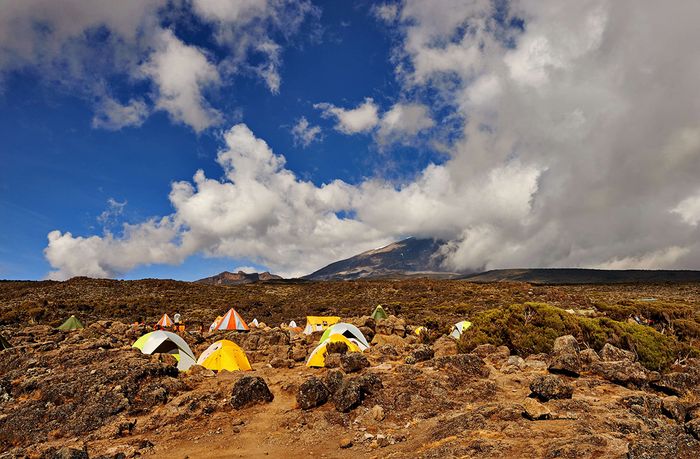
The Lemosho route
Seven or eight days from the west, through forest, heath and the Shira plateau to Barafu and the summit. The longest acclimatisation; the finest days are the third and fourth, with the view of Kibo across the plateau.
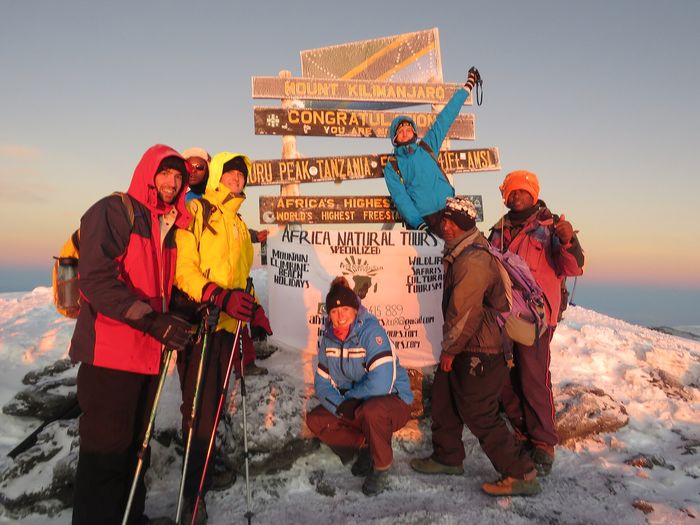
The Machame route
Six or seven days from the south, the most popular, with the Barranco Wall climbed with hands and feet and less dangerous than it looks. Seven days is the version to take; six is for people who have been at altitude before.
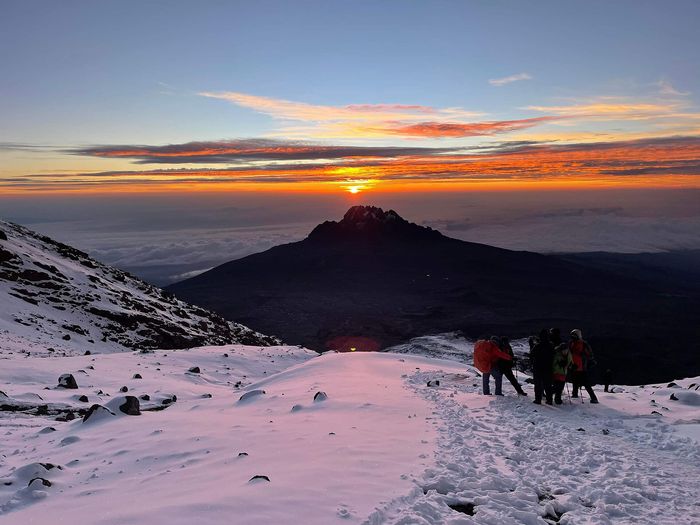
Uhuru Peak at dawn
Six hours from midnight over scree and frost, headtorches in a line, to Stella Point on the crater rim and another hour along the ridge to the summit. The sign, the photograph, ten minutes — and down, because you do not linger at 5,895.
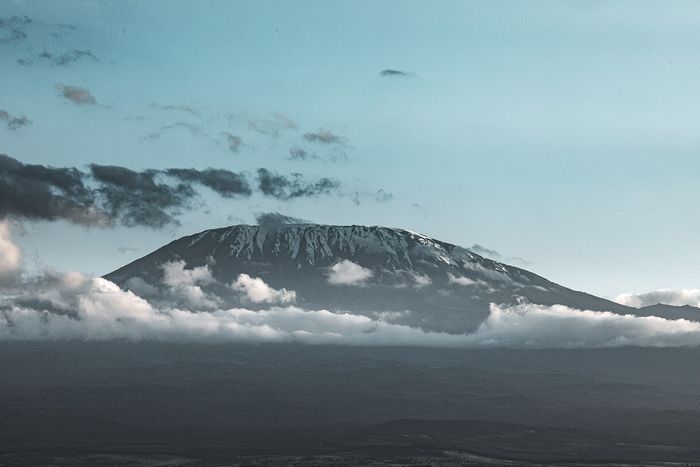
The Kibo glaciers
Ice walls at the summit, remnants of an ice field that has lost over eighty percent since 1912. Seen from the ridge before the top; by mid-century, estimates say, they will be gone.
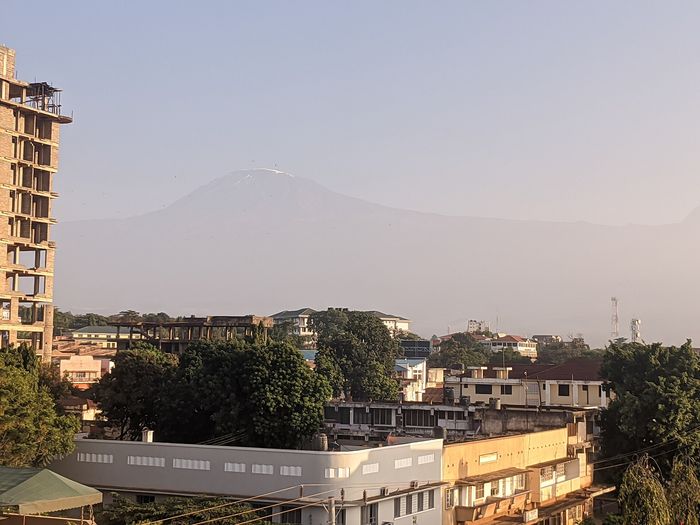
Moshi
The town at the foot with a view of the summit in the morning, coffee from the plantations on the slopes and climbing agencies. Two days before the climb for acclimatisation at 900 metres and a gear check; a day after for a bed.
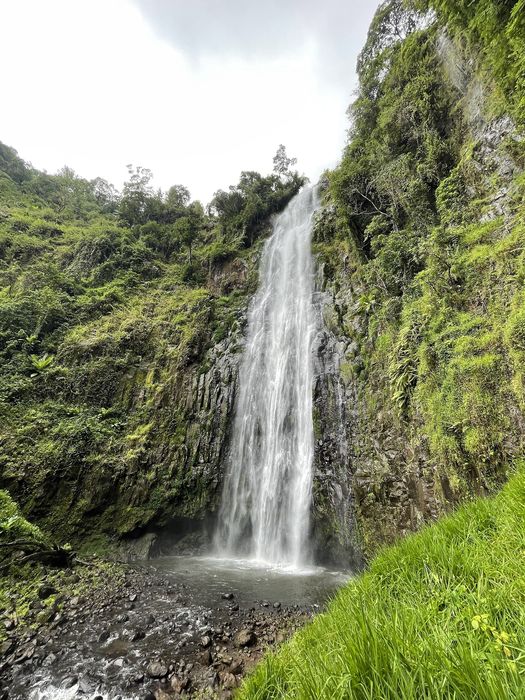
Materuni waterfall and coffee
A Chagga village on the slopes, with an eighty-metre waterfall and a coffee tour from bean to cup. Half a day from Moshi, and the best way to warm up the legs the day before the climb.


Stories from Kilimanjaro
How it actually was when we were there, and what was worth it.

Kilimanjaro: who can get up, and which route gives you a chance
→Kilimanjaro is not decided by who is fit but by who may go to altitude and how fast their sleeping height rises. Both are known before you pay for the climb.
Two things you probably did not know
Climbing Kilimanjaro takes you through five climate zones in a few days, from rainforest to arctic desert at the top. That is the same as travelling from the equator to the polar circle, compressed into fifty kilometres.
Kilimanjaro is the highest free-standing mountain in the world; it belongs to no range but rises alone from the plain to 5,895 metres. The ice at the summit has shrunk by over eighty per cent since 1912.
Ready for Kilimanjaro?
Within reach from here
Places sorted by straight-line distance from Kilimanjaro — day trips or weekends.

Tanzania
→The Serengeti, Kilimanjaro and Zanzibar in one country — and three different bills: the safari by the day, the mountain by the night, the island by an insurance paid at the door

Kenya
→A safari charged by the day, not by the trip — a reserve whose gate fee doubles in July, while a whole trip costs only half as much more

Mauritius
→An island where you do not choose a hotel but a coast — west for sunsets and calm sea, north for nightlife, east for wind, south for kitesurfing

South Africa
→A country of long distances and reversed seasons, driven on the left throughout
All 277 places we write about sit on one page — narrow them down by continent, country, price or what you are travelling for.
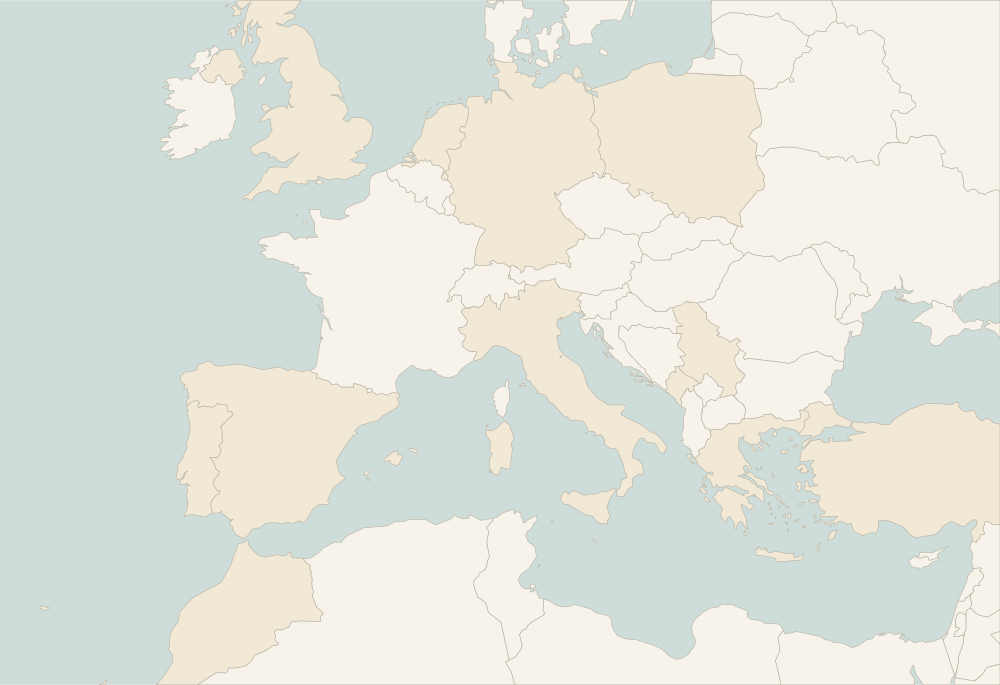
Within reach from here: Arusha, Amboseli and Ngorongoro
See how much of that actually suits you — or pin Kilimanjaro if you have been.
Front row for the next trip
Leave your email and we'll let you know when a new destination or story goes up.