

Amboseli
The park under Kilimanjaro where elephants have been studied longer than anywhere on earth — and a mountain that usually shows itself only until nine in the morning
- When to go
- November 22° · 19 rainy days
- Per day
- €€€€€price 5 of 5
- How many days
- 2days
- For you
- 6 questions →
- Nearest airport
- 38 km Amboseli
- Right now
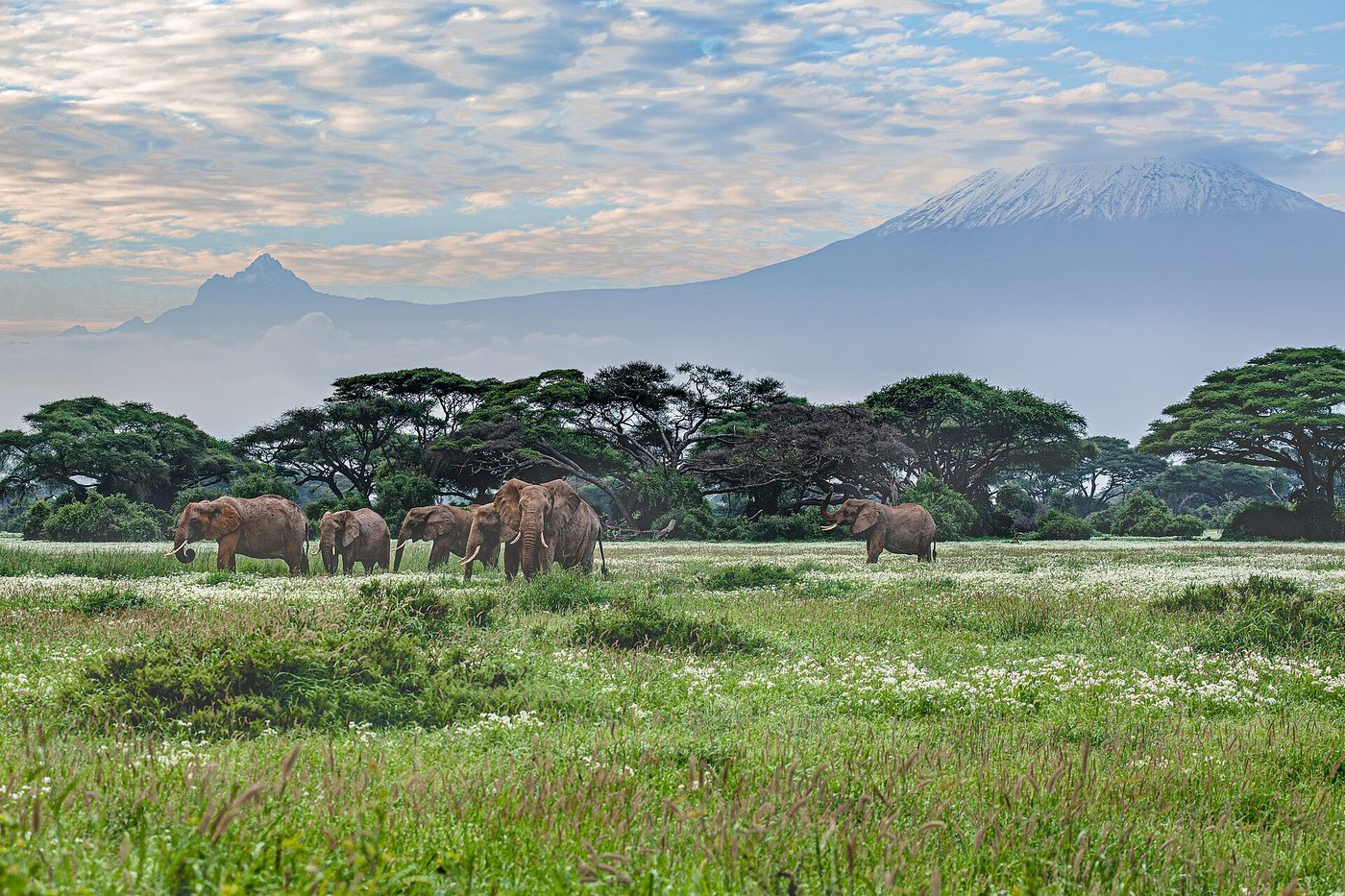
Amboseli is the open park under Kilimanjaro that people visit for its elephants, which stay in the open because two swamps, fed by groundwater from the mountain, never dry out. Families here have been followed since 1972, in the longest study of wild elephants in the world, with records on more than 3,500 animals. Entry is €78 per adult for 24 hours, so two days means two tickets.
The park itself covers 392 square kilometres and forms the core of an 8,000-square-kilometre ecosystem that runs across the border into Tanzania, while the rest is Maasai community land. Elephants have been protected here long enough for bulls to reach old age and grow big tusks. The best known of them, Craig, whose tusks weighed more than 45 kilograms each, died of natural causes in January 2026, aged 54.

Entry is paid only through eCitizen or KWSPay, by card or M-Pesa, and the gate takes no cash, so pay before you arrive. Management of the park is passing from the Kenya Wildlife Service to Kajiado county in stages until 2029, starting in November 2025, but the ticket is bought the same way while the handover lasts.
From Nairobi it is four to five hours by road, either through Namanga on the border or through Emali on the Mombasa road, or about 45 minutes by air. If you are heading for the coast afterwards, you pass Tsavo West on the way, so the two parks fit into one long drive. The dry months run from June to October, with a shorter dry spell in January and February, while the long rains begin in mid-March and by April and May the park tracks turn heavy.
Check the same room on both sites: price and cancellation terms can differ.
Timed-entry tickets and guided tours in one place.
Both sites fill in your nearest airport for you; change it in one click.
What to see in Amboseli
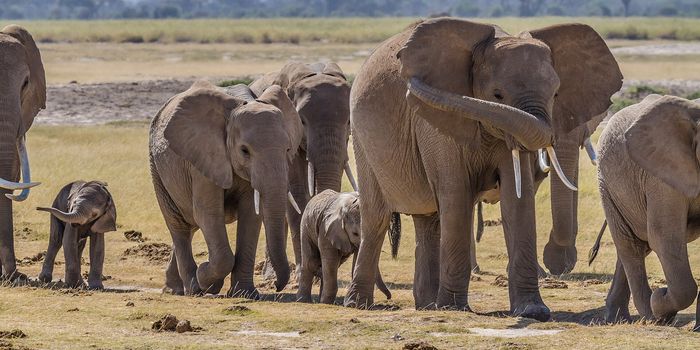
Elephants in the swamp
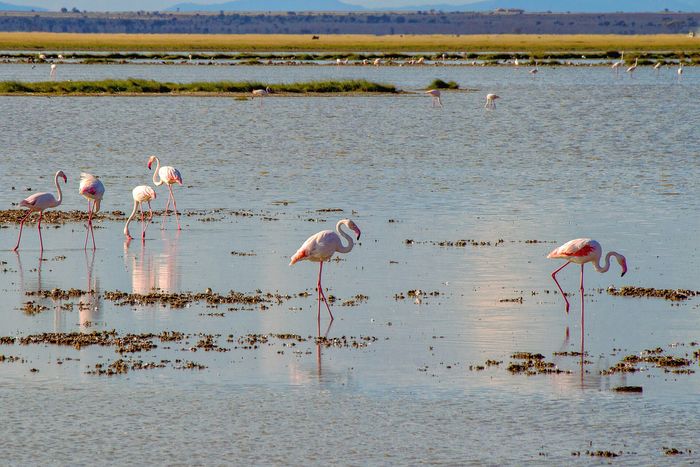
The swamps stay wet when the rest of the park dries out, so from June to October the elephants crowd around them, and that is when they are easiest to see and closest to the vehicle.
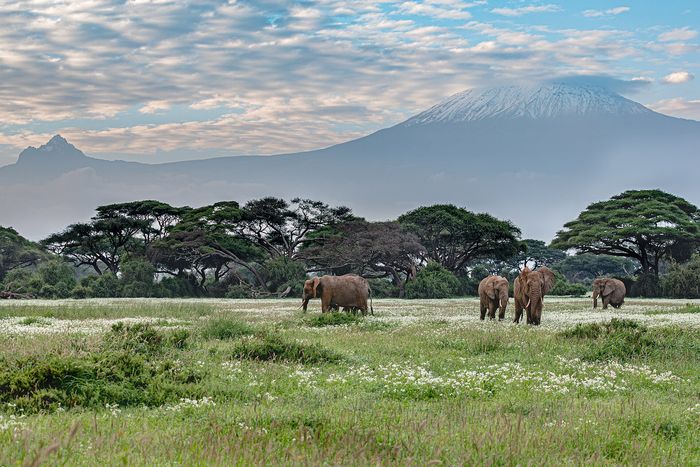
Kilimanjaro at dawn
The summit lies across the border, yet from here you see its full height, most often from six until eight or nine in the morning and again before sunset, while from late morning cloud covers it. That is why the morning drive leaves when the gate opens, not after breakfast.
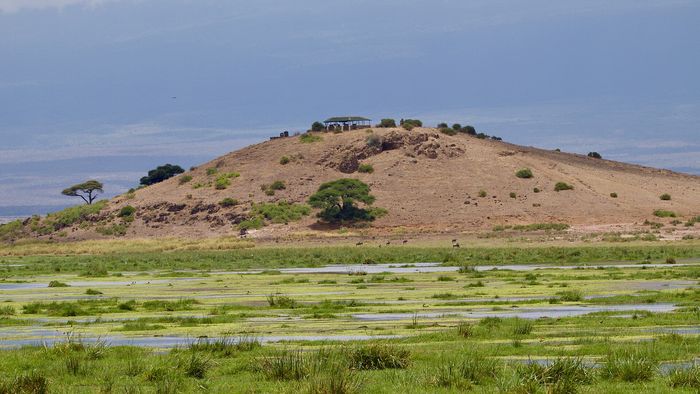
Observation Hill
A rocky knoll above the Enkongo Narok swamp, reached by ten to fifteen minutes of stone steps, with a view over the swamps, the lake bed and the mountain. It is one of the few places in the park where you get out of the vehicle.
Camps outside the park
Maasai land around the park, such as the Selenkay conservancy, has camps that offer night drives and walks, since the park itself allows no night driving and you leave the vehicle only at marked places. The price is the drive to the gate every morning.
- T
Tsavo West
A park of 9,065 square kilometres east of Amboseli, with the Mzima springs, which are filled by water from a reservoir under the Chyulu Hills, and a rhino sanctuary. It is done as the second park on the way to the coast, since the Nairobi–Mombasa road separates it from Tsavo East.


Nomadinho scores out of 100, the same ones behind “Where to go”.
If you like Amboseli
Three places with the closest scores, from any country.


Two things you probably did not know
Amboseli is the best place in the world to photograph an elephant below Kilimanjaro, though the mountain is in neighbouring Tanzania. The park's water comes from it. Meltwater travels underground and surfaces in the swamps.
Elephants have been tracked individually in Amboseli since 1972, in one of the longest studies of wild animals ever run. Over fifteen hundred elephants are known by name, with family trees across several generations.
Before you go
Short answers to what people ask most before setting out.
How many days do you need in Amboseli?
Two days: two 24-hour tickets and two morning drives for the mountain. A lodge in the park gives a morning without the drive to the gate, a camp on Maasai land gives night drives and walks.
How do you get to Amboseli from Nairobi?
Four to five hours by road, via Namanga on the border or via Emali on the Mombasa road, or about 45 minutes by air. Going on to the coast, you pass Tsavo West in the same vehicle.
When is the best time to visit Amboseli?
June to October and January to February are dry. The long rains start in mid-March, and in April and May the park tracks turn heavy.
Ready for Amboseli?
Within reach from here
Places sorted by straight-line distance from Amboseli — day trips or weekends.

Kenya
→A safari charged by the day, not by the trip, and a reserve whose gate fee doubles in July

Tanzania
→The Serengeti, Kilimanjaro and Zanzibar in one country — and three different bills: the safari by the day, the mountain by the night, the island by the ferry

South Africa
→A country of long distances and reversed seasons, driven on the left throughout

Namibia
→A country you drive rather than visit: about four people per square kilometre, gravel roads without end, and a safari done in your own car as in Kruger — only without the fence
All 292 places we write about sit on one page — narrow them down by continent, country, price or what you are travelling for.
Within reach from here: Arusha, Kilimanjaro and Nairobi
See how much of that actually suits you — or pin Amboseli if you have been.
Front row for the next trip
Leave your email and we'll let you know when a new destination or story goes up.