

Masai Mara
The Kenyan end of the Serengeti ecosystem, with one of the highest lion densities in Africa — and an entry fee that doubles from July to December, though the herds leave in October
- When to go
- October 19° · 4 rainy days
- Per day
- €€€€€price 5 of 5
- How many days
- 3days
- For you
- 6 questions →
- Right now

The Masai Mara is planned by the calendar: from July to October the wildebeest herds are here and cross the Mara river, and entry is €173 per adult per day; from January to June entry is €86 and there is no migration. November and December are the worst deal — the high price runs to the end of the year, while the herds are already heading back to Tanzania.
Entry is paid per person per day and is the largest single line of the safari. The ticket is valid for twelve hours, the reserve is open from six to six, and leaving by road after ten in the morning costs another day — so two nights in camp give one full day in the reserve, and three nights give two. Children aged 9 to 17 pay €43 all year; younger ones go in free. The eastern side, run by Narok county, takes cash, card and M-Pesa at the gate; the Mara Triangle in the west takes no cash.

Around the reserve lie the conservancies — Mara North, Naboisho, Olare Motorogi and others — Maasai-owned land that camps use for a share of revenue or a lease. They allow night drives, off-road driving and walking safaris; the reserve does not, and there you drive from six to six, on tracks only, with no more than five vehicles at one sighting. A conservancy charges its own fee per night and a day in the reserve is paid separately, so conservancy guests enter the reserve only for the days by the river.
The road from Nairobi through Narok is tarmac as far as Sekenani gate in the east, and the drive takes about six hours; small planes from Wilson airport land on airstrips by the camps in 45 to 60 minutes. There are two rains: the long rains from March to May, with April the wettest month, and the short rains in November and December. July is the driest month.
Guides for Masai Mara
Shorter, practical pages for one concrete question each — how many days, how much money, where to sleep, where to escape the city.

What Masai Mara costs
→A Mara safari is paid per day and per person, and €173 entry in season is the biggest line on every bill, two thirds of…

What to see in Masai Mara
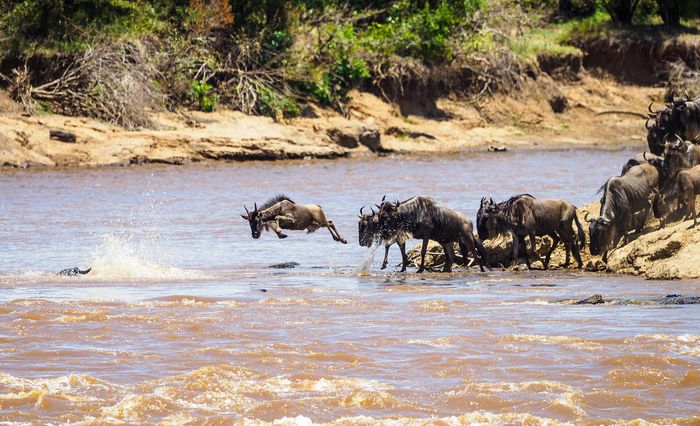
The Mara river crossing
Around 1.3 million wildebeest, with zebra and gazelle, arrive from the Serengeti and cross a river full of crocodiles. Guides know where the crossings are, but nobody knows the day or the hour — so a day by the river is a whole day.
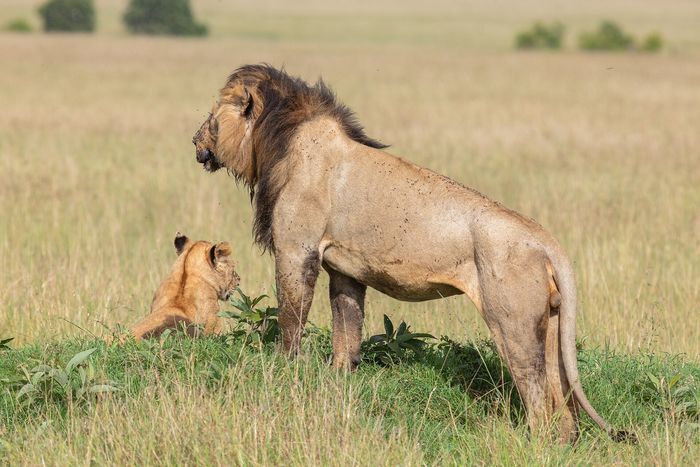
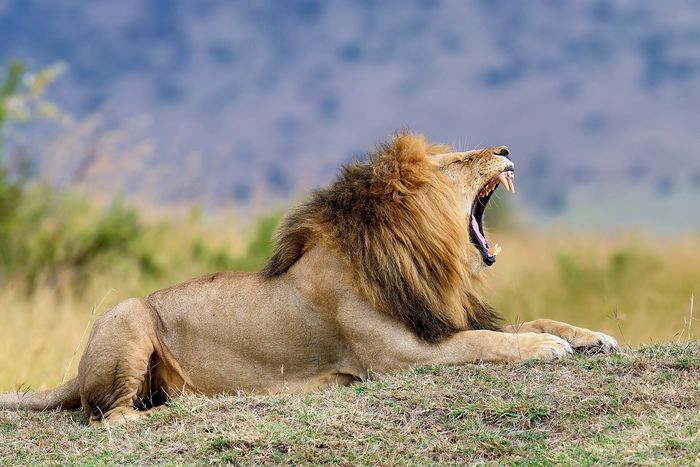
The lions of the Mara
Around seventeen lions over a year old per hundred square kilometres, by Oxford University's count — one of the highest densities in Africa. A lion is inactive for about twenty hours a day and moves after dusk, so you most often see one on the move on the first morning drive.
Cheetahs on the open savanna
Cheetahs are numerous here, and a cheetah is active by day, most of all from dawn to noon, keeping clear of lions. Late morning, when the lions lie down, is its time — which is why the drive does not stop at ten.
The Musiara marsh
Where the BBC filmed Big Cat Diary, along with Leopard Gorge. A leopard lives where there are trees to escape into — along the Mara river and its tributaries, the Talek and the Sand — so this is where you look for one, not on the open grass.
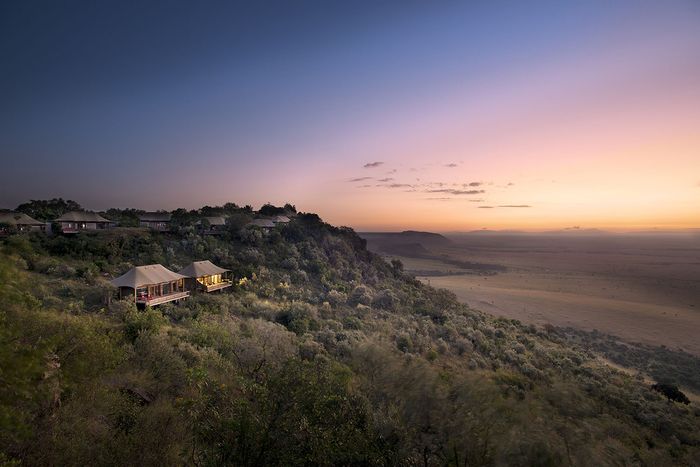
The Mara Triangle
The western part of the reserve, between the Mara river and the Esoit (Siria) escarpment on the edge of the Rift. It is run not by Narok county but by the Mara Conservancy.
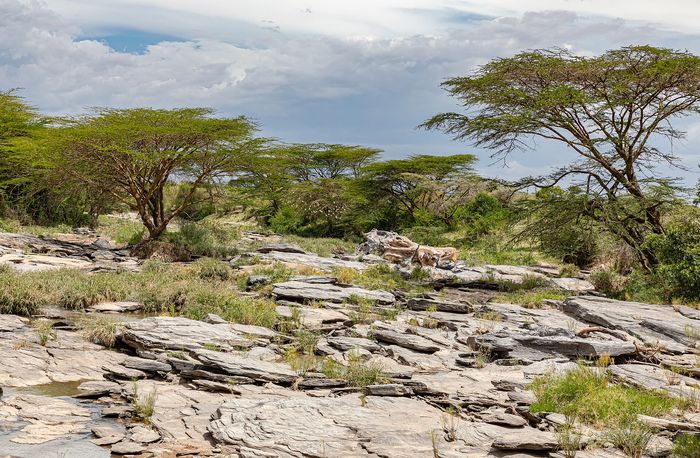
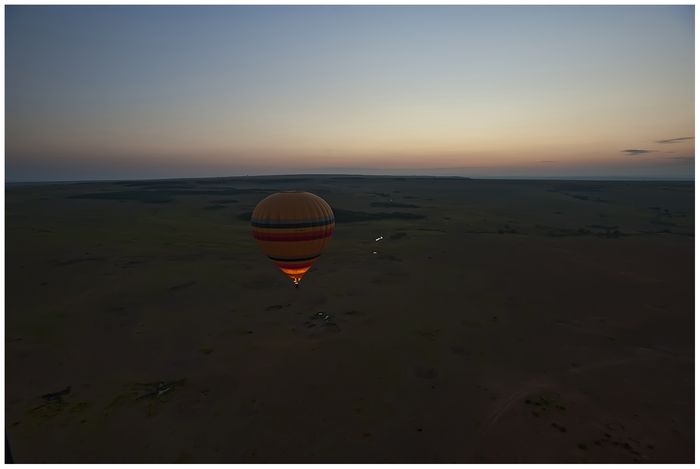
A dawn balloon
About an hour's flight over the savanna, then breakfast in the grass, from €388 per person; reserve entry is not included. In the migration season places fill months ahead, so the flight is booked together with the camp.


Two things you probably did not know
The great migration is the movement of some one and a half million wildebeest and several hundred thousand zebra and gazelle in a circle between the Serengeti and the Mara. It has no leader and no fixed route; the herd follows the rain. The river crossing falls on a different date each year.
The Maasai have driven cattle through the same pastures for centuries and do not hunt game, so lions and herds live alongside their villages. That is why the reserve still borders inhabited land without a fence.
Ready for Masai Mara?
Within reach from here
Places sorted by straight-line distance from Masai Mara — day trips or weekends.

Kenya
→A safari charged by the day, not by the trip — a reserve whose gate fee doubles in July, while a whole trip costs only half as much more

Tanzania
→The Serengeti, Kilimanjaro and Zanzibar in one country — and three different bills: the safari by the day, the mountain by the night, the island by an insurance paid at the door

South Africa
→A country of long distances and reversed seasons, driven on the left throughout

Namibia
→A country you drive rather than visit: about four people per square kilometre, gravel roads without end, and a safari done in your own car as in Kruger — only without the fence
All 277 places we write about sit on one page — narrow them down by continent, country, price or what you are travelling for.
Front row for the next trip
Leave your email and we'll let you know when a new destination or story goes up.