
Serengeti
Fifteen thousand square kilometres of grass around which the wildebeest herds circle all year — and a park where entry is paid by the day, VAT on the entry, and a lion is seen every day
- When to go
- October 24° · 4 rainy days
- Per day
- €€€€€price 5 of 5
- How many days
- 3days
- For you
- 6 questions →
- Right now

The Serengeti is the best-known safari on the continent and the one where least searching is needed: lions are seen every day, the migration is somewhere in the park every month, just in a different place. Entry is €61 per person per day plus VAT, a camp inside the park pays a concession of €61 per night, and all of that together makes three days here dearer than a week on Zanzibar.
The park is so large that you choose a part, and the part is chosen by month. The migration of wildebeest and zebra circles clockwise: December to March they are in the south around Ndutu, where they calve in February; April to June they move west along the Grumeti; July to October they are in the north by the Mara river and cross into Kenya; in November they return. Anyone arriving in the wrong part sees the park without the herds, which is still the Serengeti with lions, but not what was paid for. Seronera in the centre works all year and has the most cats.

The prices are public and add up: €61 per foreign adult per day plus eighteen percent VAT, a €61 concession per night for every camp or lodge inside the park, and the vehicle — all paid by the operator and passed on to the bill. That is why a five-day group camping safari runs nine hundred to fifteen hundred dollars a head, depending on season and vehicle occupancy, and a lodge three to four thousand; budget tours sleep in camps just outside the gate to avoid the concession. You do not enter alone: the vehicle must be registered and the guide licensed.
From Arusha it is seven to eight hours by road to the centre of the park, through Ngorongoro — which is also why the two are done together, with the crater on the way to the Serengeti and back. A small propeller plane from Arusha or Kilimanjaro lands on airstrips by the camps in an hour and is worth it for anyone with fewer days and more money. Camps range from tents with a camp bed to luxury ones with a bath; all have the rule that you do not walk at night without an escort, because there is no fence and animals pass through the camp.
Guides for Serengeti
Shorter, practical pages for one concrete question each — how many days, how much money, where to sleep, where to escape the city.
What Serengeti costs
→Entry €61 per person per day, plus eighteen percent VAT, plus a concession for every camp inside the park — in the…

What to see in Serengeti
Seronera
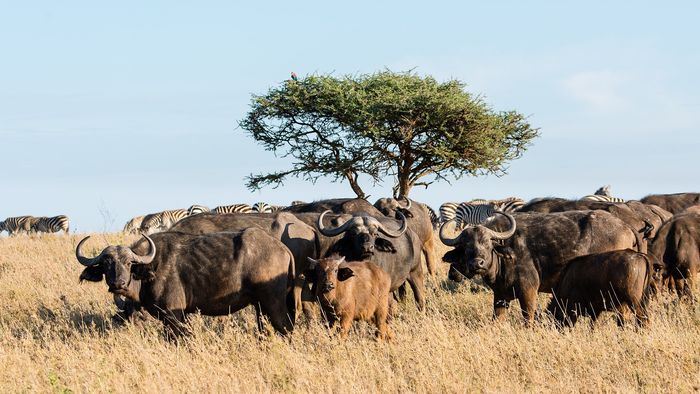
The centre of the park, with a river, kopjes and the highest density of leopards and lions, all year. A first safari goes here; if the migration is elsewhere, this is the part that does not depend on it. The most vehicles in the park, and you feel it.
Ndutu in February
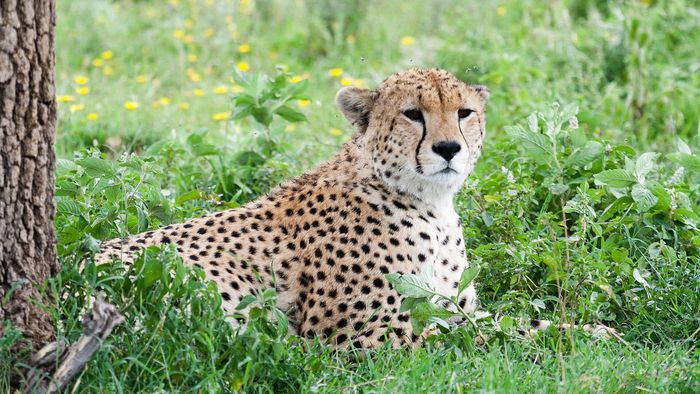
The south of the park and the edge of Ngorongoro, where the herds calve within three weeks in February while lions, hyenas and cheetahs wait. The best predator viewing of the year; outside the park, so charged differently.
The Mara river in August
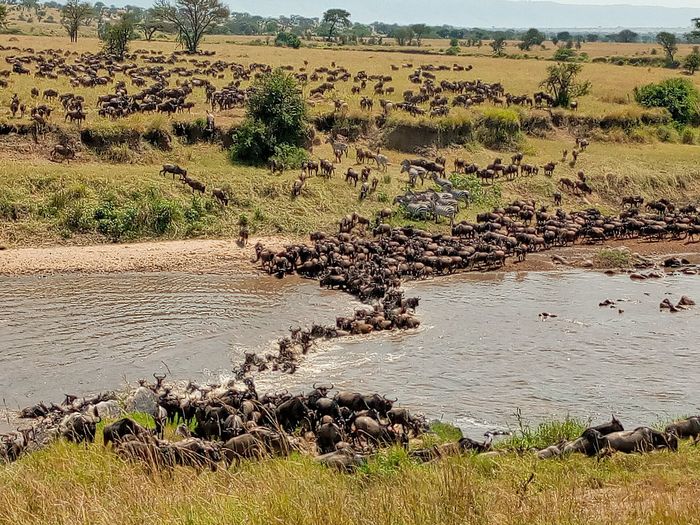
The north of the park, with wildebeest crossing a river of crocodiles from July to October. The same spectacle as on the Kenyan side with fewer vehicles; the camps are far and expensive, and that is why there are fewer people here.
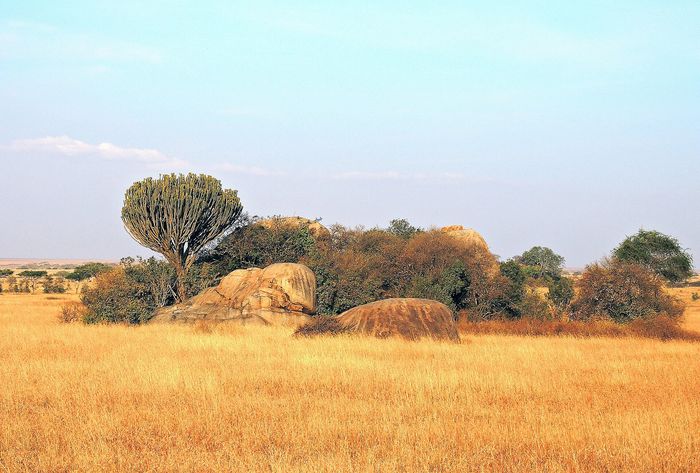
The kopjes
Granite islands in the grass, where lions lie on the rocks in the shade and watch the plain. The Simba kopjes on the road from Naabi to Seronera are the ones from the famous photographs; the driver knows which are occupied that week.
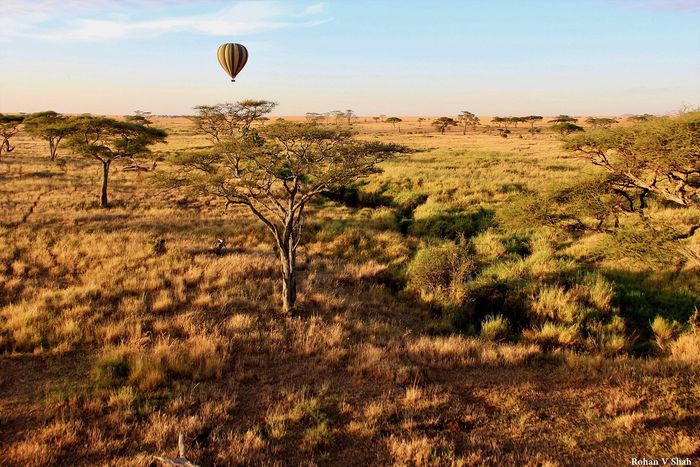
A balloon over the plain
An hour at dawn above the herds and the rivers, with a champagne breakfast in the grass after landing. A few hundred dollars, from Seronera; booked with the tour because there are no seats on the spot.
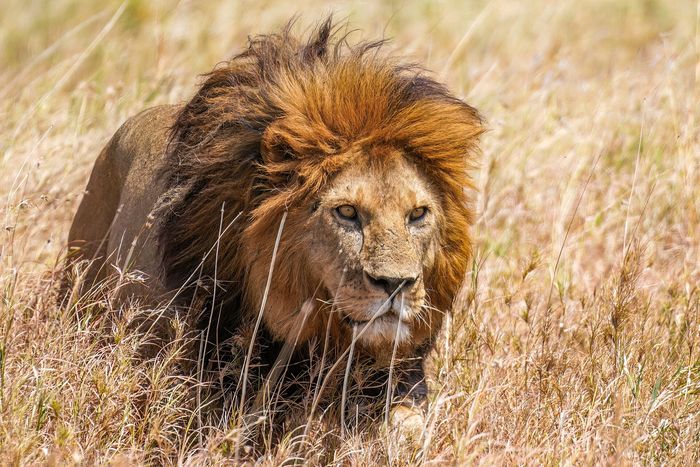
Naabi Hill gate
The entrance from the south, on a hill with the view of the plain to the horizon, where you wait an hour while the papers are done. You climb the rock, look, and understand how big the park is; it is the first view and it stays.


Two things you probably did not know
Serengeti means endless plain in Maasai. The park covers almost fifteen thousand square kilometres and holds the greatest concentration of large mammals on earth.
The grass of the Serengeti grows on volcanic ash from Ngorongoro, rich in minerals but shallow, so trees cannot root. That is why the plain is treeless. It is also why the herds can cross it with no cover.
Ready for Serengeti?
Within reach from here
Places sorted by straight-line distance from Serengeti — day trips or weekends.

Tanzania
→The Serengeti, Kilimanjaro and Zanzibar in one country — and three different bills: the safari by the day, the mountain by the night, the island by an insurance paid at the door

Kenya
→A safari charged by the day, not by the trip — a reserve whose gate fee doubles in July, while a whole trip costs only half as much more

Mauritius
→An island where you do not choose a hotel but a coast — west for sunsets and calm sea, north for nightlife, east for wind, south for kitesurfing

South Africa
→A country of long distances and reversed seasons, driven on the left throughout
All 277 places we write about sit on one page — narrow them down by continent, country, price or what you are travelling for.
Within reach from here: Ngorongoro, Masai Mara and Arusha
See how much of that actually suits you — or pin Serengeti if you have been.
Front row for the next trip
Leave your email and we'll let you know when a new destination or story goes up.