

Mombasa
An island city of a thousand years of trade with Arabia and India, with a Portuguese fort over the harbour and an old town you pass through on the way to the beaches
- When to go
- October 26° · 20 rainy days
- Per day
- €€price 2 of 5
- How many days
- 1days
- For you
- 6 questions →
- Nearest airport
- 8 km Mombasa
- Right now

Mombasa is the entrance to the Kenyan coast, not the destination: an island city with Fort Jesus and an old town done in half a day, before the ferry or the bridge takes you to the beaches south or north. The SGR train from Nairobi arrives in five hours, and it is the easiest link between safari and sea in the country.
The city stands on an island joined to the mainland by a bridge in the north and the Likoni ferry in the south, and that shapes the day: the hotels on the northern beaches, Nyali and Bamburi, are twenty minutes across the bridge; Diani in the south needs the ferry, which is free for pedestrians and runs every few minutes, but with a car can mean an hour's wait. The SGR train from Nairobi arrives at Miritini station outside the city, from where the centre is half an hour by taxi and Diani an hour and a half — some tours include the transfer from the station, which is worth having.

Fort Jesus is the reason to stop in the city: a Portuguese fortress of 1593 over the harbour mouth, which the Omanis besieged for three years and took in 1698, with a museum that includes porcelain from ships sunk in the bay. Entry is seventeen dollars for a visitor from outside Africa, and an hour and a half is enough. The old town behind the fort — houses with carved balconies, mosques and the spice market — is walked in an hour with a guide who waits at the gate, and it is worth more than everything else in the city.
The rest is a working city that does not charm at first sight: traffic, heat and humidity all year, and a centre that empties at night. The aluminium tusks over Moi Avenue are a photograph and nothing more; Haller Park in the north, a former quarry turned reserve with giraffes and hippos, is half a day for children. Anyone arriving by train in the morning does the fort and the old town by lunch, eats Swahili fish in the old town, and is on the beach by the afternoon.
What to see in Mombasa
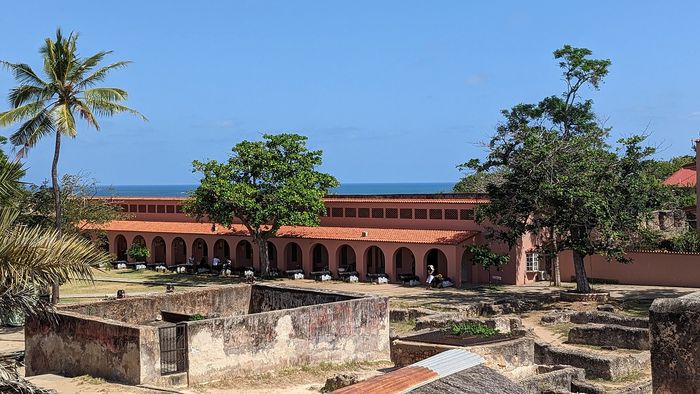
Fort Jesus
A Portuguese fortress of 1593, shaped like a man seen from above, over the harbour mouth. Ramparts, a chapel, a museum with porcelain from sunken ships. Seventeen dollars for visitors from outside Africa, an hour and a half, in the morning before the heat.
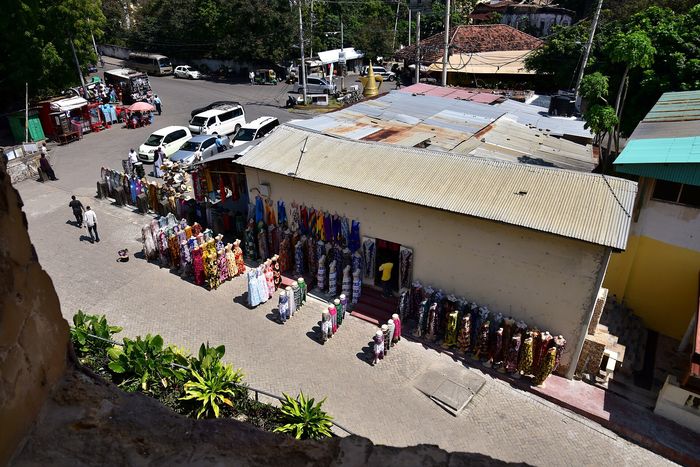
The old town
Houses with carved doors and balconies, the 16th-century Mandhry mosque and the fishing harbour, behind the fort. An hour with a guide from the fort gate; without a guide you get lost, and that is not bad.
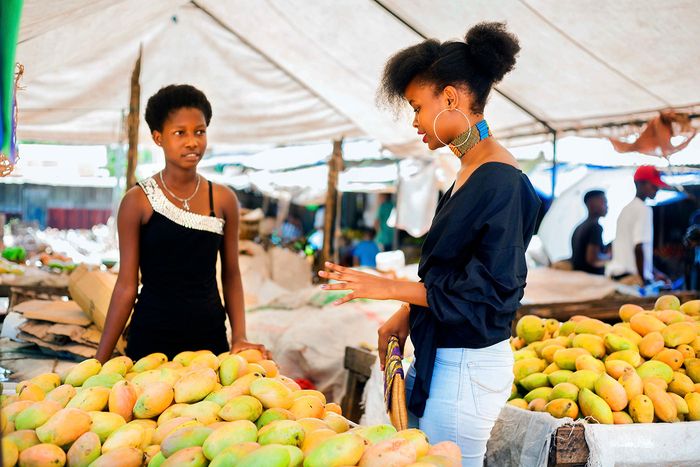
The Marikiti spice market
The market in the centre with spices, fruit and cloth, where you buy cardamom and pepper to take home. In the morning, with small shillings and patience; prices are asked, not guessed.
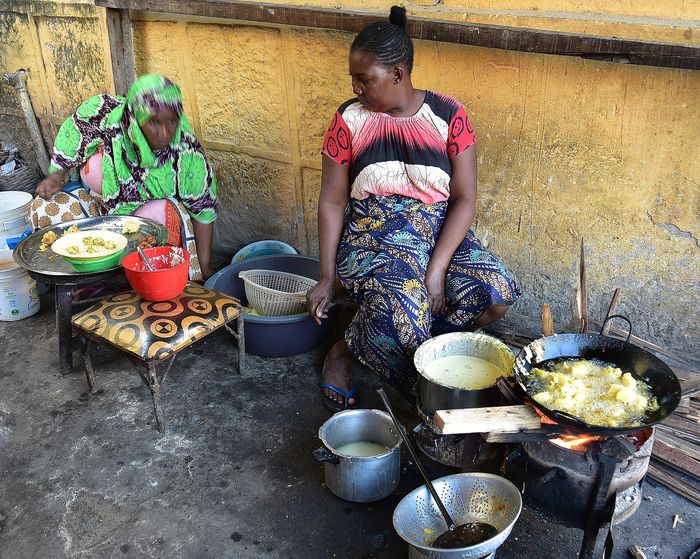
Swahili cooking
Fish in coconut, pilau and biryani from the coast, in the restaurants of the old town and by the harbour. The lunch that is the reason to stay in the city until the afternoon, for a few hundred shillings.
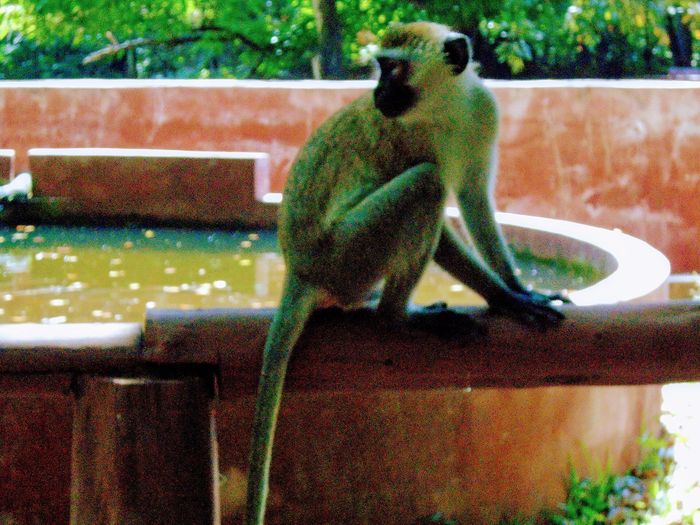
Haller Park
A former cement quarry in Bamburi, reforested and turned into a reserve with giraffes fed by hand, hippos and tortoises. Half a day for families; on a Monday afternoon, when it is empty.
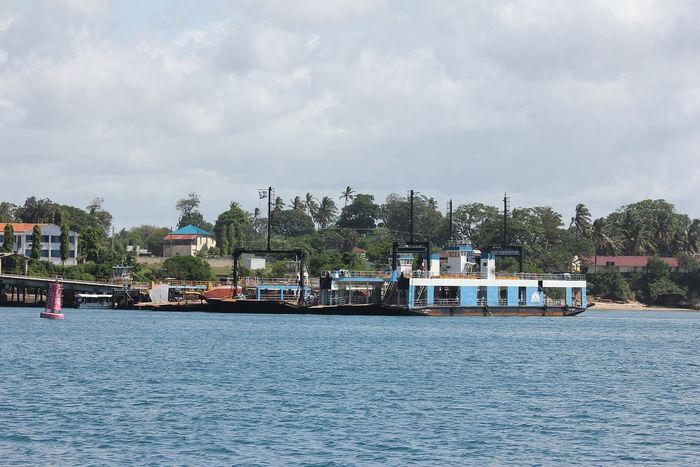
The Likoni ferry
The ferry joining the island to the south coast, free for pedestrians, with thousands of people on every crossing. You cross on foot with a taxi waiting on the other side — faster than queuing in a car.


Two things you probably did not know
Fort Jesus in Mombasa was built by the Portuguese in 1593 and changed hands nine times in a century. One siege lasted thirty-three months and ended with thirteen people left alive inside.
Swahili grew on this coast from Bantu languages mixed with Arabic, through centuries of trade across the ocean. Over a hundred million people speak it today and it is one of the official languages of the African Union.
Ready for Mombasa?
Within reach from here
Places sorted by straight-line distance from Mombasa — day trips or weekends.

Kenya
→A safari charged by the day, not by the trip — a reserve whose gate fee doubles in July, while a whole trip costs only half as much more

Tanzania
→The Serengeti, Kilimanjaro and Zanzibar in one country — and three different bills: the safari by the day, the mountain by the night, the island by an insurance paid at the door

South Africa
→A country of long distances and reversed seasons, driven on the left throughout

Namibia
→A country you drive rather than visit: about four people per square kilometre, gravel roads without end, and a safari done in your own car as in Kruger — only without the fence
All 277 places we write about sit on one page — narrow them down by continent, country, price or what you are travelling for.
Within reach from here: Diani Beach, Nungwi and Stone Town
See how much of that actually suits you — or pin Mombasa if you have been.
Front row for the next trip
Leave your email and we'll let you know when a new destination or story goes up.