

Lamu
The oldest living Swahili town, on an island without cars where goods go by donkey and people by dhow
- When to go
- September 26° · 17 rainy days
- Per day
- €€€price 3 of 5
- How many days
- 3days
- For you
- 6 questions →
- Nearest airport
- 2 km Lamu
- Right now

Lamu is an island at the end of the Kenyan coast that you fly to rather than drive, and that has preserved it: a 14th-century town without a single car, with streets the width of a donkey, coral-stone houses and a harbour full of dhows. Three days are enough — one for the town, one for the beach at Shela, one for a dhow at sunset — and it is the quietest place in the country.
You arrive by air at Manda airport on the neighbouring island, an hour from Nairobi or half an hour from Mombasa, and from there by boat across the channel to the jetty — twenty minutes, with luggage carried by someone the hotel sends. The overland road from Mombasa exists, but because of its condition and security in the north it is not recommended; the flight is the only sensible way and its price is part of the price of the island. Lamu town is World Heritage since 2001: streets without cars, carved doors, courtyards behind white walls, and a museum in a house on the jetty that explains Swahili culture better than anything on the coast.

Shela, a village two kilometres south, is where the villas, small hotels and a twelve-kilometre beach with nothing on it are — no sunbeds, no sellers, no shade. You walk along the shore at low tide or take a boat for a couple of hundred shillings; swimming is at high tide, because at low tide the sea goes far out. Lamu town is for people who want the market, the street and the mosques; Shela for people who want quiet and the beach — most sleep in Shela and go to town for a day.
The dhow, the traditional sailing boat, is transport and excursion in one: an afternoon sail down the channel with the sunset and fish grilled on board, or a whole day to the Takwa ruins on the next island, a 15th-century town abandoned in the jungle. Captains wait on the jetty and the price is agreed per boat. The island is Muslim and conservative: shoulders and knees covered in town, alcohol only in hotels, and everything closed at noon on Friday. That is not an obstacle but the reason the island has stayed like this.
What to see in Lamu
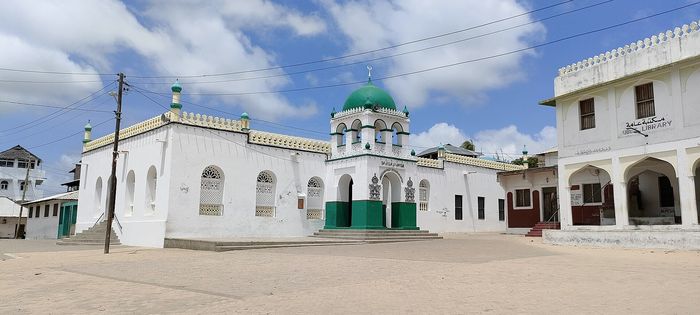
Old Lamu town
Streets two metres wide without cars, coral-stone houses with carved doors, twenty-three mosques and a market by the fort. Walked in the morning with a guide from the jetty; free, museums about five dollars. Donkeys have right of way.
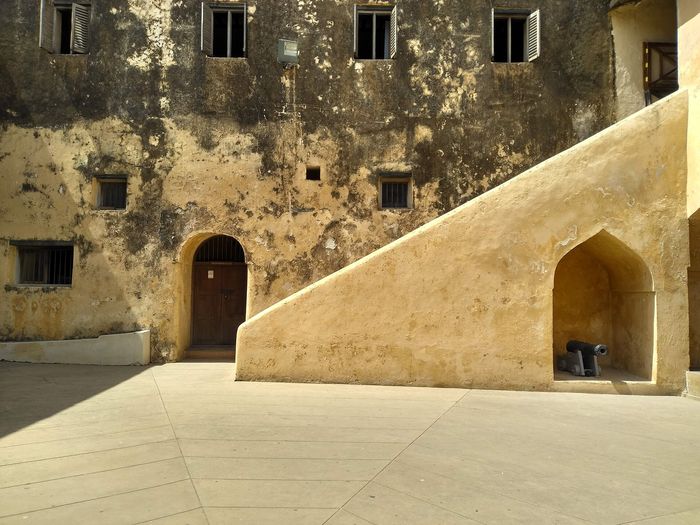
The Lamu Museum
A house on the jetty with the ethnography of the Swahili coast, models of dhows and the siwa — an ivory horn used for proclamations. An hour, and a better introduction to the island than any book. The same ticket covers the fort.
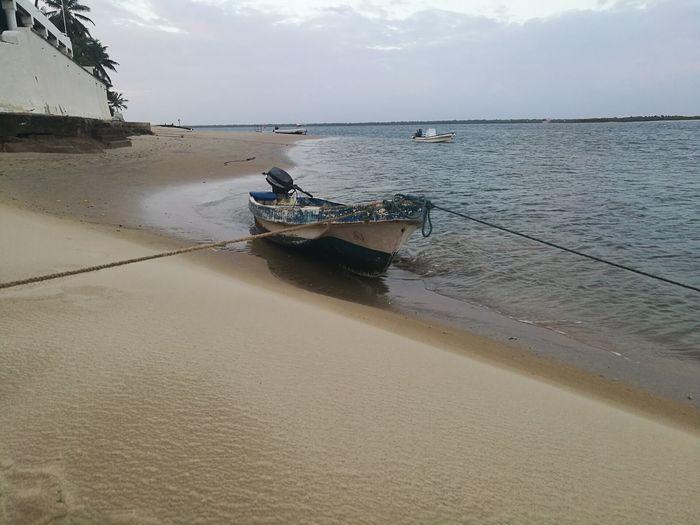
Shela and the beach
A village of villas and small hotels two kilometres south, with twelve kilometres of empty beach and dunes behind it. You walk along the shore at low tide; you swim at high tide. This is where most people sleep.
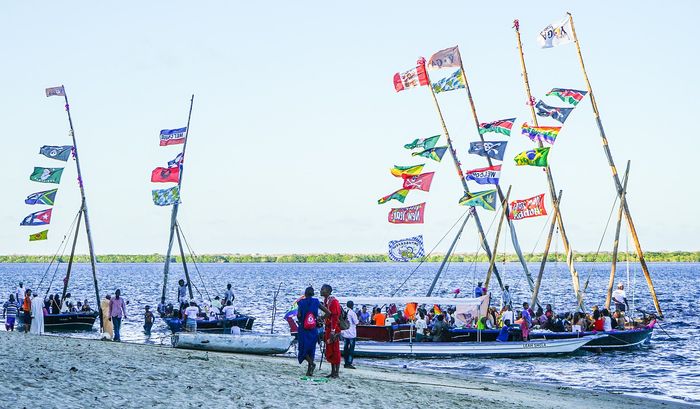
A dhow at sunset
A sailing boat from the jetty, two hours down the channel between the islands with the sunset and fish on board. Priced per boat, agreed with the captain in advance; the wind does the work, the engine is the backup.
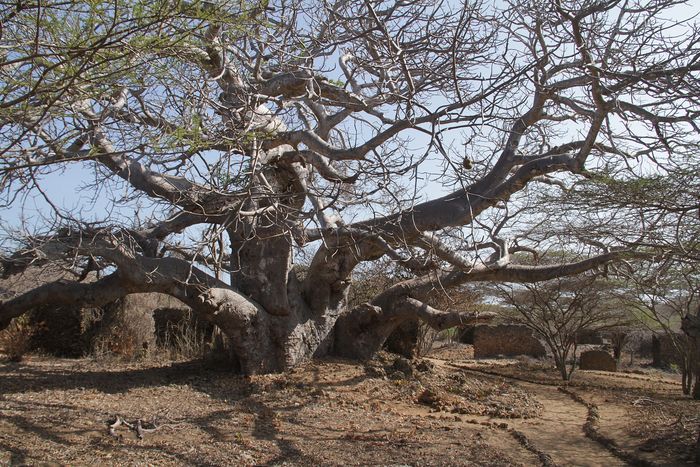
The Takwa ruins
A 15th-century town on Manda island, abandoned in the 17th and overgrown by jungle, with a mosque and a cemetery. A full day by dhow through the mangroves, with the tide deciding when it is possible. With a guide, and with water.
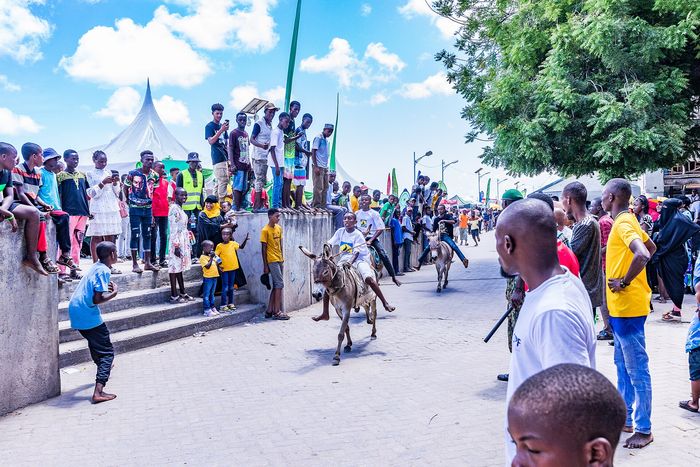
The cultural festival in November
Dhow races, donkey races and Swahili poetry on the jetty, three days in November. The one time the island is full; booked months ahead, and then you do not come for quiet.


Two things you probably did not know
Lamu is the oldest continuously inhabited Swahili settlement, over seven centuries old, and it is UNESCO listed. There are almost no cars in the town; transport is by donkey. There are thousands of them.
Carved wooden doors are a mark of wealth on the Swahili coast and have been made to the same patterns for centuries. The spikes on them come from India, where they deterred elephants. There are no elephants on Lamu, but the spikes stayed.
Ready for Lamu?
Within reach from here
Places sorted by straight-line distance from Lamu — day trips or weekends.

Kenya
→A safari charged by the day, not by the trip — a reserve whose gate fee doubles in July, while a whole trip costs only half as much more

Tanzania
→The Serengeti, Kilimanjaro and Zanzibar in one country — and three different bills: the safari by the day, the mountain by the night, the island by an insurance paid at the door

South Africa
→A country of long distances and reversed seasons, driven on the left throughout

Namibia
→A country you drive rather than visit: about four people per square kilometre, gravel roads without end, and a safari done in your own car as in Kruger — only without the fence
All 277 places we write about sit on one page — narrow them down by continent, country, price or what you are travelling for.
Within reach from here: Mombasa, Diani Beach and Kilimanjaro
See how much of that actually suits you — or pin Lamu if you have been.
Front row for the next trip
Leave your email and we'll let you know when a new destination or story goes up.