

Essaouira
The one Moroccan city that was drawn before it was built
- When to go
- September 21° · 0 rainy days
- Per day
- €€price 2 of 5
- How many days
- 2days
- For you
- 6 questions →
- Nearest airport
- 15 km Essaouira
- Right now

In the 1760s Sultan Sidi Mohammed ben Abdallah brought in a French engineer, Théodore Cornut, trained on Vauban's fortifications, and commissioned a port built to European military rules. Which is why Essaouira has right angles and streets that cross at ninety degrees — something no other Moroccan medina has.
The first thing you notice isn't the architecture but the wind. The trade winds blow almost without pause, hardest from April to September, and they keep Essaouira around twenty-five degrees in summer while Marrakech sits at forty. That's also why the town became a kitesurfing and windsurfing place rather than a towel-on-sand one: the beach is wide and long, but mostly you walk and run on it. Bring sleeves, even for August.

The medina has been UNESCO-listed since 2001, under criteria that speak precisely to the mix of a European plan and North African life. The Skala ramparts are as wide as a street, lined with old cannon pointed at the ocean, and that's where everyone watches the sun go down. Orson Welles shot 'Othello' here in the early fifties, and the Skala played Astapor in the third season of 'Game of Thrones' — both are still being sold as tours.
The harbour is a working one, not a set. Sardines and conger eel come ashore in the morning, and right next to it is a row of stalls where you pick a fish and pay to have it grilled in front of you — the cheapest good meal in town, but agree the price per kilo before anything hits the grill. It smells the way a working harbour smells, and there's no way around that.
What to see in Essaouira
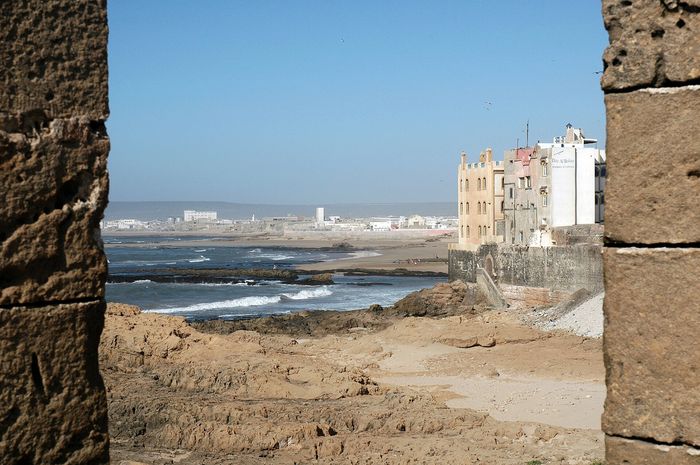
The medina and the Skala
Eighteenth-century walls laid out on a European military pattern, with a walkway along the rampart and old bronze cannon facing the ocean. Free to enter, best an hour before sunset, and in rough weather the swell on the rocks below comes over the parapet — don't stand in the front row.
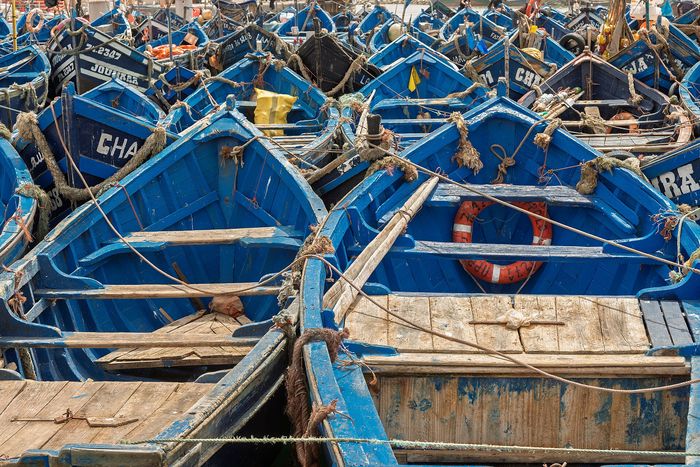
The harbour and the fish market
A working port of blue wooden boats, sardines landed in the morning and stalls where you choose a fish and have it grilled on the spot. Agree the price per kilo first. Beside it is a yard where those boats are still built by hand.
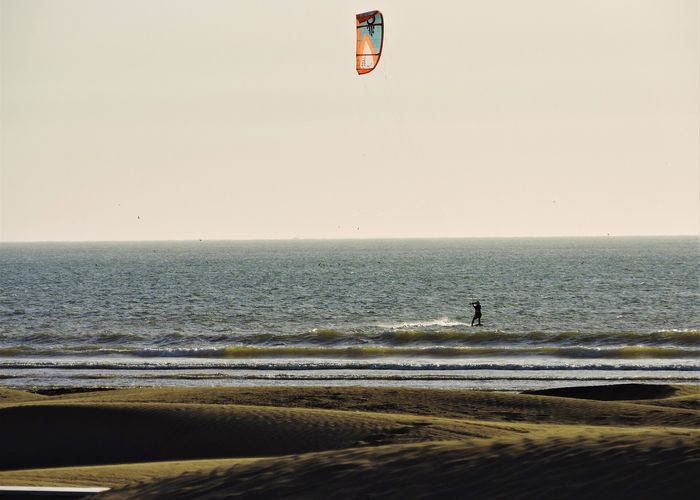
The beach and the wind
A wide Atlantic beach running for kilometres to the south. The water is cold year-round and the wind too strong for a quiet swim — which is why the kitesurfing and windsurfing schools are here. This is not a town for a lazy beach day, and it's worth knowing before you book.
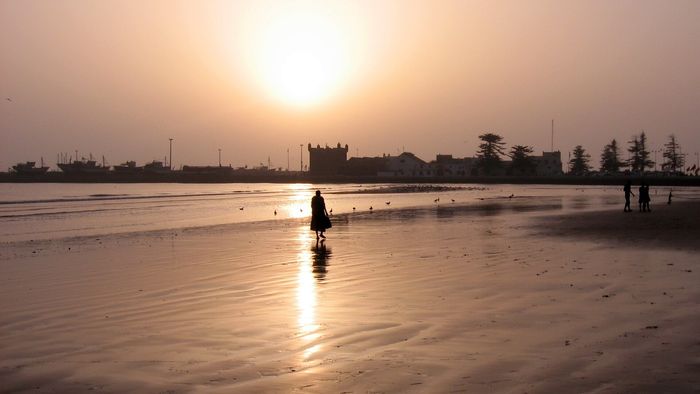
The Gnaoua festival
Late June, four days, around four hundred and fifty thousand people and several free stages in the town itself. Gnaoua music is a sub-Saharan inheritance and here it gets mixed with jazz and rock. Rooms go months ahead for those dates, at double the price.
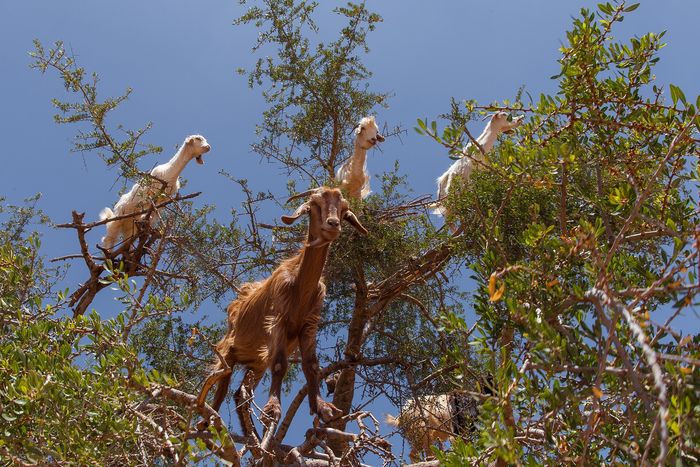
Argan oil and goats in trees
Argan grows only in this corner of Morocco and the oil is made in cooperatives along the roads to Agadir and Marrakech. The goats standing in roadside branches are mostly put there, and the photo is charged for — if you stop, settle the price before the phone comes out.
- G
Getting here from Marrakech
About a hundred and seventy-five kilometres; two and a half to three hours by Supratours or CTM bus, roughly ninety to a hundred and thirty dirhams. Departures every three or four hours; driving takes about two and a half. The airport is fifteen kilometres out of town.


Two things you probably did not know
Jimi Hendrix spent a few days in Essaouira in 1969, and Orson Welles filmed Othello here in 1951. The Castelo Real in the port was the set for the opening of the film that won the Palme d'Or.
Essaouira was for centuries the main port for purple dye taken from sea snails on the islands offshore. The Romans called it Mogador, and senators' togas were dyed with what came from here.
Ready for Essaouira?
Within reach from here
Places sorted by straight-line distance from Essaouira — day trips or weekends.

Morocco
→The north by train, the south by road, and in July you leave Marrakech for the coast

Portugal
→A country that spent centuries looking at the ocean instead of the Europe behind it

Turkey
→Istanbul, then one direction: Cappadocia by plane, Ephesus and Pamukkale by train, or the Lycian coast by bus
All 277 places we write about sit on one page — narrow them down by continent, country, price or what you are travelling for.
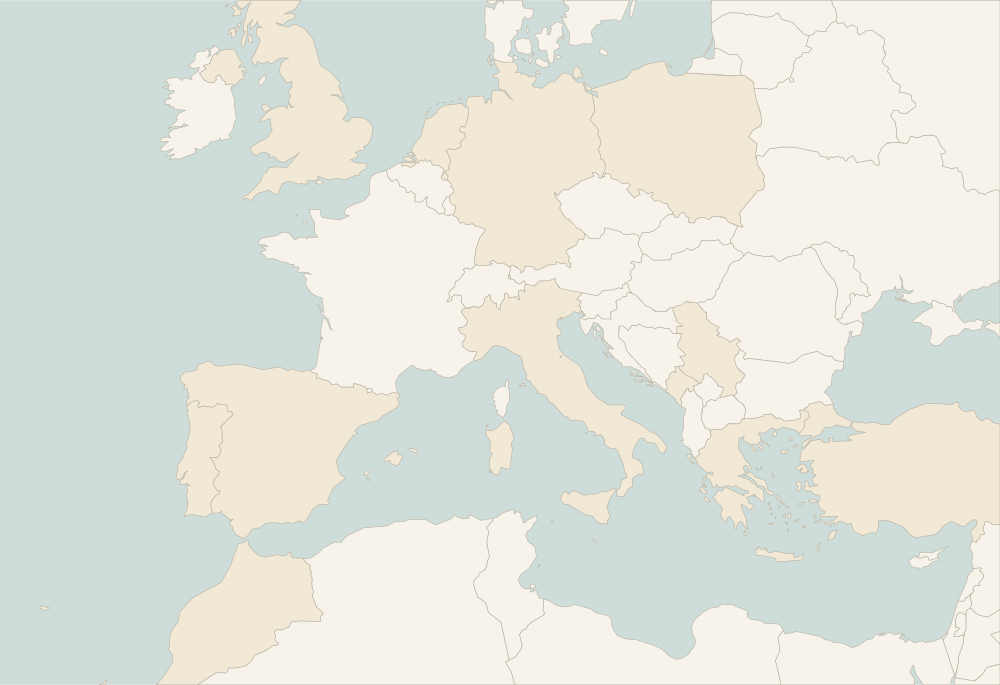
Within reach from here: Marrakech, Ait Ben Haddou and Casablanca
See how much of that actually suits you — or pin Essaouira if you have been.
Front row for the next trip
Leave your email and we'll let you know when a new destination or story goes up.