

Gdańsk
The city where the Second World War started and where communism came apart
- When to go
- October 11° · 11 rainy days
- Per day
- ~15,48 · 71 · 85 €budget · mid · comfort, per person · checked 15 Sep 2026
- How many days
- 2–3days
- For you
- 6 questions →
- Nearest airport
- 12 km Gdańsk
- Right now

Gdańsk holds two beginnings: at 4.45 on 1 September 1939 the guns opened on Westerplatte, and in August 1980 the shipyard at the other end of town produced the first independent trade union in the Eastern Bloc. A few kilometres and forty-one years lie between the two.
The Main Town looks Flemish, and not by accident — Gdańsk spent centuries as a Hanseatic port trading more with Amsterdam than with Warsaw. What you see is a reconstruction: estimates of the 1945 destruction run from eighty to ninety-five per cent. The facades came back from photographs, the plots and interiors did not, so behind those narrow houses sit perfectly ordinary flats from the fifties. The exception is the Żuraw, the port crane of 1442, reassembled after the war from what was left and reopened on 30 April 2024.

The Museum of the Second World War stands near the old harbour. The ticket is €8.06; on Tuesdays entry is free, but you still collect a ticket, online or at the desk, and the queues that day are longer. It closes on Mondays. At the other end of town the European Solidarity Centre does the same job for the eighties, at €9.21 with the audio guide included.
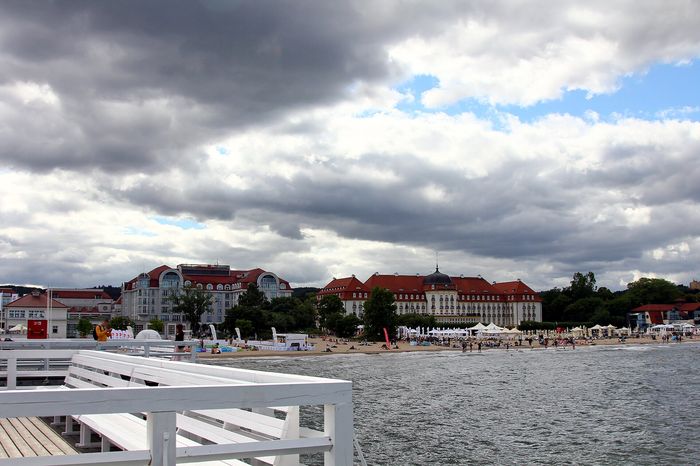
The Tricity is really one city with three names, stitched together by the SKM commuter rail. Sopot is fifteen minutes and €2.07 away, Gdynia thirty minutes and €2.53; trains run every seven to ten minutes at peak. Sopot means the beach and a 511-metre pier, which costs €2.30 from April to the end of September. Gdynia is an interwar city built from nothing, and every facade says so.
Guides for Gdańsk
Shorter, practical pages for one concrete question each — how many days, how much money, where to sleep, where to escape the city.

Gdańsk in 2 days
→Długi Targ, Westerplatte and the shipyard in two days — arranged around two museums that close on different days.

Day trips from Gdańsk
→Malbork for a full day, Hel for the beach, Sopot and Gdynia for half — all by train except Kashubia.

Where to stay in Gdańsk
→The Main Town puts everything within reach, Wrzeszcz keeps the same ride for less money, and Sopot trades the address…

What Gdańsk costs
→The biggest item is the bed, the biggest decision is Gdańsk or Sopot — everything else is a few euros a day.

Gdańsk behind the façades: the crane, the tower, the fortress and the district the guides skip
→A crane that once hauled masts, a tower that shows how small the Main Town really is, a fortress at the river mouth and…

What to eat in Gdańsk
→Gdańsk eats the Polish menu with a speciality of its own in a glass — a liqueur with real gold flakes in it, as old as…

The best time to visit Gdańsk
→In Gdańsk the date changes the sea temperature as much as the air — and three weeks in late summer turn the city into…

Getting around Gdańsk
→A train from the airport into town, the SKM to Sopot and Gdynia, trams to Brzeźno and Jelitkowo, and the Main Town on…

Mistakes everyone makes in Gdańsk
→Five mistakes that cost time or a ticket in Gdańsk, and what to do instead.

Beaches in Gdańsk
→Brzeźno is a tram and a pier, Jelitkowo is wide sand and a park, Stogi is pine and dunes, with no tram until mid-2027…
What to see in Gdańsk
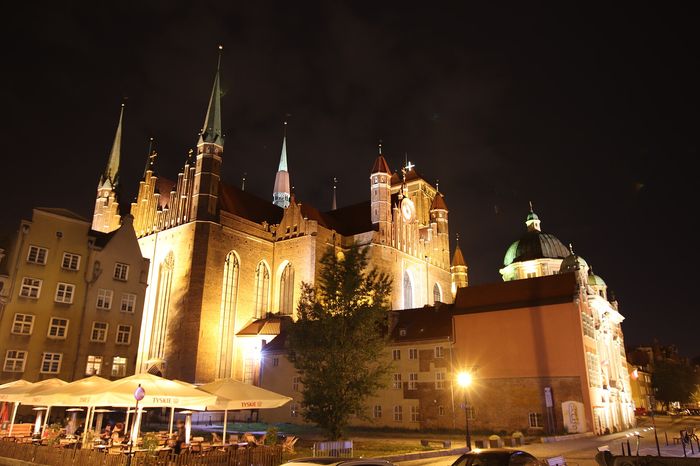
Długi Targ and Mariacka Street
Długi Targ is the parade route, with Neptune's fountain and the Artus Court. Mariacka is narrower, quieter and full of amber, with stone terraces in front of the houses that people sit on. Above it all stands St Mary's Basilica, 105 metres long, built between 1343 and 1502.
free
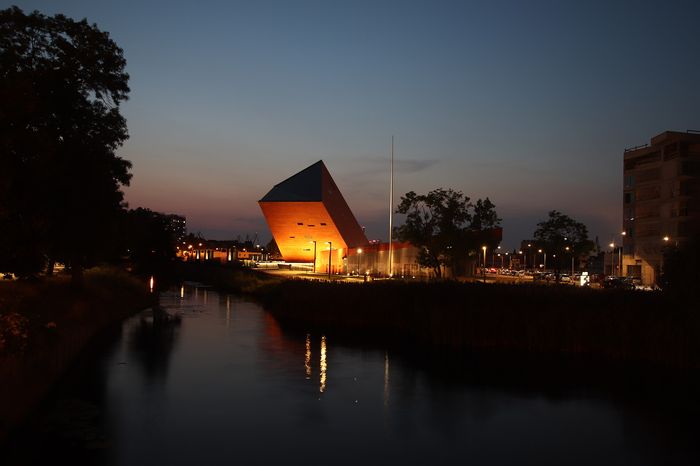
The Museum of the Second World War
A vast underground exhibition that tells the war from the civilian side as much as through front lines. Budget three hours; with two you rush the main exhibition.
€8.06 · 3 h · closed Monday
Westerplatte
The peninsula at the harbour mouth where the Second World War began at 4.45 on 1 September 1939. A garrison of around two hundred held out for seven days. Today there are barracks ruins, a cemetery and a 25-metre monument from 1966; the site is always open and free. Come by bus or by boat.
free
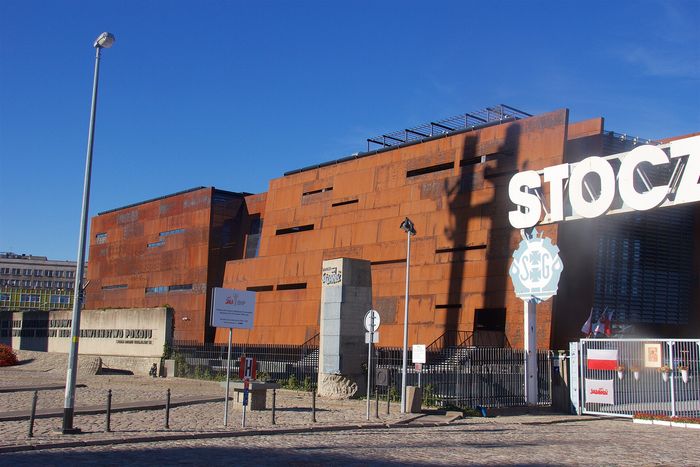
Solidarity and the ECS
The European Solidarity Centre stands beside Gate No. 2 of the Gdańsk shipyard, the gate the strikers walked out through in 1980. The building is deliberately clad in rusted steel, like a hull under construction. The shipyard exhibition is a separate ticket, €3.45, and the centre closes on Tuesdays.
€9.21 · closed Tuesday
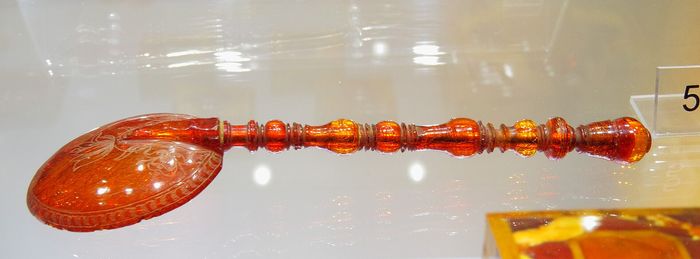
Amber
The Baltic still washes it onto the beach after hard storms, and Gdańsk has been working it for centuries. The Amber Museum sits in the Great Mill, with insects forty million years old set in resin. Mariacka sells it on every corner — the real thing is warm to the touch and light, plastic is neither.
€8.44
Sopot, Gdynia and the Baltic
The beaches are wide and sandy, but the sea is cold and barely salty: around 19 degrees in July and August, only fifteen in June. Sopot's pier long passed as the longest wooden one in Europe; in 2024 a new 720-metre pier at Prerow, in Germany, overtook it on the Baltic.
€2.07 · 15–30 min


Stories from Gdańsk
How it actually was when we were there, and what was worth it.

A week in the Tricity: Gdansk, Sopot and Gdynia
→A week here is not too long, but only if you stop thinking in city limits. The commuter train is the only plan you genuinely need.
Two things you probably did not know
The Second World War began in Gdansk, at Westerplatte, at 4.45 in the morning on 1 September 1939. The same city was where Solidarity was founded in the shipyard in 1980, which set off the end of communism in Europe.
Gdansk lived for centuries off amber, fossil resin washed up on the Baltic shore. The Amber Road ran from here all the way to Rome, and pieces sometimes hold insects forty million years old.
Ready for Gdańsk?
Within reach from here
Places sorted by straight-line distance from Gdańsk — day trips or weekends.


All 277 places we write about sit on one page — narrow them down by continent, country, price or what you are travelling for.
Within reach from here: Malbork, Toruń and The Masurian Lakes
See how much of that actually suits you — or pin Gdańsk if you have been.
Front row for the next trip
Leave your email and we'll let you know when a new destination or story goes up.