

Etosha
A park around a 4,760-square-kilometre salt pan, where the safari is not driven but waited for — by a waterhole, in camp, at night under a floodlight, while rhinos come by themselves
- When to go
- October 28° · 0 rainy days
- Per day
- €€€€price 4 of 5
- How many days
- 3days
- For you
- 6 questions →
- Right now

Etosha is a self-drive safari, and in the dry season you do not search but wait: the animals come to waterholes by the road, so you park and watch. Entry is €15 per person for 24 hours plus the vehicle, and the park's real wealth is the floodlit waterholes in the camps, which you walk to at night, without the car.
The middle of the park is the Etosha pan, a quarter of its area, which fills with water in a good rainy season and in the dry season dries out. The waterholes lie along the pan's southern edge, on the road joining the camps from Okaukuejo in the west via Halali to Namutoni in the east. The main roads are gravel that an ordinary car handles in the dry season; in the rains, and on the side loops to the waterholes, a vehicle with more clearance is better. Outside the camps you do not leave the vehicle, and you do not leave the road.

The gates set the day: you enter no earlier than sunrise, and by sunset you must be in a camp or out of the park — there is no late entry, and no driving after dark outside a camp except on organised night drives from the camps. That is why you sleep inside. The state company NWR runs Okaukuejo, Halali and Namutoni with their floodlit waterholes, the dearer Onkoshi and Dolomite, and the Olifantsrus campsite in the west; lodges outside the gates have no night waterhole and reach the animals only once the gate opens. The dry season from May to October draws the animals to water; the rains scatter them across a green park.
Etosha is the single most important custodian of the black rhino in the world, and the easiest place to see one is at night, at the floodlit Okaukuejo waterhole, where in the dry season they come almost every night, along with elephants and lions. Protecting them is still a fight: in 2022 alone, poachers killed 46 rhinos in the park.
Guides for Etosha
Shorter, practical pages for one concrete question each — how many days, how much money, where to sleep, where to escape the city.

What Etosha costs
→Etosha is one of the cheapest big safaris in Africa: no guide, no chauffeured vehicle, just €15 entry per person and…

What to see in Etosha
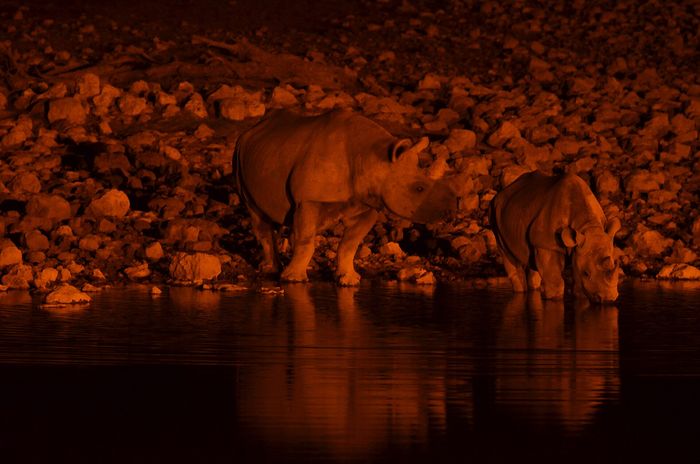
The Okaukuejo waterhole at night
A floodlit waterhole by the camp fence, with benches and a rule of silence. Black rhinos come almost every night in the dry season, elephants especially from June to December; for camp guests it is a safari with no car and no gate.
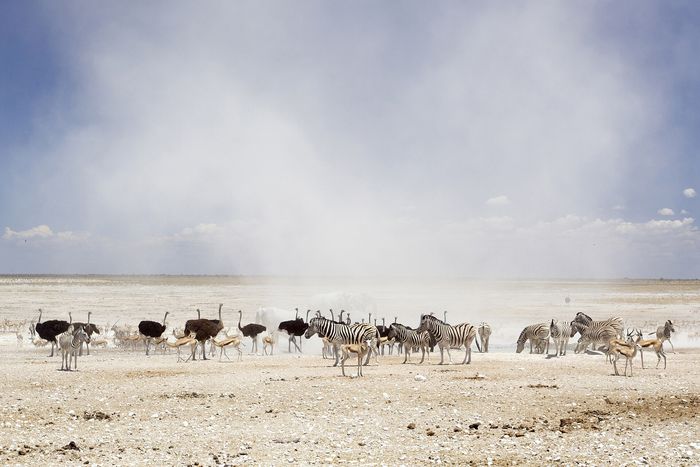
The salt pan
White to the horizon, with no shade and no landmark. After a good rainy season a shallow lake; in the dry season a mirage in which oryx and giraffe seem to walk on air. You drive along the edge, not across.
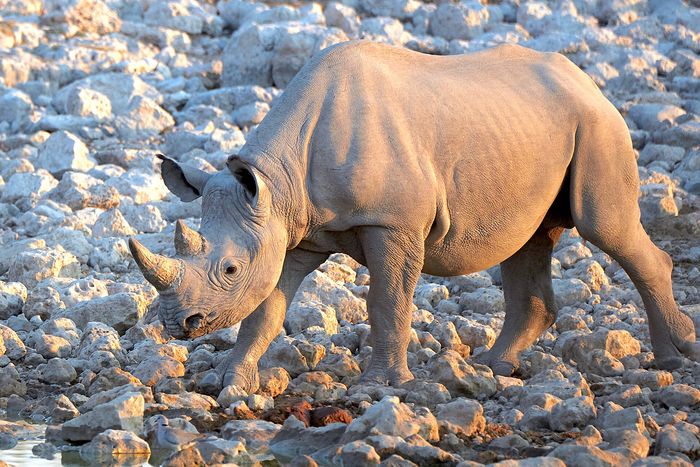
The waterholes between Okaukuejo and Halali
Okondeka, Nebrownii, Homob: waterholes by the main road, where in the dry season you park with the engine off and wait. Zebra, oryx and giraffe come in waves.
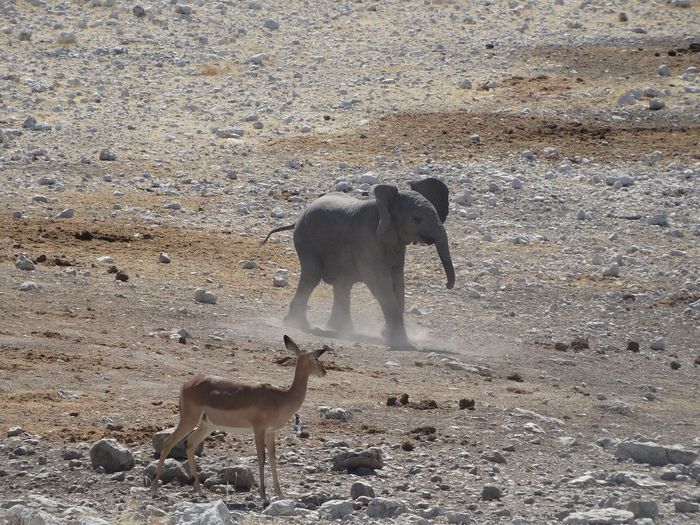
Halali and the Moringa waterhole
The camp in the middle of the park, with a floodlit waterhole below a rocky hill you watch it from. Besides rhino and elephant, leopards turn up here more often than at the bigger camps' waterholes; the night between the two ends of the park.
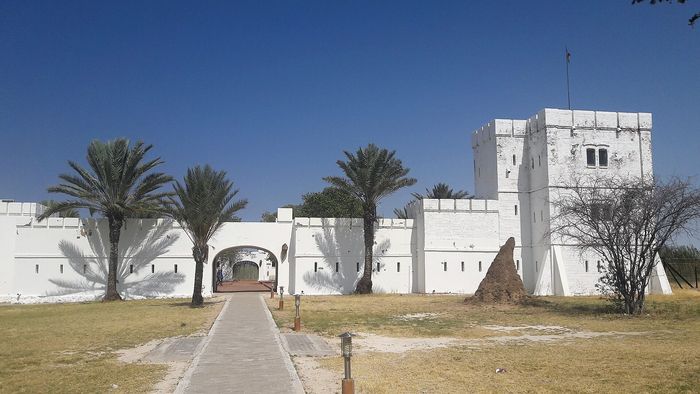
Namutoni and the fort
A German cavalry fort of 1889, destroyed in January 1904 and rebuilt when the reserve was declared in 1907; the camp now surrounds it, with the third floodlit waterhole. Two kilometres away is Klein Namutoni, a waterhole on an artesian spring, best early in the morning and late in the afternoon.
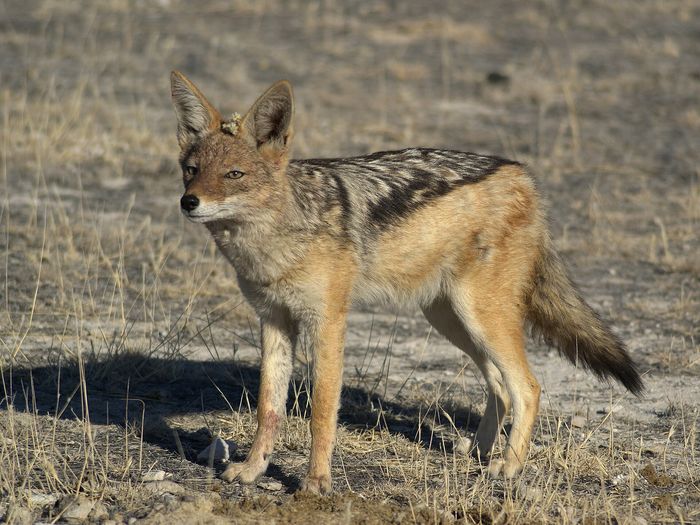
Western Etosha and Dolomite
The west of the park, where the Galton gate opened to everyone only in 2014, with hills and almost no vehicles. You sleep at Dolomite camp or the Olifantsrus campsite; for a second visit or a fourth night.


Stories from Etosha
How it actually was when we were there, and what was worth it.

Etosha or Kruger: two parks you watch in two different ways
→In one park you look for animals, in the other you wait for them. That difference changes the shape of the day and how much you actually see.
Two things you probably did not know
The Etosha pan is a dried lake of around five thousand square kilometres, so white that it is visible from space. It holds water only a few weeks a year; the rest of the time it is a salt crust.
In the dry season the animals gather at a handful of waterholes, so a safari here comes down to sitting by one and waiting. Some of the holes are lit at night, when the rhinos come.
Ready for Etosha?
Within reach from here
Places sorted by straight-line distance from Etosha — day trips or weekends.

Namibia
→A country you drive rather than visit: about four people per square kilometre, gravel roads without end, and a safari done in your own car as in Kruger — only without the fence

South Africa
→A country of long distances and reversed seasons, driven on the left throughout

Kenya
→A safari charged by the day, not by the trip — a reserve whose gate fee doubles in July, while a whole trip costs only half as much more

Chile
→A country 4,300 kilometres long and 180 wide — driest desert on earth to glacier, without a single turn
All 277 places we write about sit on one page — narrow them down by continent, country, price or what you are travelling for.
Within reach from here: Skeleton Coast, Windhoek and Swakopmund
See how much of that actually suits you — or pin Etosha if you have been.
Front row for the next trip
Leave your email and we'll let you know when a new destination or story goes up.