

Windhoek
A capital of almost half a million with a German church, a street that was once Kaiserstraße, and one job for the traveller: collect the car and fill the cool box
- When to go
- October 23° · 2 rainy days
- Per day
- €€€price 3 of 5
- How many days
- 1days
- For you
- 6 questions →
- Nearest airport
- 5 km Eros · 41 km Hosea Kutako
- Right now

Windhoek is the start and the end of a loop round Namibia and needs a day at each end: the visa at the airport, a car with two spare wheels, cash and a full cool box. The German centre with its church, fort and Independence Museum takes a morning on foot — and that is as much of the city as you need before heading south.
The visa is sorted before take-off: the application on the Namibian home affairs portal (eservices.mhaiss.gov.na), then the €85 fee at the airport. Hosea Kutako airport is 41 kilometres east of the city in a straight line; you collect the car before heading south, and before signing you count the spare wheels — the British Foreign Office advises two for gravel roads — check the jack and photograph every scratch, because damage that is not in a photo gets charged on return.

The city sits at 1,650 metres and is dry: the January daytime high is around thirty degrees, a July night around six, and it can drop below freezing. Independence Avenue, the former Kaiserstraße, is the shopping street; the monuments are a block up on Robert Mugabe Avenue — the Lutheran Christuskirche, consecrated in 1910, the old German fort of Alte Feste and, between them, the Independence Museum, a building put up by the North Korean firm Mansudae. The museum works floor by floor through colonial repression, the liberation struggle and the road to independence in 1990, and a glass lift on the outside goes up to the restaurant at the top. For dinner there are two extremes: Joe's Beerhouse and kapana in Katutura.
Katutura is the part of the city to which the apartheid authorities forcibly moved black residents from the Old Location in the 1950s; its name in Otjiherero means "we do not settle", and on 10 December 1959 police opened fire on people refusing the move. Go by day, with a local guide or a tour: the British Foreign Office warns against entering townships at night without someone who knows them, says muggings of tourists in Windhoek can happen by day in the busy centre, and advises booking taxis through the hotel rather than hailing them. The rest of the day is shopping — water, food and ice for the cool box, cash, a SIM card; the Namibian dollar is pegged one to one to the South African rand, and the rand is legal tender in Namibia.
What to see in Windhoek
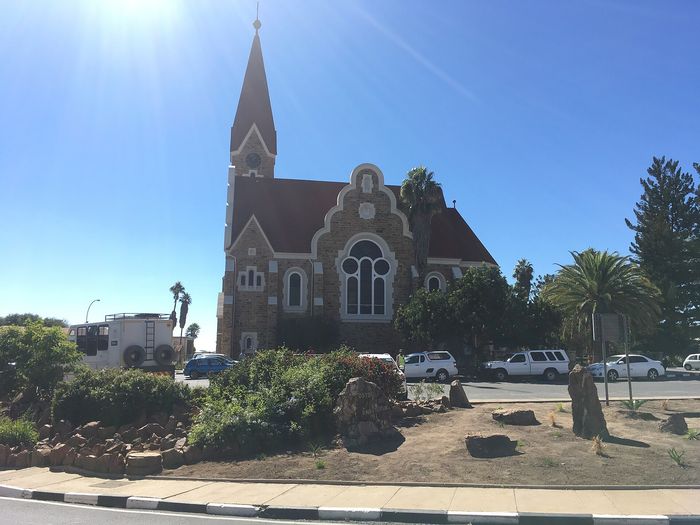
The Christuskirche
Quartz sandstone from a quarry by the Avis dam, a portico of Carrara marble and stained glass given by Kaiser Wilhelm II. It was first called the Church of Peace, after the wars with the Herero and Nama; it stands on a traffic island facing the Tintenpalast, the parliament building.
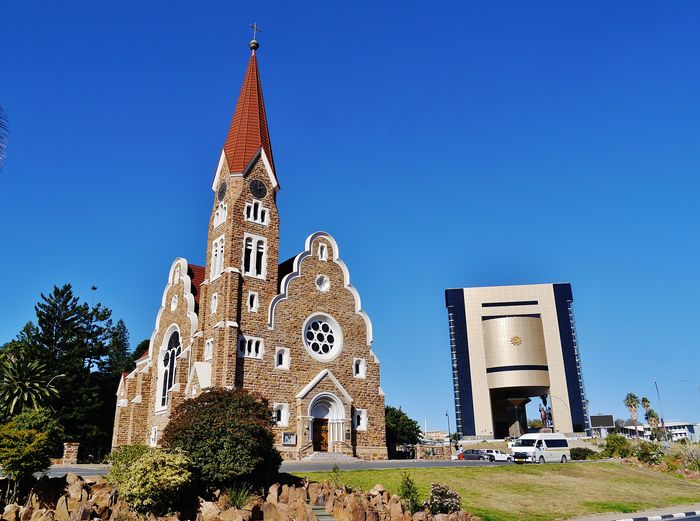
The Independence Museum
Opened in 2014 on the spot where the German equestrian monument, the Reiterdenkmal, had stood for 102 years; it is now in the courtyard of the Alte Feste. Entry is free, and it belongs on the first day: it explains the country you will spend the next two weeks watching through a windscreen.
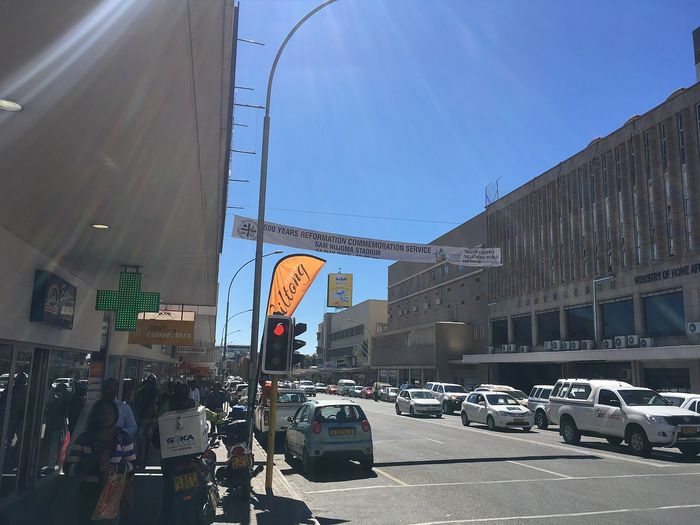
Independence Avenue and Zoo Park
A park in the middle of the main street, where elephant bones and the stone tools of Stone Age hunters turned up during landscaping in 1961. The avenue also has the banks and bureaux de change for cash before the road.
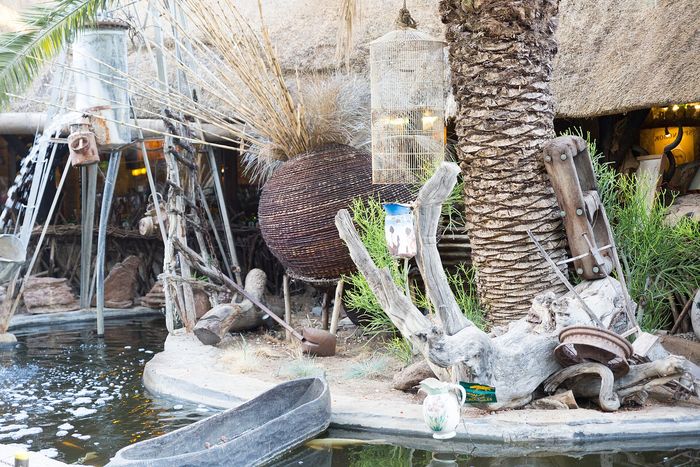
Joe's Beerhouse
A restaurant on Nelson Mandela Avenue with zebra and other game on the grill; book a table through the restaurant's website. It is the first-night dinner, while the cool box for the road is still empty.
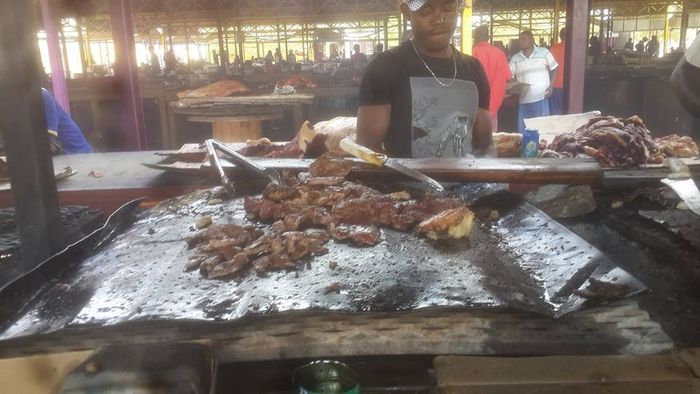
Kapana in Katutura
Beef, sometimes game, grilled at market stalls in Katutura and at Single Quarters, eaten with an onion and tomato salsa and the fried dough known as junkies. By day and with a guide, like everything in Katutura.
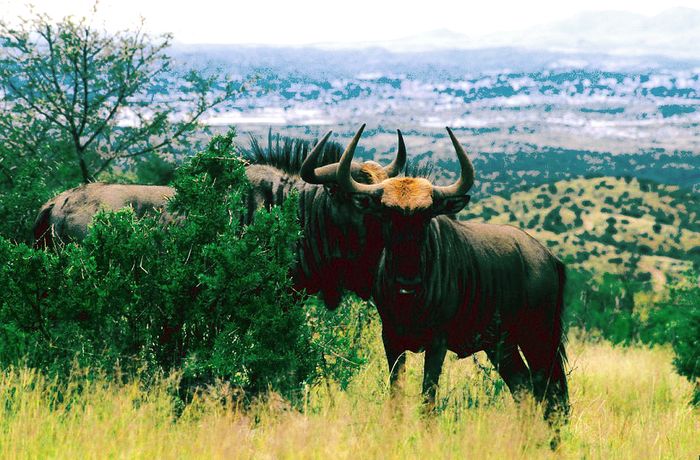
The Daan Viljoen reserve
Some twenty kilometres west, in the Khomas Hochland hills, with mountain zebra, giraffe and kudu and marked trails of three and nine kilometres you walk without a guide. For anyone who lands in the morning and heads south only the next day.


Two things you probably did not know
Namibia is the only African country where German was once official, and today the official language is English, though under one per cent speak it as a mother tongue. It was chosen in 1990 precisely because it belonged to nobody.
Beer in Windhoek is still brewed to the German purity law of 1516, though no such rule exists in Namibia. The brewery follows it voluntarily, as a legacy of the colonial period.
Ready for Windhoek?
Within reach from here
Places sorted by straight-line distance from Windhoek — day trips or weekends.

Namibia
→A country you drive rather than visit: about four people per square kilometre, gravel roads without end, and a safari done in your own car as in Kruger — only without the fence

South Africa
→A country of long distances and reversed seasons, driven on the left throughout

Kenya
→A safari charged by the day, not by the trip — a reserve whose gate fee doubles in July, while a whole trip costs only half as much more

Chile
→A country 4,300 kilometres long and 180 wide — driest desert on earth to glacier, without a single turn
All 277 places we write about sit on one page — narrow them down by continent, country, price or what you are travelling for.
Within reach from here: Sossusvlei, Swakopmund and Skeleton Coast
See how much of that actually suits you — or pin Windhoek if you have been.
Front row for the next trip
Leave your email and we'll let you know when a new destination or story goes up.