

Port Louis
The capital the hotels do not mention: a harbour between mountains, the market where the island shops, a Chinatown, Hindu temples and a colonial palace — all for one day, never for a night
- When to go
- October 24° · 10 rainy days
- Per day
- €€€price 3 of 5
- How many days
- 1days
- For you
- 6 questions →
- Nearest airport
- 36 km Mauritius
- Right now

Port Louis is the only city on the island, and a day in it explains everything else: who the people of Mauritius are, what they eat and why temples stand next to mosques next to churches. Done on a weekday morning, with the market as the first stop and a café at the Caudan as the last; in the evening the city empties, and that is when you go back to the coast.
The city sits between the harbour and an amphitheatre of mountains, with Le Pouce — a thumb-shaped hill — above it, and is walked in its entirety in half a day. The Central Market is the start: the ground floor with fruit, vegetables and spices, the upper floor with cloth and souvenirs, and stalls with dholl puri — a pea pancake with curry — for a few rupees, which is the best breakfast on the island. Behind the market is Chinatown with Royal Street, walked towards the Jummah mosque, then on to the Hindu temples; all three faiths within three hundred metres, and so since the 19th century.

Government House, a French palace of 1738 with Victoria in front, stands at the end of Independence Street leading up from the harbour; beside it are the Natural History Museum with a dodo skeleton — one of the few real ones in the world — and the Blue Penny Museum, with two of the most expensive postage stamps on the planet. Fort Adelaide, the Citadel, on the hill above the city, gives the view of the harbour, the roofs and the Champ de Mars racecourse of 1812, the oldest in the southern hemisphere, where on Saturdays in season the island bets. All of that is one morning with stops.
The Caudan Waterfront, on the shore with coloured umbrellas across the street, is a mall, a casino and cafés — touristy, but with shade and the harbour view, and this is where you sit when the city hurts at noon. The Aapravasi Ghat, World Heritage by the harbour, is where Indian labourers replacing the slaves were landed from 1834; the museum in it explains why the island is Indian, and it is free. At three in the afternoon the city empties because everyone goes home to the coast; the streets after dark are not for walking, and that is the only reason nobody stays the night here.
What to see in Port Louis
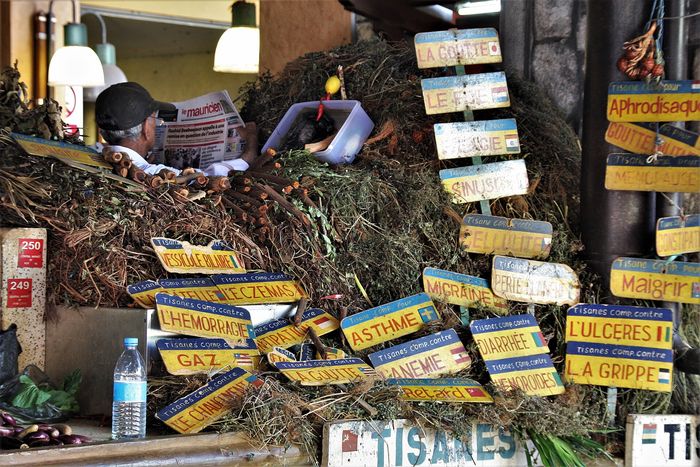
The Central Market
A market of 1844 with fruit, spices, cloth and stalls with dholl puri and alouda — local fruit mixes with chilli. In the morning on a weekday; Saturday it is packed and Sunday closed. Vanilla and tea are bought here, not in the hotel.
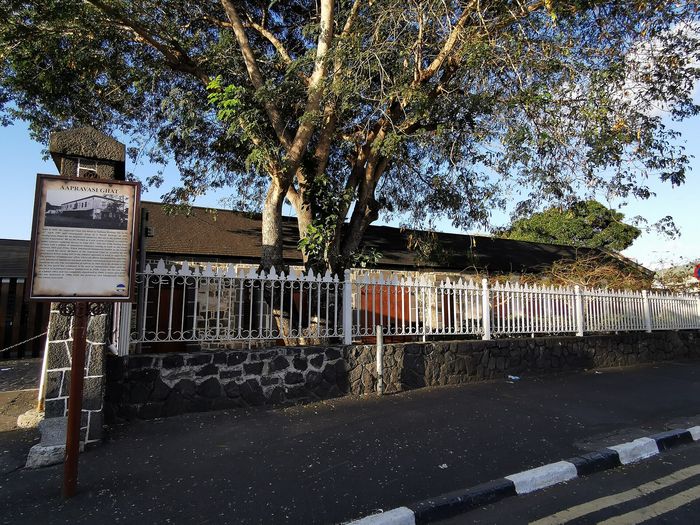
The Aapravasi Ghat
The remains of the depot where indentured Indian labourers were landed from 1834 — half a million people in a century — and the museum about it. World Heritage, free, an hour by the harbour. It explains the island better than anything.
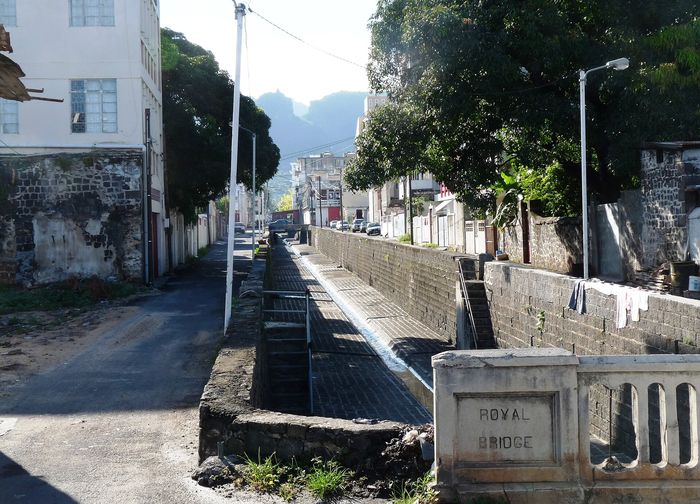
Chinatown and the Jummah mosque
Royal Street with Chinese shops and restaurants, and the mosque of 1852 with a white marble courtyard and wooden doors. Ten minutes' walk from the market; the mosque is entered outside prayer times, with legs covered.
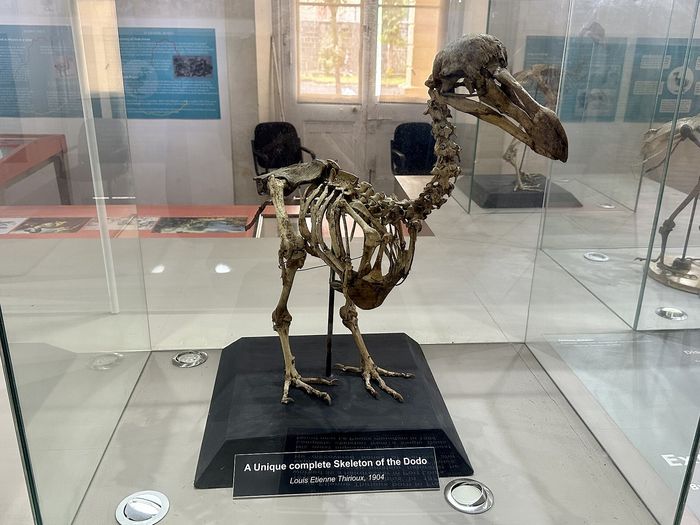
The Natural History Museum and the dodo
A dodo skeleton assembled from bones found in the Mare aux Songes swamp, in a building of 1880 on Government square. Half an hour; the museum is modest, the dodo is the reason. The Blue Penny Museum is across the road, for philatelists and for anyone who wants air conditioning.
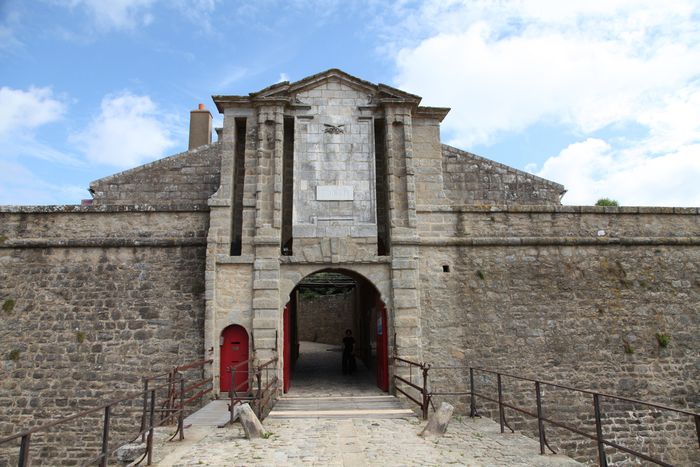
The Citadel
Fort Adelaide of the 1830s on the hill above the city, with the view of the harbour, the mountains and the racecourse. Fifteen minutes' walk uphill from the centre or a taxi; in the morning for the light, and it is the only panorama of the city.
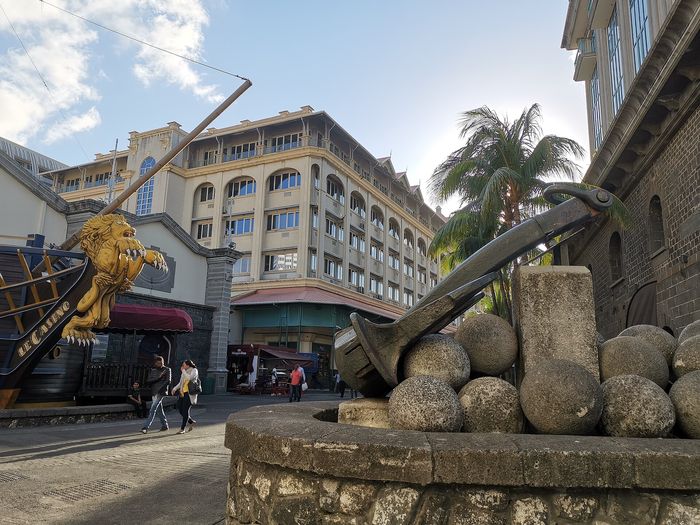
The Caudan Waterfront
A mall on the shore with coloured umbrellas, cafés, a casino and a craft market. Shade and the harbour view when the city hurts at noon; prices are tourist prices, the coffee is good.


Two things you probably did not know
Port Louis was founded in 1735 by a French governor as a port on the route to India. Mauritius was held in turn by the Dutch, the French and the British, and each left a language. That is why Creole, French and English turn up in one sentence.
The 1847 Mauritius Blue Penny is one of the most valuable stamps in the world. It was printed by mistake with Post Office instead of Post Paid, and a few surviving copies are kept in the Blue Penny Museum in Port Louis.
Ready for Port Louis?
Within reach from here
Places sorted by straight-line distance from Port Louis — day trips or weekends.

Mauritius
→An island where you do not choose a hotel but a coast — west for sunsets and calm sea, north for nightlife, east for wind, south for kitesurfing

Tanzania
→The Serengeti, Kilimanjaro and Zanzibar in one country — and three different bills: the safari by the day, the mountain by the night, the island by an insurance paid at the door

South Africa
→A country of long distances and reversed seasons, driven on the left throughout

Thailand
→Two coasts the monsoon never reaches at the same time, and a north seen through smoke in March
All 277 places we write about sit on one page — narrow them down by continent, country, price or what you are travelling for.
Within reach from here: Flic-en-Flac, Grand Baie and Île aux Cerfs
See how much of that actually suits you — or pin Port Louis if you have been.
Front row for the next trip
Leave your email and we'll let you know when a new destination or story goes up.