

Tunis
The capital the charters skip: a medina that is real rather than a set, the museum with the most Roman mosaics anywhere, and Carthage at the end of a suburban train
- When to go
- November 17° · 7 rainy days
- Per day
- €€price 2 of 5
- How many days
- 2days
- For you
- 6 questions →
- Nearest airport
- 7 km Tunis · 86 km Enfidha
- Right now
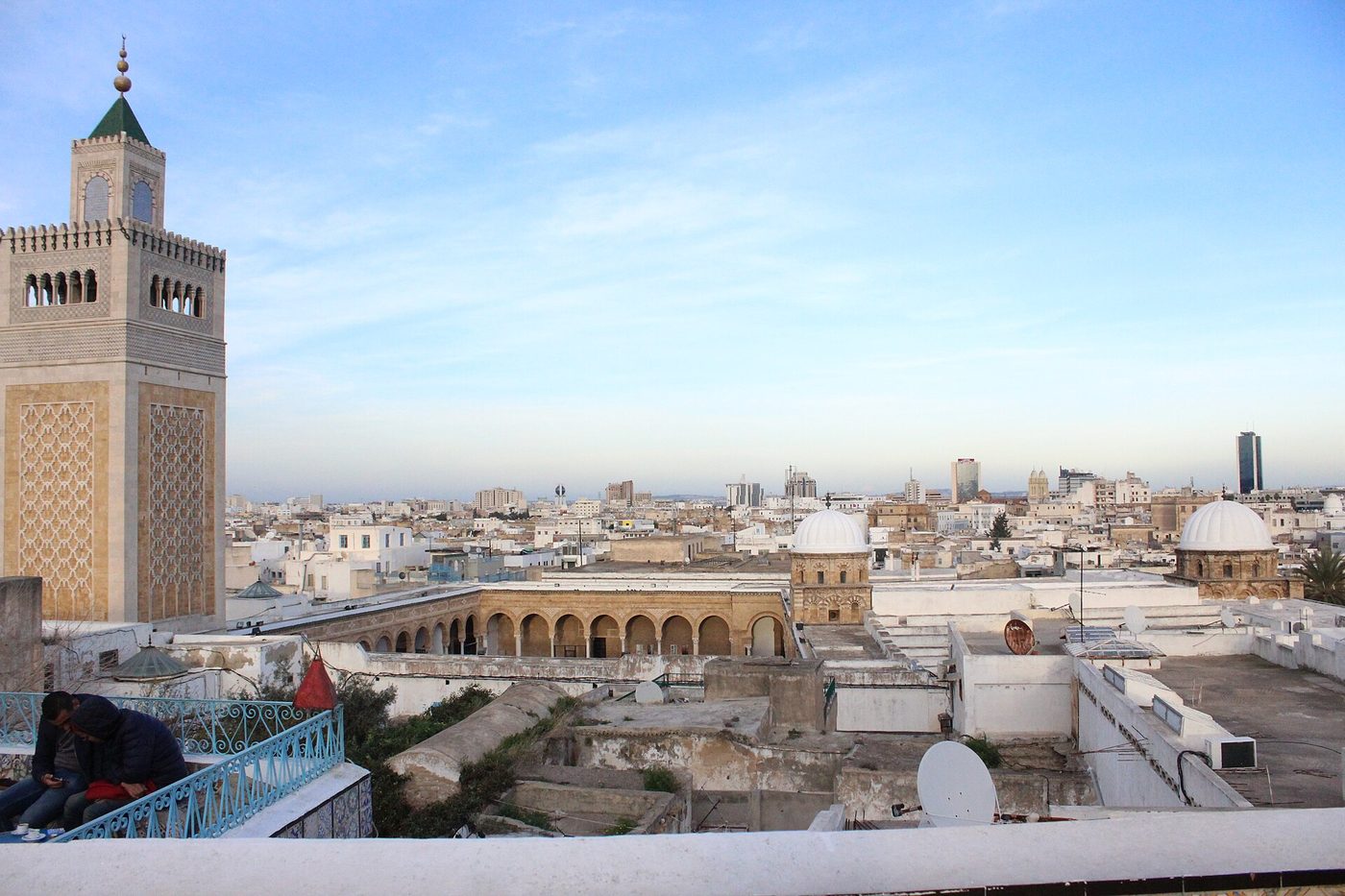
Tunis is the Tunisian capital that most visitors glimpse through a coach window on the way to ancient Carthage, and two nights fix that easily. The old medina is walked all day free, without a ticket, and the Bardo holds one of the largest collections of Roman mosaics anywhere. Sidi Bou Said and Carthage are a short ride away on the suburban railway for a few euros.
The medina is the reason to come, and unlike the famous ones in Morocco it has fewer tourists, less pushing and more local people who actually shop. You enter through Bab el Bhar from Avenue Habib Bourguiba, the broad main street of the French city, and walk to the great Zitouna mosque. It is not visited inside, but the roof of the carpet shop beside it gives a view of the whole city.

The traditional souks are laid out by trade as they were five hundred years ago, and perfumes, hats and gold are recognised by smell before the sign.
The Bardo stands in the former bey's palace in the western part of the city and holds ancient Roman mosaics from villa floors across the country. In the halls the floor is the museum and the walls are the palace. The foreigner ticket is €8.90 and the visit needs 3 h; it is closed on Mondays, and a cheap taxi from the centre costs a couple of euros on the meter. It is the one site in Tunisia we would call essential, and hotel groups often skip it for Carthage, which is the wrong choice.
The suburban TGM train runs from the station at the end of the avenue across the lagoons to Carthage and Sidi Bou Said in 30 min, which makes it the easiest day trip in the whole country. The city itself is walked: the French part is flat and has pavements, while the medina is steep and narrow, with none. In the evening the avenue is busy until midnight, but the medina closes with its shops, so dinner there means booking one of the old palaces turned restaurants.
hostel, dorm bed, per night
Timed-entry tickets and guided tours in one place.
Both sites fill in your nearest airport for you; change it in one click.
Guides for Tunis
Shorter, practical pages for one concrete question each — how many days, how much money, where to sleep, where to escape the city.

Tunis in 2 days
→The medina and the Bardo on day one, Carthage and Sidi Bou Said on day two, with two days done entirely on foot and by suburban train.

Day trips from Tunis
→Carthage by train, Dougga with a driver, Bizerte by train and Cap Bon by car: the trips from Tunis ordered from the nearest, by whether they need a car or only a train ticket.

Where to stay in Tunis
→Tunis is rarely chosen for its hotels, and far more for how short the walk is from the bed to the old medina or to the train for Carthage.

What Tunis costs
→Tunis is one of the cheaper capitals on the Mediterranean, and the biggest cost of the day is not a ticket but the choice of where to eat.

The Tunis guidebooks skip
→Three places in the medina that no hotel map marks: a palace that is still free to enter, a herb souk with seven centuries of trade behind it, and a bathhouse that still heats its water.

What to eat in Tunis
→Harissa on every table, a brik with a runny egg, lablabi in a bowl of torn bread and fish by the kilo on the coast: Tunisian food is spiced, cheap and almost never found in the hotel.

The best time to visit Tunis
→Tunis has no beach as a reason to come, so the date is chosen by the temperature for walking the medina rather than by a swimming season.

Getting around Tunis
→One direct bus from the airport, a pair of feet in the centre and the medina, and one suburban train for everything further out, so Tunis moves in layers rather than on a single ticket.

Mistakes everyone makes in Tunis
→Five small mistakes can ruin a day in Tunis before anyone notices what happened, and each has an easy replacement that costs no time.
What to see in Tunis
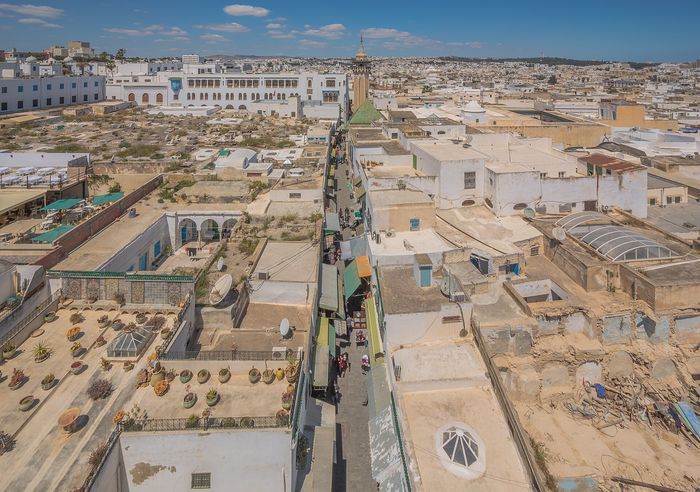
The medina
World Heritage since 1979, with seven hundred monuments in a maze walked without a map. Entry free, in through Bab el Bhar, aim for the Zitouna, out wherever you end up.
free
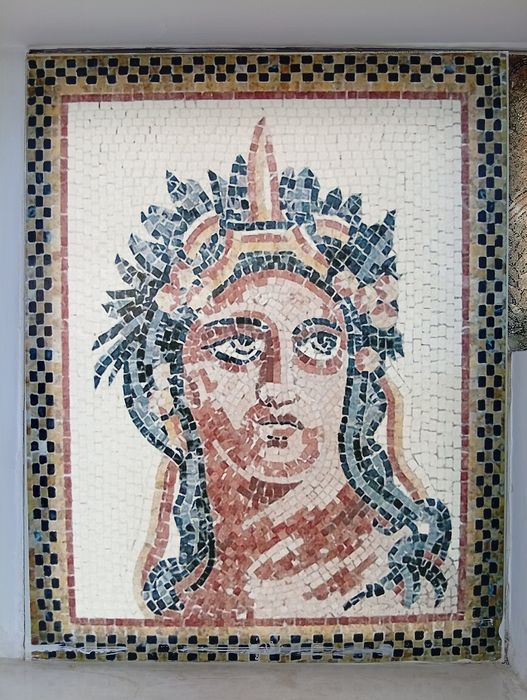
The Bardo Museum
One of the largest collections of Roman mosaics in the world, in a 19th-century bey's palace. Virgil with the muses, Odysseus and the sirens, a whole floor of Neptune's triumph. 3 h, closed Mondays, €8.90 for foreigners.
€8.90 · 3 h · closed Monday
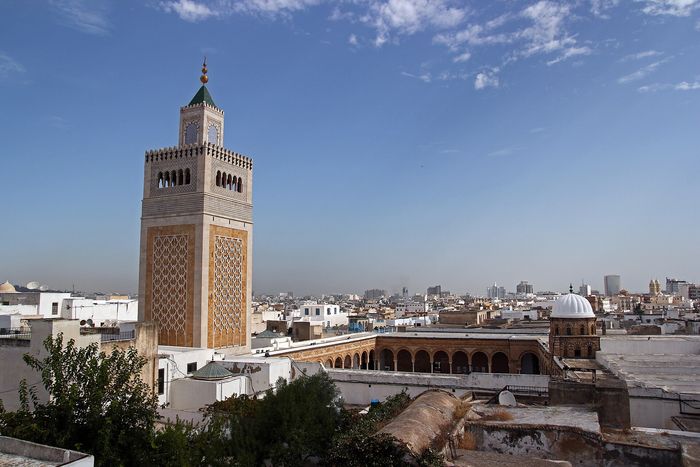
A rooftop by the Zitouna
Shops around the mosque let you onto their roof terraces, on the understanding that you look at something but need not buy. The view of the minaret and the medina is the best in the city; go in the afternoon with the light from the west.
free
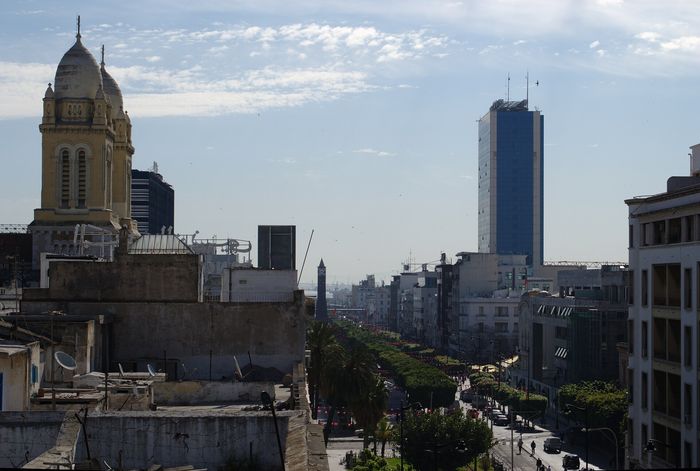
Avenue Habib Bourguiba
The boulevard of the French city with the cathedral, the art nouveau theatre and cafés under the trees. This is where you sit in the evening, because the medina is closed; coffee costs less than in the hotel.
free
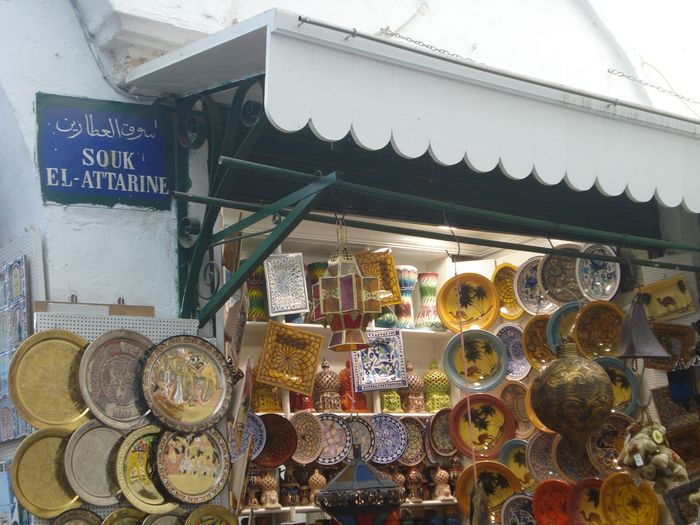
Souk el Attarine and Souk el Berka
The perfume souk with flasks of essences blended to order, and the former slave market that is now the goldsmiths' souk. The two places in the medina where people actually buy rather than just look; closed Friday afternoons, partly.
free · closed Friday afternoons, partly
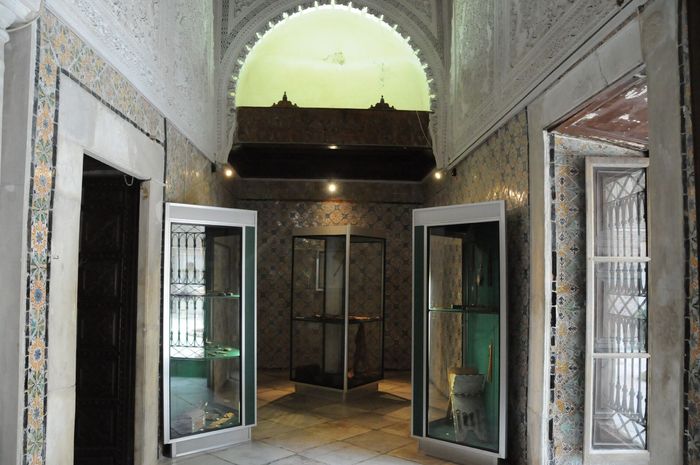
Tourbet el Bey
The 18th-century mausoleum of the Husseinite dynasty in the medina: eight domed burial chambers around two marble courtyards, reopened in 2023 after eleven years of restoration. The ticket is bought at the door.


Nomadinho scores out of 100, the same ones behind “Where to go”.
If you like Tunis
Three places with the closest scores, from any country.


Two things you probably did not know
Carthage, at the end of the suburban railway from central Tunis, was Rome's equal through three wars. The Romans levelled it in 146 BC and then rebuilt it a century later as a Roman city.
The Bardo Museum in Tunis holds the largest collection of Roman mosaics in the world. It occupies a former bey's palace, so the mosaics sit under ceilings decorated in Ottoman style.
Before you go
Short answers to what people ask most before setting out.
How many days do you need in Tunis?
Two are enough: the medina and the Bardo, then Carthage and Sidi Bou Said on the suburban train. A third day is for Dougga, Cap Bon or Bizerte.
How do you get from Tunis airport to the centre?
Take the line 35 bus to Tunis Marine station: 30 to 45 minutes for €0.30. A metered taxi is faster, but it has no fixed price.
What is the best time to visit Tunis?
April to June and September to October. The Bardo is open all year except Mondays, so the season changes only the weather.
Ready for Tunis?
Within reach from here
Places sorted by straight-line distance from Tunis — day trips or weekends.

Tunisia
→Ten towns in a line, from the capital to the sand at Tozeur — in the order they're actually travelled, not listed

Egypt
→Two countries under one name: the Nile with its temples, which needs a plan, and the Red Sea, which needs only a charter — few people do both in one trip

Morocco
→The north by train, the south by road, and in July you leave Marrakech for the coast

Italy
→The cities on the high-speed line are an hour or two apart; the coast, Matera and the Tuscan hills lie off it
All 292 places we write about sit on one page — narrow them down by continent, country, price or what you are travelling for.
Guides that mention it

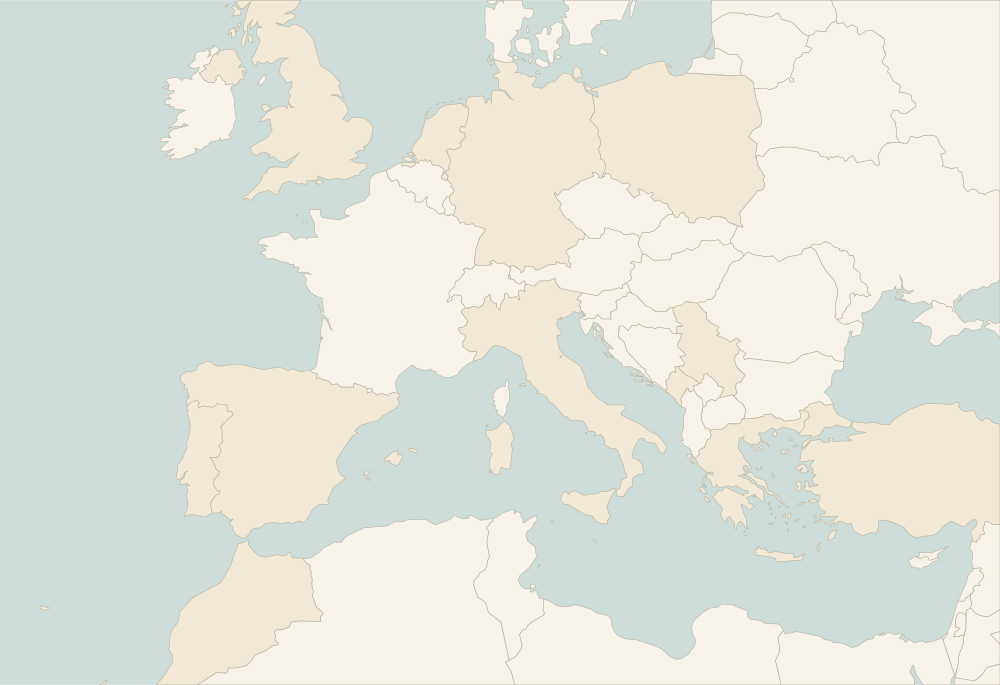
Within reach from here: Sidi Bou Said, Hammamet and Sousse
See how much of that actually suits you — or pin Tunis if you have been.
Front row for the next trip
Leave your email and we'll let you know when a new destination or story goes up.