

The best time to visit Tunis
Tunis has no beach as a reason to come, so the date is chosen by the temperature for walking the medina rather than by a swimming season.
- Best
- April–Jun · Sep–Oct
- Hottest
- July
- Coldest
- January
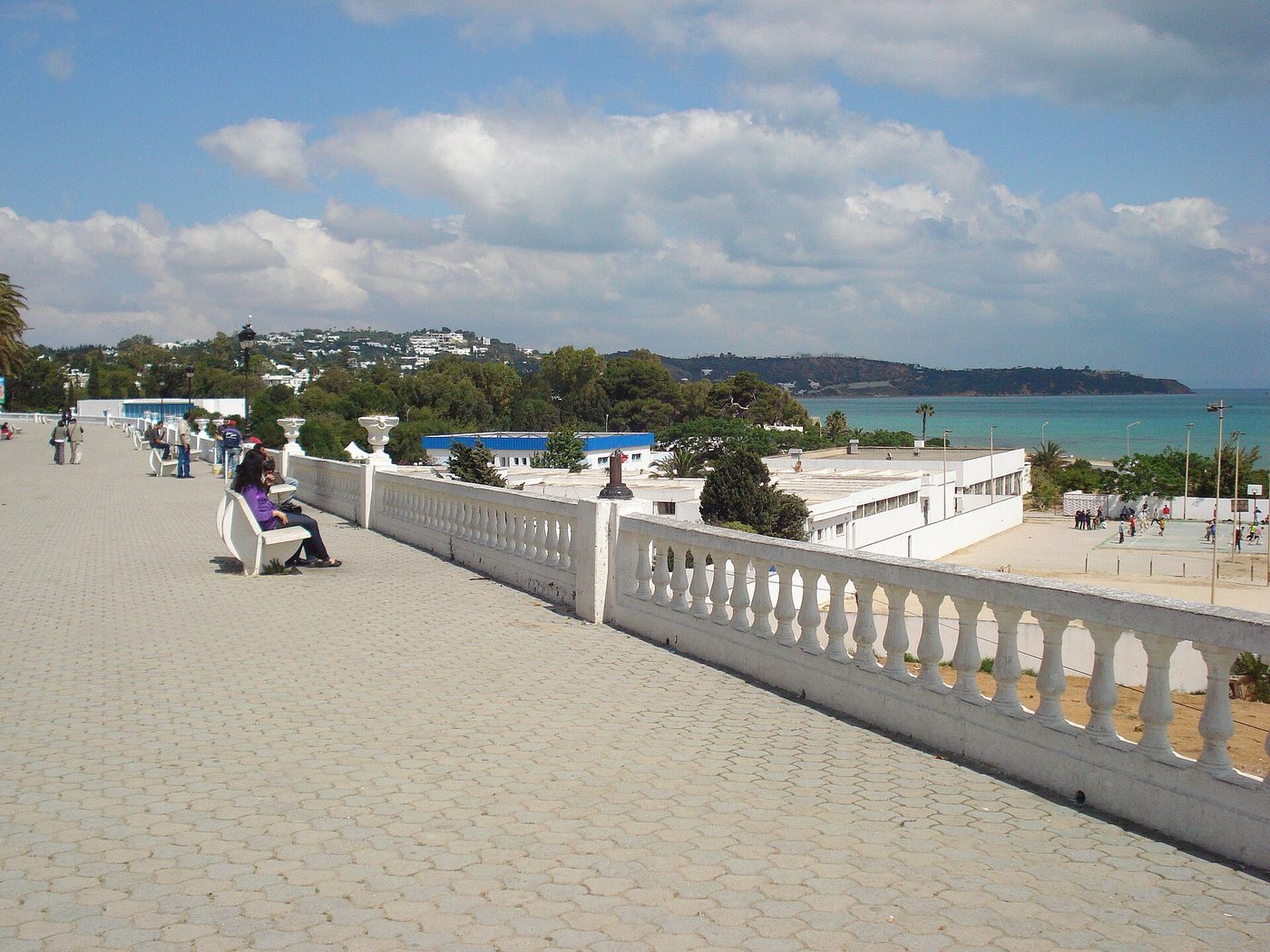
The best months for Tunis are April–Jun · Sep–Oct, warm enough that you can walk the medina without a break and cool enough that the Bardo after midday is not an escape from the sun. Summer is dry and hot, while winter is mild and wet. May and October, though inside that range, carry the most rainy days of the year.
Month by month
Through the year
April, May, September and October keep the day between 16 and 26 degrees, which is comfortable enough for the whole loop from the medina to Carthage without a long midday break. May and October in that table still carry the most rainy days of the year, eight each. You will want to check the forecast before a TGM ride, since the open stations have no roof.
hostel, dorm bed, per night

Hot and dry
July and August hold the average of the daily mean close to 29 degrees, with July practically free of rain. The medina's old stone keeps the heat into the afternoon, so you will want to climb to the Zitouna and Tourbet el Bey early in the morning, before the sun climbs high over the flat rooftops. If you continue to the coast, you find Sidi Bou Said and La Marsa a few degrees cooler than the stifling city.

Rain, but open
From November to February the average drops to 11 to 17 degrees, with five to seven wet days a month. The quiet city closes nothing for the cold, and the old medina, the Bardo and the souks keep the same hours. There are fewer people and no reason to rush ahead of the heat.

Ramadan changes the rhythm, not the sightseeing calendar
Ramadan follows the lunar calendar and falls in a different month each year, so the exact dates are worth checking for the year of travel. In the daytime fewer local places outside the hotels are open until the iftar at sunset. Afterwards the avenue is busier and livelier than usual, while the medina and the museums keep running and only the rhythm of meals changes.


Both sites fill in your nearest airport for you; change it in one click.
Where to next
Getting around Tunis
→One direct bus from the airport, a pair of feet in the centre and the medina, and one suburban train for everything further out, so Tunis moves in layers rather than on a single ticket.

Sidi Bou Said · 17 km
→A blue-and-white village on a cliff above the bay and, two stops before it, what is left of the city that was bigger than Rome

How well does Tunis suit you?
→Six questions: a score for this place and others like it.
Nomadinho scores out of 100, the same ones behind “Where to go”.
If you like Tunis
Three places with the closest scores, from any country.


Before you go
Short answers to what people ask most before setting out.
What's the best month for Tunis?
Any of April–Jun · Sep–Oct, April to June and September to October. May and October have the most rainy days of that group, but neither one derails a plan.
Is the Bardo open every month?
Yes, all year except Mondays, whatever the season.
Does Ramadan change a visit to Tunis?
It changes the rhythm of meals: the medina and the museums keep to the same hours, but fewer places outside hotels are open in the daytime, and the avenue gets busier after iftar in the evening.
Ready for Tunis?
Front row for the next trip
Leave your email and we'll let you know when a new destination or story goes up.