

What to eat in Sarajevo
Ćevapi in a somun at lunch, burek only with meat in the morning, and Bosnian coffee and baklava for everything else.
- Ćevapi
- €4–6 (8–12 KM)
- Burek
- €1.50–3 (3–6 KM)
- Bosnian coffee
- €1–2 (2–4 KM)
In Sarajevo the dish is chosen by the hour. A pita comes in the morning and ćevapi at midday, and coffee and something sweet arrive whenever you sit down, with nobody hurrying you off the chair. The city rewards a slow table, and the names below are the ones guides in 2026 keep returning to, most of them in Baščaršija.
Ten in a somun
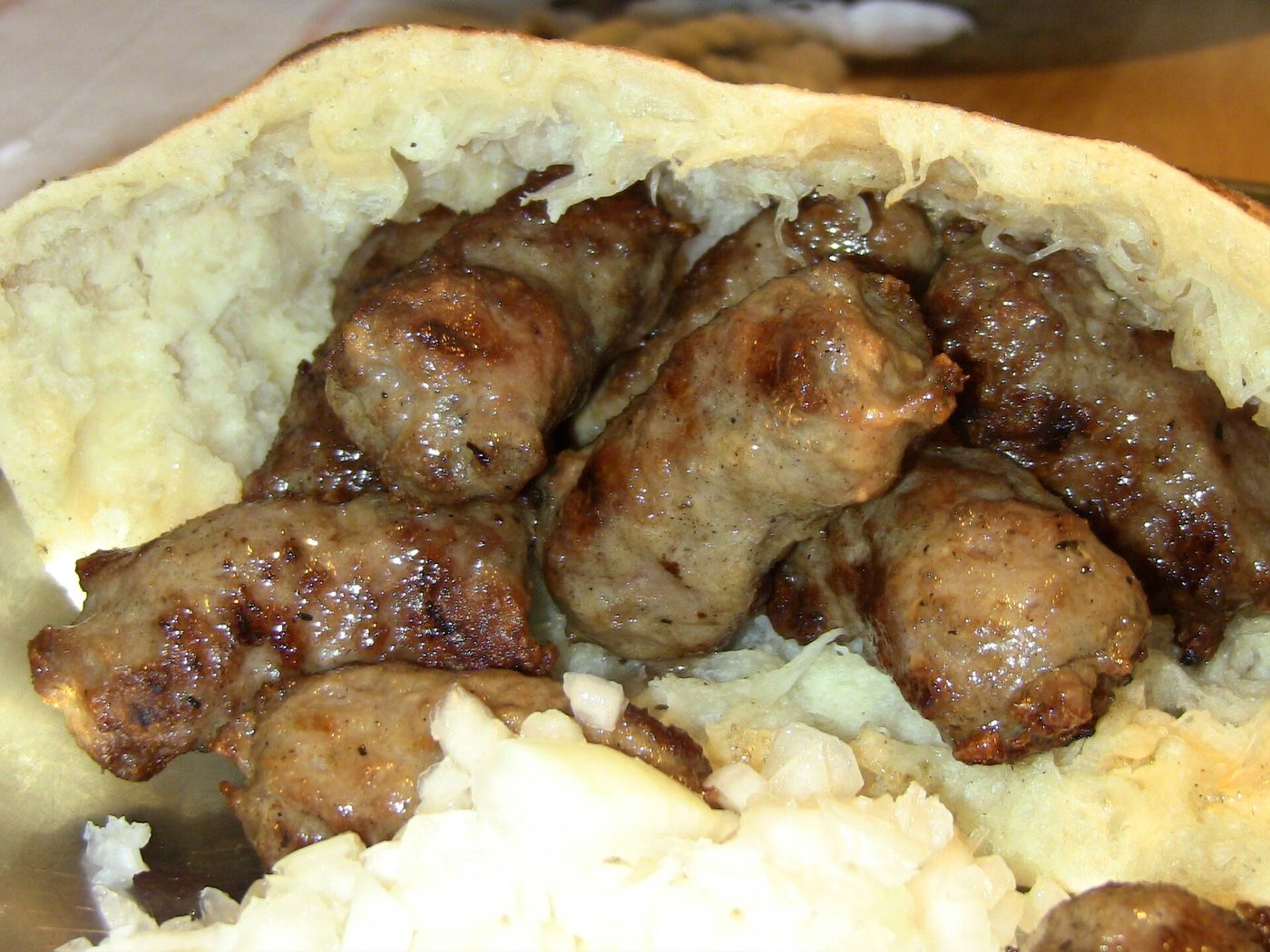
Sarajevo ćevapi are small, shaped by hand and tucked into a somun, the soft flatbread that also soaks up the juices. You order a desetka, which means ten pieces, or a petka for a lighter lunch. Kajmak, the thick cream, comes only on request and with a surcharge. The price is on the board in marks, and a portion costs €4–6 (8–12 KM).
Željo and Petica Ferhatović stand in Baščaršija, Hodžić is near the Sebilj, and Mrkva and Zmaj od Bosne lie off the main tourist path. The streets given for Željo differ from one source to the next, so look for it in the bazaar and follow the smoke. If you want a verdict, take the place with the shortest queue near the Sebilj on a first visit and one of the two off the path on a second.
Burek, sirnica and zeljanica
Here burek means only a pita with meat, nothing else. A pita with cheese is a sirnica, with spinach a zeljanica and with potato a krompiruša, and "pita" is the common name for the whole family. So the cliché that burek is any pie rolled in pastry stops at the bakery counter, where you say which one you want, and the word you choose tells the baker everything. A piece from a bakery costs €1.50–3 (3–6 KM), so it makes a cheap and filling start to the day.
A food tour with a local guide: several tastings in one walk.
Soup, stew and stuffed dishes
Begova čorba is a soup of meat and vegetables, and it is the dish to order when the sky is grey and the lanes are wet. Order it first, since the rest of the table will follow. Bosanski lonac is meat cooked over a fire, and sogan-dolma is an onion filled with meat. Sarma completes the list, and a table of four can taste most of it in one sitting.
In a restaurant the usual price is €6–10 (main course), and for a sit-down meal with history around it, Morića Han in Sarači, built in 1551, has a restaurant of national cuisine in the courtyard, and the shops of the han stay open around it.
Coffee and something sweet
Bosnian coffee is served in a cafe, slowly, and a cup costs €1–2 (2–4 KM). A cake with coffee costs €2.50–4.50 (5–9 KM), and the sweet shelf is where the Ottoman centuries show. Order tufahija, a whole cooked apple stuffed with walnuts, or hurmašica, a sweet soaked in syrup, and if you want the familiar choice, baklava and rahat lokum sit in the same cabinets. Nobody will ask you to leave before the cup is empty.
Where to sit down
The shortlist fits in a table, with the prices posted on each board in marks. Opening hours and closing days change over the year, so look at the door when you arrive.
Prices are posted in marks; opening hours and closing days change.


Where to next
The best time to visit Sarajevo
→Spring and early autumn for sightseeing, summer for the film festival and the heat, winter for skiing on the mountains and smog in the valley.

Mostar · 71 km
→The Old Bridge, the cobbles of Kujundžiluk and the Neretva in its gorge, with Blagaj, Počitelj and Kravice within forty kilometres

How well does Sarajevo suit you?
→Six questions: a score for this place and others like it.
Nomadinho scores out of 100, the same ones behind “Where to go”.
If you like Sarajevo
Three places with the closest scores, from any country.


Ready for Sarajevo?
Front row for the next trip
Leave your email and we'll let you know when a new destination or story goes up.