

- Published
- 26 July 2026
- Reading
- 5 min read
- Where
- Milan, Italy
- Prices checked
- 21. Oct 2026.
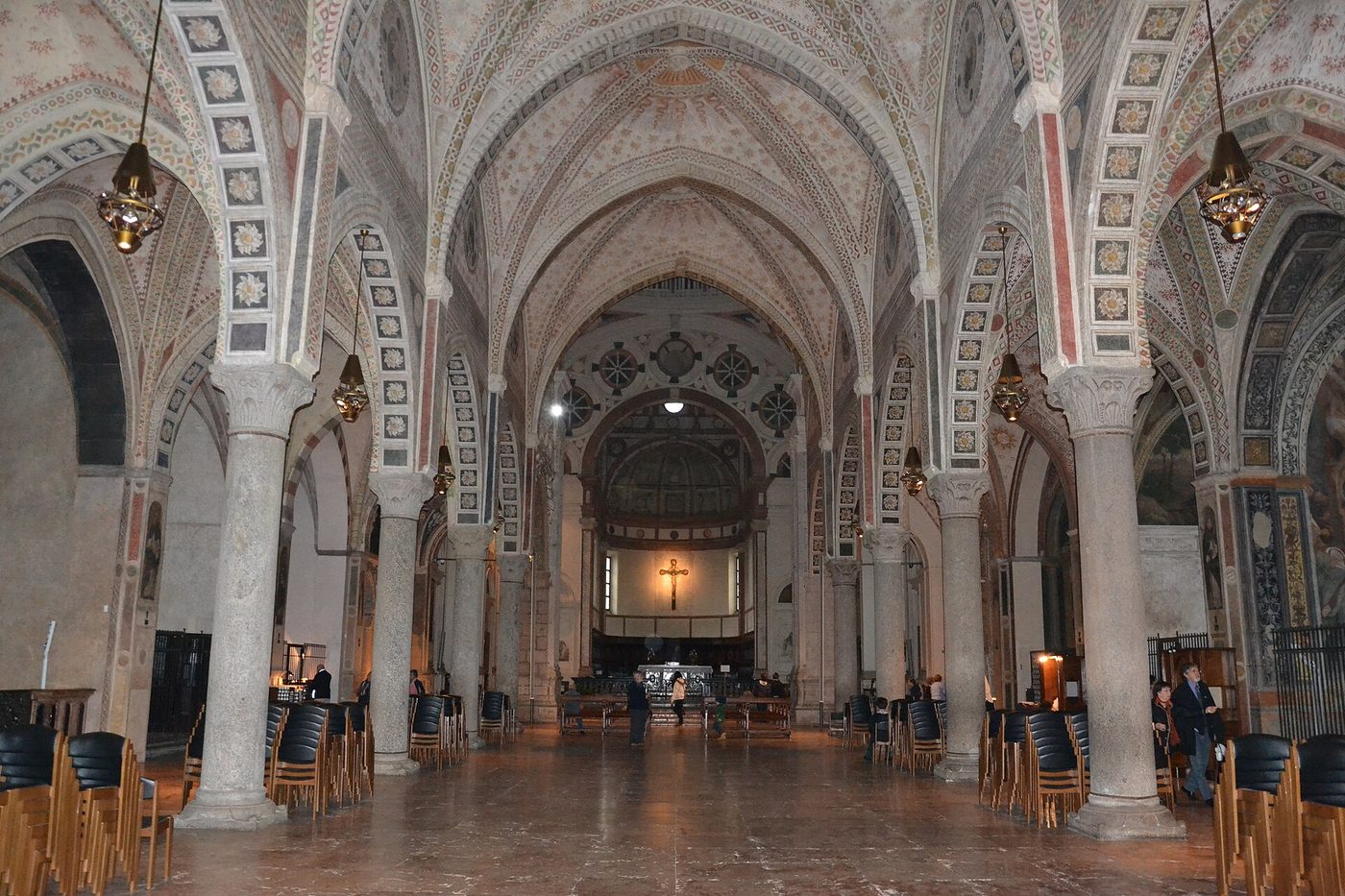
Getting into the Last Supper comes down to the sales calendar, because tickets are released in waves and mostly sell out. Here is the release schedule, the Wednesday top-up and a fallback for the days without one.
Seeing the Last Supper takes fifteen minutes, and getting in is the part that needs planning. A ticket with a reserved slot costs €15, the room admits at most 40 people at a time, and each group gets fifteen minutes in front of the wall. The real obstacle is the sales calendar, and the price hardly matters.
When tickets are released
Tickets come out in quarterly batches. The September release covers November to January, the December release covers February to April, March covers May to July, and June covers August to October. The latest release the official site lists was on Tuesday 23 June 2026 at noon, for September to December 2026. Everything is bought through Vivaticket, the ticket carries a name that cannot be changed, and one person can buy at most five in a calendar year.
The travel date decides everything. Someone planning April looks at the December release, while someone who learns of the trip a month beforehand finds nothing left in regular sales. That is where Wednesday noon comes in.
Fifteen minutes, and thirty minutes early
The museum is open Tuesday to Sunday, closed on Monday, and also closed on 1 January and 25 December. Arrive at least thirty minutes before your slot, because the ticket is collected at the desk beside the entrance, with proof of payment, and anyone who is late loses the right to enter. There are no refunds and no changes of slot, so the day of the visit should have nothing else squeezed around it.
The reduced ticket for ages 18 to 25 costs €2, and under-18s go free, though they also need a reservation. On the first Sunday of each month entry is free. Those tickets appear the Wednesday before at noon, online, up to five per person, with no groups and no guided tours, and they go quickly.
Official ticket
- Closed
- Mondays, 1 Jan, 25 Dec
- Reduced
- €2, ages 18 to 25
Through a partner
- options with a guide or audio guide
- usually costs more than the official ticket

Why the visit is only fifteen minutes
It is not a classic fresco. Leonardo painted in tempera on a plastered wall so that he could rework it as he went, and he finished on 9 February 1498. The paint began to deteriorate soon afterwards, and by 1532 Cardano described the picture as blurred and colourless. The technique shares the blame with damp held inside the wall, which the sources name as the cause.
On 15 August 1943 Allied bombs fell on Milan, and sandbags protected the wall from shrapnel. A restoration then ran from 1978 to 1999, and the refectory reopened on 28 May 1999. The room is now sealed and air-conditioned, with the windows walled up, and that is why entry is limited to fifteen minutes and a reservation.

What to do when there are no tickets
There are two ways in, Wednesday noon and guided tours. Groups of ten or more tickets have a separate channel, by email, which is why tour organisers still have slots when the public sale is empty. With a tour you pay for the guide on top of the ticket.
Hoping for cancellations is not a plan, since tickets cannot be returned. Nothing is sold at the door, and the refectory admits only the names on its list.
The Duomo terraces as the substitute
The Duomo terraces cost €16 by the stairs and €18 by lift. The ticket carries the time slot you choose when you buy it, and the visit takes at least an hour, much of it spent walking on the roof among the pinnacles.
The roof is fully open and has no shade, which matters at midday in summer. The lift goes only to the first level, and the rest is on foot, with around 80 steps still to climb. Fast track, €28, buys a shorter queue and nothing else, since the view is the same. In season the queue for the lift can be long, and the stairs are the better bet.

Brera costs about €20, with a slot booked through the museum's own system, Brera Booking, and it suits anyone who dislikes heights. The order of play is the quarterly release first, then Wednesday noon, then a guided tour, and only then the terraces and Brera.
Official ticket
- By stairs
- €16
- By lift
- €18
- Fast track
- €28
Through a partner
- options with a guide or audio guide
- usually costs more than the official ticket
Check the same room on both sites: price and cancellation terms can differ.
Italy, in brief
What now
If this sounds like your trip, start here.
- Tickets are released quarterly: for April, watch the December release, not the March one.
- They are sold through Vivaticket, issued in your name, five per person per year at most.
- Count on fifteen minutes inside and €15 with the booking fee — build the day around that slot.
Milan
→The Italian city that lives off next season rather than its own past

Milan in 1 day
→From the Duomo to the canals in one loop: the cathedral, the Last Supper, the Castello and Brera — a day built around one time slot.

Day trips from Milan
→Como, Bergamo, Verona, Maggiore and the Certosa — five trips by train, and which Milan station each one leaves from.
Where to stay in Milan
→A mid-range room by the Duomo costs about twice what it does by Centrale — except in fashion week and Salone week, when that sum holds nowhere in the city.

What Milan costs
→A hostel bed is €12–50, coffee at the counter €1–1.30 — then a fair week comes and room prices rise across the whole city, by more than threefold in Design Week 2026.

What to eat in Milan
→A cutlet on the bone, fritters made from leftovers and a cake sold by the kilo: three dishes Milan eats all year, plus an aperitivo where only the glass is on the bill.

The best time to visit Milan
→Milan sits on a plain with no sea nearby, so summer can turn heavy and humid, and the best months are May, June and October, clear of the worst heat and the priciest fair weeks.

Getting around Milan
→Milan has two airports in use, and which one you land at changes your whole first hour in the city — from a direct metro line to a train that runs nearly an hour.

Mistakes everyone makes in Milan
→Five mistakes that cost time, a ticket or entry in Milan, and what to do instead.

From the airport to Milan
→Two airports, two different ways into the city: Linate sits on a metro line, Malpensa is the international hub and needs a train.

Italy
→The cities on the high-speed line are an hour or two apart; the coast, Matera and the Tuscan hills lie off it

The Tuscany everyone photographs isn't in any town
→The Tuscany on the postcard has no name on the map and no entrance gate. It is a view from a road, so the real question is where you can stop the car.

Rome for a weekend: what we spent, and what we would change
→The bill from one October 2025 weekend in Rome, line by line: two people, two days, no luxuries, and the three decisions that would change it next time.

Pompeii and Herculaneum from Naples: what fits into one day
→Pompeii and Herculaneum are a train ride from Naples, while Vesuvius needs a transfer uphill, which is why the day so often gets overpacked.
Front row for the next trip
Leave your email and we'll let you know when a new destination or story goes up.