

Valencia
The city that moved its river out of its bed and built a park in it
- When to go
- October 20° · 6 rainy days
- Per day
- €€€price 3 of 5
- How many days
- 3–4days
- For you
- 6 questions →
- Nearest airport
- 9 km Valencia · 91 km Castellón
- Right now

Valencia is crossed by an eight-and-a-half-kilometre park in an old riverbed, has a city beach the tram runs to, and cooks its paella to the recipe of a village on the lagoon south of town. In March it also has Fallas, when the square in front of the town hall thunders at two every afternoon for three weeks.
The flood of 14 October 1957 killed at least eighty-one people, and afterwards the Plan Sur rerouted the Turia around the city to the south. That left an empty riverbed through the middle of town and a plan to run a motorway down it. The city answered with the slogan 'the Turia bed is ours and we want it green', and in 1986 the park was founded — around a hundred and thirty-six hectares cutting straight across the city.

At the south-eastern end of that bed is the City of Arts and Sciences, designed by Santiago Calatrava and Félix Candela. Work began in 1996, the first building opened in 1998 and the last, the Àgora, in 2009. The 1991 estimate was three hundred million euros for three buildings; the final bill came to around one thousand two hundred million. At a hundred and ten thousand square metres, the Oceanogràfic is the largest aquarium in Europe.
Arrive in March and you are not in the same city. From 1 to 19 March there is a mascletà at two every afternoon on the Plaça de l'Ajuntament — pyrotechnics you feel in your chest rather than watch. The figures go up on the 15th and 16th, and on the evening of the 19th they burn: the children's ones from eight, the big ones from ten, and the municipal one on the square last, at eleven. Beds for those days are booked months ahead.
Guides for Valencia
Shorter, practical pages for one concrete question each — how many days, how much money, where to sleep, where to escape the city.

Valencia in 3 days
→Three days arranged by opening hours: the market and the old town in the morning, the aquarium at opening, the lagoon…

Valencia off the main axis: gates you can climb and the frescoes of San Nicolás
→A gate still marked by French cannon fire, a church painted to the last inch of its vault and a station that wishes…

What to eat in Valencia
→The esmorzaret at ten, paella at noon, horchata in the afternoon — in Valencia every meal keeps its own hour.
What to see in Valencia
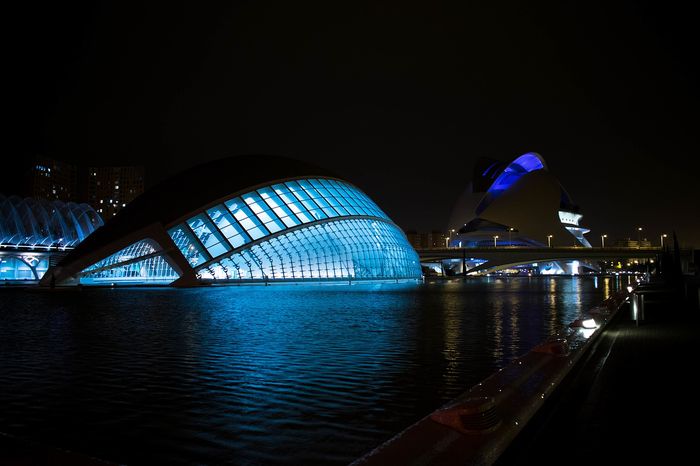
The City of Arts and Sciences
The eye-shaped Hemisfèric with its IMAX screen, a science museum where you touch the exhibits, and the Oceanogràfic with a tunnel through the shark tank. The aquarium alone is €36–43 depending on the season, and with the museum and the Hemisfèric €44–51. All three take a full day; walking between the buildings and round the pools is free.
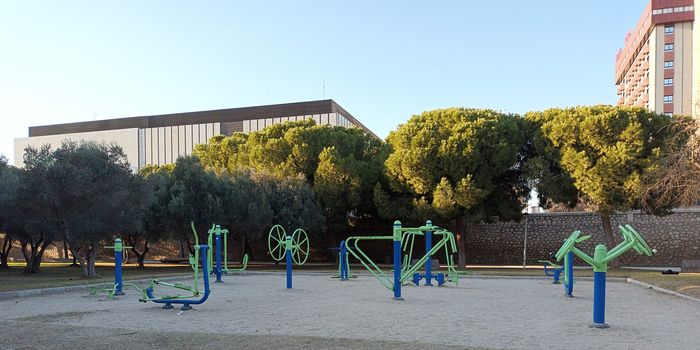
The Turia, a park without a river
The park is the fastest way to cross Valencia end to end by bike — the bed sits below street level, so you pass under the bridges without a single traffic light. Along the way are playgrounds, running tracks and the giant Gulliver that children slide down.
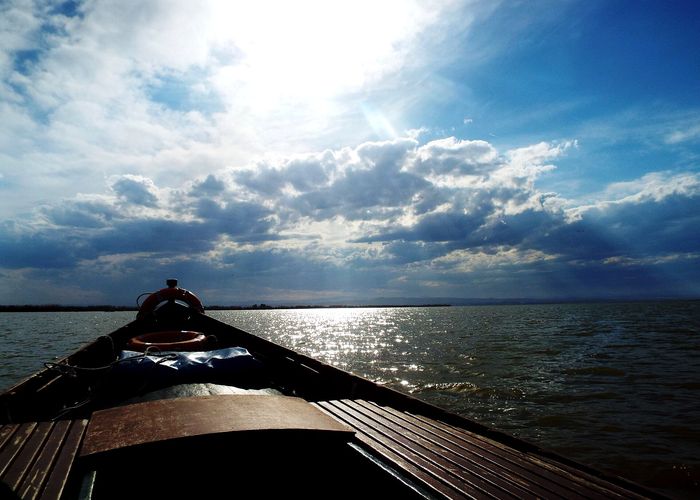
Paella and the Albufera
Valencian paella has chicken, rabbit, flat green beans and big white butter beans, and it is lunch, not dinner. For the version cooked where it began, city bus 25 takes about forty minutes to El Palmar, on a lagoon of twenty-one square kilometres.
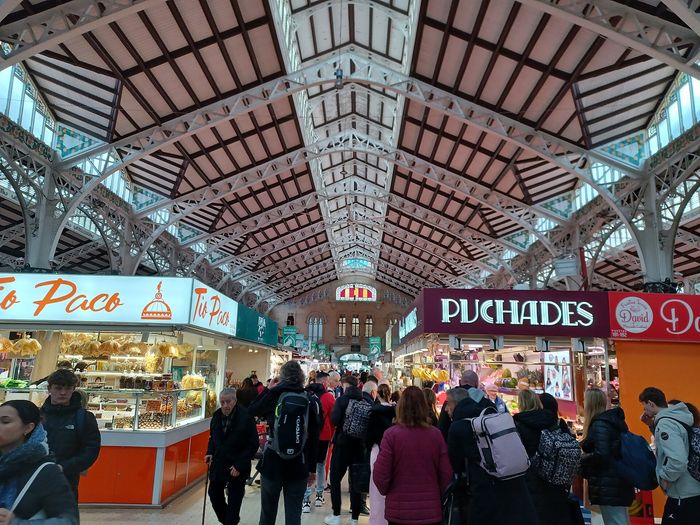
Mercat Central
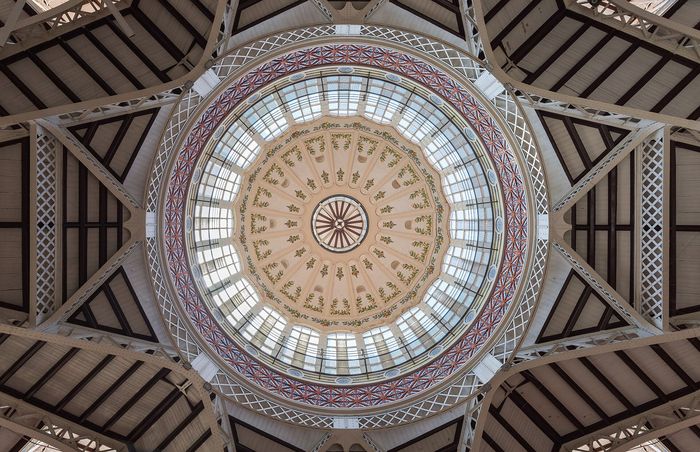
A modernista market opened in 1928, over eight thousand square metres on two levels under glass and iron domes, across from the silk exchange. It runs Monday to Saturday from half seven to three and closes on Sundays — which makes it breakfast or an early lunch, not an afternoon errand.
A beach inside the city
Malvarrosa and Cabanyal are wide sand beaches with a promenade, and the tram runs out to them from the centre. Behind the sand is Cabanyal, a former fishing quarter of houses faced in ceramic tiles — lunch here is at a table, not on a towel.
The silk exchange and the cathedral
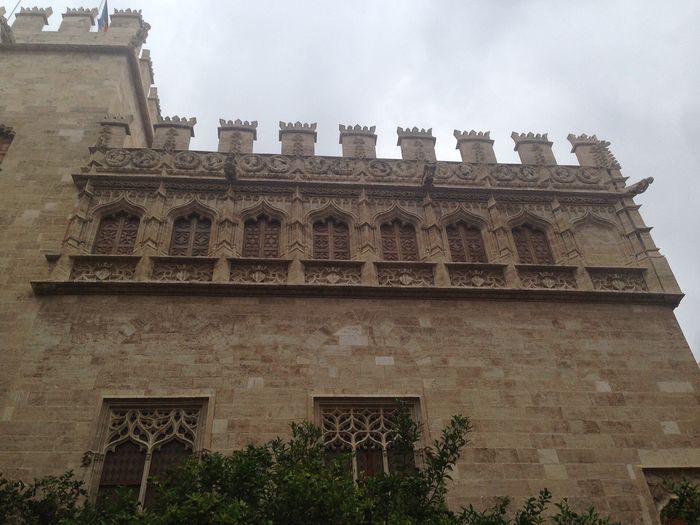
The late-fifteenth-century Llotja de la Seda went on the UNESCO list in 1996, and in its main hall the stone columns twist up into the vault like palm trunks. The cathedral, five minutes away, keeps a chalice it claims is the Holy Grail.


Stories from Valencia
How it actually was when we were there, and what was worth it.

Is Valencia a cheaper Barcelona? Where it is, and where not
→Three Gaudí buildings in Barcelona cost more than the whole of old Valencia. One Valencia ticket still costs more than the Sagrada Família.
Two things you probably did not know
After the flood of 1957 the river Turia was diverted around the city, leaving its bed empty through the centre. Instead of the motorway that was planned, a nine-kilometre park was laid out in the riverbed.
Paella comes from the area around Valencia and was not originally a seafood dish. The true Valencian version has chicken and rabbit, beans and snails; the seafood version came later and is a different dish.
Ready for Valencia?
Within reach from here
Places sorted by straight-line distance from Valencia — day trips or weekends.

Spain
→A country where dinner is at ten and the city wakes up as everywhere else turns the lights off

Portugal
→A country that spent centuries looking at the ocean instead of the Europe behind it

France
→From Paris the TGV reaches Lyon, Bordeaux and Strasbourg in about two hours — France is chosen by direction, not by city
All 277 places we write about sit on one page — narrow them down by continent, country, price or what you are travelling for.
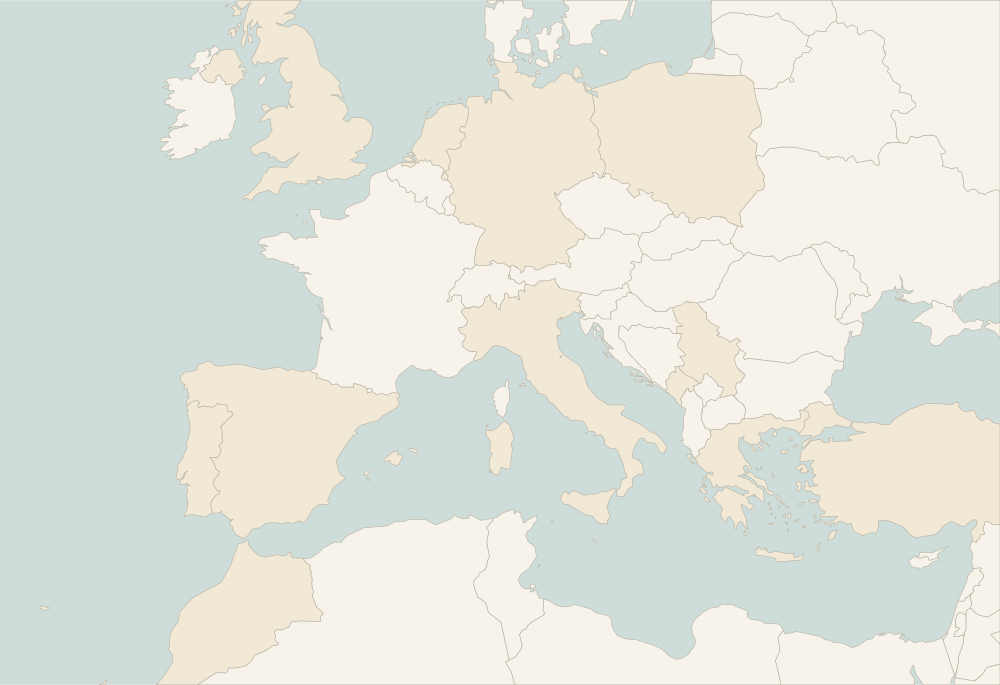
Within reach from here: Albarracín, Cuenca and Barcelona
See how much of that actually suits you — or pin Valencia if you have been.
Front row for the next trip
Leave your email and we'll let you know when a new destination or story goes up.