

What to eat in Zagreb
Zagorje-style štrukli open the meal and close it too, the Zagreb-style cutlet is for a proper dinner, and Dolac shows what arrived from the countryside that week.
- Štrukli
- Boiled or baked, €6.50–13
- Zagreb-style cutlet
- Ham and cheese inside breaded meat, €29
- For a holiday
- Sarma €13, turkey with mlinci €25
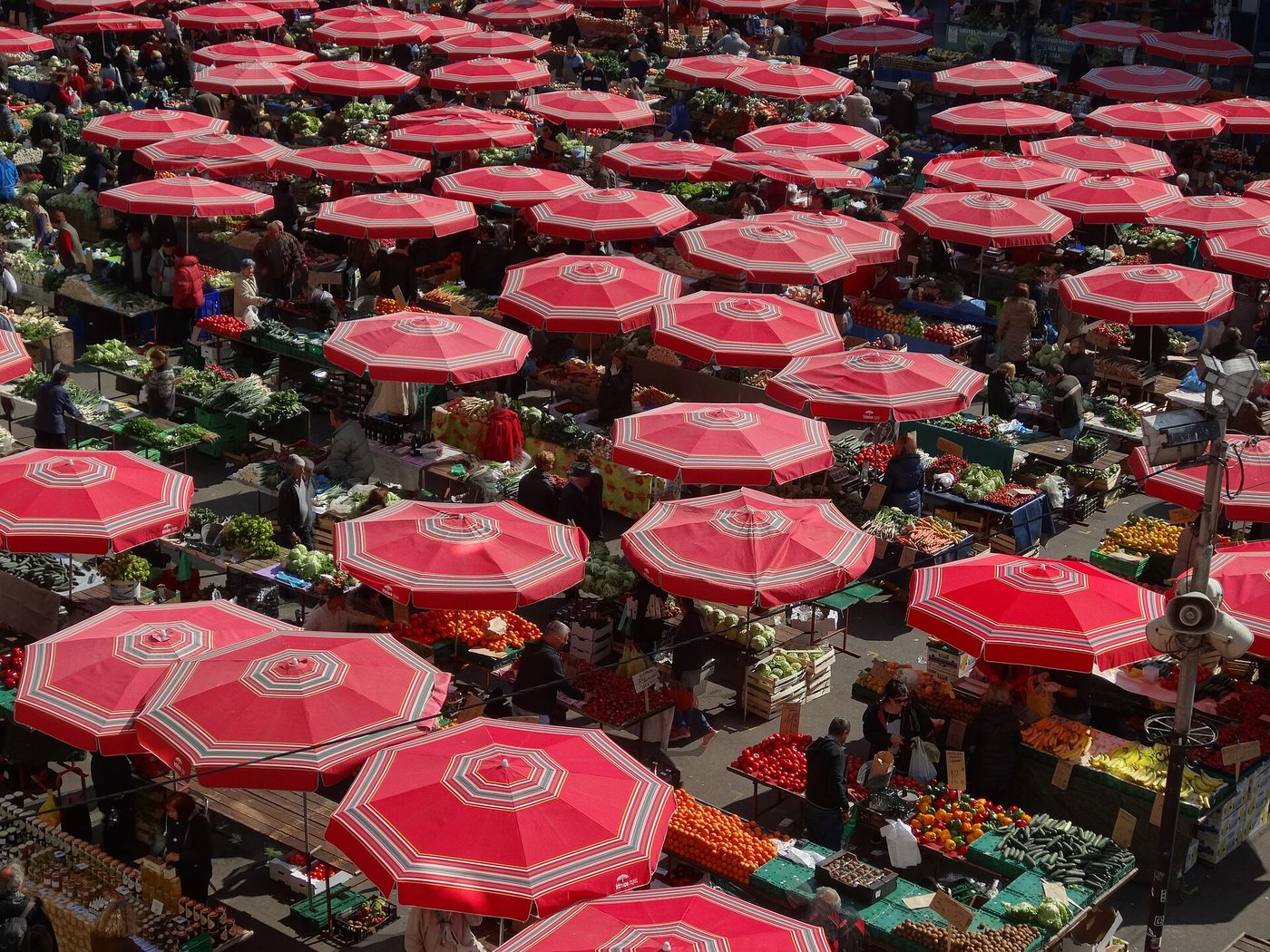
Zagreb's food is continental Croatian, closer to Vienna and Budapest than to the coast, and it leans on dough, cheese and meat. Štrukli turn up everywhere, from restaurants to bakeries, and the Zagreb-style cutlet wraps ham and cheese inside the meat before it is breaded. Dolac above the main square shows every day what has come in from the Zagorje region. What follows is the selection people actually order, with the price per portion.
Štrukli — boiled and baked
Zagorski štrukli (€6.50–13) are dough filled with fresh curd cheese, and they are served two ways. They are boiled in water or broth, as a starter or a side, or baked in the oven under sour cream or sweet cream, denser and closer to a dessert. They come from the Zagorje, the hilly region north of the city, and in Zagreb they are eaten every day, on a holiday and off it.


The cutlet, sarma and turkey with mlinci
The Zagreb-style cutlet (€29) is veal or pork wrapped around ham and cheese before it is breaded, which is what separates it from a Viennese schnitzel, meat alone. Sarma (€13) and turkey with mlinci (€25, a slow-roasted turkey leg with thin sheets of baked pasta) are holiday dishes. They stay on restaurant menus outside the holidays too, but are ordered more often around Christmas and Easter.

Dolac, from the food angle
Dolac is an open-air market, with fruit and vegetables on the upper level under red umbrellas and dairy and meat on the lower. This is where you buy the cheese for štrukli that someone else cooks at home, or the ingredients for a picnic on Lenuci's Horseshoe, while for a finished meal you head to a café or restaurant right around the market.

Coffee and quick bites
- Street food. Burek from a kiosk or bakery, €3.20 (burek), quick and no sitting down.
- Gablec. €7–12 for a set weekday lunch menu in the centre; the dish changes daily and is rarely offered at dinner.
- Restaurant, main course. €12–30, for sitting down with a menu.
- Coffee. €1.70–2.50, rarely drunk on the move; sitting over a coffee is a civic habit here.


Where to next
The best time to visit Zagreb
→Zagreb is continental with no sea to soften the summer: July averages above 23°C, January drops below zero, and April–June and September–October strike the best balance of weather and crowds.

Plitvice Lakes · 107 km
→Sixteen lakes that are still moving, because the water that makes them turns to stone

How well does Zagreb suit you?
→Six questions: a score for this place and others like it.
Nomadinho scores out of 100, the same ones behind “Where to go”.
If you like Zagreb
Three places with the closest scores, from any country.


Before you go
Short answers to what people ask most before setting out.
What to try first in Zagreb?
Štrukli (€6.50–13), boiled as a starter or baked as a denser sweet side, eaten everywhere.
What is a gablec?
A set weekday lunch menu, €7–12, common in the centre; the dish changes daily and is rarely offered at dinner.
When is Dolac freshest?
In the morning, before midday; the market's hours are Mon–Fri 6.30–16, Sat 6.30–15, Sun 6.30–14.
Ready for Zagreb?
Front row for the next trip
Leave your email and we'll let you know when a new destination or story goes up.