

What to eat in Split
Black risotto and pašticada are the main courses, soparnik from the Pazarić market is the cheapest thing on this list, and a Split konoba typically has no set lunch, just a menu.
- Black risotto
- €18–19
- Pašticada
- €20–29
- Soparnik (Pazarić)
- €0.80–1
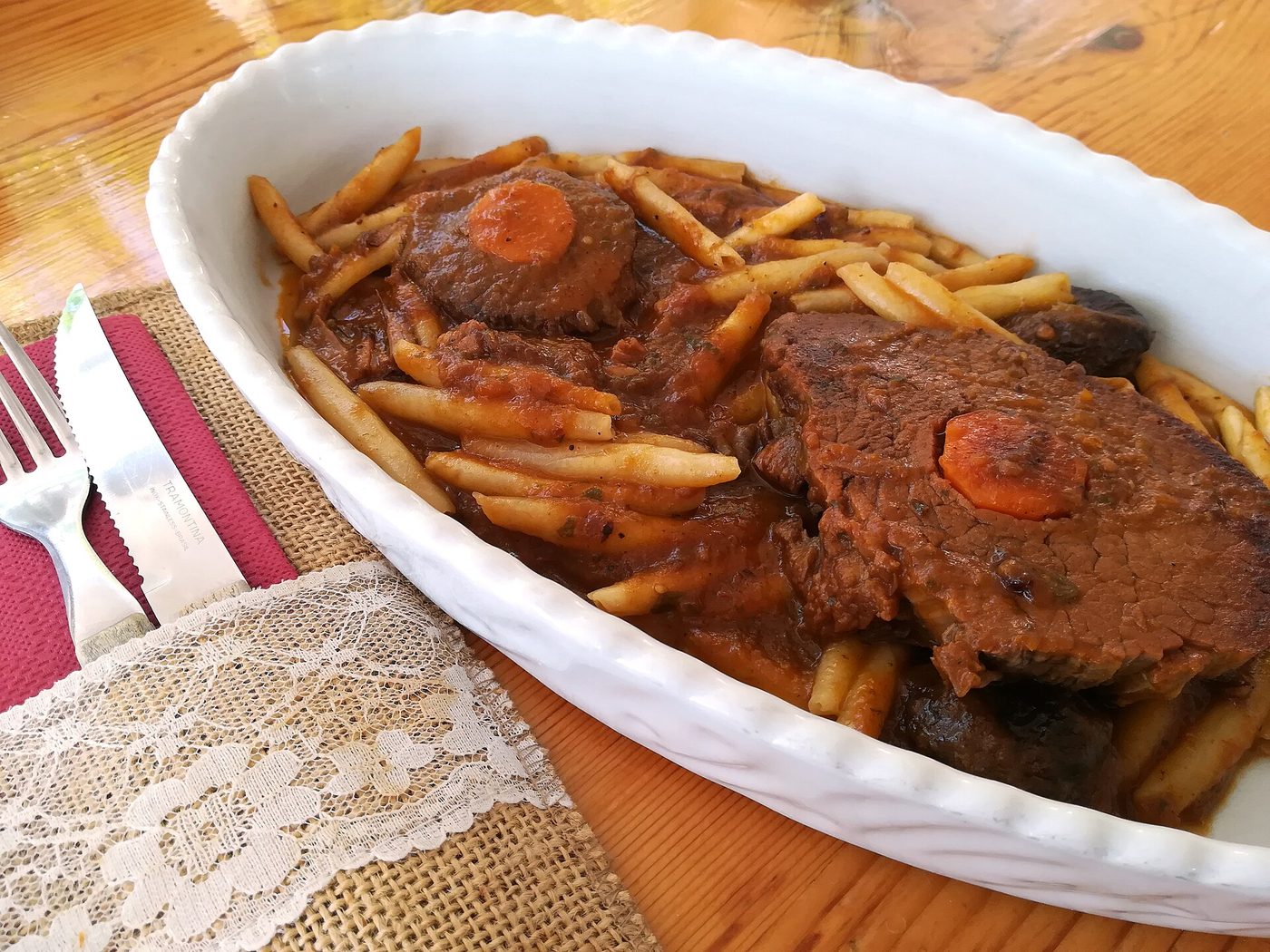
Dalmatian food in Split stays close to the sea and to slow cooking, and the two dishes ordered as a main course are black cuttlefish risotto and pašticada, a beef stew simmered for hours in wine. Soparnik, a chard pie from the Poljica district, is sold from stalls and eaten by hand, and fried squid completes what a Split table most often orders. The risotto, the pašticada and the squid are priced by the portion, the soparnik alone by the piece.
Black risotto and pašticada — the two main courses
Black risotto is cooked with cuttlefish ink and regularly costs €18–19 a portion. Pašticada is a Dalmatian beef stew, simmered for hours in wine and prošek, at €20–29. Neither comes as part of a fixed-price set meal, since Split's konobe mostly run à la carte, dish by dish.

Soparnik from the Pazarić
Soparnik is a thin pie filled with chard, made to a recipe from Poljica, the district east of the city, and on the UNESCO list of intangible heritage since 2016. It is sold by the piece at the stalls of the Pazarić, a small market beside the main Pazar, for €0.80–1, which makes it the cheapest meal on this list, and the best pieces sell out by late morning.

Fried squid and fish
Fried squid, usually in rings, runs €15 a portion and is standard at any konoba by the sea, while fresh fish is sold at the Peškarija, west of the Pazar, before it turns up on any menu.

Prices with no set lunch
Street food such as a burek from a kiosk runs around €1.50–2.50 (burek), and a main course at a plain konoba, without drinks, is €18–19 (black risotto). Split has no fixed set lunch of the kind some other cities on this site have, since the konobe work from a menu item by item, so the day's food bill is added up from single prices rather than paid as one lunch price.

When and where to eat
The Pazar and the Peškarija work best before midday, while the stock is fresh, and the konobe in the palace lanes also run into the evening.


Where to next
The best time to visit Split
→Split month by month in numbers: July is both warmest and driest, November wettest, and June and September strike the best balance of heat and crowds.

Hvar · 37 km
→Nightlife at one end, a field divided twenty-four centuries ago at the other

How well does Split suit you?
→Six questions: a score for this place and others like it.
Nomadinho scores out of 100, the same ones behind “Where to go”.
If you like Split
Three places with the closest scores, from any country.


Before you go
Short answers to what people ask most before setting out.
What to try first in Split?
Black risotto (€18–19) or pašticada (€20–29), the two dishes most often ordered as a main course in Split's konobe.
Where do you buy soparnik?
At the stalls of the Pazarić, a small market beside the main Pazar, for €0.80–1 a piece, and the best pieces sell out by late morning.
Do Split konobe have a set lunch?
Mostly not, since they run à la carte, from a menu, so the day's food bill is added up from individual prices.
Ready for Split?
Front row for the next trip
Leave your email and we'll let you know when a new destination or story goes up.