

- Published
- 28 September 2026
- Reading
- 4 min read
- Where
- Tunis, Tunisia
- Prices checked
- 28. Sep 2026.
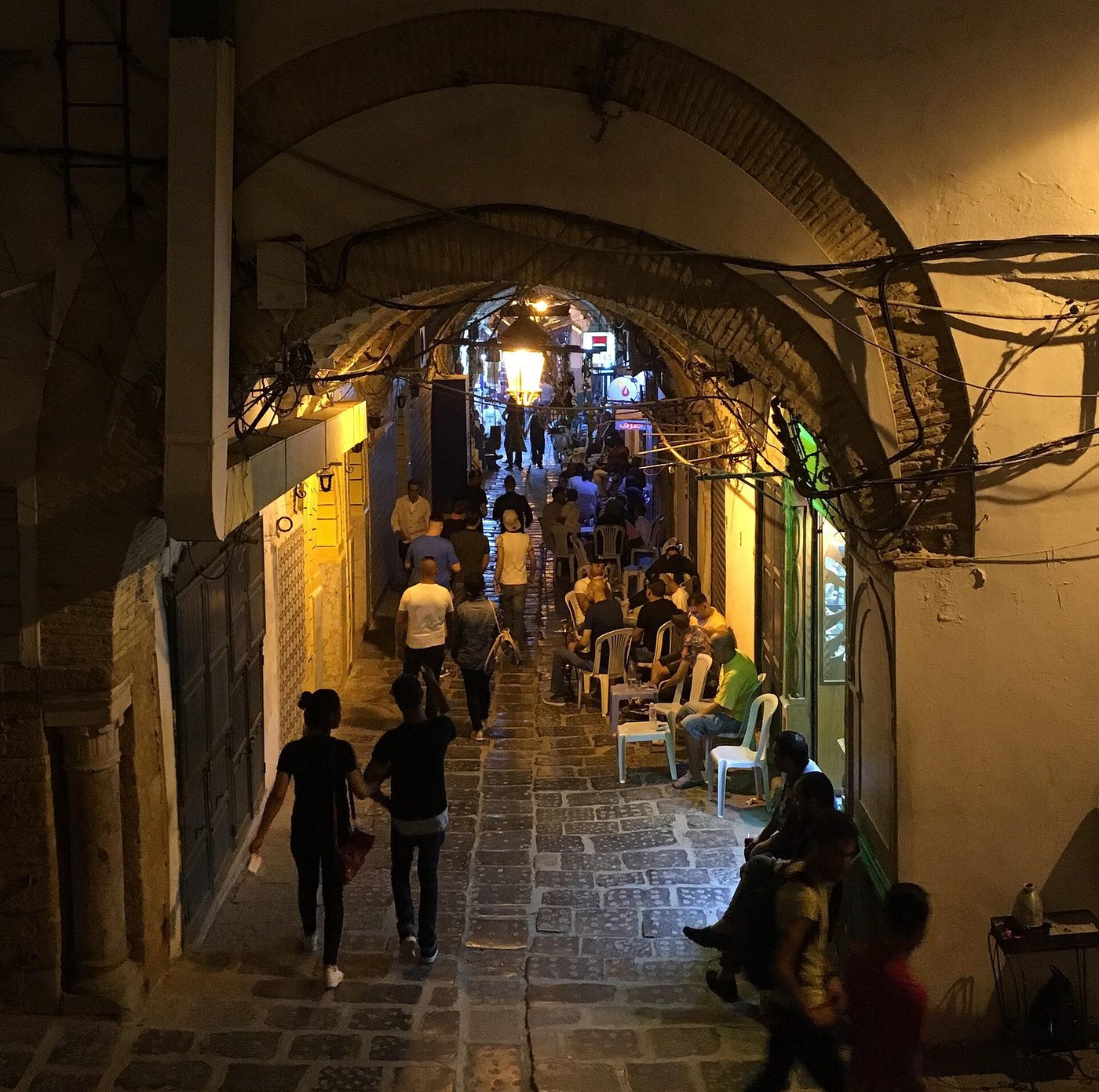
Sites open shorter hours, restaurants in the medina pull down their shutters, and after sunset the city changes pace. None of it closes the trip off, it just moves it.
Ramadan does not close Tunisia to visitors, but it shifts the clock that work, meals and nights out all run on. Nine monuments and sites are run by the AMVPPC heritage authority, which shortens their hours for the fasting month. Restaurants in the old medinas pull down their shutters by day. After sunset the city runs later than usual, so a day is easier to plan around the evening than around noon.
Shorter hours
The Ribat of Sousse stays open until half past five in winter and seven in summer, and in Ramadan winter 8am–5.30pm, summer 8am–7pm, Ramadan 8am–5pm, two hours short of the summer close. The Archaeological Museum in the Sousse kasbah does the same, winter 9am–5pm, summer 9am–6pm, Ramadan 9am–4pm. In Mahdia, Borj El Kebir runs winter 9am–4pm, summer 9am–5pm, Ramadan 9am–4pm year-round, so the fast shows most there. Instead of closing at five, the old gate shuts at 9am–4pm, so the fortress belongs in the morning.
Official ticket
- Winter
- 8am–5.30pm
- Summer
- 8am–7pm
- Ramadan
- 8am–5pm
Through a partner
- options with a guide or audio guide
- usually costs more than the official ticket

Cafés and restaurants by day
Restaurants and cafés shift too. In the tourist zones, meaning the hotels, Hammamet, the Sousse marina and Djerba, they keep their usual daytime hours, since their guests are not fasting. Inside the medinas and in residential streets fewer places open by day. The ones that do stay open work discreetly, often with paper over the window, out of consideration for a fasting neighbourhood, not because a rule demands it. After midday a hot coffee is easier to find in a hotel or beach zone than behind a medina gate.
Eating and drinking outdoors
Outside those places the rule differs. Inside a hotel, a tourist restaurant, a private space or a car, eating and drinking carry no restriction. On a street, a square or in a park it is avoided by day, out of respect, as in someone else's home. A cigarette and a bottle of water on a bench in a medina at noon draw more attention than the same thing at a table five steps away. Stepping into the first open café beats hunting for a quiet corner.
Iftar and the night in the medina
When the sun sets the medina changes shift. Shutters go up, the narrow lanes fill, and the next hour or two are the busiest of the day, because after iftar people go out for tea, sweet pastries and a long walk. Restaurants empty or shut by day seat a second round of tables, and the streets around the souk stay busy late, so the day's busiest stretch moves from afternoon to night.

Eid at the close
Eid al-Fitr, three days of celebration, closes out the month. Schools and most businesses stop, and families gather, making it the one stretch when sites and some services shut rather than run shorter hours. In 2026 Eid falls on 20 March, and for 2027 early forecasts put the start of Ramadan around 8 or 9 February and Eid around 9 or 10 March, though the sighting of the new moon confirms the exact day.

Check the same room on both sites: price and cancellation terms can differ.
Tunisia, in brief
What now
If this sounds like your trip, start here.

Tunis
→The capital the charters skip: a medina that is real rather than a set, the museum with the most Roman mosaics anywhere, and Carthage at the end of a suburban train

Tunis in 2 days
→The medina and the Bardo on day one, Carthage and Sidi Bou Said on day two, with two days done entirely on foot and by suburban train.

Day trips from Tunis
→Carthage by train, Dougga with a driver, Bizerte by train and Cap Bon by car: the trips from Tunis ordered from the nearest, by whether they need a car or only a train ticket.

Where to stay in Tunis
→Tunis is rarely chosen for its hotels, and far more for how short the walk is from the bed to the old medina or to the train for Carthage.

What Tunis costs
→Tunis is one of the cheaper capitals on the Mediterranean, and the biggest cost of the day is not a ticket but the choice of where to eat.

The Tunis guidebooks skip
→Three places in the medina that no hotel map marks: a palace that is still free to enter, a herb souk with seven centuries of trade behind it, and a bathhouse that still heats its water.

What to eat in Tunis
→Harissa on every table, a brik with a runny egg, lablabi in a bowl of torn bread and fish by the kilo on the coast: Tunisian food is spiced, cheap and almost never found in the hotel.
The best time to visit Tunis
→Tunis has no beach as a reason to come, so the date is chosen by the temperature for walking the medina rather than by a swimming season.

Getting around Tunis
→One direct bus from the airport, a pair of feet in the centre and the medina, and one suburban train for everything further out, so Tunis moves in layers rather than on a single ticket.

Mistakes everyone makes in Tunis
→Five small mistakes can ruin a day in Tunis before anyone notices what happened, and each has an easy replacement that costs no time.

Tunisia
→Ten towns in a line, from the capital to the sand at Tozeur — in the order they're actually travelled, not listed

Tunisia or Morocco for a first time in North Africa
→Two countries with the same brochure of medinas, desert and Roman ruins differ in one thing more than in all the rest, which is how far you drive between places.

El Jem after the Colosseum: all of it on one ticket, no time slot
→At the Colosseum you choose between the underground and the upper tiers. At El Jem you do not, and that is the reason to see it even after Rome.

Two days in the Sahara from Tunisia that are actually worth it
→The Tunisian desert is sold as a day trip from a beach hotel. That is five hours each way for one hour on a dune, and the sums do not work.
Tunis, Sidi Bou Said and Hammamet from this story
See which of them suits you, then pin what you have already done.
Front row for the next trip
Leave your email and we'll let you know when a new destination or story goes up.