

Street food in Naples: pizza in hand, cuoppo, frittatina and sfogliatella
- Published
- 30 September 2026
- Reading
- 6 min read
- Where
- Naples, Campania
- Prices checked
- 21. Oct 2026.
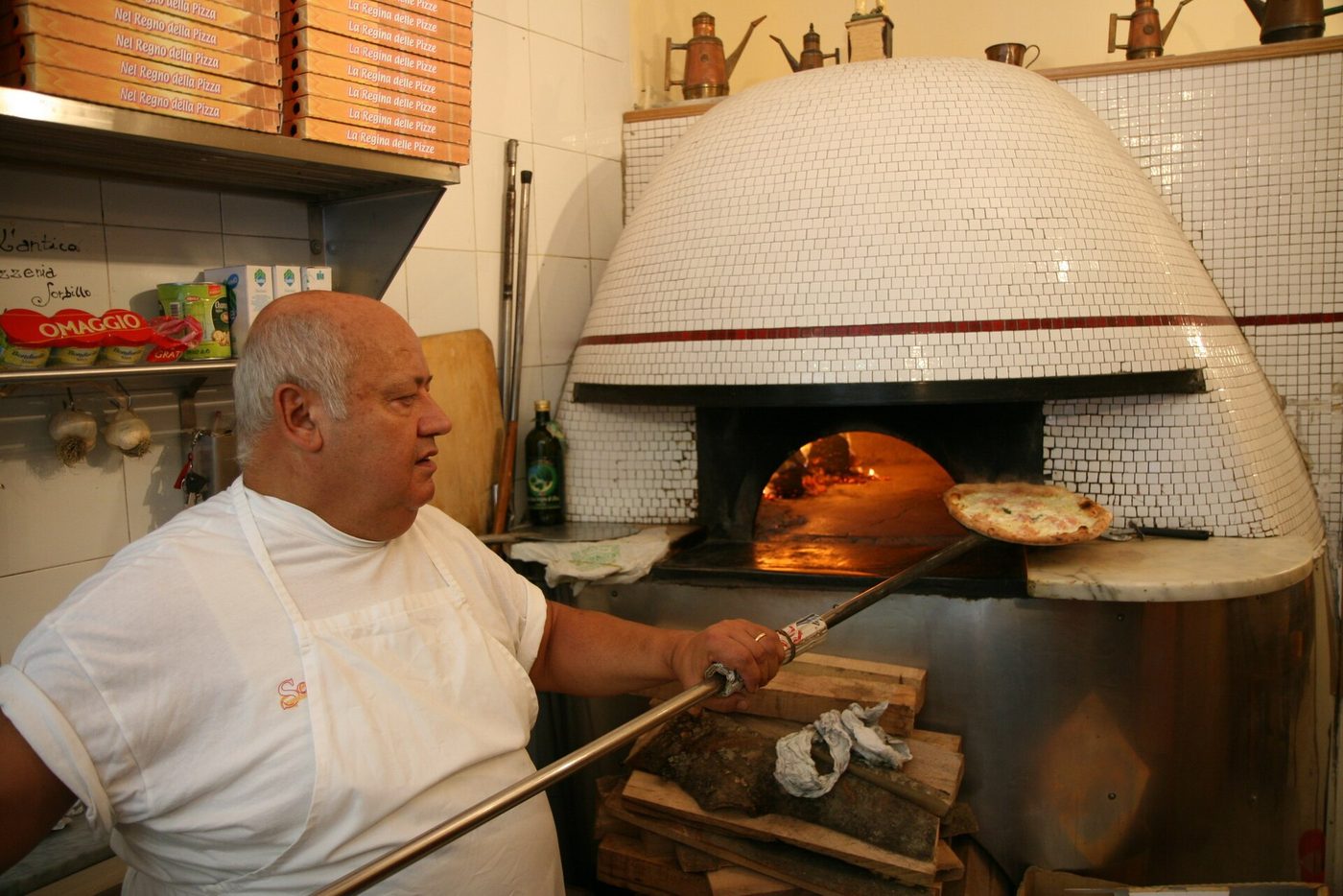
A walking order for Naples street food: a folded pizza, paper cones of fried fish and dough, pasta croquettes, and pastry to finish, with the counters worth stopping at.
Naples is best eaten standing up, and the order matters more than the menu. Pizza comes first, anything fried next, something sweet to close. Sit at a table and the same dishes cost more and arrive colder, so start at a street counter and keep walking. Nobody on this route will hand you a knife.
Pizza, a craft with a UNESCO stamp
UNESCO did not list the pizza in 2017. It listed the art of the Neapolitan pizzaiuolo, the craft of around 3,000 pizza makers who learn beside a master in the bottega and work the dough with a rotating motion before it meets a wood fire. The EU rules for the protected version allow only marinara and margherita, baked at about 485 °C for 60 to 90 seconds. A margherita in a pizzeria averages €6.70. Da Michele, on Via Cesare Sersale 1 and open since 1870, makes the wait outside part of the ritual, so take a number and treat the queue as the first course.
A food tour with a local guide: several tastings in one walk.

Pizza a portafoglio, the wallet pizza
The pizza built for walking is the pizza a portafoglio, a small margherita baked in about 90 seconds and folded into quarters with its paper. Order it at the street counter of Antica Pizzeria Di Matteo, on Via dei Tribunali 94, not in the dining room: it is faster and cheaper there, and the cheese is still molten. Local lore says Bill Clinton ate one in July 1994, during the G7 summit, and a photo of it decorates the menu cover. Take the pizza and ignore the fried food sitting in the display case.
Pizza fritta, the pizza paid for in eight days
Sophia Loren did not invent fried pizza, whatever the legend says. After the war a wood oven was a luxury, so women in ground-floor flats fried discs of dough at home and sold them to the street. The custom that made it famous is the pizza a otto: eat now, pay in eight days. De Sica's L'oro di Napoli, from 1954, put Loren in the episode "Pizze a credito" as the wife of a fried-pizza seller, and the film made popular what scarcity had already made ordinary.
Cuoppo, a cone of fried things
The cuoppo is a cone of absorbent paper filled with fried food, a habit from the nineteenth century, when unsold market fish went into the fryer. The di mare holds anchovies, calamari and prawns, the di terra holds zeppoline, crocchè and arancini, and the dolce holds sweet zeppoline. A cone costs €4–7, close to the €4–7 a whole street meal runs. Eat it within five minutes and leave the top open, because a pinched cone traps steam and softens the batter. Il Cuoppo Friggitori Napoletani, on Via San Biagio dei Librai 23, draws a Saturday queue of up to half an hour, and a queue here means turnover. Friggitoria Fiorenzano, on Via Pignasecca 48, has fried since 1897.
Frittatina, pasta in a golden crust
Frittatina is pasta in disguise: pasta bound with béchamel, minced meat, peas, provola and ham, shaped into a ball and fried until the crust turns gold. It costs €2–5. Ask for it appena fatta, just made, and walk away from anything waiting under a heat lamp. Rosticceria Vestuto, on Piazza Gian Battista Vico 43 in San Carlo all'Arena, serves it that way.

Sfogliatella and babà, sweets to finish
Sfogliatella comes in two kinds with the same filling of semolina, ricotta and candied citrus. Riccia is hundreds of thin layers of pastry that crackle at the first bite, while frolla is a soft, crumbly dome, and the verdict is riccia, eaten warm. Legend traces it to the convent of Santa Rosa at Conca dei Marini, and Pasquale Pintauro was selling it on Via Toledo in 1818. For a warm one, go early to Antico Forno delle Sfogliatelle Calde Attanasio, on Vico Ferrovia 1 beside the central station, and bring cash. A sfogliatella costs €1.50–3. A babà, the cake soaked in rum syrup, runs €2–5, and a good one releases syrup when pressed.


Check the same room on both sites: price and cancellation terms can differ.
Italy, in brief
What now
If this sounds like your trip, start here.

Naples
→The one big Italian city that doesn't look tidied up for your benefit
Naples in 2 days
→The old town and what lies under it on day one, Capodimonte and the shore on day two, and the ruins as a third day of their own.

Day trips from Naples
→Pompeii, Herculaneum, Vesuvius, Capri and the Amalfi coast — five trips from Naples, and only Herculaneum and Vesuvius share a day.

Where to stay in Naples
→Centro storico puts everything within reach and never quite goes quiet, Chiaia is calmer and pricier, and near Garibaldi the bed is cheapest, with the line to Pompeii right outside in the morning.
What Naples costs
→The ruins are the priciest item in a day, street food costs less than it looks, and the old town itself is seen without a single paid ticket.

Naples off the main route: a chapel, a cloister, an arcade and a cemetery
→A Caravaggio in a chapel built by a brotherhood that ransomed prisoners, a cloister sheathed in majolica, a…
What to eat in Naples
→A pizza the rules recognise in two versions, a sfogliatella in two pastries and a ragù that simmers from morning — and what a margherita costs.

The best time to visit Naples
→Summer heat pushes the plan toward Capri and Amalfi, and a rough sea after an autumn storm can shut both the hydrofoil and the Blue Grotto.

Getting around Naples
→Capodichino is the only airport, a bus runs straight into the centre, and anyone heading uphill on the Montesanto funicular has found the doors shut since 15 May 2026.

Mistakes everyone makes in Naples
→The costliest mistakes in Naples happen before you even reach the ruins — at the wrong station, with the wrong ticket, or queuing for a funicular that isn't running.
The neighbourhoods of Naples
→Rione Sanità holds bones and catacombs, the Quartieri Spagnoli a mural that became a shrine, and Vomero a view and a fortress: none of the three makes the list for a place to stay.

Italy
→The cities on the high-speed line are an hour or two apart; the coast, Matera and the Tuscan hills lie off it

The Tuscany everyone photographs isn't in any town
→The Tuscany on the postcard has no name on the map and no entrance gate. It is a view from a road, so the real question is where you can stop the car.

Rome for a weekend: what we spent, and what we would change
→The bill from one October 2025 weekend in Rome, line by line: two people, two days, no luxuries, and the three decisions that would change it next time.

Pompeii and Herculaneum from Naples: what fits into one day
→Pompeii and Herculaneum are a train ride from Naples, while Vesuvius needs a transfer uphill, which is why the day so often gets overpacked.
Front row for the next trip
Leave your email and we'll let you know when a new destination or story goes up.