

- Published
- 6 October 2026
- Reading
- 7 min read
- Where
- Petrovaradin
- Prices checked
- 6. Oct 2026.
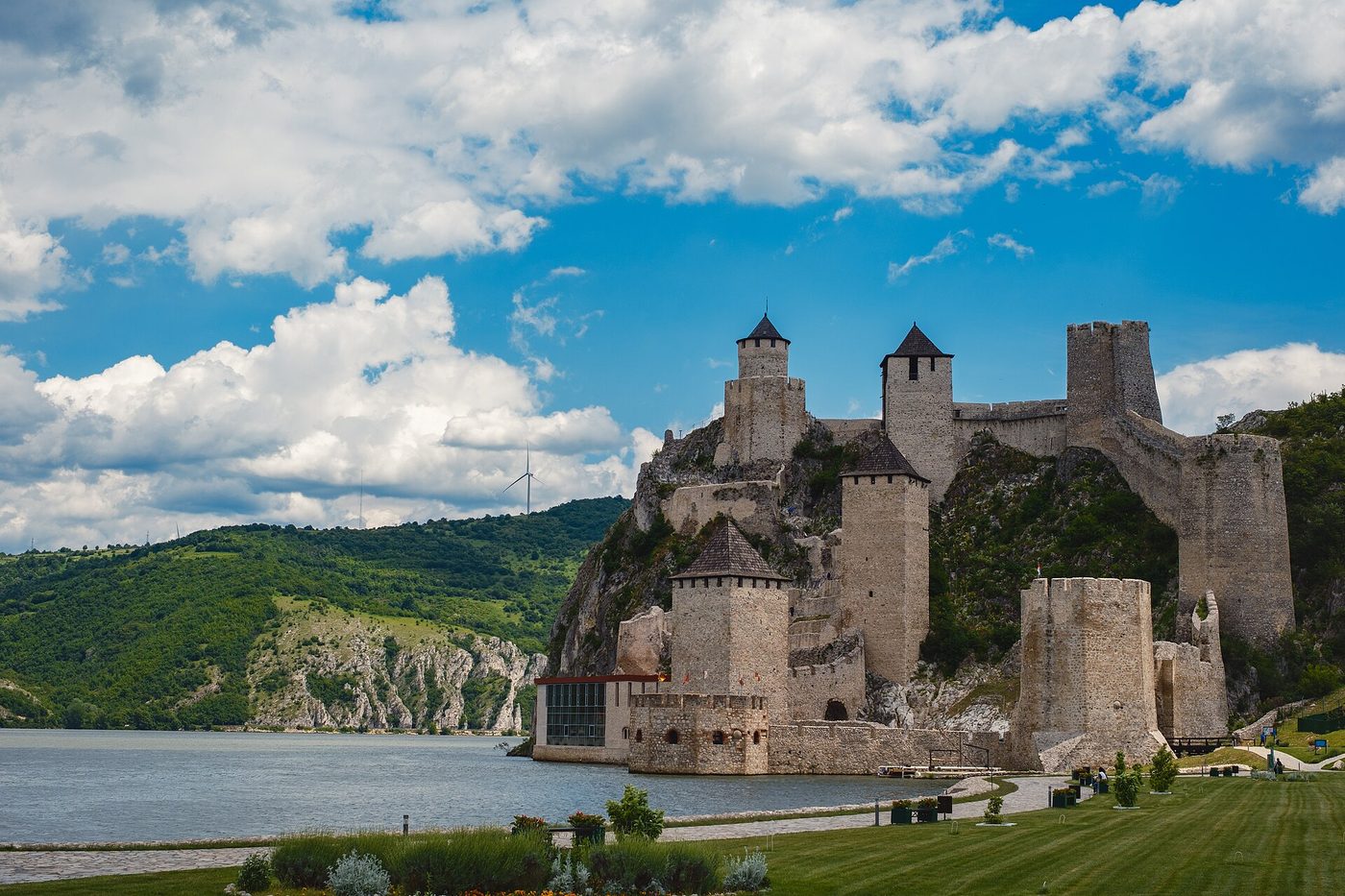
The Danube in Serbia carries a string of fortresses that are visited in the order the river flows, from a Habsburg one at Novi Sad to a medieval one in the gorge, with Niš kept for a separate day.
Five of Serbia's great fortresses stand on the Danube, so the easiest tour follows the current: Petrovaradin at Novi Sad, Kalemegdan in Belgrade, then Smederevo, Ram and Golubac. Niš, the sixth, sits on the Nišava and wants a day of its own. Their walls span four centuries, from the 14th to the 18th, raised by Serbian despots, Ottoman sultans and Habsburg engineers. Three of the six cost nothing to enter, so the cost of the route is mostly the road.
The Habsburg Gibraltar
Petrovaradin faces Novi Sad across the river and is known as the Gibraltar of the Danube. The first stone of the huge Habsburg fortress was laid on 18 October 1692, and the fortress was finished only in 1780, with more than 16 kilometres of tunnels and countermines underneath.
Its clock tower has the hands the wrong way round, the short one showing the minutes, so that fishermen on the river could read it from afar. Entry is free and the grounds are open 24/7, all year. From Belgrade the Soko train takes 36 min, and it stops at Petrovaradin itself; the GSP bus from there to the centre is free.

Where two rivers meet
Belgrade Fortress stands above the confluence of the Sava and the Danube, on the spot where a Roman camp grew out of the Celtic Singidunum. It remained a military site until 1867, when Serbia took it over. Today the green Upper Town is a park with the Victor monument, the Military Museum and the so-called Roman Well, which is in fact an eighteenth-century Austrian cistern.
More than two million people pass through every year, and entry to the grounds is free. It is a walk of minutes from the centre, so it fits any hour of the day.

A capital in stone
Smederevo, 46 kilometres south of Belgrade and about 45 minutes by car, is the last great work of medieval Serbian military building. Despot Đurađ Branković began it in the autumn of 1428 and the fortified town was complete by 1439, a vast triangle of 25 towers where the Jezava meets the Danube.
It was the capital of the Despotate until 1459. In June 1941 ammunition stored inside exploded and wrecked much of the town. The Great Town is free and the Small Town, the inner citadel, is €2.13. Hours are Great Town 7–22, Small Town 8–20, daily. The fortress has stood on Serbia's tentative UNESCO list since 2010.
Official ticket
- Great Town
- free
- Small Town
- €2.13
- Open
- Great 7–22, Small 8–20
- From Belgrade
- 46 km, about 45 min by car
Through a partner
- options with a guide or audio guide
- usually costs more than the official ticket
Compare rental prices before you go, then pick the car up at the airport or in town.

The sultan's fortress
Ram is a smaller fortress: Sultan Bayezid II ordered it in 1483 on a rock above the river, one of the oldest artillery forts in Serbia, with five towers and 36 gun ports. Here the Danube is about five kilometres wide, and the view across it is what you climb for. The restoration that ended in 2019 rebuilt its walls.
It lies roughly 110 kilometres from Belgrade, or across the river by ferry from Banatska Palanka. Entry is about €3.41 and the fortress is open daily 10–18.
Official ticket
- Entry
- about €3.41
- Open
- daily 10–18
- From Belgrade
- roughly 110 km
- Ferry
- from Banatska Palanka
Through a partner
- options with a guide or audio guide
- usually costs more than the official ticket
The gorge gate
Golubac closes the route and is its most dramatic stop. Built in the 14th century on the south bank, about four kilometres downstream of the town, it has ten towers in three compounds and is said to have repelled more than 120 attacks, as it passed between Ottomans, Hungarians and Serbs. Restoration ran from 2014 to 2019, when it reopened in full, and a 152-metre tunnel now carries the road past it.
Tickets are sold by zone, from €8.09 to €21.30, and the hours are 10–18 in summer, 10–14 in winter (changes monthly). The fortress is closed on Monday. It is about two hours by car from Belgrade, so Golubac is best as the last stop of a day or the first of the next.
Official ticket
- Tickets
- €8.09–€21.30, by zone
- Summer
- 10–18
- Winter
- 10–14
- Closed
- Mondays
Through a partner
- options with a guide or audio guide
- usually costs more than the official ticket

The fortress on the Nišava
Niš lies away from the river and is its own trip. The fortress was raised in 1719–1723 by the Ottomans on the right bank of the Nišava, over Roman and Byzantine remains, with four gates, eight bastions and about 22 hectares inside.
It is now a park and a venue: the Bali-bey mosque stands within, and the Niš Film Festival has been held here since 1966. The fortress is open daily, 24 hours and entry is free, which makes it the easiest of the six to fit into a day.

Check the same room on both sites: price and cancellation terms can differ.
Serbia, in brief
What now
If this sounds like your trip, start here.
Belgrade
→A city that isn't beautiful and could not care less

Belgrade in 2 days
→Kalemegdan, Savamala and Zemun in two days — with one evening that is not spent in the centre.
Day trips from Belgrade
→Novi Sad is the nearest by train, Đerdap and the Ovčar-Kablar gorge want a car and about two hours' drive, and Deliblato Sands is a plain that looks like a desert.

Where to stay in Belgrade
→Belgrade is chosen by how far you walk to Kalemegdan, not by the river view — Dorćol for a first stay, Vračar for quiet, Zemun for budget.

What Belgrade costs
→Serbia isn't in the eurozone — everything here is converted from dinars, and the biggest difference from other cities is that public transport doesn't enter the sum at all.

Belgrade off the main axis: a bunker, a river tower and Tito's tomb
→A bunker opposite the Victor, a tower on the Danube and a grave in a winter garden — Belgrade off Knez Mihailova.

What to eat in Belgrade
→A kafana is not a restaurant, meze is not a starter, and a portion is for two — three rules that explain the bill.

The best time to visit Belgrade
→Belgrade has no sea to soften the summer and no mountain to shorten the winter — May, June and September strike the best balance of weather and crowds.

Getting around Belgrade
→Belgrade has no metro — construction began in April 2026 — but the bus, tram, trolleybus and BG voz trains are free, so it barely shows.

Mistakes everyone makes in Belgrade
→A metro that's still being built, euro that nobody takes, and Cyrillic on a sign nobody expects — mistakes that cost time here, not just money.

Castles of Slovakia: six fortresses from Bratislava to Spiš
→Six castles stand between the Danube and the Spiš plateau, so they are visited from west to east.

Castles of Austria: six strongholds from Vienna to Innsbruck
→Austria's castles can be visited from east to west, from the Vienna area through Styria and Salzburg to Tyrol, because each of the six is a trip from a larger city.

Castles of Bavaria: Ludwig's palaces and Nuremberg from Munich
→Ludwig's palaces lie in three directions from Munich, and Nuremberg in a fourth.

Castles of Czechia: six castles from Prague to Telč
→Czech castles chain well into one route: Prague and two trips from it, then South Bohemia, then Telč. From November several open only some days.
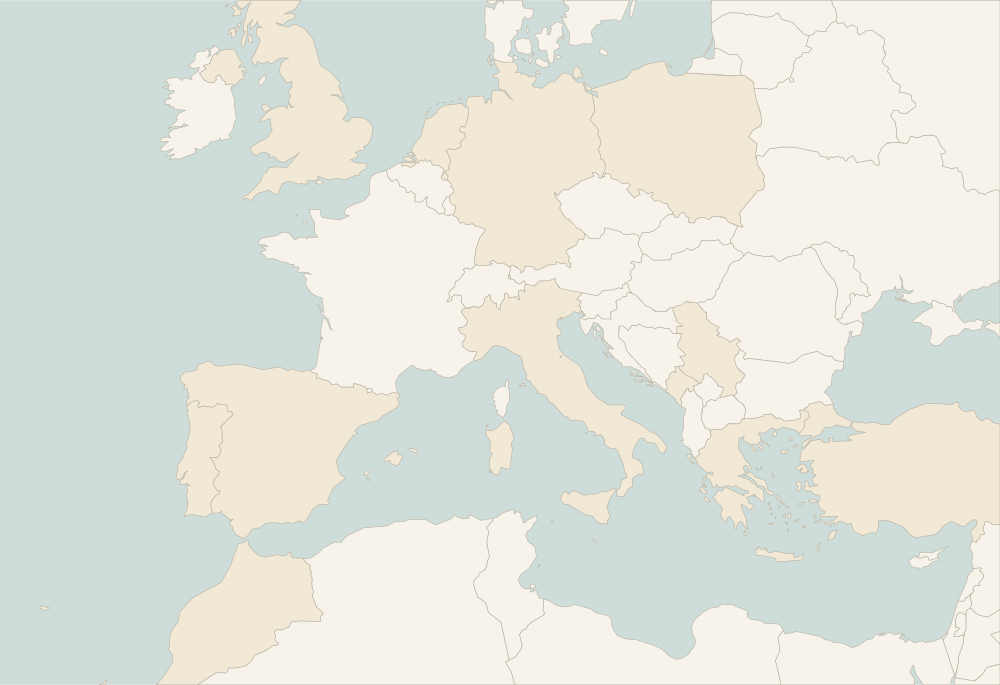
If this sounds like you, there is also Belgrade, Novi Sad and The Iron Gates
Petrovaradin has no page of its own yet, but the region does. See which of them suits you, then pin what you have already done.
Front row for the next trip
Leave your email and we'll let you know when a new destination or story goes up.