

Castles of Austria: six strongholds from Vienna to Innsbruck
- Published
- 7 October 2026
- Reading
- 7 min read
- Where
- Vienna
- Prices checked
- 7. Oct 2026.
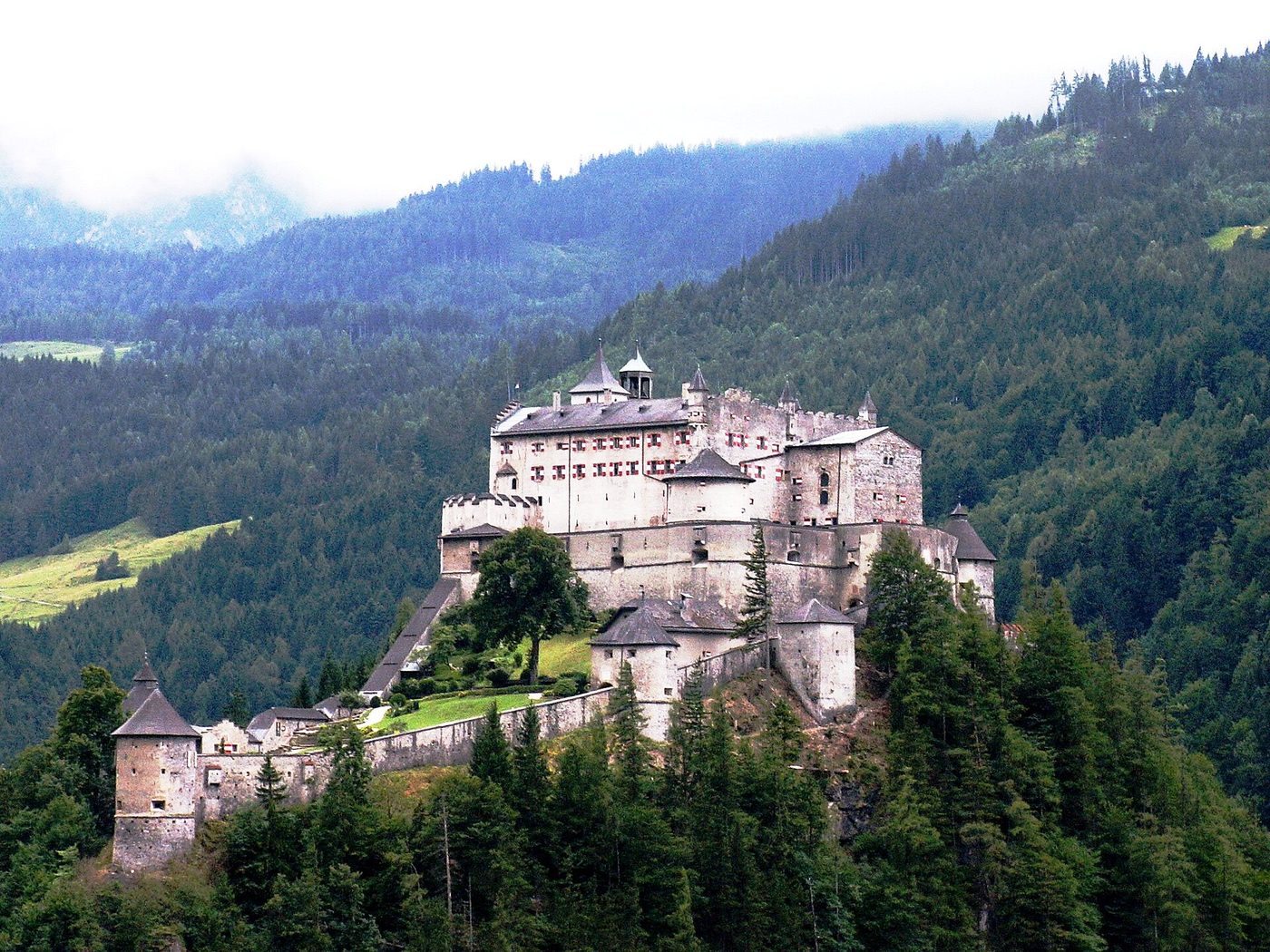
Austria's castles can be visited from east to west, from the Vienna area through Styria and Salzburg to Tyrol, because each of the six is a trip from a larger city.
Austria keeps its castles close to its cities, so the route runs from east to west. Two stops lie around Vienna, one in green Styria, two in the Salzburg area and the last above Innsbruck. The six are very different in age and in purpose, from a medieval fortress that was never taken to a Habsburg summer palace and a castle rebuilt in the 19th century. Each one is a day trip from the nearest city, so you can base yourself in Vienna, Graz, Salzburg and Innsbruck and drive or ride out.
A medieval castle built in the 1800s
Kreuzenstein stands on a ridge above Leobendorf, north of Vienna, and looks like a medieval castle that was never touched, although most of what you see was rebuilt in the 19th century. The counts of Formbach raised the first fortress in the 12th century, the Habsburgs took it in 1278, and Swedish troops under Torstensson destroyed it in 1645.
Count Johann Nepomuk Wilczek began rebuilding it in 1874 from the original walls, the east tower and parts of the chapel. He added medieval pieces collected from other buildings, and the castle reopened in June 1906. Visits are by guided tour only, at €15, and the tours are in German with English information sheets on request. Hours: 1 April–31 October, Mon–Sat 10–16, Sun and holidays 10–17; guided tours only, on the hour. From Vienna take the S-Bahn towards Stockerau to Leobendorf-Kreuzenstein, then walk for about 40 minutes, or drive out on the A22 to the Korneuburg West exit.
Official ticket
- Ticket
- €15, guided tours only
- Apr–Oct
- Mon–Sat 10–16, Sun 10–17
- Tours
- on the hour
- From the station
- about 40 min on foot
Through a partner
- options with a guide or audio guide
- usually costs more than the official ticket
The summer palace
Schönbrunn is a palace rather than a fortress, and it belongs on the route because it shows what the Habsburgs built once they no longer needed walls. The State Apartments are the grand rooms of the main floor, and the longer tour also takes in the private rooms of Franz Joseph and Elisabeth. If you have time for only one Vienna castle, take this one, and keep Kreuzenstein for a second day.
The shorter State Apartments ticket takes about 40 minutes and is €30, while the Palace Ticket runs for about 75 minutes at €42, both with an audio guide. The palace is open daily from 8.30, closing at 17.30 (Jul–Aug 18.00, from 3 November 17.00), and since admission is by time slot it is better to book online. The park is free from 6.30, and line U4 stops at Schönbrunn.
Official ticket
- State Apartments
- €30, about 40 min
- Palace Ticket
- €42, about 75 min
- Open
- daily from 8.30
- Time slot
- book online
Through a partner
- options with a guide or audio guide
- usually costs more than the official ticket

A castle on a volcanic rock
Riegersburg sits on a volcanic rock in south-east Styria and is the largest fortress in the province. It is first mentioned in a document of 1128 and was extended in the 17th century. The Liechtenstein family has owned it since 1822.
Inside there are three museums, on the castle itself, on witches and on weapons, and a short funicular climbs the rocky slope for those who would rather not walk. The Ritter ticket, which covers the climb and the interiors, is €23.90, and the castle is open daily: to the end of April 10–17, May–Sep 9–18, October–1 November 10–17. It is 50 minutes from Graz by car and 1 hour 45 minutes from Vienna. By public transport, take the train to Feldbach and then RegioBus 406, which stops at the lift.
Compare rental prices before you go, then pick the car up at the airport or in town.

The fortress over Mozart's city
Hohensalzburg is one of the largest medieval castles in Europe, about 250 metres long and 150 metres wide. Building began in 1077 under Archbishop Gebhard. The only siege came in the Peasants' War of 1525, and the fortress did not fall. A funicular runs up from the old town.
The basic ticket, which includes the funicular, is €15.50, and the fortress is open May–Sep 8.30–20, rest of year 9.30–17. Allow 2 h.
Official ticket
- Basic ticket
- €15.50, with funicular
- May–Sep
- 8.30–20
- Rest of year
- 9.30–17
- Allow
- 2 h
Through a partner
- options with a guide or audio guide
- usually costs more than the official ticket

The castle with the falcons
Hohenwerfen was begun in 1077 as well, at the same time as Hohensalzburg and Friesach, and stands on a rock above the Salzach valley. Today it has a falconry demonstration twice a day and an exhibition on the Peasants' War.
The castle tour lasts about 50 minutes and is part of the all-inclusive ticket, which costs from €20.90 with the lift. Hours: May–Sep daily 9–17 (20 Jul–21 Aug to 18), April and Oct–Nov Tue–Sun 9.30–16. It lies about 30 minutes south of Salzburg by car. Regional trains run every half hour and take about 45 minutes to Werfen, and from the station it is a 30-minute walk or a shuttle, then the lift from the car park or a walk of about 20 minutes.
Official ticket
- All-inclusive
- from €20.90 with the lift
- Castle tour
- about 50 min
- May–Sep
- daily 9–17
- From Salzburg
- about 30 minutes by car
Through a partner
- options with a guide or audio guide
- usually costs more than the official ticket

A Renaissance Kunstkammer where it was made
Ambras stands above Innsbruck and is a Renaissance palace that Archduke Ferdinand II built from 1564 for his wife Philippine Welser. The Spanish Hall, 43 metres long and finished in 1572, holds concerts today. The Chamber of Art and Wonders is the only Renaissance Kunstkammer that still stands where it was made.
The palace became a museum in 1880. Entry is €16 (€12 online), it is open daily 10am–5pm, and it is closed in November. Bus 540 from the main station takes about 10 minutes, or take tram 3 and walk 1.2 kilometres. Plan on at least an hour inside.

Check the same room on both sites: price and cancellation terms can differ.
Austria, in brief
What now
If this sounds like your trip, start here.

Vienna
→A city that turned sitting in a coffee house into protected heritage

Vienna in 3 days
→The Ring, one large museum a day and Schönbrunn, three days that respect how much time Vienna wants per stop.
Day trips from Vienna
→The Wachau runs by train and boat along the Danube, Bratislava runs straight there by train, and neither fits into half a day.

Where to stay in Vienna
→In Vienna the area is chosen by U-Bahn line: inside the Ring everything is on foot, Neubau sits closer to the nightlife, and Leopoldstadt is quieter and greener with a longer ride in.

What Vienna costs
→A day in Vienna per person, from a hostel, a sausage and a set lunch to a hotel, dinner in a Beisl and one big museum ticket.

The Vienna the six main sights don't cover
→The Lipizzaners train in the morning for less than they perform in the evening, the Opera can be watched standing up, and Hundertwasser has a whole museum away from the Ring.

What to eat in Vienna
→The schnitzel always hangs over the plate, Tafelspitz has a restaurant built around nothing else, and Kaiserschmarrn is almost always shared.

The best time to visit Vienna
→Vienna is a central European city where December is a reason to come rather than an obstacle.

Getting around Vienna
→Vienna's airport has two train options into town, and one ticket after that covers the metro and the tram equally.

Mistakes everyone makes in Vienna
→Two museums in one day, an unprepared Sunday and a ticket bought from someone in a wig, mistakes that cost both time and money here.

Austria
→A country crossed by train in five hours, from a Vienna coffee house to a Tyrolean cable car — so you choose the order, not the country

Fortresses of Serbia: six walls from Petrovaradin to Niš
→The Danube in Serbia carries a string of fortresses that are visited in the order the river flows, from a Habsburg one at Novi Sad to a medieval one in the gorge, with Niš kept for a separate day.

Castles of Slovakia: six fortresses from Bratislava to Spiš
→Six castles stand between the Danube and the Spiš plateau, so they are visited from west to east.

Castles of Bavaria: Ludwig's palaces and Nuremberg from Munich
→Ludwig's palaces lie in three directions from Munich, and Nuremberg in a fourth.

Castles of Czechia: six castles from Prague to Telč
→Czech castles chain well into one route: Prague and two trips from it, then South Bohemia, then Telč. From November several open only some days.
Vienna, The Wachau and Graz from this story
See which of them suits you, then pin what you have already done.
Front row for the next trip
Leave your email and we'll let you know when a new destination or story goes up.