

Easter in Florence: the Scoppio del Carro, what's open and what to eat
- Published
- 28 October 2026
- Reading
- 5 min read
- Where
- Florence, Italy
- Prices checked
- 28. Oct 2026.
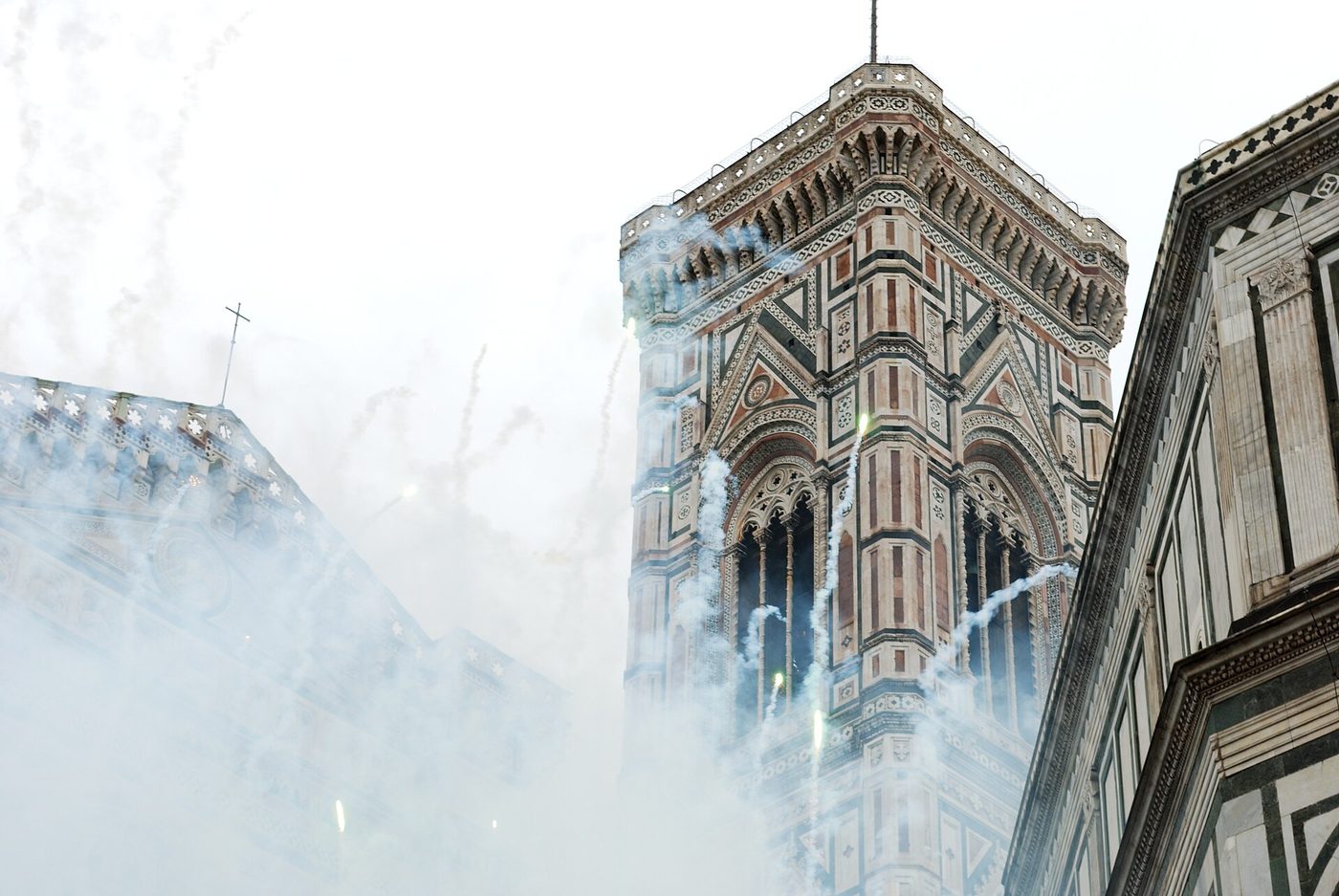
Easter in Florence is built around one noisy morning in front of the Duomo, the Scoppio del Carro. Here is how the ritual runs, where to stand for free, which museums are open and what Florentines eat.
The idea that Florence shuts down at Easter does not survive the morning of the Scoppio del Carro, the Explosion of the Cart, when the square in front of the Duomo fills up. The main state museums stay open, and the cathedral complex is the big exception. In 2027 Easter Sunday falls on 28 March by calculation, with Holy Saturday on 27 March and Easter Monday on 29 March. The 2027 programme had not been published when this was written, so every hour below comes from the 2026 ritual, and the opening hours follow the 2026 museum list, with no promise that 2027 repeats them.
The Scoppio del Carro: how the ritual runs
- Holy Saturday, the new fire in front of the Duomo: Saturday 9 pm, on the Duomo's forecourt (2026 edition)
- Easter morning, the historical procession arrives in the square: around 9.30 am (2026 edition)
- Mass in front of the cathedral, with the cart blessed: 10.30 am (2026 edition)
- The explosion itself: 11 am on Easter Sunday (2026 edition) A dove, the colombina, travels along a wire from the high altar to the cart.
- Around 12.30 the cart is taken back from the square.
The cart, the oxen and the Pazzi
The cart is called the Brindellone, and it comes into the square drawn by four white oxen decorated with flowers, from the Piazzale del Prato, with some 150 members of the historical procession in costume walking beside it. The story belongs to Pazzino de' Pazzi, who is said to have brought back three stones from the Holy Sepulchre. The fuoco novello, the new fire, is lit from them, and the 17th century gave the ritual the form it has now. Tradition also read the flight of the dove as a hint of how the harvest would go.
Where to stand and what is closed
The ritual takes place on the square between the Duomo and the Baptistery, and watching costs nothing. Traffic is banned around the Duomo and the Piazza della Signoria, and the ban runs as follows: from 6 am (2026 edition) The tram and the bus are the sensible way into the centre that morning, so do not plan to drive in. No one can promise an exact spot, so choose a place with a view of the cathedral front and accept that the cart itself may be hidden by the crowd. Waiting is not dull, because the square also hosts the draw for the Calcio Storico match and a display by the Uffizi flag throwers around the ritual.
What is open on Easter Sunday and Monday
- Uffizi: Sunday and Monday 8.15 am to 6.30 pm; free on Sunday (2026 edition)
- Accademia, with the David: Sunday and Monday 8.15 am to 6.50 pm (2026 edition)
- Palazzo Vecchio: Sunday and Monday 9 am to 7 pm; tower until 5 pm (2026 edition)
- Palazzo Pitti: Palatine Gallery Sunday 8.15 am–6.30 pm, closed Monday; Boboli both days 8.15 am–6.30 pm (2026 edition)
- Bargello: closed; open Sunday 8.15 am–6.50 pm (2026 edition)
- Cathedral: closed on Easter Sunday; Monday 10.15 am to 3.45 pm (2026 edition) Dome: closed on Easter Sunday; Monday 8.15 am to 6.45 pm, reservation required (2026 edition)
A ticket with a chosen time slot, booked ahead.
A ticket with a chosen time slot, booked ahead.
A ticket with a chosen time slot, booked ahead.
A ticket with a chosen time slot, booked ahead.
What Florentines eat at Easter
Lamb is, for most Tuscans, the most representative dish of the Easter table. A traditional menu starts with eggs, finocchiona and soppressata, then crostini neri, and goes on to crespelle alla fiorentina or pappardelle with hare. It ends with roast lamb with peas, or arista with beans. The bread of the day is the schiacciata di Pasqua, called ciaccia, a savoury yeast loaf with pecorino, eggs and aniseed, which comes from the Tuscan countryside rather than from the city itself. For sweets, look for the pan di ramerino, eaten on Maundy Thursday, and the sportella.
Where to sleep
Sleep within walking distance of the Duomo, since the roads around it are closed on the morning and the centre is small enough to cover on foot. The page on areas explains which neighbourhood suits you best.


Be in the square early for the Scoppio, use the museums that are open for the afternoon, and keep the dome for Easter Monday with a reservation.
Check the same room on both sites: price and cancellation terms can differ.
Italy, in brief
What now
If this sounds like your trip, start here.
Florence
→A city the size of a neighbourhood where the Renaissance began

Florence in 2 days
→Two days by the hour: the dome in the first slot, the Uffizi after four at the lower price, the Accademia at opening, and the Oltrarno up to the Piazzale.

Day trips from Florence
→Siena on the 131R bus, Pisa and Lucca by train, San Gimignano with a change, Chianti by car — travel time for each, and when the last ride back leaves.
Where to stay in Florence
→The centre puts the Duomo and the Uffizi on the doorstep, crowds included; five minutes across the bridge changes both the price and the evening.

What Florence costs
→In Florence it's tickets, not accommodation, that set the budget — the Uffizi and the Accademia together cost more than a night in a hostel.

Florence beyond the 200 metres: wine window, secret corridor
→A wine window, cells painted by a friar and a secret corridor over the river — seven Florence things that do not fit into two days.
What to eat in Florence
→Lampredotto from a street stall, two soups built on the same stale bread, and a steak ordered by the kilo, not by the piece.
The best time to visit Florence
→Florence has no season when it's empty — only one when it's less full. If you only pick one month, it's September.
Getting around Florence
→Central Florence is a twenty-minute walk from end to end, so the tram, the bus and the 90-minute ticket matter at its edges, and the car is the one thing the centre actively punishes.

Mistakes everyone makes in Florence
→Five mistakes that cost time or a wasted ticket in Florence, and what to do instead.
Museums in Florence
→Of the five museums on this page, four shut on Mondays; only the Brancacci Chapel opens that day, and on Tuesdays it's the other way round.

From the airport to Florence
→Florence has its own airport five kilometres from the centre, but shares Pisa's too: an hour and a half in for a cheaper flight.

Italy
→The cities on the high-speed line are an hour or two apart; the coast, Matera and the Tuscan hills lie off it

The Tuscany everyone photographs isn't in any town
→The Tuscany on the postcard has no name on the map and no entrance gate. It is a view from a road, so the real question is where you can stop the car.

Rome for a weekend: what we spent, and what we would change
→The bill from one October 2025 weekend in Rome, line by line: two people, two days, no luxuries, and the three decisions that would change it next time.

Pompeii and Herculaneum from Naples: what fits into one day
→Pompeii and Herculaneum are a train ride from Naples, while Vesuvius needs a transfer uphill, which is why the day so often gets overpacked.
Florence, San Gimignano and Siena from this story
See which of them suits you, then pin what you have already done.
Front row for the next trip
Leave your email and we'll let you know when a new destination or story goes up.