

Coffee in Italy: the counter, the table, morning cappuccino and caffè sospeso
- Published
- 30 September 2026
- Reading
- 6 min read
- Where
- Naples and Florence, Italy
- Prices checked
- 29. Sep 2026.
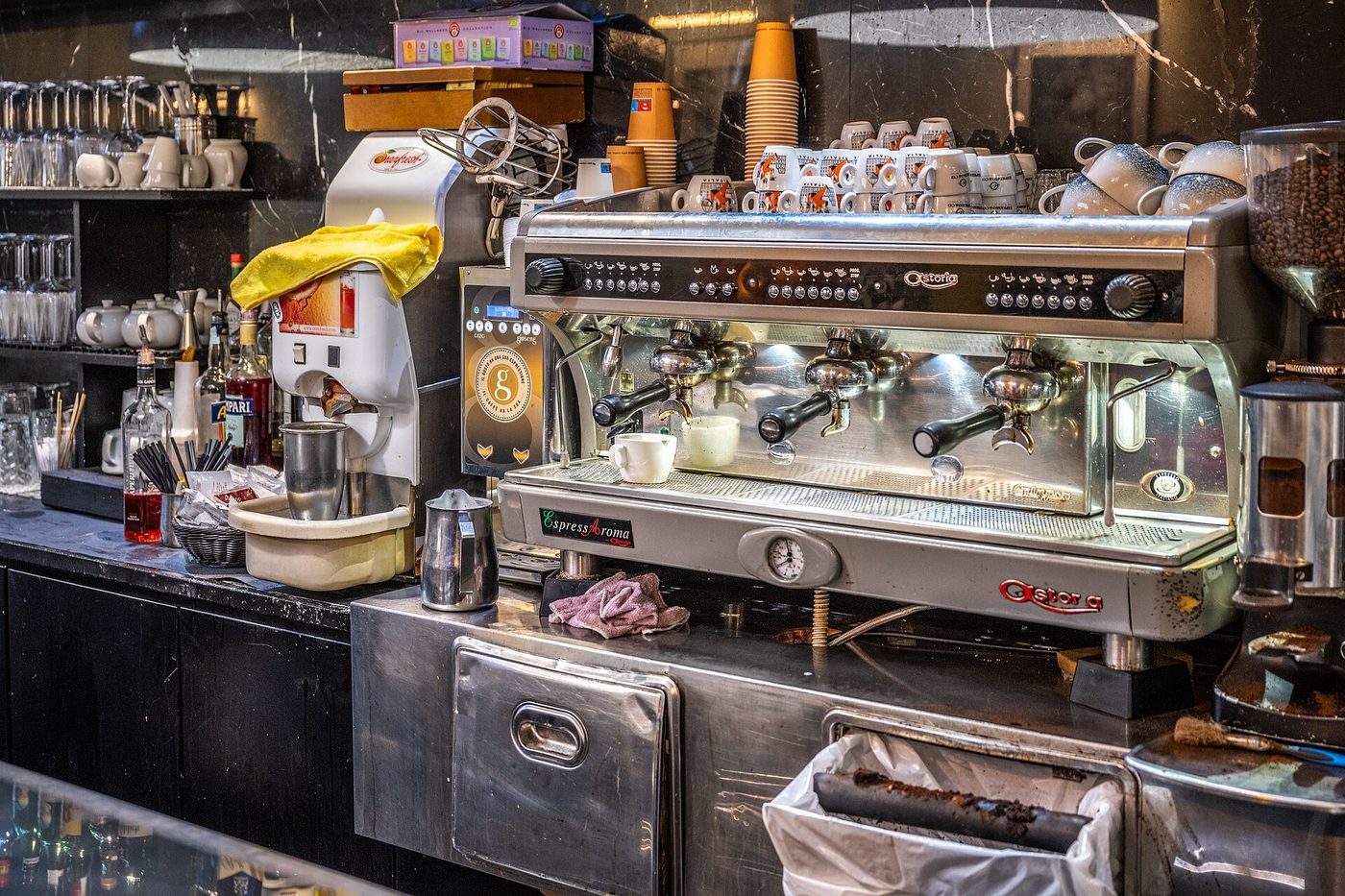
Italian coffee runs on three unwritten rules about where you stand, when you order milk and what you drink after lunch. Here is how they work in a Florence bar and a Neapolitan café, and why one old Naples habit is still alive.
Italian bars run on three rules, and none of them is printed on the menu. Drink at the counter, because the table costs double or more. Keep cappuccino for the morning, roughly until eleven. After a meal, order an espresso. Follow those and you pay local prices in Florence and Naples, and nobody glances at your cup twice. Everything else is detail, and the detail is where the fun is.
'Un caffè' means espresso
Ask for 'un caffè' and you get an espresso, because in Italy that is simply what coffee is. The machine behind the counter has a crowded family tree: Moriondo of Turin patented a steam apparatus in 1884, built for large batches rather than single cups, Bezzera worked out the one-cup version in 1901, and Gaggia's 1938 patent, refined in 1947, added the piston that puts the crema on top. Italians leave most of that history at the bar and brew with a Moka Express at home, the stovetop pot Alfonso Bialetti launched in 1933. The espresso itself arrives in a small hot cup, goes down in two or three swallows and is gone before a visitor has found the sugar. Italians often order a second, and rarely a double.
Cappuccino, the morning and the macchiato
The name comes from the brown habits of Capuchin friars, and the drink keeps friar hours: breakfast, with a cornetto, until about eleven. Between eleven and noon is a grey zone, and later than that a cappuccino is not forbidden, only slightly comical, the sort of order that marks you as a guest rather than offends anyone. After lunch or dinner the choice is an espresso, a macchiato (espresso with a spot of foamed milk, welcome at any hour) or a corretto, which comes with a splash of grappa or sambuca. And never ask for a 'latte' unless you want a glass of milk. For coffee with milk say caffè latte.
Counter or table
The table costs double or more, and on tourist squares it can reach three or four times the counter price. An espresso standing at the bar in Florence runs €1–1.50. Sit on Piazza della Signoria, at Rivoire, and you are paying for the view, the waiter and the chair, which is fair as long as you decide before you sit down. In the busy centres of Florence, Rome and Venice the order is cassa first: read the price list on the wall, pay at the till, take the scontrino to the bar, and the barista tears it before making your coffee. In smaller towns and in the south you usually pay on the way out. Tipping is not expected, and rounding up by ten or twenty cents is plenty. The counter at Caffè Sant'Ambrogio, away from the monuments, is where Florentines go to avoid the question altogether.

Gambrinus and the coffee that waits
Gran Caffè Gambrinus, on Via Chiaia 1–2 beside Piazza del Plebiscito, opened in 1860 and was redone in 1889 and 1890 by Antonio Curri in full Art Nouveau, with chandeliers, painted panels and a guest list that runs from Wilde to D'Annunzio, Hemingway and Sartre. Order your coffee at the counter by the entrance, and drink it standing, since the price of the view does not change what is in the cup. Better still, ask whether anyone has left a caffè sospeso. The custom began in the working-class cafés of Naples: you pay for two coffees, drink one, and the second waits for whoever cannot afford it, and in Gambrinus the receipts go into a metal bowl near the door. It is rarer than it was, but it is alive, and 10 December is the day it gets its own celebration. In Naples a glass of water arrives with the coffee. Drink it first.
A food tour with a local guide: several tastings in one walk.

Check the same room on both sites: price and cancellation terms can differ.
Italy, in brief
What now
If this sounds like your trip, start here.

Naples
→The one big Italian city that doesn't look tidied up for your benefit

Naples in 2 days
→The old town and what lies under it on day one, Capodimonte and the shore on day two, and the ruins as a third day of their own.

Day trips from Naples
→Pompeii, Herculaneum, Vesuvius, Capri and the Amalfi coast — five trips from Naples, and only Herculaneum and Vesuvius share a day.

Where to stay in Naples
→Centro storico puts everything within reach and never quite goes quiet, Chiaia is calmer and pricier, and near Garibaldi the bed is cheapest, with the line to Pompeii right outside in the morning.

What Naples costs
→The ruins are the priciest item in a day, street food costs less than it looks, and the old town itself is seen without a single paid ticket.

Naples off the main route: a chapel, a cloister, an arcade and a cemetery
→A Caravaggio in a chapel built by a brotherhood that ransomed prisoners, a cloister sheathed in majolica, a…
What to eat in Naples
→A pizza the rules recognise in two versions, a sfogliatella in two pastries and a ragù that simmers from morning — and what a margherita costs.

The best time to visit Naples
→Summer heat pushes the plan toward Capri and Amalfi, and a rough sea after an autumn storm can shut both the hydrofoil and the Blue Grotto.

Getting around Naples
→Capodichino is the only airport, a bus runs straight into the centre, and anyone heading uphill on the Montesanto funicular has found the doors shut since 15 May 2026.

Mistakes everyone makes in Naples
→The costliest mistakes in Naples happen before you even reach the ruins — at the wrong station, with the wrong ticket, or queuing for a funicular that isn't running.

The neighbourhoods of Naples
→Rione Sanità holds bones and catacombs, the Quartieri Spagnoli a mural that became a shrine, and Vomero a view and a fortress: none of the three makes the list for a place to stay.

Italy
→The cities on the high-speed line are an hour or two apart; the coast, Matera and the Tuscan hills lie off it

The Tuscany everyone photographs isn't in any town
→The Tuscany on the postcard has no name on the map and no entrance gate. It is a view from a road, so the real question is where you can stop the car.

Rome for a weekend: what we spent, and what we would change
→The bill from one October 2025 weekend in Rome, line by line: two people, two days, no luxuries, and the three decisions that would change it next time.

Pompeii and Herculaneum from Naples: what fits into one day
→Pompeii and Herculaneum are a train ride from Naples, while Vesuvius needs a transfer uphill, which is why the day so often gets overpacked.
Front row for the next trip
Leave your email and we'll let you know when a new destination or story goes up.