

San Pedro de Atacama
An adobe village at 2,400 metres from which a day trip climbs to 4,300, which is why day one does nothing
- When to go
- November 18° · 0 rainy days
- Per day
- €€€price 3 of 5
- How many days
- 3days
- For you
- 6 questions →
- Nearest airport
- 85 km Calama
- Right now
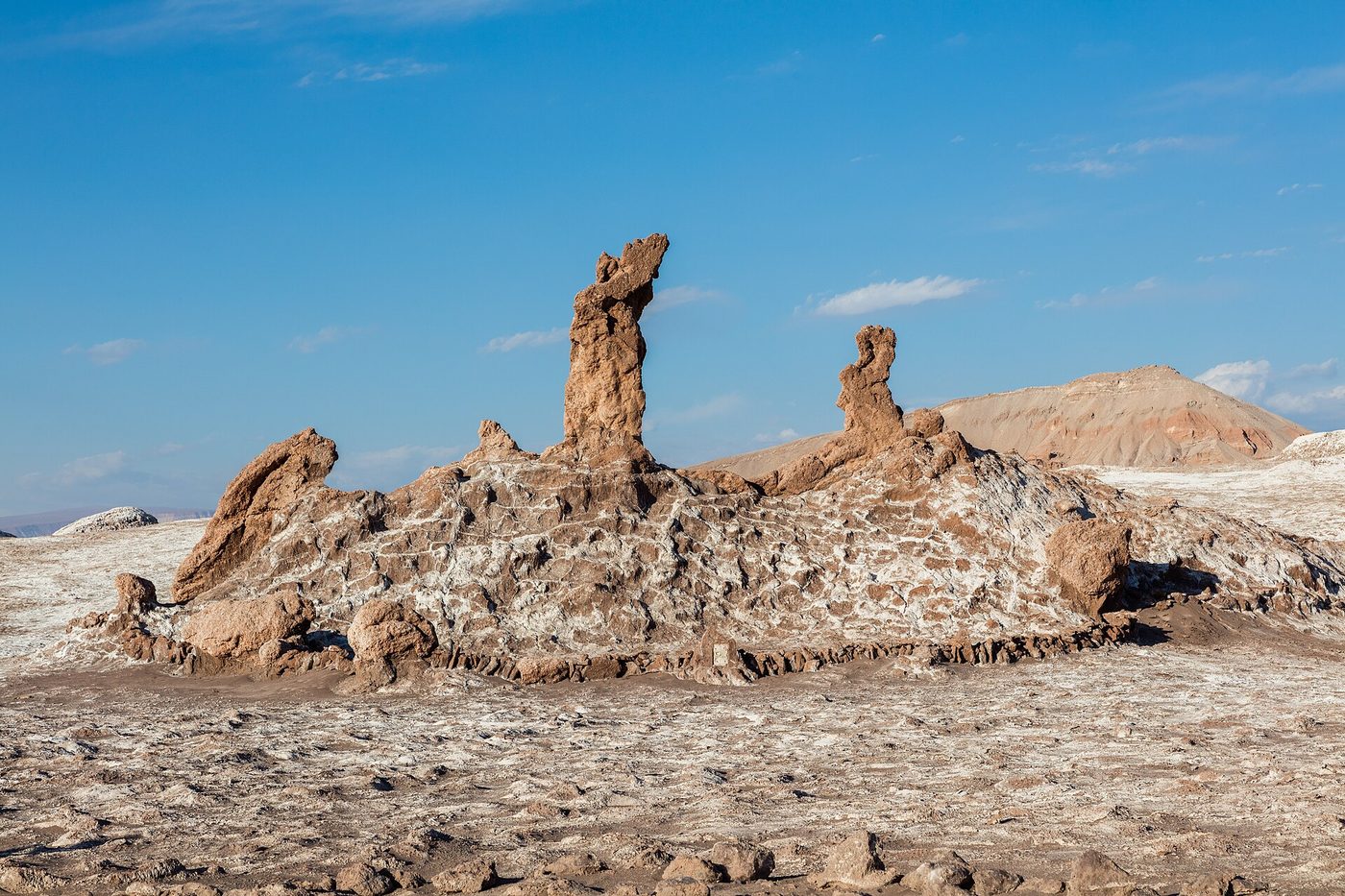
San Pedro is a small adobe village with one main street, and everything you do here is a day trip out of it, which makes the real planning problem altitude rather than distance. The thin air makes the difference, since the village sits at 2,400 metres while the high Tatio geysers lie at 4,300. Anyone who climbs up on day two without acclimatising will spend it with a bad headache and nausea.
Day one plans nothing beyond a short visit to the Valle de la Luna before sunset, which sits at the village's own altitude and is the right gentle load for a first day. Day two is the Salar de Atacama with its flamingos and the high lagoons of Miscanti and Miñiques. They lie at four thousand metres but involve no walking, so the altitude is tested sitting down. Day three is the Tatio geysers at 4,300, with an early start at four in the morning, because the steam only rises while the air is cold and stops around nine.

Every tour is bought in the village a day ahead, from one of the twenty-odd agencies on the main street, and since the prices barely differ you can simply choose by group size. Your own car works for the valleys but not for the geysers, where the road is bad and dark. Entry to most sites is charged apart from the tour, which is why it is often missing from the quoted price.
The clear, dry sky is why some people come only for the night. Humidity here is the lowest on the planet, there is no light pollution, and ALMA and the other large telescopes stand a hundred kilometres away. Astronomy tours run every night except around the full moon, when they are cancelled, so the date has to be fixed with the moon in mind.
Check the same room on both sites: price and cancellation terms can differ.
Timed-entry tickets and guided tours in one place.
Both sites fill in your nearest airport for you; change it in one click.
Guides for San Pedro de Atacama
Shorter, practical pages for one concrete question each — how many days, how much money, where to sleep, where to escape the city.

San Pedro de Atacama in 3 days
→Three days ordered by altitude rather than by beauty, because you do not go from 2,400 metres to 4,300 on day two.

The best time to visit San Pedro de Atacama
→The driest desert on earth works all twelve months, and the only thing to plan around is not the weather but the moon.
What to see in San Pedro de Atacama
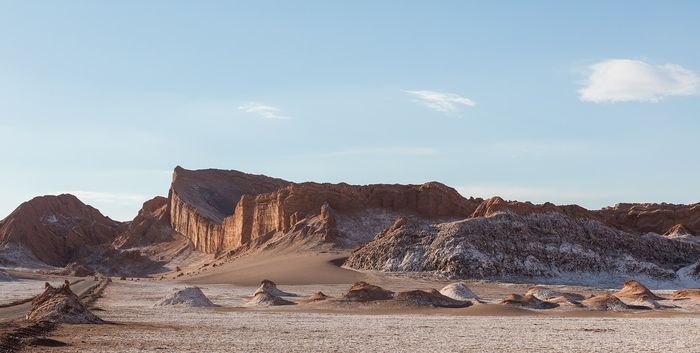
The Valle de la Luna
Salt and sand formations fifteen kilometres from the village, at village altitude, which is why it is the first day's trip. Go before sunset, when the rock changes colour in the dry air.
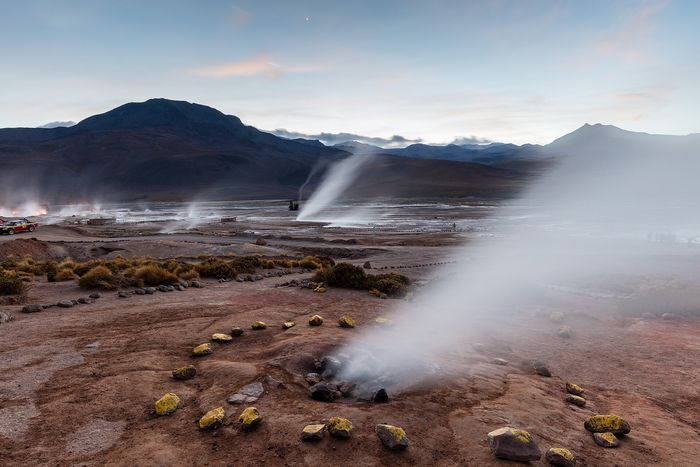
The Tatio geysers
Some eighty geysers at 4,300 metres, the third largest field in the world. Departure is at four in the morning because the steam stops around nine, so go on day three, not earlier, and dress in warm layers.
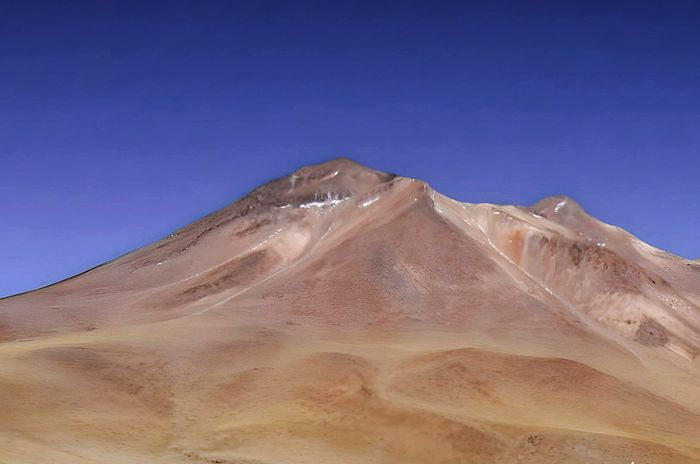
The Salar de Atacama and the lagoons
A vast salt flat the size of a small country, with three species of flamingo. The Miscanti and Miñiques lagoons sit at four thousand metres and are a colour that is hard to believe in a photograph.
- A
An astronomy tour
Telescopes in the desert and ninety minutes of the northern and southern skies at once. Tours are cancelled around the full moon, so the phase of the moon decides the date.
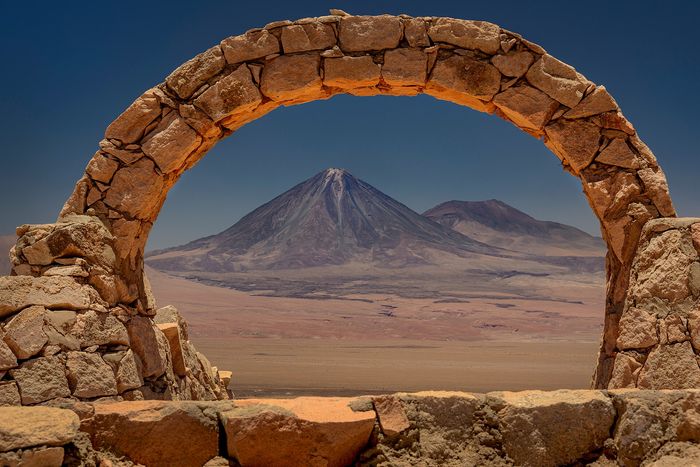
Pukará de Quitor
A twelfth-century Atacameño fortress on a hill above the river, three kilometres from the village. Reached on foot or by bike, in the morning, and the only history in a region that is otherwise all geology.
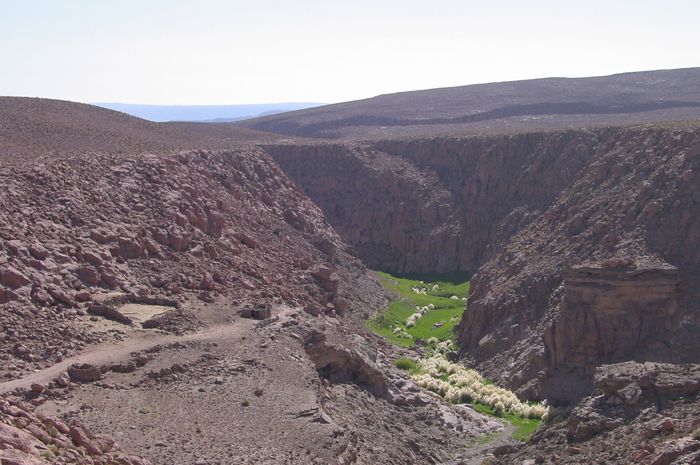
The Puritama hot springs
Eight warm pools in a canyon at 3,500 metres, thirty kilometres north, which are at their most pleasant in the morning.


Nomadinho scores out of 100, the same ones behind “Where to go”.
If you like San Pedro de Atacama
Three places with the closest scores, from any country.


Two things you probably did not know
The Atacama is the driest desert in the world; some weather stations have never recorded rain. That is also why the largest telescopes are here: the air is so dry that it barely distorts the light of the stars.
NASA tests Mars rovers in the Atacama, because the soil is closer in composition to Martian ground than anything else on Earth. In parts of the desert no bacteria have been found at all.
Before you go
Short answers to what people ask most before setting out.
How many days do you need in San Pedro de Atacama?
Three. The first is for acclimatising and the Valle de la Luna, the second for the lagoons, the third for the Tatio geysers. With two nights you drop the geysers, which are the main reason to come.
What time do you leave for the Tatio geysers?
At four in the morning, because the steam only rises while it is cold and stops around nine. At 4,300 metres it is around freezing then, so dress for winter.
When is the best time to visit San Pedro de Atacama?
March to May and September to November: dry, clear, mild and less busy. The desert works all year, and the risky months are January and February, when short downpours close roads for a day or two.
Ready for San Pedro de Atacama?
Within reach from here
Places sorted by straight-line distance from San Pedro de Atacama — day trips or weekends.

Chile
→A country 4,300 kilometres long and 180 wide — driest desert on earth to glacier, without a single turn

Argentina
→A country 3,700 kilometres long, where the far south is seen in December and the whales and the snow in August

Brazil
→A country where the flight between two cities is often cheaper, and always faster, than the overnight coach
All 292 places we write about sit on one page — narrow them down by continent, country, price or what you are travelling for.
Guides that mention it

Within reach from here: Mendoza, Valparaíso and Santiago
See how much of that actually suits you — or pin San Pedro de Atacama if you have been.
Front row for the next trip
Leave your email and we'll let you know when a new destination or story goes up.