

Merzouga
Sand dunes a hundred and fifty metres high, and a night without any light
- When to go
- November 17° · 1 rainy day
- Per day
- €€price 2 of 5
- How many days
- 2days
- For you
- 6 questions →
- Right now
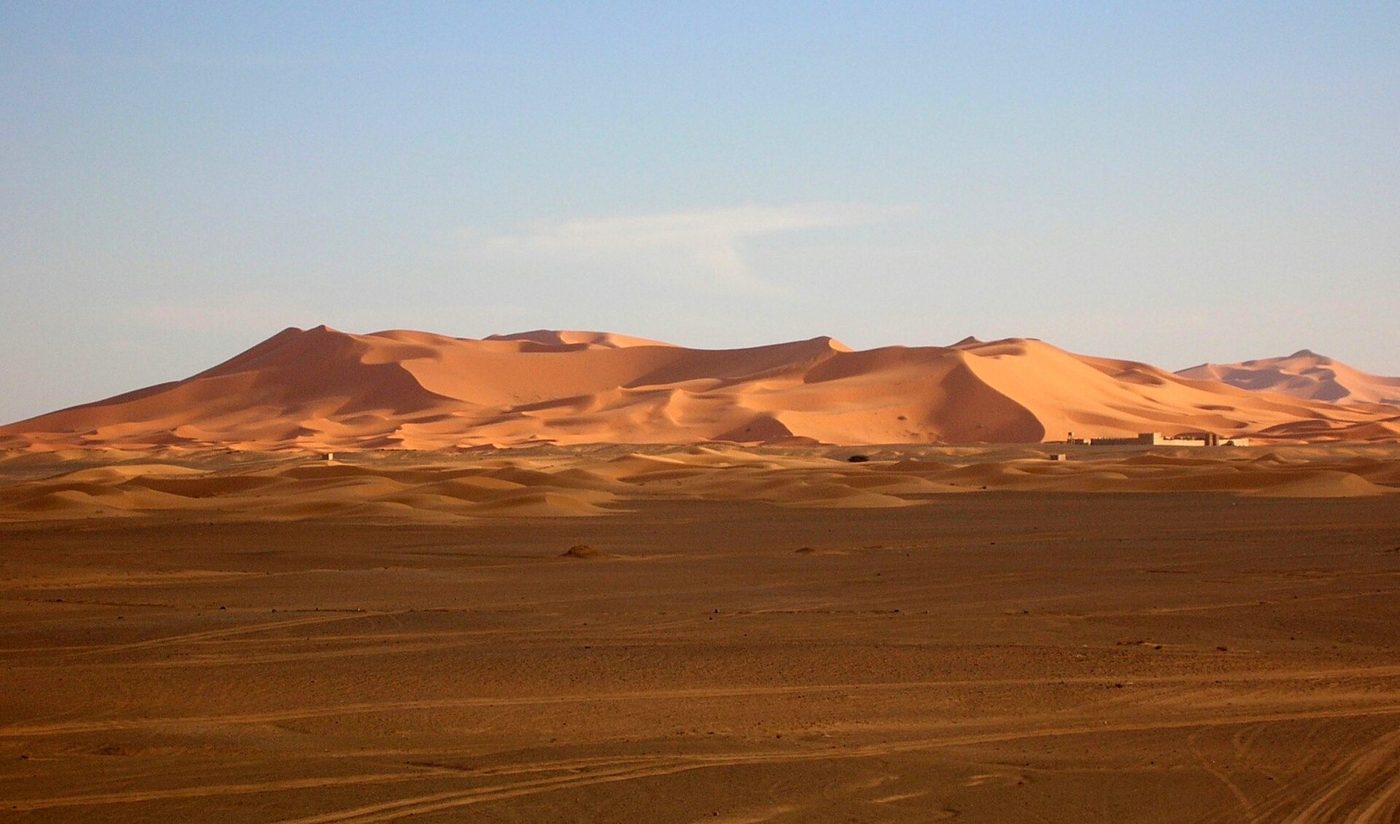
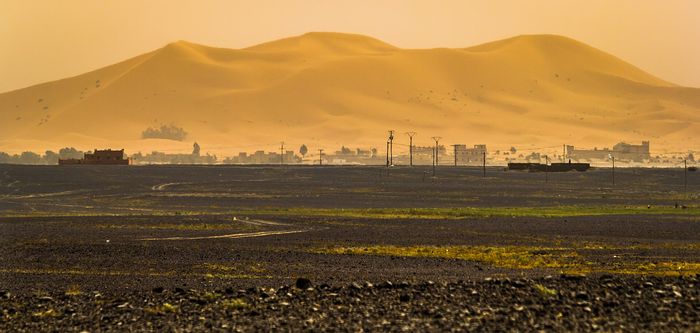
Merzouga is a village on the edge of Erg Chebbi, one of Morocco's two true sand seas. Its highest dune stands around a hundred and fifty metres tall. You do not come for a day: the drive from Marrakesh takes a whole one, so the point is to sleep out in the open desert.
The usual pattern is a three-day, two-night tour from Marrakesh, with the first night in Dades or Todra and the second in a camp among the dunes. The alternative is to fly to Errachidia or Ouarzazate and finish by car. That is quicker and dearer, but it costs you the high Tizi n'Tichka pass and the long Draa valley, which are half the reason to go overland.

Camps differ more than the listings suggest: the ones near the village are cheaper and you can hear the generator, while those deeper in the dunes are an hour away by camel or four-wheel drive and have no generator at night. Stars on the listing tell you little. Ask how far the camp is from the tarmac before booking, because that distance is what separates them.
Temperature here decides safety. From June to September the daytime maximum regularly passes forty degrees, so climbing the dunes at noon is not an option. In December and January the cold nights drop close to freezing in unheated camps, so come in March, April, October or November, and in winter bring a warm sleeping bag.
Check the same room on both sites: price and cancellation terms can differ.
Timed-entry tickets and guided tours in one place.
What to see in Merzouga
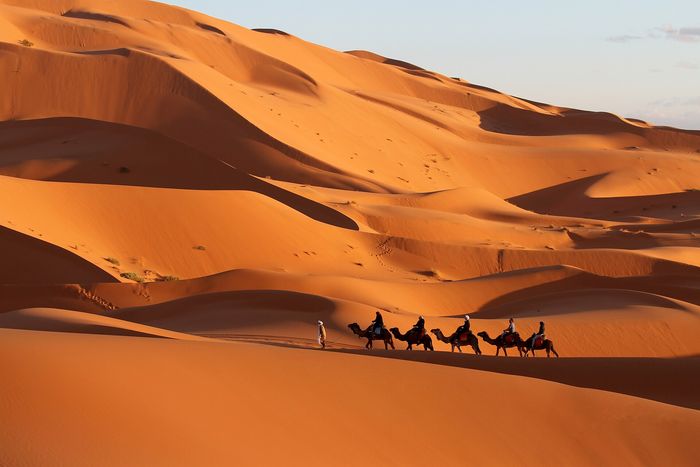
Erg Chebbi
A sand sea some twenty-eight kilometres long, with its highest dune around a hundred and fifty metres tall, and sunrise from the ridge is the reason most people come.
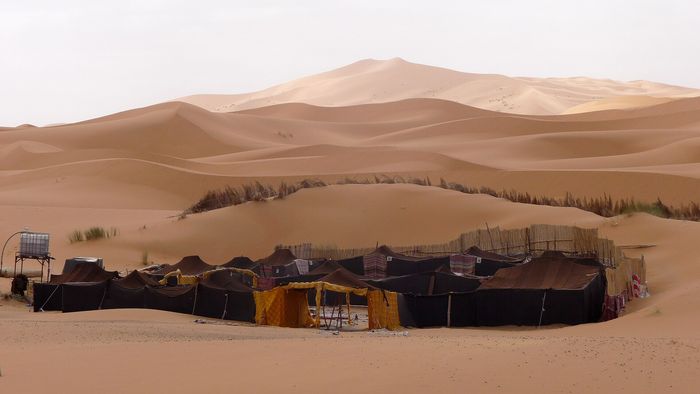
A night in camp
There is no power and no light from the sides, so the Milky Way shows to the naked eye, which is the reason to sleep out.
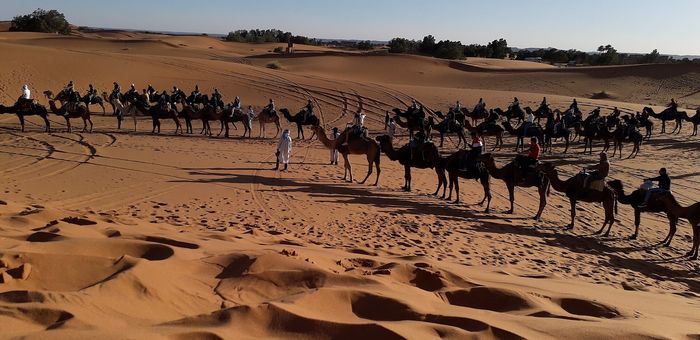
Camel or four-wheel drive
Both get you to the camp, though the camel is slower and sorer, so it is worth taking one way only.
- D
Dayet Srji
A seasonal salt lake north of the dunes, where flamingos stop when there is water; for most of the year it is dry.
- G
Gnawa music
The village of Khamlia, a few kilometres on, is home to descendants of people brought across the Sahara, and their music is the reason to go there in the evening.
The road here
The Tizi n'Tichka pass, the Draa valley and the Dades and Todra gorges make up the way here, and half the value of the trip is what you see on the road.


Nomadinho scores out of 100, the same ones behind “Where to go”.
If you like Merzouga
Three places with the closest scores, from any country.


Two things you probably did not know
Erg Chebbi near Merzouga has dunes up to a hundred and fifty metres high, formed from sand the wind carries hundreds of kilometres. The dune field is the exception: nearly all the Sahara is stone, not sand.
The Sahara has not always been desert. Between six and ten thousand years ago it was savannah with lakes and herds, and satellite images still show riverbeds under the sand.
Before you go
Short answers to what people ask most before setting out.
How many days do you need for Merzouga?
Two days on the ground, but three days and two nights in total from Marrakesh, since the drive takes a whole day. The usual tour spends a night in Dades or Todra on the way.
When is the best time to visit Merzouga?
March, April, October and November. From June to September the daytime maximum regularly passes forty degrees, and in December and January nights drop close to freezing in camps that are not heated.
Where should you stay in Merzouga?
In a camp among the dunes rather than in the village; that difference is the point. Camps near the village are cheaper and you hear the generator, while deeper ones need an hour by camel or four-wheel drive and are quiet at night.
Ready for Merzouga?
Within reach from here
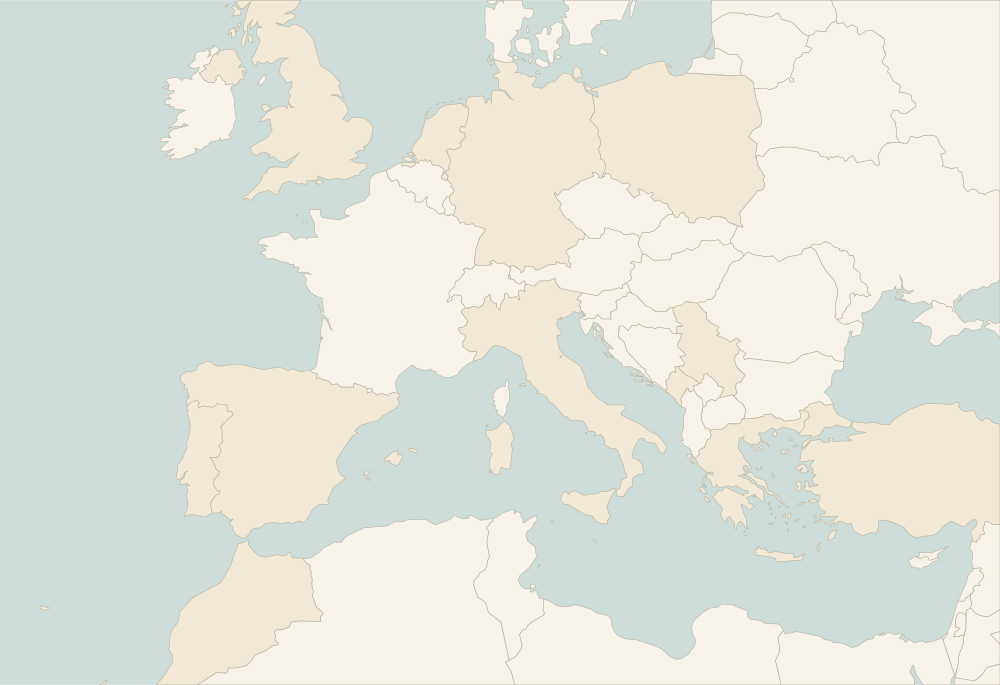
Places sorted by straight-line distance from Merzouga — day trips or weekends.

Morocco
→The north by train, the south by road, and in July you leave Marrakech for the coast

Portugal
→A country that spent centuries looking at the ocean instead of the Europe behind it

Turkey
→Istanbul, then one direction: Cappadocia by plane, Ephesus and Pamukkale by train, or the Lycian coast by bus
All 298 places we write about sit on one page — narrow them down by continent, country, price or what you are travelling for.
Guides that mention it

Within reach from here: Ait Ben Haddou, Fez and Marrakech
See how much of that actually suits you — or pin Merzouga if you have been.
Front row for the next trip
Leave your email and we'll let you know when a new destination or story goes up.