

Sapa
Rice terraces at fifteen hundred metres, where you come to walk rather than for the town
- When to go
- September 19° · 28 rainy days
- Per day
- €price 1 of 5
- How many days
- 3days
- For you
- 6 questions →
- Right now

You do not come to Sapa for the town itself, which was built without a plan and is full of hotels, but for the valleys around it: the terraces drop away from fifteen hundred metres, and the walking between villages fills whole days. Stay in the town and you have seen the least interesting part.
The terraces are the work of the Hmong, Dao and Tay, who have lived here for centuries and whose villages differ by the colour of their clothing rather than their architecture. The trek through the Muong Hoa valley, from Sapa via Lao Chai and Ta Van, takes five to six hours and is usually done with a local guide — not a service for the lazy here, but the only way to understand what you are looking at.

The terraces change colour month by month — that alone is worth matching to your dates. May and June are when the fields fill with water and turn into mirrors; September is gold, just before the harvest; from November to March they are brown, and Sapa is cold and often inside a cloud, with temperatures that can drop near freezing.
From Hanoi you reach Sapa by night train to Lao Cai and then by road up the hill, or by bus on the motorway in five to six hours. Fansipan, the highest peak in Indochina at 3,147 metres, is reachable by cable car in about twenty minutes — a decision everyone makes for themselves, because the same mountain on foot takes two days.
What to see in Sapa
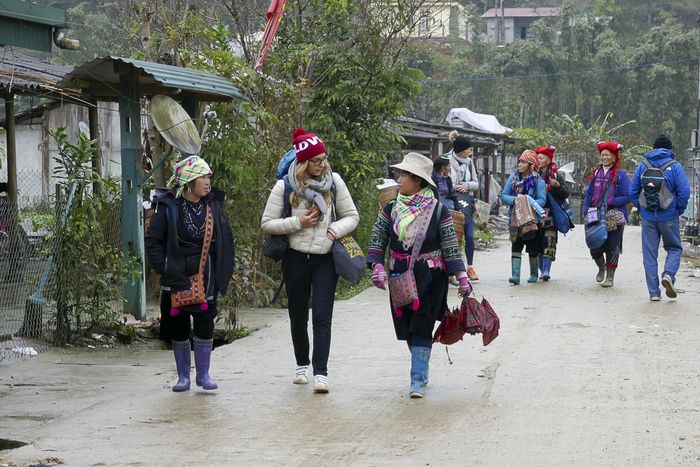
The Muong Hoa valley
The trek from Sapa via Lao Chai and Ta Van, five to six hours. The best day you can spend here.
- T
The terraces in May and June
Flooded in May and June, gold before the September harvest. But the reason to come is not the colour — it is that you walk through them all day, village to village.
- F
Fansipan
The highest peak in Indochina, 3,147 metres. Twenty minutes by cable car, two days on foot — both versions are legitimate.
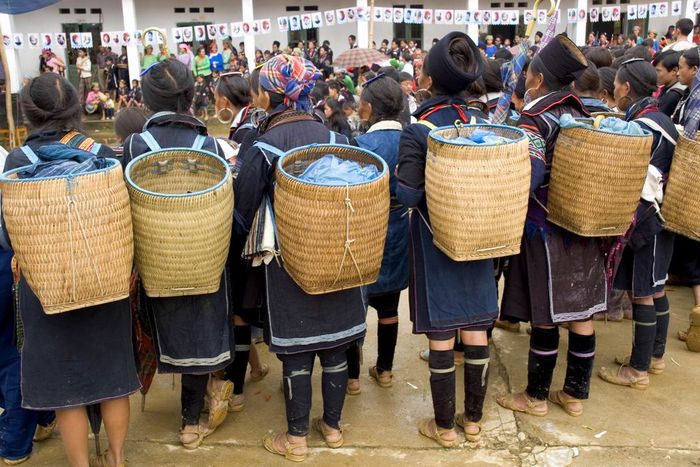
Bac Ha market
On Sundays, ninety minutes from Sapa. A genuine trading market for several ethnic groups, not a show for visitors — but tour groups arrive after nine, so earlier is the best time.
- T
Ta Phin village
A Dao community known for baths in a wooden tub of fragrant cypress, with ten to thirty medicinal herbs in the water. Best after a full day of walking.
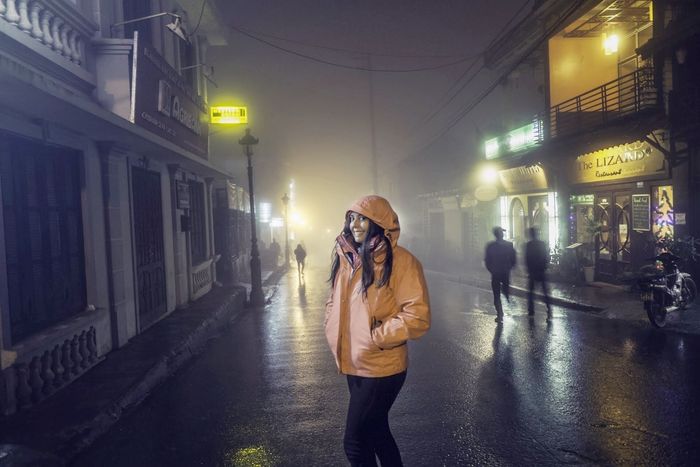
The O Quy Ho pass
The highest road pass in the country, between Sapa and Lai Chau. The cloud often breaks precisely at the top.


Two things you probably did not know
The rice terraces around Sapa were cut by hand over centuries and climb the slopes to over a thousand metres. Each terrace has to be perfectly level for the water to stand, and they were levelled without a single instrument.
Several highland peoples live around Sapa, the Hmong and the Dao among them. The French built Sapa in 1922 as a hill station for colonial officials escaping the heat of the delta.
Ready for Sapa?
Within reach from here
Places sorted by straight-line distance from Sapa — day trips or weekends.

Vietnam
→A country sixteen hundred and fifty kilometres long, where north and south are never in season together

China
→A country the size of a continent, where the hard part is sorted out before you fly: payment, internet and tickets

Thailand
→Two coasts the monsoon never reaches at the same time, and a north seen through smoke in March
All 277 places we write about sit on one page — narrow them down by continent, country, price or what you are travelling for.
Within reach from here: Hanoi, Ha Long Bay and Chiang Mai
See how much of that actually suits you — or pin Sapa if you have been.
Front row for the next trip
Leave your email and we'll let you know when a new destination or story goes up.