

Foz do Iguaçu
Falls seen from two countries, and it is not the same experience — Brazil gives you the view, Argentina the proximity
- When to go
- November 25° · 10 rainy days
- Per day
- €€price 2 of 5
- How many days
- 2days
- For you
- 6 questions →
- Nearest airport
- 11 km Foz do Iguaçu
- Right now
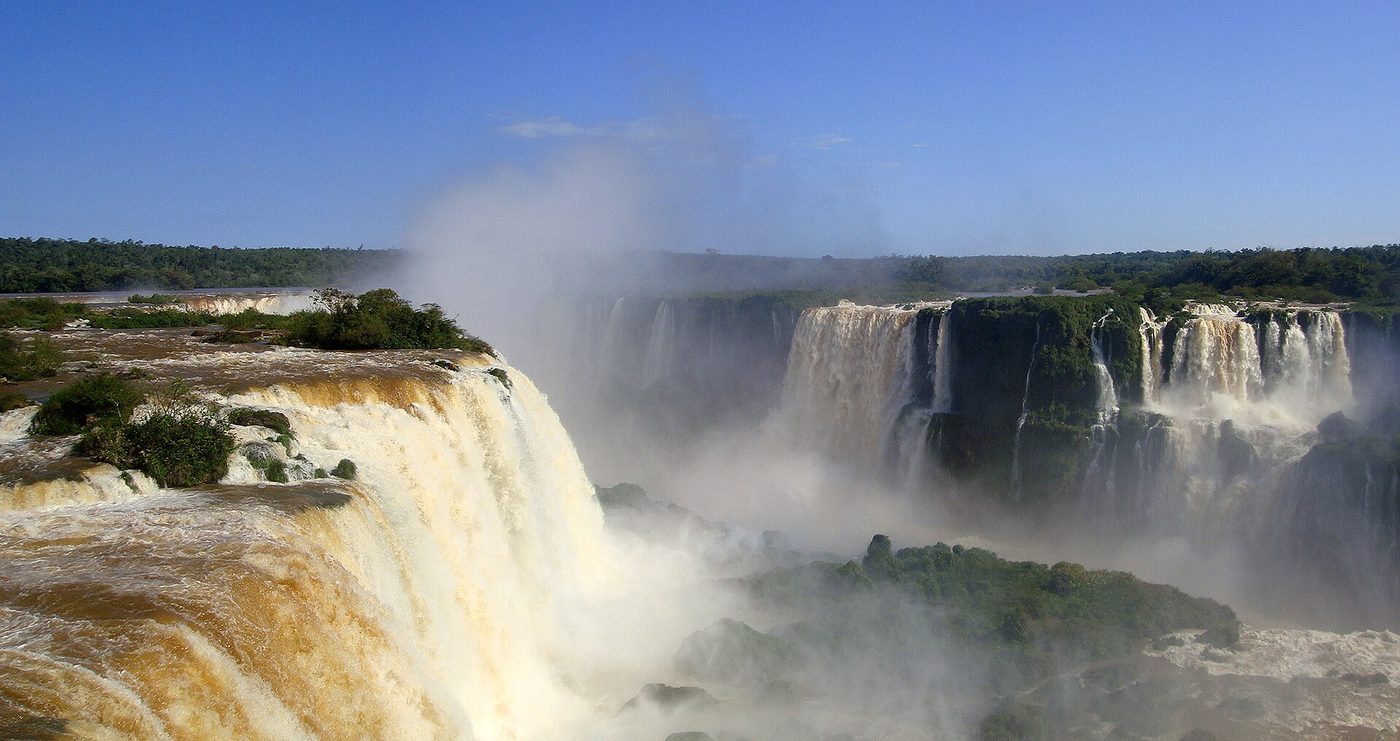
You do Iguaçu from both sides rather than choosing one: the Brazilian side is a morning and gives you the panorama, the Argentine side a full day that takes you in among the cascades themselves.
The Brazilian side has a single long path, about a kilometre, that descends along the canyon and ends on a platform beneath the falls. It takes three to four hours, with a park bus from the entrance, and it is done in the morning, when the sun is on the water. If you arrive in the afternoon, leave it for the next day. Foreign entry is €22.54.

Argentina's side holds around eighty percent of the falls and needs a whole day, with entry at €34. There are three scenic circuits, the upper, the lower and the little train to the Devil's Throat, and the day ends with standing directly over the lip, where the heavy spray hides the bottom. Crossing the border is routine, done by an ordinary taxi or organised transport; carry your passport and take the stamp; visa rules depend on your passport.
Third in town is the Itaipu dam, for years the largest hydroelectric plant in the world by capacity, until China's Three Gorges overtook it, though it is still one of the two largest by annual output. The outside tour takes about 1 h 10 and the one through the powerhouse about 2 h 30, and either belongs only to a third day; if you do not have one, drop it without regret. The bird park opposite the Brazilian park entrance is a half-day substitute, with toucans a metre away.
Check the same room on both sites: price and cancellation terms can differ.
Timed-entry tickets and guided tours in one place.
Both sites fill in your nearest airport for you; change it in one click.
Guides for Foz do Iguaçu
Shorter, practical pages for one concrete question each — how many days, how much money, where to sleep, where to escape the city.

What to see in Foz do Iguaçu
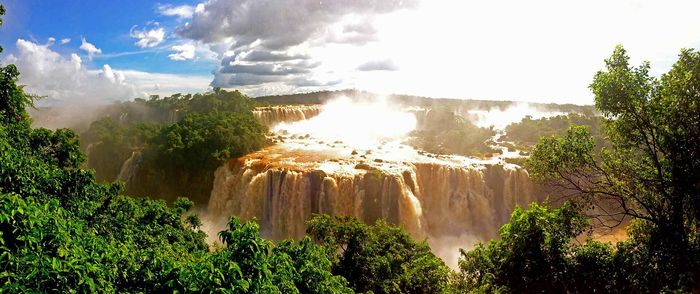
The Brazilian panorama
A path descending along the canyon to a platform beneath the falls, with almost the whole system in one view. Three to four hours; a poncho does not help, you get wet regardless.
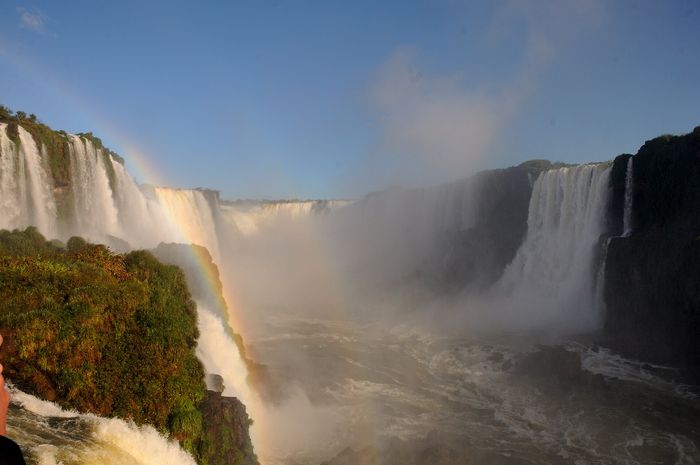
The Devil's Throat
The largest fall in the system, on the Argentine side, where water pours into one throat from three directions. A walkway over the river leads to a platform right on the lip. This is why you cross the border.
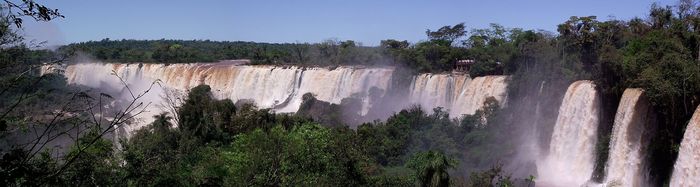
The lower circuit, Argentine side
Paths that drop in among the cascades, with a boat that runs under the water for anyone who wants to be soaked. A rainbow needs the sun behind you, so look for it on the spot rather than planning around a fixed hour.
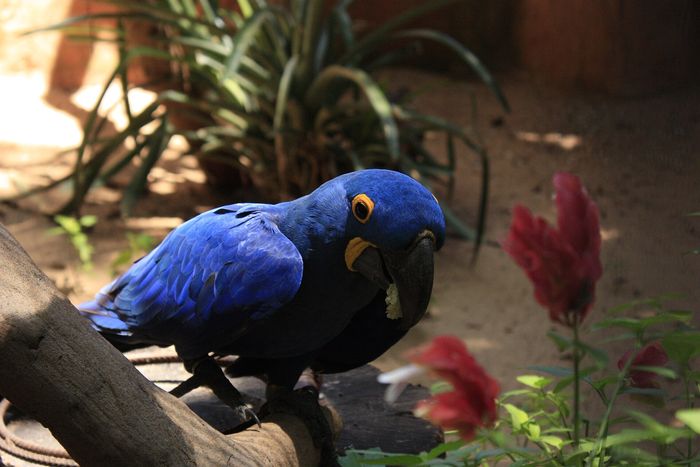
The bird park
Opposite the Brazilian entrance, with walk-through aviaries where toucans, macaws and harpy eagles are a metre away. Ninety minutes, and a chance to see up close what you otherwise only hear in the forest.
- I
Itaipu
An eight-kilometre dam on the Paraguayan border, toured from outside or through the powerhouse. Only if you have a third day; the illuminated tour runs on Fridays and Saturdays at 7pm.
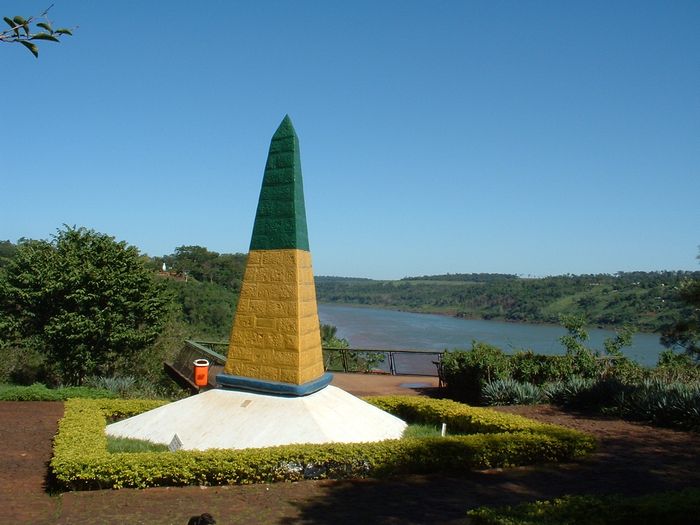
The triple frontier
The point where Brazil, Argentina and Paraguay meet, each with an obelisk painted in its own colours. Fifteen minutes, which is exactly the right length.


Nomadinho scores out of 100, the same ones behind “Where to go”.
If you like Foz do Iguaçu
Three places with the closest scores, from any country.


Two things you probably did not know
The Iguazu falls have between 150 and 300 separate cascades, depending on the water level. On seeing them, Eleanor Roosevelt is said to have remarked only: poor Niagara.
An hour away is the triple border of Brazil, Argentina and Paraguay, marked by obelisks in three colours on three banks. The falls are split between the first two countries, so there are two sides to see and they are two different views.
Before you go
Short answers to what people ask most before setting out.
Which side of Iguaçu Falls is better?
Neither on its own. The Brazilian side is done by lunch, along a path of about a kilometre ending on a platform beneath the falls; the Argentine side takes a day, from eight in the morning to half past five.
How much does it cost to enter Iguaçu Falls?
The Brazilian side is €22.54 for a foreign visitor, park bus included. The Argentine side is €34, and if you go back the next day, the second day is half price.
Can you cross into Argentina from Foz do Iguaçu?
Yes, by taxi or organised transport, and the crossing is routine, about fifteen minutes each way. Carry your passport and take the stamp on both sides.
Ready for Foz do Iguaçu?
Within reach from here
Places sorted by straight-line distance from Foz do Iguaçu — day trips or weekends.

Brazil
→A country where the flight between two cities is often cheaper, and always faster, than the overnight coach

Argentina
→A country 3,700 kilometres long, where the far south is seen in December and the whales and the snow in August

Portugal
→A country that spent centuries looking at the ocean instead of the Europe behind it
All 292 places we write about sit on one page — narrow them down by continent, country, price or what you are travelling for.
Guides that mention it

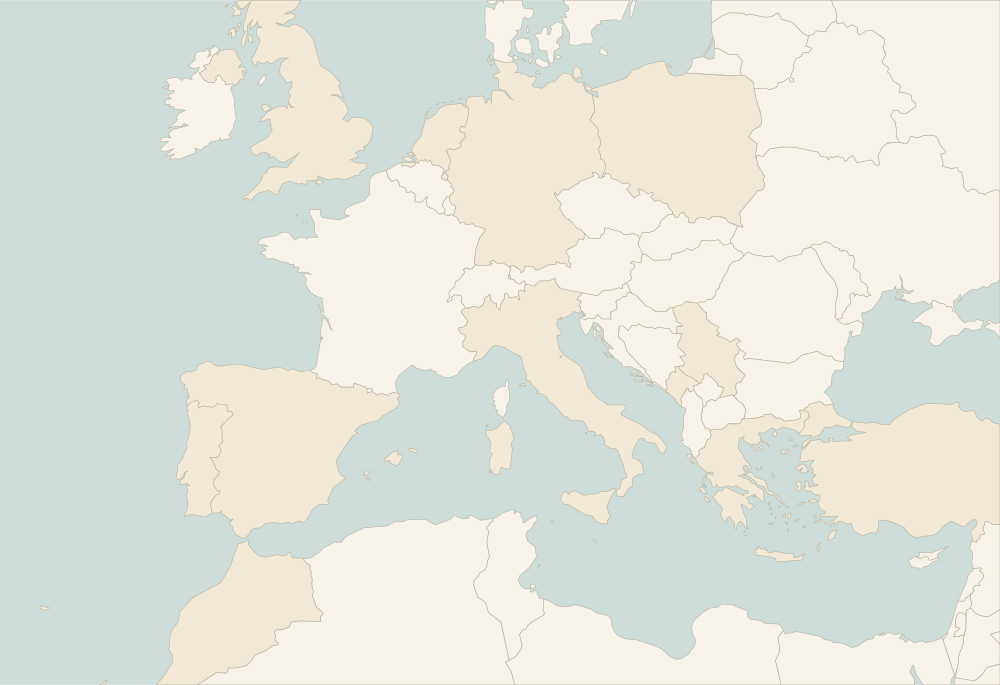
Within reach from here: São Paulo, Buenos Aires and Rio de Janeiro
See how much of that actually suits you — or pin Foz do Iguaçu if you have been.
Front row for the next trip
Leave your email and we'll let you know when a new destination or story goes up.