

São Paulo
A city with no postcard, where you come for the table and not for the view
- When to go
- November 20° · 16 rainy days
- Per day
- €€€price 3 of 5
- How many days
- 3days
- For you
- 6 questions →
- Nearest airport
- 9 km Congonhas · 21 km Guarulhos
- Right now
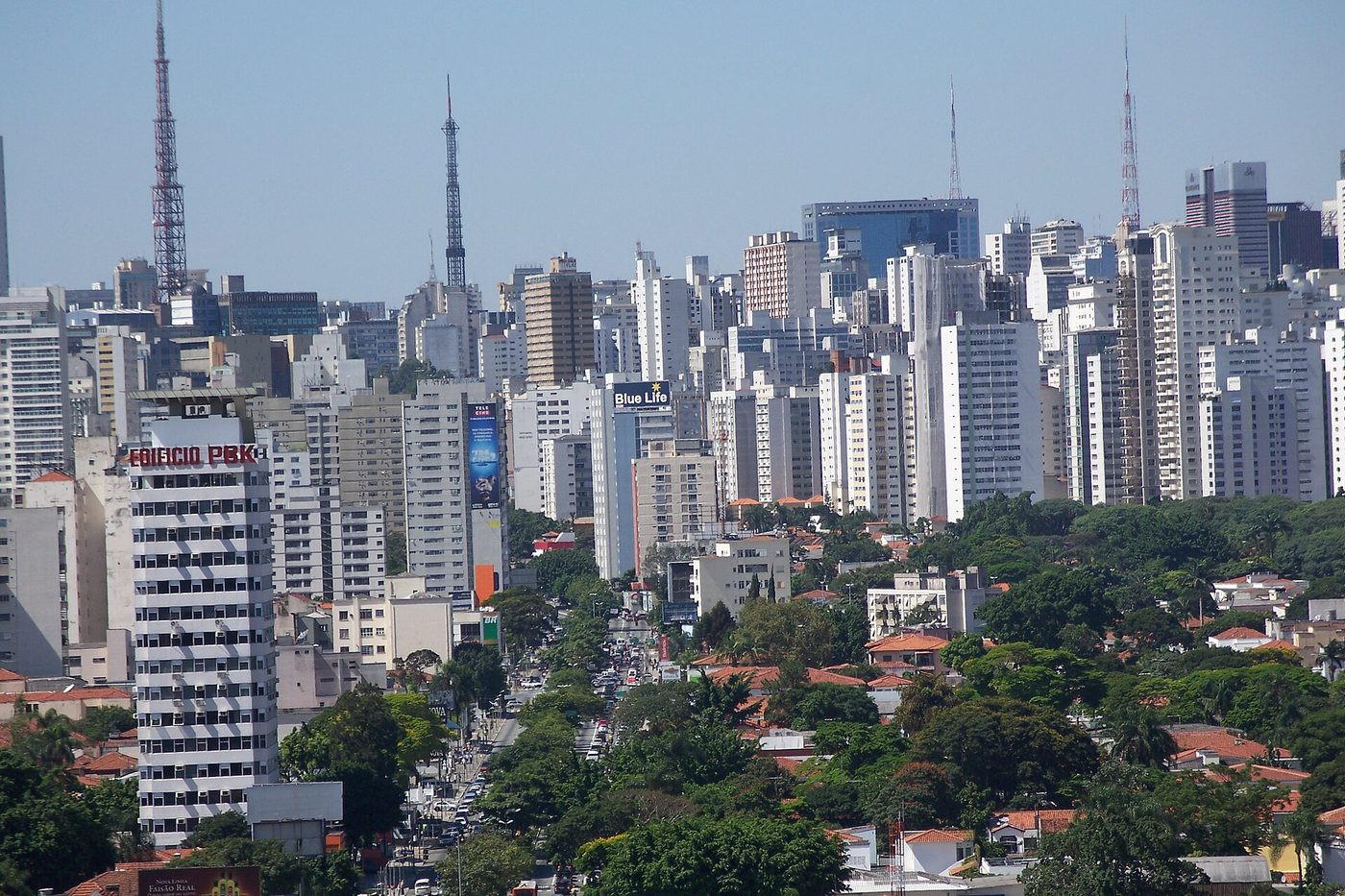
São Paulo has nothing to show from a viewpoint, and that is the honest way to begin, since you come for the table. Twenty-two million people live in the metro area, including the largest Japanese, Italian and Lebanese communities outside their home countries, and the kitchens of the city grew from whatever the newcomers carried with them.
The city is visited by district, and that makes three separate days. Avenida Paulista is the long, busy spine: MASP hangs its paintings on glass easels in the middle of the room, and Ibirapuera park holds Niemeyer's buildings. On Sundays the avenue closes to traffic and half the city walks it. The centre has the Municipal Market, a 1933 hall whose salt-cod sandwich is an institution, and the Copan building, Niemeyer's wave of an apartment block.

The metro changes a plan more than anything else: six lines, clean and fast, covering Paulista, the centre, Ibirapuera and Vila Madalena. The traffic above it is notorious, with rush-hour queues running for kilometres, so a taxi belongs outside six to ten and four to eight.
Tables at the restaurants on world lists are booked weeks or a month ahead, while everywhere else, which is most of the city, you walk in without notice. Liberdade is the Japanese quarter, with a market on Saturdays and Sundays. Bixiga is Italian, and Vila Madalena has bars and the murals of Beco do Batman. The padaria, a bakery open from six, is where you have pão na chapa and drink your coffee standing up.
Check the same room on both sites: price and cancellation terms can differ.
Timed-entry tickets and guided tours in one place.
Both sites fill in your nearest airport for you; change it in one click.
Guides for São Paulo
Shorter, practical pages for one concrete question each — how many days, how much money, where to sleep, where to escape the city.


What to see in São Paulo
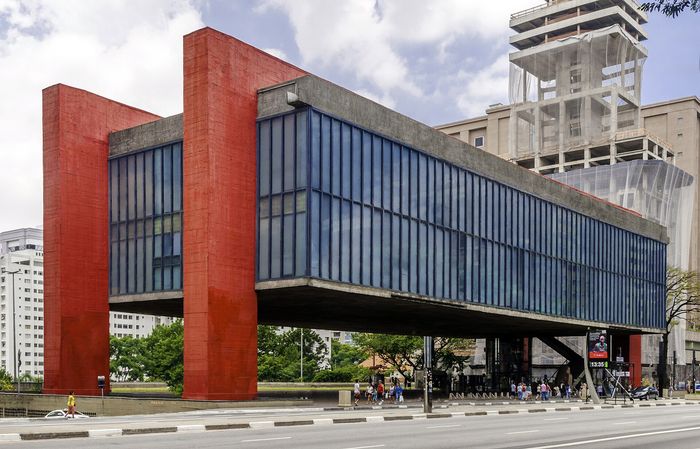
MASP
A museum in a building floating on four red pillars, its paintings on glass easels in the middle of the room instead of on the wall, because Lina Bo Bardi wanted visitors in 1968 to walk around a picture rather than stand in front of it. Entry is free on Tuesdays until 8pm and on Fridays from 6pm to 9pm.
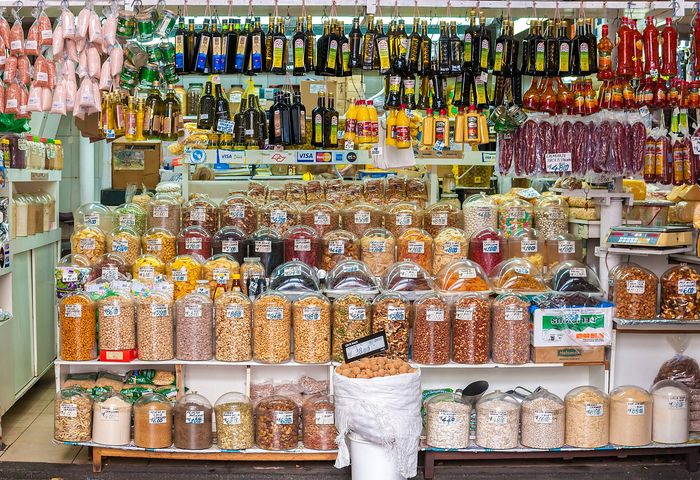
The Municipal Market
A 1933 hall with stained glass and a salt-cod sandwich that is half the reason people come. Go in the morning and on a weekday, because at the weekend the queue upstairs is longer than the sandwich is worth.
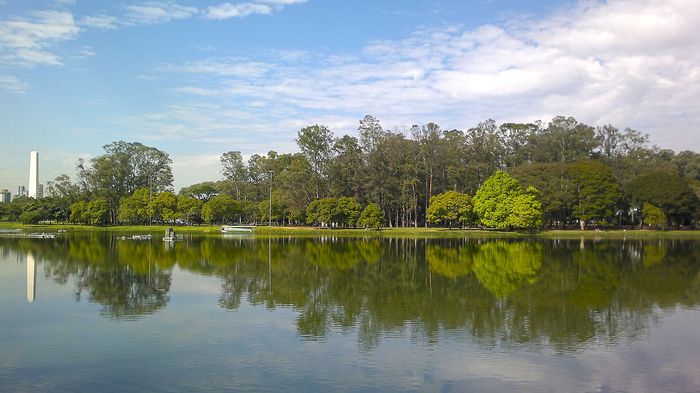
Ibirapuera
A park designed in 1954 by Niemeyer with Burle Marx, holding four museums and a covered walkway that links them. This is what the city looks like resting.
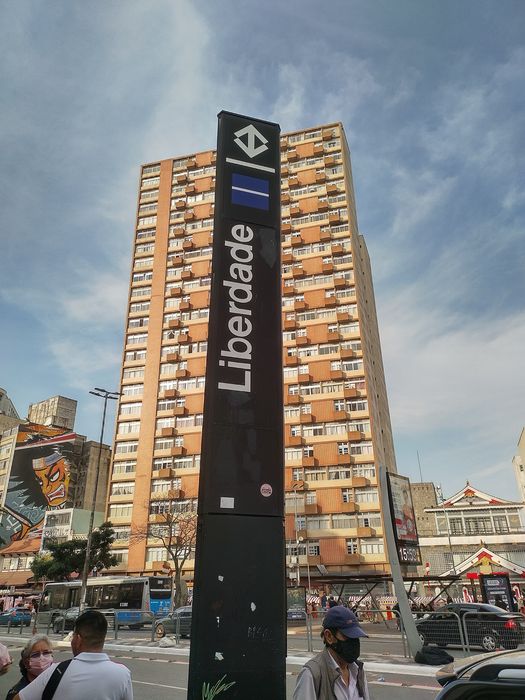
Liberdade
The largest Japanese community outside Japan, with a Saturday and Sunday market and shops selling what is hard to find elsewhere. It is as Chinese and Korean as Japanese now, which is a truer picture of the city.
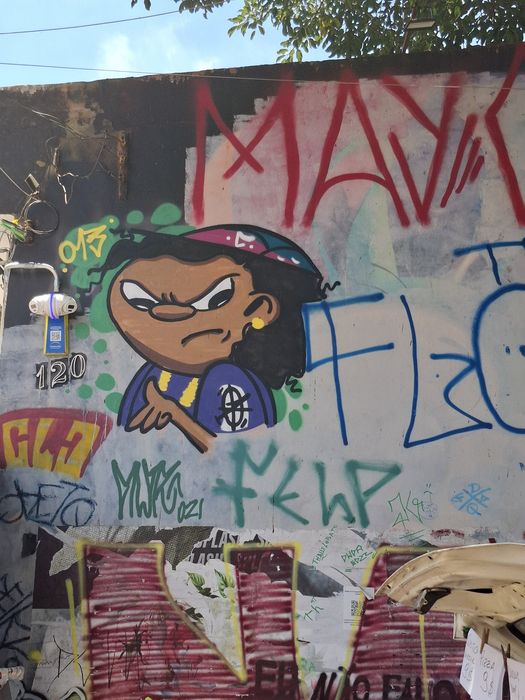
Vila Madalena and Beco do Batman
A lane covered in murals since the eighties and repainted every few months. In the evening the quarter turns into bars, with a real crush on Friday and Saturday and a lighter crowd on Wednesday.
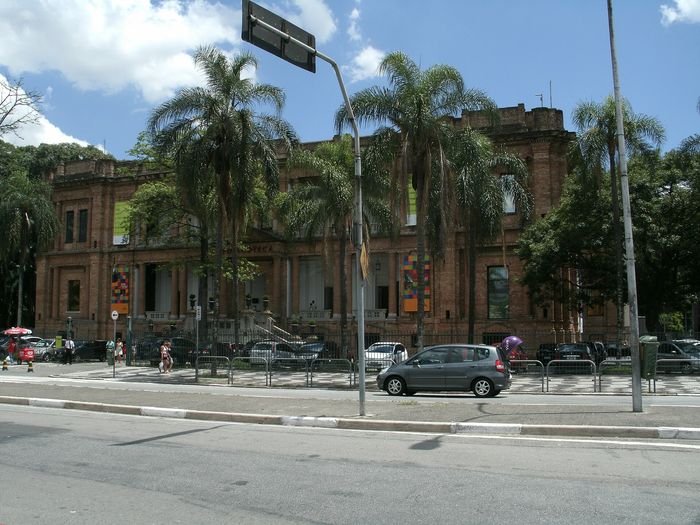
The Pinacoteca and Luz
An art museum in a restored 1900 building, next to the Museum of the Portuguese Language in the old railway station. The quarter is fine by day and not walked after dark.


Nomadinho scores out of 100, the same ones behind “Where to go”.
If you like São Paulo
Three places with the closest scores, from any country.


Two things you probably did not know
Sao Paulo banned advertising billboards across the whole city in 2007. Over fifteen thousand hoardings came down within months, revealing buildings nobody had seen for decades.
The state of Sao Paulo has the largest Japanese community outside Japan, around a million and a half people. The first immigrants arrived by ship in 1908 to work on the coffee plantations.
Before you go
Short answers to what people ask most before setting out.
How many days do you need in São Paulo?
Three days: Paulista and Ibirapuera, the centre with the Municipal Market, then Liberdade and Vila Madalena. A week is too much unless you live at the city's pace.
How do you get around São Paulo?
By metro: six lines, the best in Brazil, covering Paulista, the centre, Ibirapuera and Vila Madalena. Rush hour runs 7 to 10 and 5 to 8, and a taxi sits in the same traffic.
What is open on Sundays in São Paulo?
Avenida Paulista is closed to cars from 9 to 4, and there is a market on the square in Liberdade. MASP and the Pinacoteca open on Sundays; MASP closes on Mondays, the Pinacoteca on Tuesdays.
Ready for São Paulo?
Within reach from here
Places sorted by straight-line distance from São Paulo — day trips or weekends.

Brazil
→A country where the flight between two cities is often cheaper, and always faster, than the overnight coach

Argentina
→A country 3,700 kilometres long, where the far south is seen in December and the whales and the snow in August

Portugal
→A country that spent centuries looking at the ocean instead of the Europe behind it
All 292 places we write about sit on one page — narrow them down by continent, country, price or what you are travelling for.
Guides that mention it

Within reach from here: Rio de Janeiro, Foz do Iguaçu and Salvador
See how much of that actually suits you — or pin São Paulo if you have been.
Front row for the next trip
Leave your email and we'll let you know when a new destination or story goes up.