

Semana Santa in Seville: Madrugá, seats and where to watch for free
- Published
- 28 October 2026
- Reading
- 5 min read
- Where
- Seville, Spain
- Prices checked
- 28. Oct 2026.
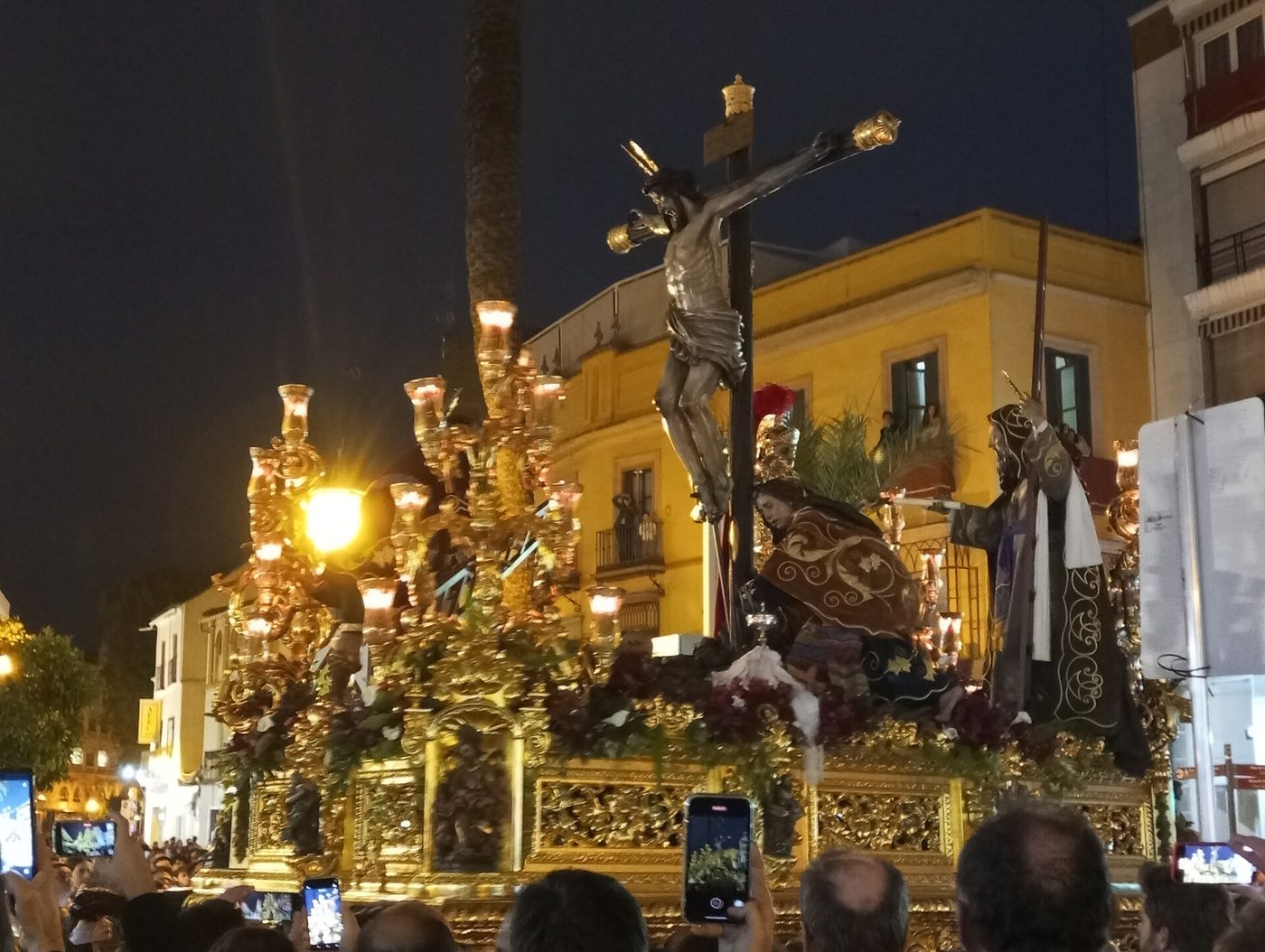
Holy Week in Seville runs from Palm Sunday on 21 March to Easter Sunday on 28 March 2027. Here are the order of the days, the Madrugá, the free places to watch, what is shut and what to eat.
Seville's Easter processions can be watched in full without paying for a seat. Seats and boxes exist only on the Carrera Oficial, the official route, and the rest of the route is open to anyone standing in the street. Semana Santa 2027 begins on Palm Sunday, 21 March, and ends on Easter Sunday, 28 March, with the Madrugá in the night of 25 to 26 March. Those dates follow from Easter itself, since the brotherhoods' timetables and the traffic plan for 2027 have not been published.
The Madrugá and the order of the days
Each day of the week has its own character. Palm Sunday opens it with La Borriquita, and from Monday to Wednesday the brotherhoods, the hermandades, cross the Triana bridge and use smaller streets. On Holy Thursday the churches stay open late and women walk in black with a mantilla. Then comes the Madrugá, the night into Good Friday. Holy Saturday is quieter and belongs to La Soledad, and on Easter Sunday a procession of the Resurrection closes the week. Among the best known are El Cachorro, Gran Poder and Esperanza de Triana. Listen for the saeta, a flamenco lament sung from a balcony as a float goes by.
The Madrugá runs in a set order. El Silencio comes out first, in complete silence, followed by Gran Poder, the Macarena with its Centuria Romana, and Calvario. Esperanza de Triana turns for home across the bridge, which is the emotional high point of the night, and Los Gitanos come last, when the sun is already high on Good Friday. The last edition, for scale (2026: Palm Sunday 29 March to Easter Sunday 5 April; the Madrugá on the night of 2 to 3 April; six brotherhoods: Silencio, Gran Poder, Macarena, Calvario, Esperanza de Triana and Los Gitanos). One detail from that year (2026: Madrugá times moved 15 minutes earlier than usual).
Every brotherhood must pass through the Carrera Oficial, so this is where the week is concentrated. It starts at Plaza de la Campana, runs along Calle Sierpes to Plaza San Francisco, continues down Avenida de la Constitución and ends at the Cathedral.
Seats on the route and the free places
The seats and the boxes, called palcos, stand only on the Carrera Oficial and are booked months ahead. They are subscriptions for the whole week, and in the 2026 edition they ran from €90.50 to €1,016. Standing in the street costs nothing.
- Everything beyond the Carrera Oficial is open to the public, with no ticket.
- Monday to Wednesday send the brotherhoods through smaller streets and over the Triana bridge.
- If it rains, a brotherhood can stay in its church, so a day may turn out quieter than planned.
What is shut and how to get around
Holy Thursday is a regional holiday and Good Friday a national one, so many offices are closed and some shops in the centre change their hours. Traffic is diverted and taxis slow down. The historic centre is pedestrian all week, which makes a park-and-ride the sensible place for the car, with Cercanías, Tussam buses and the metro for the last stretch. The Real Alcázar is shut on Good Friday, 26 March in 2027, so give it another day. It closes on 1 and 6 January, Good Friday and 25 December. The Cathedral and the Giralda fill a free daytime hour, and a flamenco show suits an evening without a procession.
A ticket with a chosen time slot, booked ahead.
A ticket with a chosen time slot, booked ahead.
What to eat
Lent and Holy Week come with their own sweets. Torrijas are called the official dessert of Semana Santa, and pestiños are made from flour, white wine and olive oil, then finished with honey. Piñonates are another Lent tradition tied to the convents of the Poor Clares. If you try only one, take the torrijas.


Check the same room on both sites: price and cancellation terms can differ.
Spain, in brief
What now
If this sounds like your trip, start here.
Seville
→Five centuries under the mosque, nearly eight under the cathedral

Seville in 2 days
→An order that follows the opening hours: the Alcázar while the cathedral is shut, Triana while the stalls trade, the Setas once the heat eases.

Day trips from Seville
→Córdoba and Cádiz by train, Jerez on the way, Ronda by bus and Itálica for half a day, with what each trip asks of the day.
Where to stay in Seville
→Six neighbourhoods, from Santa Cruz beside the Alcázar to Nervión by the station, with what each gives and what it asks in return.

What Seville costs
→Three entry tickets and the room break the bill; tapas, the market and walking save it, since the centre is crossed on foot.

Seville outside the triangle: courtyards and a Roman basement
→Courtyards, ceramics and a Roman basement under a timber canopy: seven places that are not on the list.
What to eat in Seville
→Spinach with chickpeas and pavía in the old bars, pringá in a montadito, solomillo al whisky in the evening, all in small portions.
The best time to visit Seville
→The daytime high, the night and the rainy days for all twelve months, with the dates of two spring weeks in 2027.
Getting around Seville
→From the airport by the EA bus to Plaza de Armas, on foot through the old town, and to Santa Justa station by bus or an hour's walk.

Mistakes everyone makes in Seville
→Six mistakes that cost a slot, money or an afternoon, each with a fact behind it and what to do instead.

Spain
→A country where dinner is at ten and the city wakes up as everywhere else turns the lights off

Is Valencia a cheaper Barcelona? Where it is, and where not
→Three Gaudí tickets in Barcelona cost more than the whole of old Valencia put together.

Pintxos for beginners: how to eat bar by bar in San Sebastian
→Pintxos are not tapas: nothing arrives with your drink, and every bite is ordered and paid for on its own.

Front row for the next trip
Leave your email and we'll let you know when a new destination or story goes up.