

Skopje off the usual route: Nerezi, Debar Maalo and the clock stuck at 5:17
Frescoes at Nerezi, a district of kafanas and a station stopped by the earthquake: three places that rarely make the first round.
- Nerezi
- Church of St Panteleimon
- The station
- Clock stopped at 5:17
- Holocaust centre
- Opened 10 March 2011
The first round of Skopje fits into two days, and the things that explain the city are scattered just beyond it. A church whose frescoes predate Giotto, a district that comes alive after dark, a station whose clock records the exact moment an earthquake ended the old town. None of them appears on the standard map, and all of them sit within a taxi ride or a short walk of the square.
The frescoes of 1164
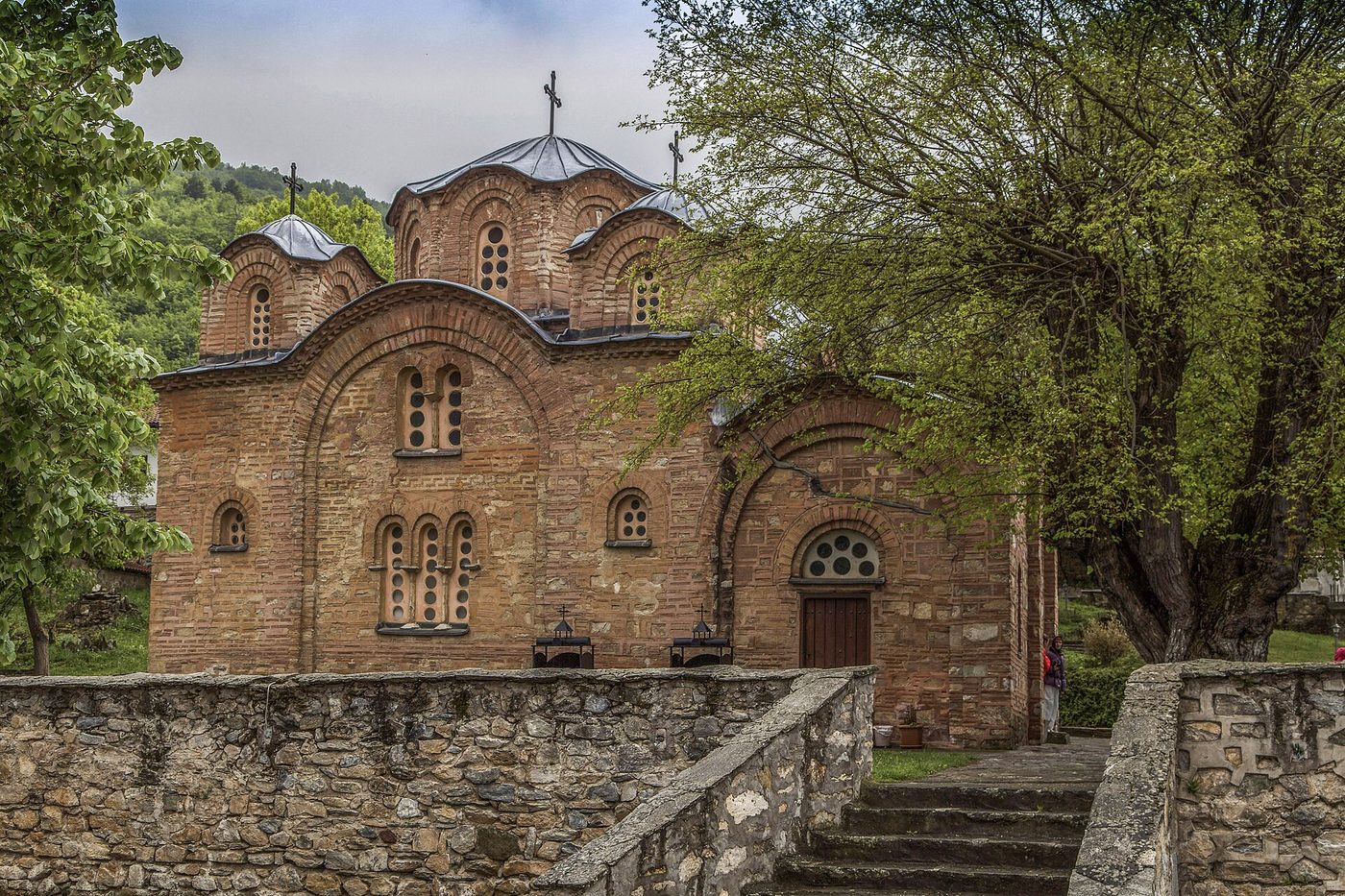
Gorno Nerezi is a village on the slopes of Vodno, about 6 km from the centre and roughly 15 minutes by taxi. The church of St Panteleimon stands there, built in 1164 for Alexios Angelos Komnenos. Inside, the walls carry frescoes from the Komnenian age, and the Lamentation of Christ is the scene that visitors travel for, a figure of grief painted with a restraint that later centuries rarely matched. It is small. Give it twenty minutes of silence and it repays them.
The art historian Andrew Graham-Dixon places these paintings before Giotto's frescoes in Padua, which date from around 1305, and the church was important enough to be drawn on the 50-denar banknote of 1996, a small honour for a village chapel that few tourists ever reach. Bring small change for the door, and leave the visit for the daytime, when the light reaches the walls.
hostel, dorm bed, per night
Cafés and kafanas for dinner
Debar Maalo is the quarter next to the centre where Skopje goes to sit down. Cafés fill the pavements, craft beer has a following, and the kafanas play music, so the evening settles here long after the bazaar shops have closed their shutters and the last tourists have gone back to their hotels. It is a walk from the square, and nobody needs a map. Come at dusk.
Kafana Debar Maalo on Živko Čingo 5 is the namesake, and Woodstock Beer Bar on Franklin Roosevelt is the choice for beer. Heart Bar completes a circuit that takes one evening and no planning. Farther out, in Karpoš, Skara Bar pours beer, and the club Stanica 26 on Jordan Mijalkov Street hosts guest DJs. A beer in these places costs €2.27–4.87. Rakija Bar Kaldrma in the bazaar is the place for a stronger drink at the end of the evening. The Bunjakovec green market stands close by, which makes a morning visit possible before the cafés have put their tables out, and a good way to see what the kafanas will serve later in the day. The shops of the bazaar close around 5 to 6 pm, and in the evening the life of the city moves to the cafés and kafanas of Debar Maalo.
The old railway station and the clock at 5:17
The earthquake of 26 July 1963 struck at 5:17 in the morning, with a magnitude of 6.1, and it killed more than 1,000 people and destroyed about 80% of the city. The old railway station keeps that minute on its stopped clock. Part of the building has housed the Museum of the City of Skopje since 1970, a collection of 21,950 objects spread over 4,500 m².
Macedonia Street leads from the square to the station, and it joins two eras. At one end stand the monuments of the Skopje 2014 project, announced in 2010, and at the other the station that stopped with the city in 1963. The station is visible from outside, which suits anyone who does not want a museum. Stand in front of the clock for a minute. It is the quickest lesson in why the square looks the way it does.
The Holocaust Memorial Center
The Holocaust Memorial Center opened on 10 March 2011, 68 years after the deportation to Treblinka, and it remembers 7,148 Jewish victims from the country. It tells of Sephardic life in Macedonia and of Ladino, the language of those families. The number is a small one on a page and a very large one in a country of this size. The building lies in the old Jewish quarter behind the Museum of Macedonian Struggle. Adult entry costs €1.62, and the centre is open Tuesday–Friday 9–19, Saturday and Sunday 9–15, closed on Mondays.
The aqueduct at Vizbegovo
The Skopje aqueduct stands in Vizbegovo, 2 km northwest of the centre, where about 386 m of it and 55 arches survive. Nobody agrees on its origin, since sources call it Roman, Byzantine or Ottoman of the 16th century. Restoration began in September 2021 and continues, so ask locally about access before walking out.


Where to next
What to eat in Skopje
→Burek for breakfast, kebapi in the bazaar for lunch, tavče gravče with shopska salad at night, and rakija only after the meal.

Ohrid · 111 km
→Samuel’s Fortress, Byzantine churches and a UNESCO lake you can swim in, all on one headland

How well does Skopje suit you?
→Six questions: a score for this place and others like it.
Nomadinho scores out of 100, the same ones behind “Where to go”.
If you like Skopje
Three places with the closest scores, from any country.


Ready for Skopje?
Front row for the next trip
Leave your email and we'll let you know when a new destination or story goes up.