

Samuel’s Fortress Ohrid: Tickets, Hours and What Is Really Old
Three kilometres of walls, a view over the lake and a ticket paid in cash at the gate
- Ticket
- €2.43, the ramparts
- Open
- 1 May–30 Sep 9–16.30
- Closed
- Mondays
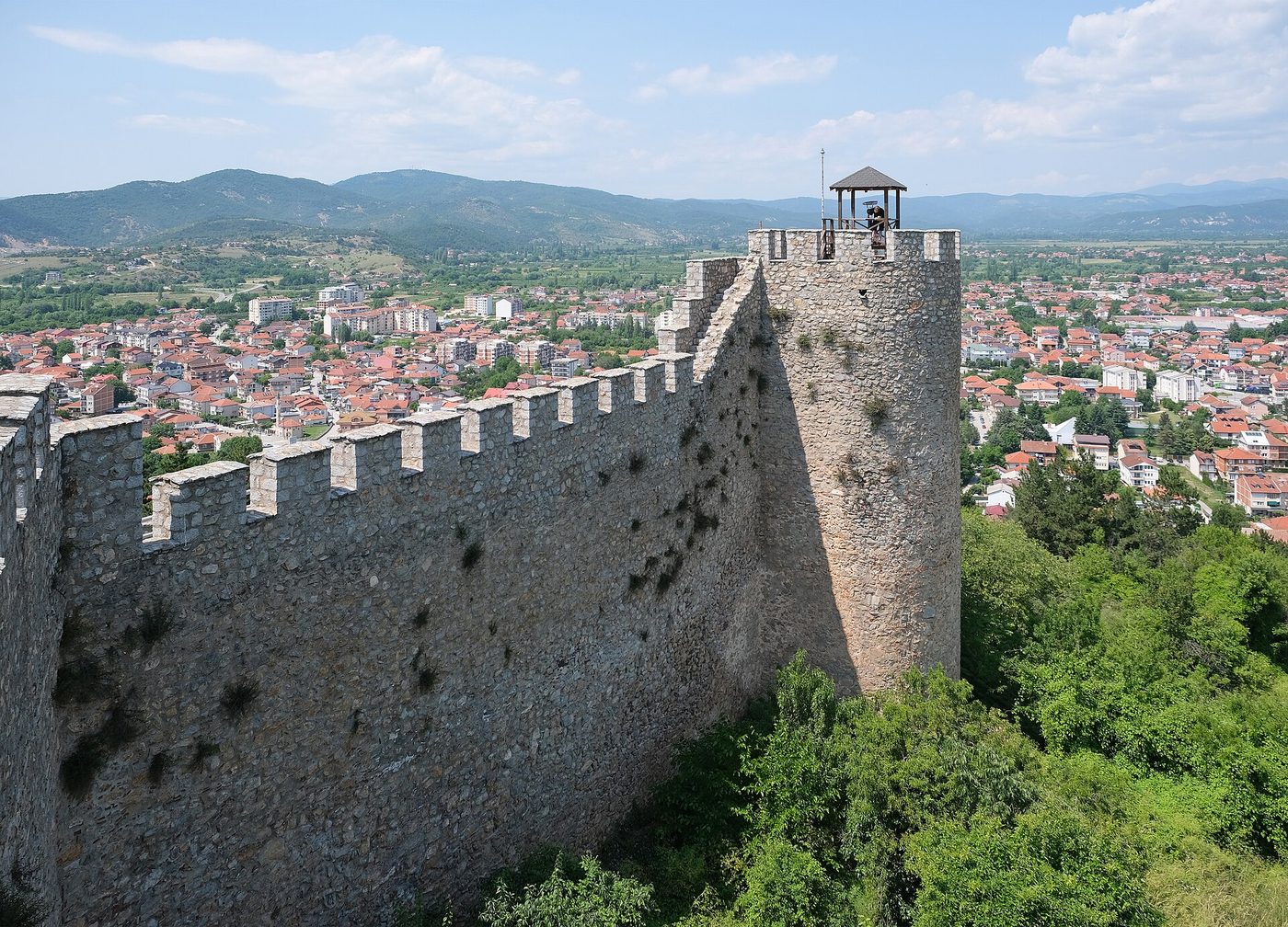
Samuel’s Fortress is a morning job. The gate is shut every Monday of the year. It closes at 4.30 pm from May to September and at 3.30 pm from October to April, so the ticket is the smallest part of the cost. Come when it opens at nine, while the stone is still cool and the tour groups are somewhere else, and the whole hill is yours for the first hour.
Which ticket for Samuel’s Fortress
Foreign visitors pay €2.43 for the ramparts, a tariff set by the museum and heritage institute that runs the site. It is paid in cash, in denars, at the gate. A card machine there cannot be counted on, so draw money in town before you start the climb.
Residents and students pay less, as the table shows, and the lower rates need an ID. Only the ramparts carry a fee. The slopes and the approach are free, and so is the view from the Upper Gate. A visitor who wants only the outline of the hill against the lake can stand there and pay nothing, which is a fair deal on a day when the gate is shut.
Shut on Mondays all year.
Official ticket
- Foreign visitors
- €2.43, the ramparts
- Residents
- €1.95, with ID
- Children, students
- €0.97, with ID
- Payment
- cash in denars
Through a partner
- options with a guide or audio guide
- usually costs more than the official ticket
When to come
From 1 May to 30 September the fortress is open from 9 am to 4.30 pm. From 1 October to 30 April it closes an hour earlier, at 3.30 pm. Monday is the closed day in every season, a rule of the institute that also shuts its museums on that day, and nobody at the gate can bend it.
The verdict is to arrive at nine and not after lunch. The summer closing time leaves a short afternoon, and the groups from the day trips fill the path by late morning. On a Monday the walls are out of reach. The ancient theatre just below the gate can still be looked at, and so can the church at Kaneo from the outside, which makes Monday a day for the lake.
The climb and what you see
The way up leaves the old town on cobbles and ends at the Upper Gate, which is also the entrance. Count on 10 to 15 minutes on foot. The hill carries the walls about 100 m above the lake, and the ramparts run for roughly 3 km at heights between 3 and 16 m, so there is far more wall than a first look from the harbour suggests. The fortress takes up the whole of the Ohrid hill, which is why the walls seem to follow you all the way round.
Inside, the pleasure is the walk along the ramparts and the view back over the old town and the water. The order for the day goes uphill and then down. Take the church of St Sophia and the theatre first, the fortress at nine, then Plaošnik, and finally the wooden walkway to Kaneo for a swim or a late lunch.
What is old and what is rebuilt
The label “ancient fortress of Tsar Samuel” is half true. Most of the surviving walls of the citadel and its suburb date from the time of Samuel, who ruled from 976 to 1014, and from his successors until 1018. Basil II then tore the place down. Later rulers rebuilt it, among them the Byzantine emperor Alexios Komnenos, and under all of it lies an older trace from the 4th century BC, probably laid out under Philip II. Livy mentions the place in 209 BC, and systematic research and conservation began only in 2000.
What you walk on today is mostly newer. The walls and ramparts were heavily restored in 2003, and many of the battlements are fresh stone set where nothing had survived. Only the Upper Gate stands complete, with marble gravestones carrying Greek and Roman inscriptions reused in its masonry. Treat the fortress as a reconstruction on an old plan, and it repays the climb.

When you are short on time
With an hour to spare, keep only what carries the visit. The ramparts and the gate give most of what the hill has to offer, and everything else can wait for another day.
- Start at nine on any day but Monday, when the gate is shut.
- Carry cash in denars, since cards at the gate are unreliable.
- Walk the ramparts first, then look for the gravestones set into the Upper Gate on the way out.
- Finish at the ancient theatre just below the gate, which costs nothing to look at.

Where to next
Ohrid in 3 days
→The old town and the fortress on day one, the boat to Sveti Naum on day two, Galičica or Struga on day three, and Monday changes the order.

Skopje · 111 km
→An Ottoman bazaar, the Kale fortress and a centre rebuilt after the 1963 earthquake, all on the Vardar

How well does Ohrid suit you?
→Six questions: a score for this place and others like it.
Nomadinho scores out of 100, the same ones behind “Where to go”.
If you like Ohrid
Three places with the closest scores, from any country.


Before you go
Short answers to what people ask most before setting out.
Is the fortress open on Mondays?
No. The fortress is shut on Mondays all year, because the institute that runs it keeps Monday as its closed day. The ancient theatre below the gate and the outside of the church at Kaneo stay open to visitors.
Can you pay by card?
Not reliably. The ticket is paid in cash, in denars, at the gate. A card payment there cannot be counted on, so withdraw denars in town beforehand.
Is there a way in that costs nothing?
Partly. The hillside paths are free, and so are the view from the Upper Gate and the walk around the outside of the walls. Only the ramparts themselves carry a fee.
Ready for Ohrid?
Front row for the next trip
Leave your email and we'll let you know when a new destination or story goes up.