

Kyoto
Three sides of the city, three days, and a fourth added at dawn before one of them — a bus network that keeps up with none
- When to go
- October 17° · 9 rainy days
- Per day
- €€€€price 4 of 5
- How many days
- 3days
- For you
- 6 questions →
- Nearest airport
- 39 km Osaka · 65 km Kobe
- Right now

Kyoto is planned by sides of the city, not by temples: east (Higashiyama), west (Arashiyama) and north (Kinkaku-ji) are three separate days, with south (Fushimi Inari) added at dawn before one of them, since it is open around the clock. Combine two of the other three and it means ninety minutes on a bus that is not moving.
Buses are the main transport here and the main problem. A ride in the central zone is ¥230 regardless of distance, and the old ¥700 bus day pass — still recommended by blogs and guidebooks — was withdrawn in March 2024. Its replacement is the combined subway and bus pass at ¥1,100, which only pays off from the fifth ride. For two or three journeys a day it is cheaper to tap an IC card.

From 1 March 2026 the lodging tax is considerably higher and scales with the room rate: under ¥6,000 a night it is ¥200, ¥6,000–20,000 is ¥400, ¥20,000–50,000 is ¥1,000, ¥50,000–100,000 is ¥4,000, and above ¥100,000 a night it is ¥10,000 per person. For a couple in a mid-range hotel that is a few thousand yen across a week — not ruinous, but not something to discover at the desk on check-out either.
Fushimi Inari is the one major site in the city that is open around the clock and charges nothing. That changes the plan: the path through the torii climbs a hill and is packed until three in the afternoon, and empty before seven in the morning and after nine at night. Get up early and you get the best-known image of Japan with nobody in the frame — and a whole day still ahead of you.
What to see in Kyoto
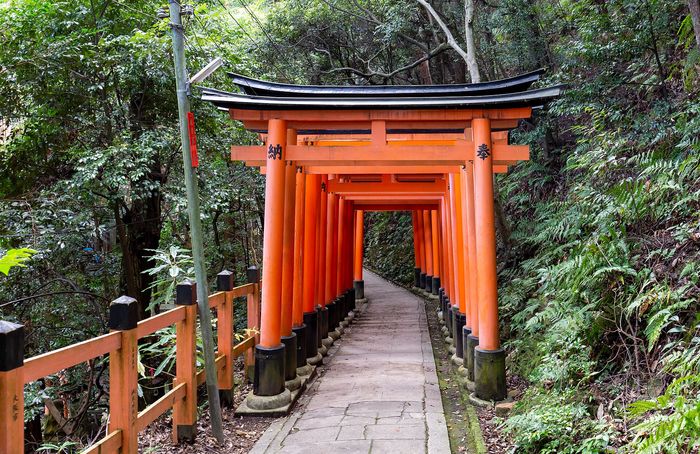
Fushimi Inari
A path of several thousand orange torii climbing Mount Inari. Free, open around the clock; the full loop is two to three hours, and most people turn back after the first twenty minutes.
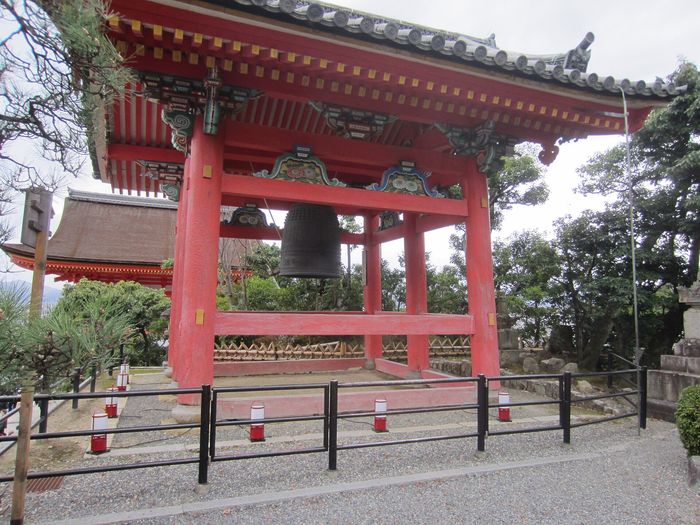
Kiyomizu-dera
A temple on a wooden platform above the hillside, built without a single nail. The terrace is the reason to come, and the Sannenzaka lane leading up to it is half the experience.
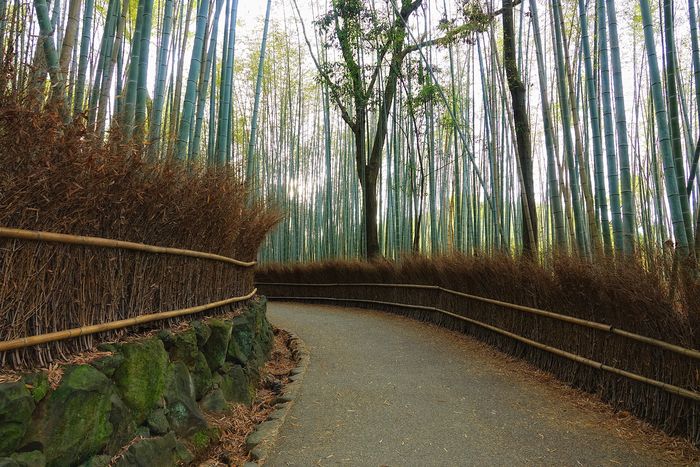
Arashiyama
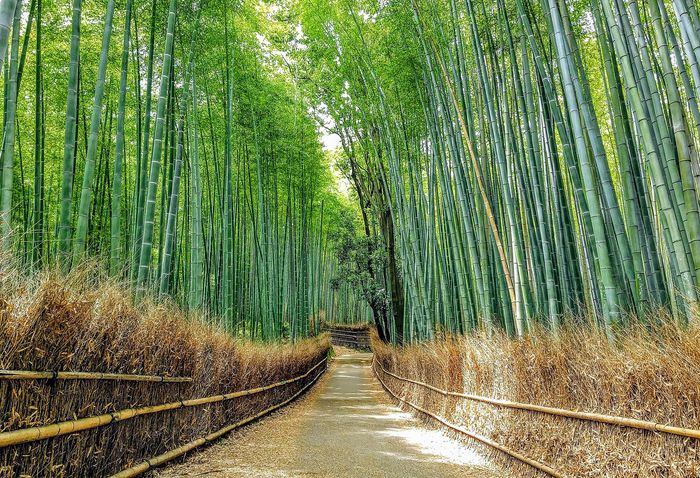
The western edge of the city, with the bamboo path, the Togetsukyo bridge and a monkey park on the hill. The bamboo path is short and always full — go before eight.
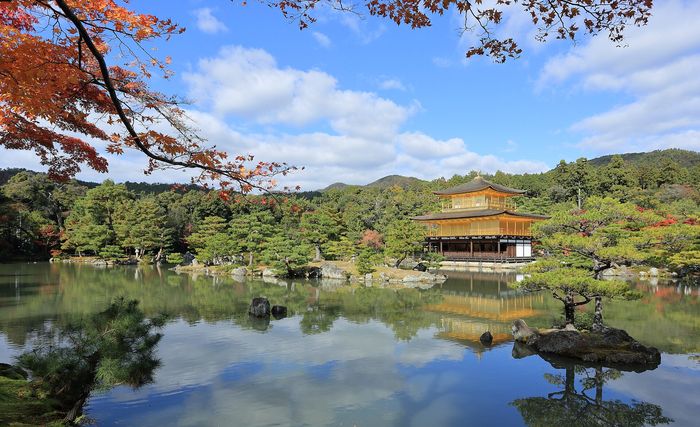
Kinkaku-ji
A pavilion covered in gold leaf above a pond. What you see is a 1955 reconstruction: a young monk burned the original down in 1950 — the story Mishima turned into a novel.
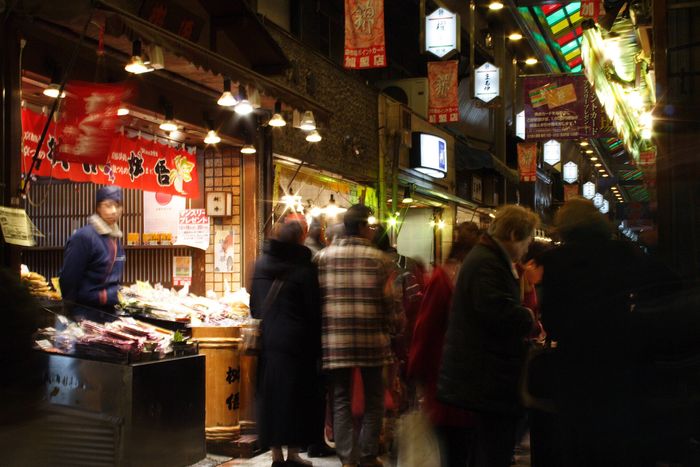
Nishiki
A covered market a few hundred metres long, with kitchens, pickles and knives. It is more takeaway food than market these days, but still the best lunch in the centre.
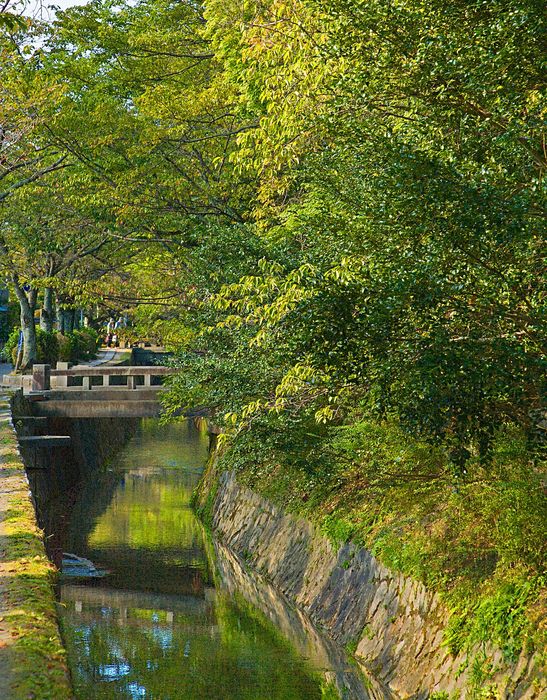
The Philosopher's Path
A canal between Ginkaku-ji and Nanzen-ji, lined with cherry trees. Crowded in April, red in November, and empty and quiet in July — which is probably the best of the three.


Two things you probably did not know
Kyoto was on the target list for the atomic bomb in 1945, but the American secretary of war Henry Stimson had it removed. He had been there on his honeymoon and insisted the city be spared.
The Golden Pavilion you see today was built in 1955. A young monk burned down the fourteenth-century original in 1950, and Yukio Mishima turned the case into a novel that is still read.
Ready for Kyoto?
Within reach from here
Places sorted by straight-line distance from Kyoto — day trips or weekends.
Japan
→A country where a train five minutes late hands the passenger a written delay certificate

China
→A country the size of a continent, where the hard part is sorted out before you fly: payment, internet and tickets

Thailand
→Two coasts the monsoon never reaches at the same time, and a north seen through smoke in March
All 277 places we write about sit on one page — narrow them down by continent, country, price or what you are travelling for.
Front row for the next trip
Leave your email and we'll let you know when a new destination or story goes up.