

Osaka
A city you don't tour so much as eat your way through, standing up
- When to go
- October 19° · 8 rainy days
- Per day
- €€€price 3 of 5
- How many days
- 2days
- For you
- 6 questions →
- Nearest airport
- 11 km Osaka · 26 km Kobe
- Right now

Osaka is a base for the Kansai region rather than a destination in itself: Kyoto, Nara and Kobe are fifteen to forty minutes away, and in the evening you come back to a city where dinner runs late and nobody is in a hurry to go home. Two days is the right measure, and both are largely about food.
Dotonbori is the street people come for and the place they get wrong. The restaurants with giant mechanical crabs and lanterns charge tourist prices; the lane behind them, Hozenji Yokocho, has neither the picture menus nor the men calling from the pavement, and you eat the same food without paying extra for the show. The rule that works everywhere in this city: if a place has a picture menu and a man calling from the pavement, walk another fifty metres.

The castle is the most expensive single item in town and deserves one caveat. The keep costs ¥1,200 — twice what it was before April 2025, when it was ¥600 — and what you climb is not a sixteenth-century castle but a 1931 concrete reconstruction with a lift and a museum inside. The park, walls and moat around it are free, and better looking than the interior.
Osaka is also a cheap way into Kansai by air: Kansai airport has a dedicated terminal for low-cost carriers, and the train into the centre is about thirty minutes. Anyone planning Kyoto, Nara and Hiroshima on one trip sleeps here and travels out — accommodation is cheaper than in Kyoto, and since March 2026 so is the lodging tax.
What to see in Osaka
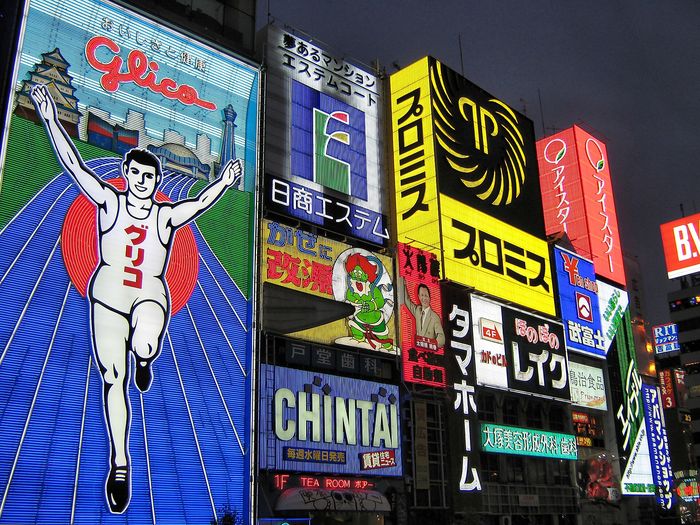
Dotonbori after dark
The canal, the neon and the Glico running man, up there since 1935. The shot everyone wants is from Ebisubashi bridge, and it works after dark, not at dusk.
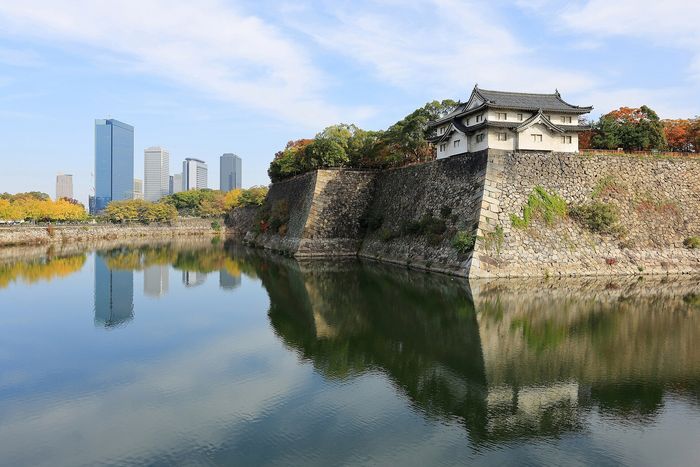
Osaka Castle
A 1931 concrete reconstruction on original sixteenth-century stone walls. The keep is ¥1,200; the park and moat are free and worth more.
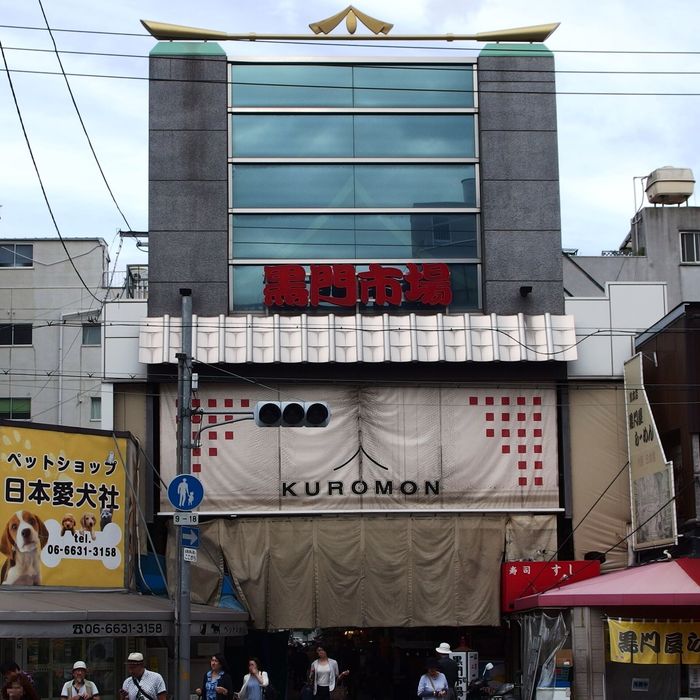
Kuromon Ichiba
A covered market that is now mostly eaten standing up — scallops, tuna, beef grilled in front of you. Go at lunchtime, around noon, while it is fresh.
Shinsekai and Tsutenkaku
A district built in 1912 on the model of Paris and Coney Island, then left fifty years behind. Kushikatsu is eaten here, and you do not double-dip the sauce — that is a rule, not a joke.
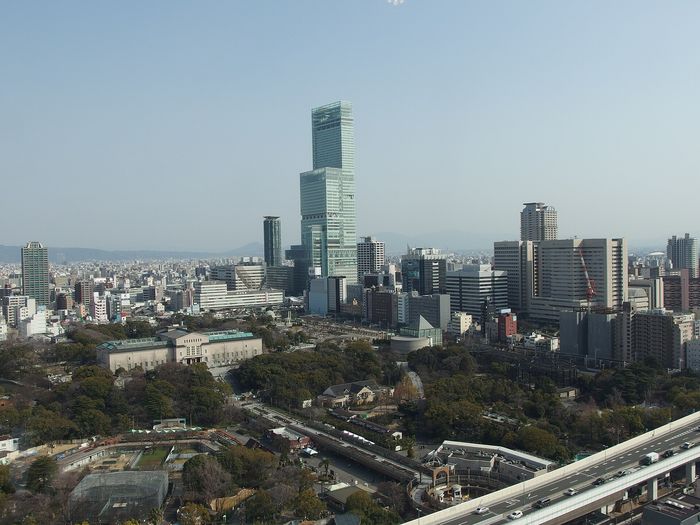
Umeda Sky Building
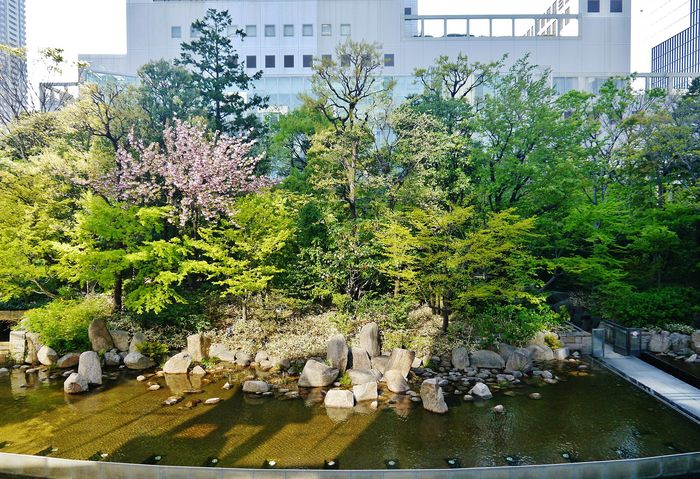
Two towers joined by a floating garden 173 metres up, with escalators in glass between them. The ticket runs ¥1,500–2,000 depending on where you buy it, and the view is best half an hour before sunset.
Nakanoshima
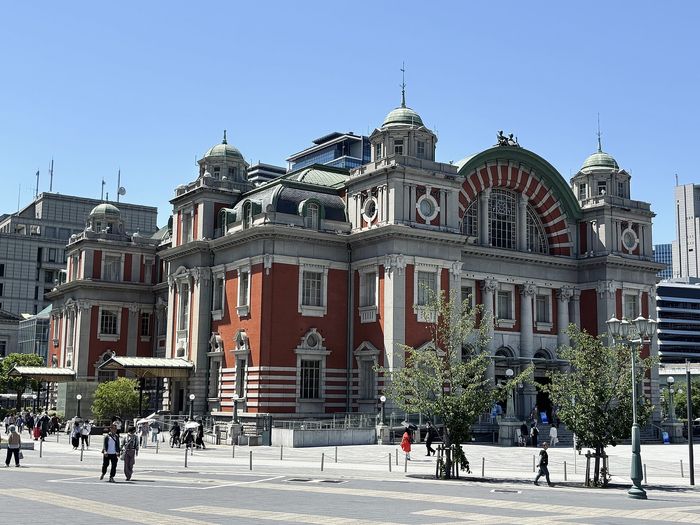
An island between two rivers with a 1904 library, museums and a rose garden. This is the Osaka without neon, and most visitors never see it.


Two things you probably did not know
Osaka is called the nation's kitchen, and the local word kuidaore means to ruin yourself by eating. Takoyaki and okonomiyaki come from here, and both are made on a griddle in front of the customer.
In Osaka people stand on the right of an escalator, in Tokyo on the left. The difference is usually put down to the 1970 World Expo, when Osaka adopted the international habit while Tokyo kept its own.
Ready for Osaka?
Within reach from here
Places sorted by straight-line distance from Osaka — day trips or weekends.
Japan
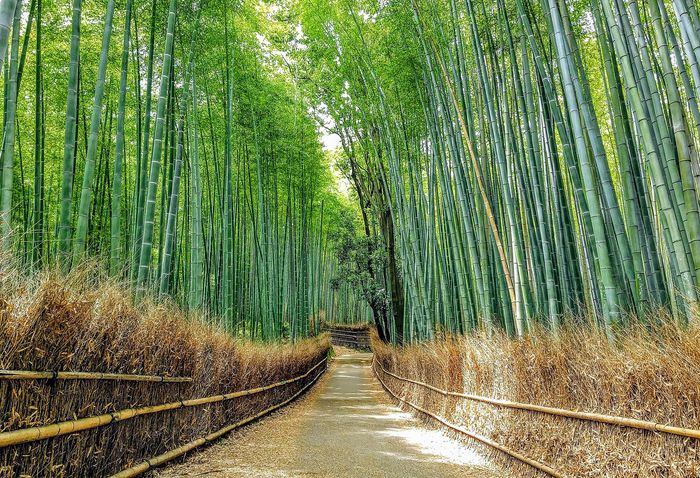
→A country where a train five minutes late hands the passenger a written delay certificate

China
→A country the size of a continent, where the hard part is sorted out before you fly: payment, internet and tickets

Thailand
→Two coasts the monsoon never reaches at the same time, and a north seen through smoke in March
All 277 places we write about sit on one page — narrow them down by continent, country, price or what you are travelling for.
Front row for the next trip
Leave your email and we'll let you know when a new destination or story goes up.