

Getting around Rio de Janeiro
By express bus from Galeão to the centre, by metro along the South Zone, to Corcovado by train or van, and to Niterói by ferry from Praça XV.
- From Galeão
- BRT Gentileza to the centre
- Metro
- €1.33 a ride
- VLT in the centre
- €0.84
Rio punishes the visitor who expects one ticket to do everything. The metro runs along the South Zone beaches, and one express bus links Galeão airport to the centre. Everything the metro skips, from downtown to Corcovado, Santa Teresa and Niterói, needs a different vehicle and a different fare, so plan around the handovers.
From the airport to the city
Rio has two airports, and the one you land at decides your first hour. Santos Dumont (SDU) sits in the centre and the VLT tram stops beside it. Galeão (GIG) is out on Ilha do Governador, so it needs a proper ride: the BRT Gentileza express runs without a stop to Terminal Gentileza downtown, leaves every 20 minutes and takes 20–25 min. The fare is €2.52, payable only with a Jaé or RioCard card because cash is not accepted, and there is space for luggage.
From Terminal Gentileza the public route goes on by VLT and then by metro to Copacabana or Ipanema, and all three legs together cost €4.68 and take about 1 h 30. A taxi or Uber to the South Zone takes 40–60 min, depending on traffic. A lone traveller does best on the public chain, though it means changing twice with a suitcase. A group of three or more should price a ride app against three separate fares.
Check the same room on both sites: price and cancellation terms can differ.
Three lines, one fare
One fare covers all three lines: €1.33 a ride. Line 1 is the beach line, and Lines 1 and 2 share the stretch between Central do Brasil and Botafogo. Line 4 carries on from Ipanema through Leblon and São Conrado to Barra da Tijuca. Jaé and RioCard cards work at every station, and so does a Visa, Mastercard or Elo bank card, or a phone or watch with NFC held to the reader. For a few rides there is no reason to buy a transit card at all, and transfers to buses, BRT and ferries have a window of 120 minutes.
A ride is €1.33 on all three lines; the official tariff page lists no day pass.
VLT and ferry
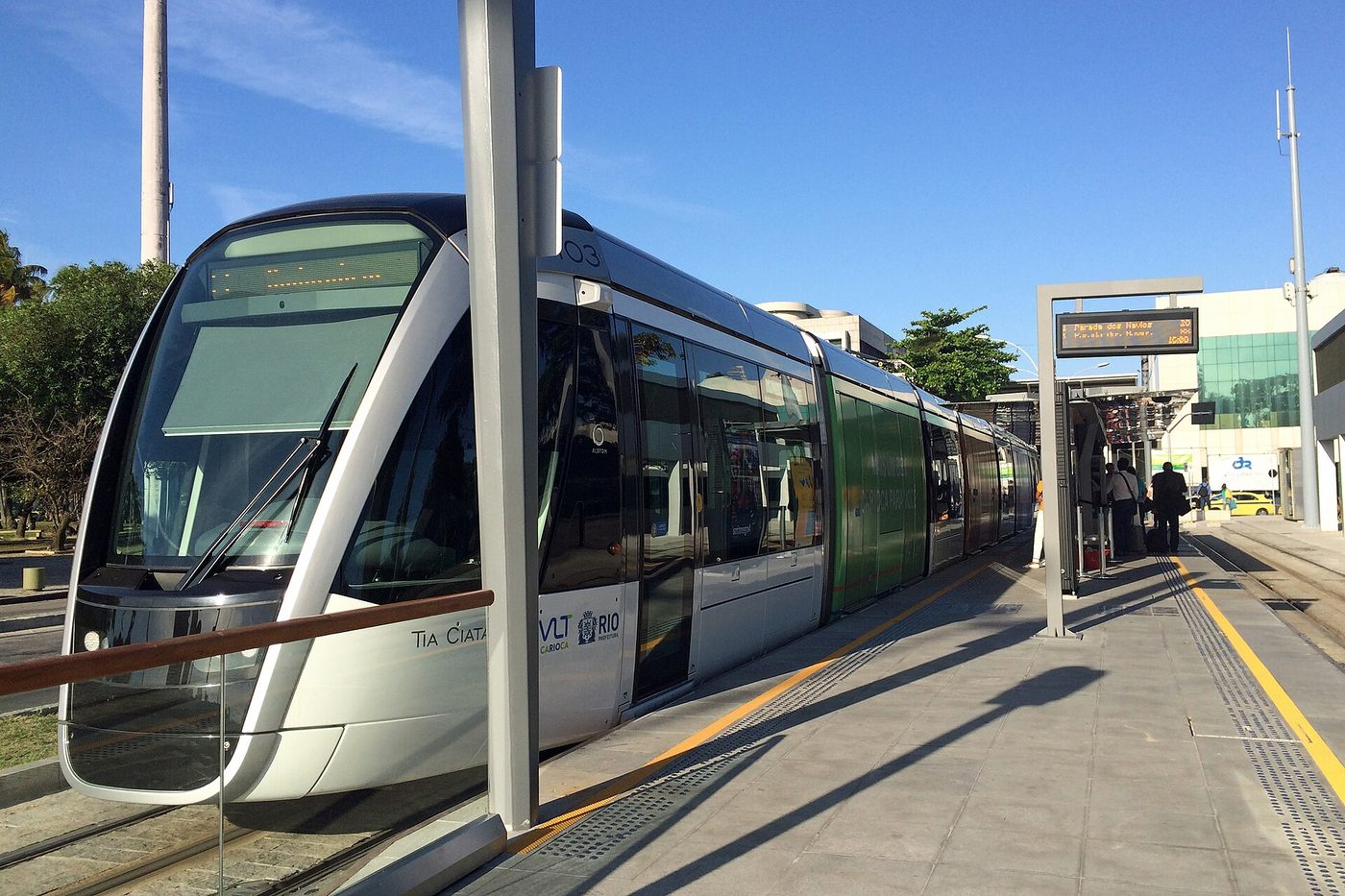
The VLT Carioca is a light rail line in the centre, with a fare of €0.84, and it stitches downtown together. It stops at Terminal Gentileza, Central do Brasil, Santos Dumont airport, Praça XV and the Rodoviária bus station, and the metro stations Carioca, Cinelândia and Central lie on its route, so a single change takes you from rails underground to rails in the street. You pay with a Jaé card and validate it on board.
From Praça XV the ferry crosses the bay to Niterói: the crossing takes about 20 min and costs €0.84. Praça XV is also where VLT and boat meet, so a short downtown day can run on rails and water without touching a taxi.

Corcovado and Santa Teresa
The train to Christ the Redeemer leaves from Cosme Velho station at Rua Cosme Velho 513, climbs through Tijuca National Park and has run since 1884. The ticket costs €22 and covers the ride up and down. Vans are the alternative: from Copacabana and Largo do Machado they cost €22, and from Paineiras €15. The transport is part of the entry price in every case, and the Paineiras van asks you to reach Paineiras on your own first.
The Santa Teresa tram starts at Carioca station and climbs over the Arcos da Lapa, which trams have crossed since 1896; in Santa Teresa itself they have run since 1872. Visitors without a resident card buy a ticket at the station for €3.36, in cash or by card. The Silvestre branch came back after almost twenty years and is still in trial operation, which suits a morning of looking around and not a connection you cannot miss. If the tram does not come, a ride app up the hill is the fallback.

Taxis, ride apps and walking
Uber works in Rio. It is the simplest answer wherever the metro does not go, from the back streets of Santa Teresa to a late dinner in a neighbourhood with no station within reach. Between Copacabana, Ipanema and Leblon the simplest way to travel is on foot along the beach, and the metro then serves to cross the hills and reach the neighbourhoods that have no shore.


Where to next
Rio de Janeiro in 3 days
→Three days in which the viewpoints are not booked but waited for, because in cloud Corcovado shows you nothing and the ticket is not refunded.

São Paulo · 360 km
→A city with no postcard, where you come for the table and not for the view

How well does Rio de Janeiro suit you?
→Six questions: a score for this place and others like it.
Nomadinho scores out of 100, the same ones behind “Where to go”.
If you like Rio de Janeiro
Three places with the closest scores, from any country.


Before you go
Short answers to what people ask most before setting out.
How do you get from Galeão to Copacabana cheaply?
The cheapest route is BRT, VLT and metro in a row, which costs €4.68 in total and takes about 1 h 30. A taxi or Uber covers the same trip in 40–60 min, depending on traffic, and for three or more people a ride app can come out ahead of three separate fares.
Can you pay for the metro with a bank card?
Yes. A Visa, Mastercard or Elo card works at the reader, and so do a phone or watch with NFC. Jaé and RioCard cards are accepted at every station, and the fare is €1.33 a ride on Lines 1, 2 and 4.
How do you reach the statue without a taxi?
Take the train from Cosme Velho station or a van from Copacabana, Largo do Machado or Paineiras. The Paineiras van works only if you get to Paineiras yourself, and the cost and the choice between the options are in the itinerary and the budget guide.
Ready for Rio de Janeiro?
Front row for the next trip
Leave your email and we'll let you know when a new destination or story goes up.