

- Published
- 9 November 2026
- Reading
- 9 min read
- Where
- Before you go
- Prices checked
- 5. Nov 2026.
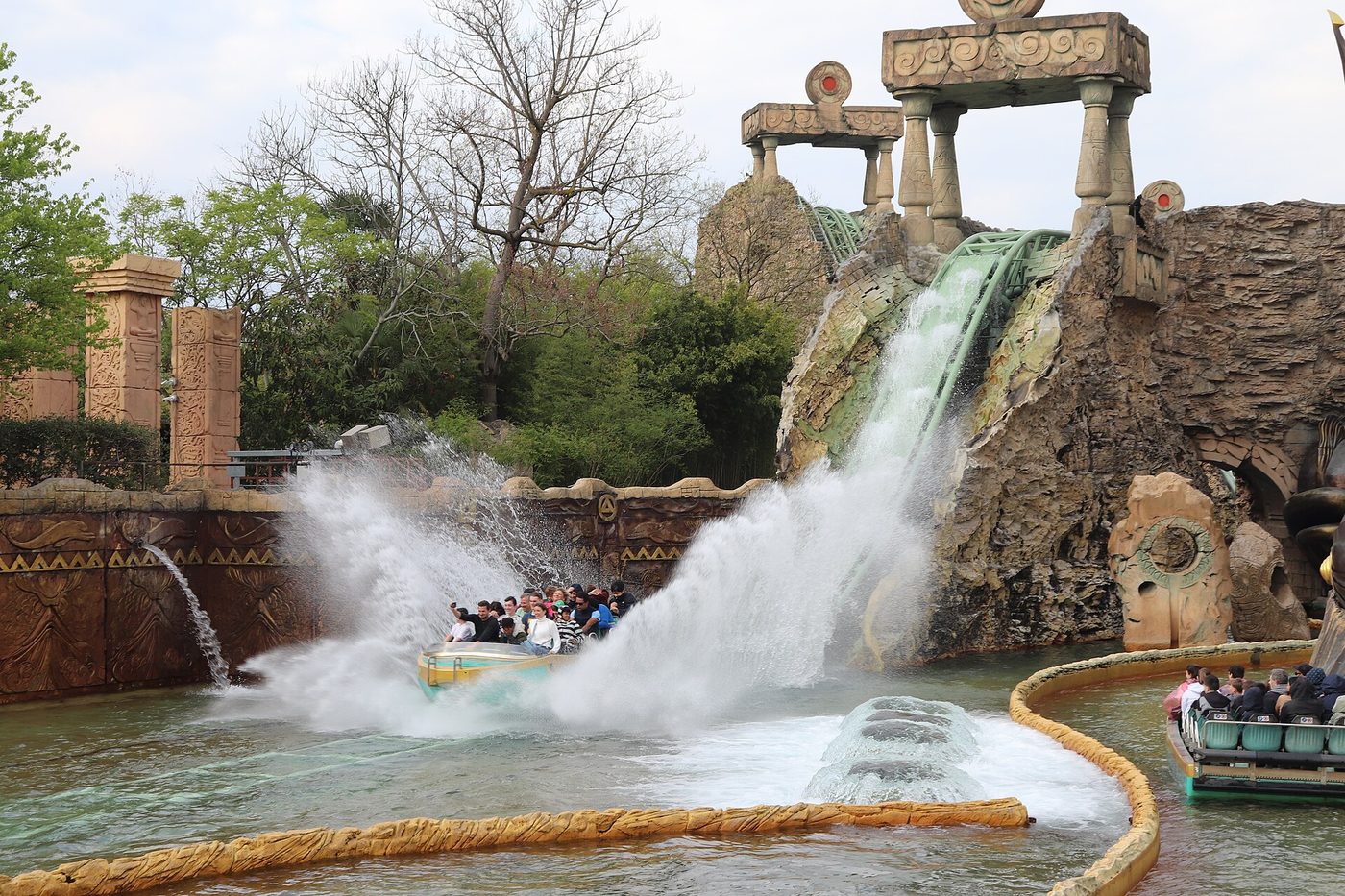
This guide compares 13 European theme parks by ticket price, the height of your child and the season they open. The right park depends on who is going and when, so the table below is the quickest way in.
Count centimetres before you count years. For small children the answer is Leolandia near Milan, where children up to 89 cm get in free, and for every age at once it is Disneyland Paris. Gardaland and Heide Park, with its 140 cm coasters, suit teenagers and adults who want the big drops. The cheapest entry is Jardin d'Acclimatation in Paris at €7, followed by the Prater in Vienna, where walking in costs nothing. Buying online saves more money than any other trick, and in November most parks open by calendar rather than every day. The table below puts all 13 side by side so you can see where your budget and your child's height land.
Height counts for more than age
Most parks do not ask how old your child is. They measure, usually in shoes, and the ticket category and the rides on offer follow from the number of centimetres. Legoland Windsor is the one park here that works by age, with a target group of 2 to 12. The table lists the 13 parks in order of the lowest amount in the price column, and since the amounts are not for the same day, read the note under it before comparing.
Amounts are for adults, from 2026, and are not for the same day: some are "from" prices, others are for a fixed date or the gate, so the comparison is approximate. At Leolandia and Legoland Windsor, height is measured in shoes.
- Under 80 cm: free entry at Jardin d'Acclimatation.
- Under 90 cm (up to 89 cm at Leolandia): free at Leolandia, Legoland Windsor, Gardaland and Heide Park.
- Under 100 cm, or under 1 m: free at Parque Warner and Cinecittà World.
- Up to 3 years old: free at Disneyland Paris, Parc Astérix, Terra Mítica and Siam Park.

Leolandia, Legoland Windsor, Jardin d'Acclimatation
Leolandia sits in Capriate San Gervasio, 34 km from Milano Centrale, and it is the easiest park here to plan around a short child. A fixed-date ticket costs from €30.50 for visitors over 120 cm, and children between 90 and 119 cm pay from €27.50. Anyone up to 89 cm enters free, and the staff measure in shoes. Of the park's more than 50 attractions, more than half are open to children under 90 cm, which means a toddler is not left holding the bags at the gate while the older ones ride. A 2026 ticket also gives one free return visit, with the first visit before 6 January 2027, except on 31 October and 1 November 2026.

Legoland Windsor is built for children aged 2 to 12, and those under 90 cm get in free whatever their age: under 90 cm free, whatever the age. DUPLO Valley has no minimum height, so the youngest visitors still have a corner of their own. A ticket starts from €37, and booking online can be up to 50 % cheaper than paying at the gate. Jardin d'Acclimatation works in a different way: entry at €7 covers the park and its free playgrounds for adults and for children from 80 cm, and younger children enter free. Rides are paid with tickets at €4.50 each, and a ride takes one to three of them. A pass is also on sale: from €25 to €48.
Official ticket
- Ticket
- from €30.50
- 90–119 cm
- from €27.50
- Up to 89 cm
- free
Through a partner
- options with a guide or audio guide
- usually costs more than the official ticket


Disneyland or Parc Astérix
Disneyland Paris is the park for a group with mixed ages. One park costs €52–150 and two parks on the same day cost €87–185, with the date setting the price: weekdays outside school holidays are cheapest, while weekends and French holidays cost the most. Book as early as you can. The resort has Disneyland Park and Disney Adventure World, which opened on 29 March 2026 on the site of the old Walt Disney Studios Park. Under-3s go in free. For a single day, pick a single park and give it the whole day. Opening times: usually from 9:30 am; closing 9–10 pm on weekdays, 10–11 pm at weekends and holidays. RER line A runs from central Paris to Marne-la-Vallée–Chessy in about 40 minutes, and the fare is €2.55.

Parc Astérix is the French alternative, and it suits older children who prefer speed to castles. The Futé ticket costs €56 and is dated, bought at least 7 days ahead. Liberté Flex costs €68 and lets you change the date up to an hour before opening. Outside school holidays the park can be closed on weekdays, so confirm the date before you buy. The season runs 4 April 2026 to 3 January 2027. The park lies about thirty kilometres north of Paris. Take RER B to Charles de Gaulle Airport 1 and then the shuttle, which costs €14 return.
Official ticket
- One park
- €52–150
- Two parks
- €87–185
- Under 3
- free
Through a partner
- options with a guide or audio guide
- usually costs more than the official ticket

Seven roller coasters on Lake Garda
Gardaland is the park to pick when the family can reach Italy easily and wants coasters without crossing Europe. An online ticket costs from about €44, while the gate price is €56, and the gate is the top price, while the online figure moves with the date and the season. Children between 90 cm and 10 years pay less, and under 90 cm they enter free. There are seven roller coasters, and Legoland Water Park is open with a separate ticket. Raptor, a wing coaster from 2011 that stands 33 m high, and Oblivion, a 42.5 m drop from 2015, both require 140 cm, while Mammut starts at 110 cm. The season runs 2026 season: 28 Mar–1 Nov, then weekends for Magic Halloween and Magic Winter; open until 11 pm in summer (27 Jun–6 Sep), and the ticket offices close two hours before the park does. From Verona, take the train from Porta Nuova to Peschiera del Garda and then the free shuttle: train Verona Porta Nuova–Peschiera del Garda 12–20 min, then a free shuttle to the park.
Official ticket
- Online
- from about €44
- Gate
- €56
- Under 90 cm
- free
Through a partner
- options with a guide or audio guide
- usually costs more than the official ticket

A park with a holiday: PortAventura and Terra Mítica
PortAventura is really three parks under one name: the main park with six themed areas, Ferrari Land, and Caribe Aquatic Park, which runs only in summer. The main park costs from €37, the park with Ferrari Land costs from €44, and Ferrari Land alone costs from €19. Outside peak weeks it does not open every day, and the 2026 season is Park: 28 Feb 2026–6 Jan 2027, not every day outside peak season; Caribe 23 May–20 Sep 2026. Shambhala is the tallest coaster in the park at 76 m, while Red Force reaches 112 m. From Barcelona, the R17 train takes Rodalies R17, about 1 h 15 min to 1 h 30 min depending on the departure station. The Salou-PortAventura station is next to the entrance.

Terra Mítica, near Benidorm, charges from €35 for a full day, and children aged 4 to 12 pay from €30. Under 3 is free. The season is 2026: from 15 May to 1 November; closed in winter. The Egypt, Greece and Rome areas work all season, but Iberia and the Islands, the water side, open only from 27 June to 6 September. From Alicante, take TRAM line 1 from Luceros station, which takes between an hour and an hour and a quarter. An online ticket cannot be changed or refunded, so pick the day with care.
Official ticket
- Park
- from €37
- Park + Ferrari Land
- from €44
- Ferrari Land
- from €19
Through a partner
- options with a guide or audio guide
- usually costs more than the official ticket

Height for the big coasters: Heide Park and Parque Warner
Heide Park, in Soltau near Hamburg, is where height limits start to matter. Colossos, Krake, Desert Race and Flug der Dämonen require 140 cm, and Flug der Dämonen also asks for a minimum age of 12. Scream and Toxic Garden start at 130 cm, and Big Loop at 120 cm and six years. Children under 90 cm enter free. The park has more than thirty attractions, and its 2026 season was 28 March–31 October 2026.

Parque Warner, in San Martín de la Vega south of Madrid, sells tickets by height rather than age: under 100 cm free; junior 100–140 cm; general from 140 cm. The junior category is a step on the way to the general ticket. Batman Gotham City Escape runs with inversions. The park opens at weekends all year and every day during school holidays. Parc Astérix has a ladder of its own: Toutatis (opened 2023, 51 m, 110 km/h) at 1.30 m, Goudurix with seven inversions at 1.40 m, Tonnerre de Zeus at 1.20 m and Pégase Express at 1.00 m.

A different kind of park: film, water and fairground
Cinecittà World, at Castel Romano south of Rome, is built around cinema. It opens by calendar, a fixed-date ticket costs €29, children up to 140 cm pay €24, and those under 1 m enter free. A shuttle leaves the Metro B station EUR Palasport: €5.

Siam Park, at Costa Adeje on Tenerife, is a water park, and the adult ticket for one day is from €44. Children up to 3 enter free. A free shuttle serves Playa de las Américas, Los Cristianos and Costa Adeje, and the gates open at 10.00. Lost City, Sawasdee, Coco Beach and Siam Beach have no height minimum, so small children can use them.

The Prater in Vienna is a fairground with free entry. The Giant Ferris Wheel costs €14.50, and the rides are paid separately at €3.50–15, often in cash only. The wheel turns all year, and the other attractions run 15 Mar – 31 Oct.
Official ticket
- Adult
- from €44
- Shuttle
- free
- Opens
- at 10.00
Through a partner
- options with a guide or audio guide
- usually costs more than the official ticket

Online or at the gate
The gate is the most expensive way through the same door. Gardaland charges from about €44 online and €56 at the gate. At Heide Park, a ticket with a date costs from €37, one without a date costs €52, and the ticket office asks €64. Parque Warner sells online from €32.90, while the general ticket at the gate is €62.90. Legoland Windsor online is up to 50 % cheaper. A date also costs money in the other direction: Cinecittà World charges €29 for a fixed date and €39 for an open one, and at Parc Astérix, Futé costs €56 against €68 for Flex. At Leolandia, the open-date ticket is dearer than the fixed one.
Parking is a separate bill. Heide Park charges €14, Parc Astérix €25 a day, Parque Warner €16 and Leolandia €7. A pushchair at Parque Warner costs €9.

Season and winter
In November 2026, Heide Park, Terra Mítica and most Prater rides are closed, while the other parks open by their own calendar, so choose the day before you choose the ticket. Parque Warner runs at weekends all year and every day in school holidays.
- Disneyland Paris: usually from 9:30 am; closing 9–10 pm on weekdays, 10–11 pm at weekends and holidays
- Jardin d'Acclimatation: every day of the year; in November 2026 Wednesday, Saturday and Sunday 10–18, other days 11–18
- PortAventura: Park: 28 Feb 2026–6 Jan 2027, not every day outside peak season; Caribe 23 May–20 Sep 2026
- Parc Astérix: 4 April 2026 to 3 January 2027
- Gardaland: 2026 season: 28 Mar–1 Nov, then weekends for Magic Halloween and Magic Winter; open until 11 pm in summer (27 Jun–6 Sep)
- Legoland Windsor: main season from March to early November; Christmas on selected dates from 21 Nov 2026 to 3 Jan 2027
- Cinecittà World: weekends, holidays and the Christmas holidays 11 am–6 pm; Christmas event 7 Nov 2026–6 Jan 2027
- Leolandia is open every day only from June to September, and its seasonal programme: 7 November 2026 to 6 January 2027, selected days only, 10:30 am–6 pm
- Heide Park: 28 March–31 October 2026
- Terra Mítica: 2026: from 15 May to 1 November; closed in winter
- The Prater has the wheel all year, and its rides: 15 Mar – 31 Oct
Getting there without a car
- Disneyland Paris: RER A from central Paris, about 40 minutes.
- Parc Astérix: RER B to Charles de Gaulle 1, then the shuttle.
- Gardaland: train to Peschiera del Garda, then the shuttle: train Verona Porta Nuova–Peschiera del Garda 12–20 min, then a free shuttle to the park
- PortAventura: the R17 train from Barcelona: Rodalies R17, about 1 h 15 min to 1 h 30 min depending on the departure station
- Cinecittà World: shuttle from EUR Palasport at 10.30: €5
- Leolandia: bus Z301 from Milano Centrale, or 35 to 40 minutes by car.
- Terra Mítica: TRAM line 1 from Alicante.
- Legoland Windsor: train from Paddington to Windsor & Eton Central, about 40 minutes with a change at Slough, then a shuttle bus of 10 to 15 minutes at an extra charge.
- Parque Warner: train C3 to Pinto and then bus 413, 40 to 50 minutes from Atocha, or the Ticket + Bus combination from Méndez Álvaro.
- Heide Park: the Heide Park Express from Hamburg.
- Siam Park: a free shuttle from the resorts.
Before you go
Short answers to what people ask most before setting out.
Which theme park in Europe is best for toddlers?
It depends on the height of your child. Leolandia lets children up to 89 cm in free, and more than half of its attractions are open to those under 90 cm. Legoland Windsor is for ages 2 to 12 and its DUPLO Valley has no minimum height. Jardin d'Acclimatation in Paris is free for children under 80 cm.
How much does a ticket to a European theme park cost?
It starts with entry at €7 at Jardin d'Acclimatation, goes through €29 at Cinecittà World and reaches €52–150 at Disneyland Paris. The price depends on the date and on whether you buy online.
Is it cheaper to buy theme park tickets online?
Yes. Gardaland sells at from about €44 online against €56 at the gate, and Heide Park at from €37 with a date against €64 at the ticket office. Parque Warner follows the same pattern, and Legoland Windsor online is up to 50 % cheaper.
Which European theme parks are open in winter?
Disneyland Paris and Jardin d'Acclimatation open every day. PortAventura runs until 6 January 2027 and Parc Astérix until 3 January 2027, while Leolandia and Cinecittà World follow a calendar. Heide Park and Terra Mítica are closed.
How do you get to a theme park without a car?
For Paris, take the RER, line A for Disneyland and line B plus a shuttle for Parc Astérix. Gardaland is a train and a shuttle, PortAventura the R17, Cinecittà World a shuttle from EUR Palasport, Terra Mítica the TRAM and Leolandia bus Z301.
From what height can children ride the big coasters?
At Gardaland, Mammut starts at 110 cm, and Raptor and Oblivion at 140 cm. At Parc Astérix, Pégase Express starts at 1.00 m and Toutatis at 1.30 m. At Heide Park, Big Loop needs 120 cm and six years, and Colossos needs 140 cm. Leolandia lets children from 90 cm onto the first rides.
Serbia, in brief
What now
If this sounds like your trip, start here.

Serbia
→The north an hour or two away by train, the mountains three or four by car — Serbia divides by the time you have

Travel insurance explained: what it covers and what it leaves out
→Which parts of travel insurance are worth buying for which kind of trip, what a state health card already pays for, what a policy leaves out and what to do on the day something goes wrong.

Travel eSIM, roaming or a local SIM: which one fits your trip
→A travel eSIM, EU roaming and a local SIM card each suit a different kind of trip, and the right pick depends on how long you stay and where your own SIM comes from.

Flight delay compensation and lost luggage: what you can claim
→What a late flight or a missing suitcase gives you depends on the route, the airline and the clock.

Alicante With Kids: Beaches, Castle and Benidorm Parks
→Alicante offers a city beach and a castle, while its three big family parks stand in Benidorm, an hour up the coast by tram.

Prague With Kids: Zoo, Petřín and Aquapalace by Age
→Prague suits families because its three big family days sit on a hill, in a park and in a water world.

Rome With Kids: What to Do by Age and How to Plan a Day
→Rome with kids works best when you choose by age and height, not by a list of monuments.

Amsterdam With Kids: Zoo, Science and a Ship
→Four family stops, ARTIS, Micropia, NEMO and the Maritime Museum, sit in two pairs close together.

London With Kids: What to Do by Age and What Is Free
→A London break with children works best with two stops a day that sit close together.

Barcelona With Kids: Zoo, Aquarium, CosmoCaixa and Beach
→The zoo, the aquarium and a science museum all sit within reach of the metro, and the beach is one stop away.

Vienna With Kids: Zoo, Aquarium, Prater and Museums
→Vienna works for families because each big name has its own age line.

Paris With Kids: Zoo, Aquarium, Science City and Disneyland
→In Paris the age of the child picks the day: a science house for toddlers, the zoo and aquarium for school age, Disney and museums for teenagers.

Car hire in Greece: tolls, ferries and Athens
→Tolls are paid at plazas, the hire contract decides whether a car may board a ferry, and central Athens has an odd-even rule.

Car hire in Spain: tolls, the DGT label and city zones
→No vignette but a few toll motorways, a DGT sticker that decides whether a car may enter Madrid or Barcelona, then Cuenca, Granada and Tenerife, where a hire car earns its keep.

Car hire in Czechia: vignette, winter tyres, Prague parking
→The electronic vignette and its fine, winter tyres by law, Prague's parking zones and P+R lots, then what a car means in Český Krumlov, Kutná Hora and Plzeň.

eSIM for Chile: local SIM, roaming or travel eSIM
→A travel eSIM installed at home suits a short trip, and a registered prepaid SIM suits a long stay.

eSIM for Argentina: local SIM, roaming or travel eSIM
→A travel eSIM installed at home suits a week or two, and an Argentine line registered with your passport suits a longer stay.

Car hire in Austria: vignette, tolls and winter tyres
→A vignette before the motorway, six stretches with a toll of their own and winter tyres by law, then the rules of Hallstatt, Zell am See and Kitzbühel.

Car hire in Montenegro: tolls, ferry and parking
→Montenegro sells no vignette, so a rental car pays at the booth, once for the Sozina tunnel and once on the motorway north of Podgorica.

Car hire in Croatia: tolls, ferries and parking
→Croatia charges motorway tolls at booths, has no vignette and plans to replace the booths with cameras by…

Car hire in France: Crit’Air, tolls and where to drive
→France has low-emission zones that need a Crit’Air sticker and motorways paid by the section, some with no barriers at all.

Car hire in England: driving left, London and villages
→Which side to drive on, what London charges and where a hire car earns its keep.

Car hire in Italy: ZTL, motorway tolls, Tuscany, Dolomites
→Hotel plates for ZTL zones, the colours of the motorway lanes, and the two regions where a rental car earns its fee: Tuscany and the Dolomites.

eSIM for Kenya: roaming, Safaricom or a travel eSIM
→For a week or two a travel eSIM set up at home is the easy route, and a Safaricom line suits a longer stay.

eSIM for Slovakia: Serbian SIM, Orange or travel eSIM
→Slovakia is on the European Commission’s roam-like-at-home list, but Serbia is not.

eSIM for Brazil: local SIM, roaming or travel eSIM
→A travel eSIM installed at home suits a week, and a Brazilian line suits a longer stay.

eSIM for Mauritius: staying online on the island
→Mauritius is an island with hotel Wi-Fi in the lobby and a beach three bays away.

eSIM for Namibia: roaming, local SIM or travel eSIM
→Namibia is a trip of long drives between a few towns and lodges, so the phone needs a data plan from the first day and maps that work offline.

eSIM for Tanzania: local SIM, roaming or travel eSIM
→For Tanzania, a travel eSIM is installed at home, while a local SIM means a passport and a fingerprint at a counter.

eSIM for South Africa: local SIM, roaming or eSIM
→A travel eSIM installed at home suits a week, and a prepaid SIM registered under RICA with your passport suits a longer stay.

eSIM for Romania: Serbian SIM, Romanian SIM or travel eSIM
→A Serbian SIM sits outside Romania’s EU roaming rules.

eSIM for Bulgaria: Yettel eSIM, roaming or travel eSIM
→A Serbian SIM has no European roaming in Bulgaria.

eSIM for China: local SIM, roaming or travel eSIM
→In China the SIM you pick decides which of your everyday apps work.

eSIM for Japan: pocket Wi-Fi, data SIM or travel eSIM
→A pocket Wi-Fi router, a data SIM from an electronics shop or a travel eSIM: how each one works for a visitor from Serbia, and which suits a week in Tokyo or a loop through Kyoto and Osaka.

eSIM for Vietnam: roaming, local SIM or travel eSIM
→Vietnam is a long trip, and one data plan has to last from Hanoi to Ho Chi Minh City.

eSIM for Thailand: passport rules, 60 days and what to buy
→Thailand ties every prepaid SIM to a passport, so the choice is between a queue at an airport counter and a travel eSIM installed at home.

eSIM for Tunisia: roaming, Ooredoo SIM or travel eSIM
→A travel eSIM installed at home covers a short trip to Tunisia, while Ooredoo’s tourist SIM asks for a passport number from the first form.

eSIM for Morocco: which mobile data option to pick
→Morocco is outside both free-roaming zones, so a Serbian SIM runs at your operator’s own tariff.

eSIM for Hungary: local SIM, roaming or travel eSIM
→A travel eSIM installed at home suits a week, and a Telekom Travel SIM bought with an ID suits ten days or a month.

eSIM for Czechia: local SIM, roaming or travel eSIM
→A travel eSIM installed at home suits a week, and a prepaid SIM from a Czech operator suits a month or more.

eSIM for the Netherlands: local SIM, roaming or eSIM
→A travel eSIM installed at home suits a week, and a prepaid SIM from an operator shop suits a month or more.

eSIM for Portugal: local SIM, roaming or travel eSIM
→A travel eSIM installed at home suits a week, and a prepaid SIM with your passport suits a month or more.

eSIM for Egypt: local SIM, roaming or travel eSIM
→A travel eSIM installed at home suits a week, and a prepaid SIM registered with your passport suits a longer stay.

eSIM for Poland: local SIM, roaming or travel eSIM
→A travel eSIM installed at home suits a week, and a prepaid SIM registered with your passport suits a month or more.

eSIM for Croatia: Serbian SIM, local card or travel eSIM
→A travel eSIM installed at home suits a week on the coast, and a local SIM suits a month or more.

eSIM for Montenegro: when a Serbian SIM is enough
→On a Serbian SIM there is usually nothing to buy for Montenegro.

eSIM for Germany: prepaid SIM, roaming or travel eSIM
→A travel eSIM installed at home suits a week, and a prepaid SIM identified with your passport suits a month or more.

eSIM for Austria: local SIM, roaming or travel eSIM
→Vienna, Hallstatt or Innsbruck: a travel eSIM for a short stay, a prepaid SIM from A1, Magenta, Drei or HoT with your passport for a long one.

eSIM for Greece: islands, ferries and Turkish masts
→Data in Greece causes no trouble until your phone joins the wrong mast.

eSIM for Italy: tourist SIM, roaming or travel eSIM
→A travel eSIM installed at home suits a week, and a tourist SIM bought with your passport suits a month or more.

eSIM for Turkey: install it before you fly
→Turkey is the one country where the usual eSIM routine needs a twist: the plan has to be installed before you leave home.

eSIM for Spain: Airalo or a local SIM card
→Spain is inside the EU roaming regime, but a Serbian SIM is not.

Car rental at the airport or in town: what changes
→Collecting at the airport adds a location surcharge but starts the drive at once, while collecting in town skips the surcharge and the parking until the day you leave.

Night trains in Europe: routes from cities we cover
→This guide maps the night trains that leave Vienna, Munich, Brussels, Amsterdam, Budapest and Belgrade for the cities on this site.

Europe in winter with kids: hours, closures and rinks
→Winter with children is planned by the clock, not by the city: daylight is short, outdoor places close early and some parks shut for the season.

Staying near the main station: when it makes sense
→Whether a room by the main station is a smart choice depends on the city.

Flight cancelled or overbooked: refund and compensation
→A cancelled flight and a seat the airline sold twice call for different moves at the desk.

Long layover: leaving the airport for a city visit
→With a Serbian passport, a long layover can become a city visit only in Schengen and Turkey.

Day trips by train in Europe: how to plan one
→A day trip by train rests on three things: how far the destination is, which kind of train runs there and which ticket you hold.

Flying from Budapest when you live in Serbia
→How to reach Budapest Airport from Serbia by bus, car or the train that is still to start, with the last…

Self-transfer flights: the risk and how to cover it
→Two or more separate bookings stitched into one trip make a self-transfer, and the cover you get depends on whether the flights sit on one reservation or on two.

Direct flights from Niš: where you can fly
→Niš airport has ten destinations in its winter timetable for 2026/27, run by Air Serbia and Wizz Air.

Cheap flights from Belgrade: how to search and when to book
→Cheap flights from Belgrade start with search tools that move the date for you and a sum that includes the ride to the airport.

Free walking tour or a paid guide: which one, where
→A free walking tour suits the first morning in a city, and a paid guide earns the fee where entry or the story depends on one.

International driving permit: where Serbian drivers need one
→An IDP from the Serbian motoring association is a short, one-visit purchase, and whether you need it depends on the country you drive in, not on the driver.

City passes in Europe: when the maths works
→A city pass is worth as many of your planned entries as it covers.

Best viewpoints and observation decks in Europe’s cities
→Whether you reach the top by lift or on foot, the ticket price and the hour you go decide how the visit feels.

Christmas markets with kids in Europe: where to go
→The best Christmas markets with kids have a carousel, an ice rink or a workshop, and a few of them run past Christmas Day.

Rainy day in Paris, London, Rome and other big cities
→Three rules decide a rainy day in a museum city: which day the big house is closed, whether you need a time slot, and which sight to pick when you have only an hour.

Museums closed on Monday and Tuesday in Europe, by city
→Monday and Tuesday are the days when some of Europe's best-known museums close: the Louvre on Tuesday, the Orsay and the Uffizi on Monday.

Best aquariums in Europe: which one suits you
→Ten aquariums in Europe are compared in one table, ordered by the adult ticket.

Palaces and castles in Europe worth the ticket
→Seventeen palaces and castles in Europe compared by what the ticket covers, how long the visit takes and whether you need a time slot.

Catacombs and crypts in Europe: which ones to visit
→Paris sends you through a quarry to an ossuary, Palermo shows bodies laid out in corridors, and Naples and Rome keep early Christian burial tunnels.

Booking.com: free cancellation, pay later and the fine print
→Free cancellation, pay at the property and city tax each look settled on a Booking.com page, yet the property writes the rule behind all three.

Hotel, apartment or hostel: which to book for a city break
→A hostel bed, a hotel room or an apartment: the right one depends on how many of you are travelling, how many nights you stay and which city you pick.

Low-cost airports far from town: Beauvais, Bergamo, Ciampino
→A cheap flight often lands a long way from the city printed on the ticket.

Museums in Europe you have to book ahead
→Only a handful of European museums turn visitors away without a booked time.

Free museum days in Europe, city by city
→Museum entry comes free in three ways: on the first Sunday of the month, in a set hour before closing, or every day.
Europe With Kids: City Breaks That Work for Families
→Europe with kids comes down to the age of the child and the number of days you have.

Weekend trips from Belgrade by plane: 15 cities to pick from
→Fifteen cities with a Nomadinho guide are reachable from Belgrade on Air Serbia, Wizz Air or LOT, listed here from the shortest flight to the longest.

Renting a car in Europe: deposit, excess and borders
→What a rental desk asks for and what you pay afterwards: card, excess, borders, ZTL fines and vignettes.
Are skip-the-line tickets worth it? When to pay extra
→In most places “skip the line” means a ticket with a fixed entry time, and the official ticket already works that way.

Airport to city centre: taxi, train or pre-booked transfer
→Train, taxi or a pre-booked transfer: the right way from the airport depends on the hour, the luggage and how many of you are travelling.

Best zoos in Europe, and how to visit them
→Schönbrunn in Vienna is the oldest zoo in Europe still operating, open since 1752.
If this sounds like you, there is also Belgrade, Novi Sad and The Iron Gates
Before you go has no page of its own yet, but the region does. See which of them suits you, then pin what you have already done.
Front row for the next trip
Leave your email and we'll let you know when a new destination or story goes up.