

Kenya or Tanzania for a first safari: the month decides more than the country
- Published
- 6 August 2026
- Reading
- 4 min read
- Where
- Masai Mara and the Serengeti
- Prices checked
- 15. Sep 2026.
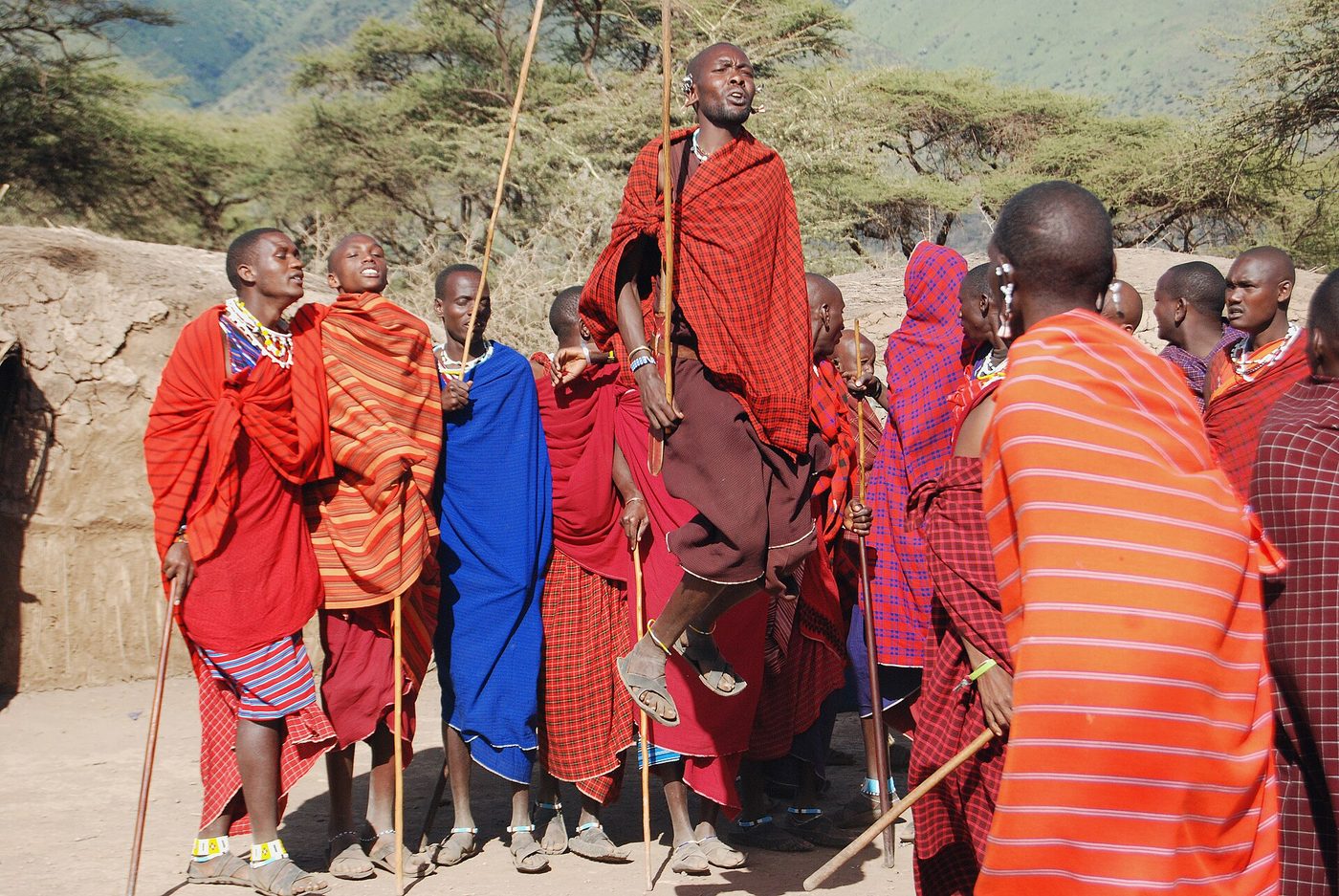
Two parks, one herd, and a price list that flips with the calendar. Here is how the days add up in the Mara and the Serengeti, and which month tips a first safari one way or the other.
Kenya is cheaper only for half the year, and then the Masai Mara overtakes it. The Mara and the Serengeti are one ecosystem of grass, rivers and granite outcrops that a border happens to cut in two, and the wildebeest cross that line without showing a passport. From July to December a day in the Mara costs more than a day in the Serengeti. The month you fly decides the bill long before the country does.

A day in the park, per person
From July — the Serengeti, concession included, is cheaper per day than the Mara. Mara: a 12-hour ticket. Serengeti: a 24-hour ticket, concession only for a night inside the park. The Ngorongoro crater descent is in none of these prices.
From January to June the Mara is a little dearer than a bare Serengeti ticket. It turns cheaper the moment you sleep inside the Tanzanian park, because every night there adds a concession fee on top. Tanzania also carries a line that Kenya does not have, and it is the one that surprises people at the gate. The usual road from Arusha runs through the Ngorongoro Conservation Area, which charges a separate fee per person. The drop onto the crater floor adds €255 per vehicle. Your operator should arrange that permit in advance, because the gates take cards only. Nobody at Loduare will make change from a banknote.
On your own
- Mara, Jan–Jun
- €86 a day
- Mara, Jul–Dec
- €173 a day
- Serengeti
- €61 + 18% VAT
With a guide
- transport arranged
- a guide on site
- costs more than going alone
The road and the size
Nairobi to the Mara takes 5.5 to 6.5 hours by road. It is a little less to the eastern gate at Sekenani and a little more to Musiara or Oloololo in the west, and the stretch from Narok to Sekenani was in poor shape through 2026, so budget for the longer figure. A small plane from Wilson Airport covers the same distance in 45 to 60 minutes and lands on a strip inside the reserve. The Serengeti is nearly ten times larger, 14,763 square kilometres against 1,510, and the scale shows up in the driving. From Arusha you pass Karatu, where you fill the tank for the last time. Then come the Loduare gate, the crater rim and the Naabi Hill gate, on gravel that rattles every bolt, before Seronera finally appears with its cluster of lodges and the most dependable predators of the whole year. The way back takes nine to ten hours, so nobody should plan it as a day trip. If the herds are in the far north around Kogatende, a flight is the sensible answer.

The decision by month
January and February are dry in the Mara, but the herds are not there. They are calving around Ndutu in the south of the Serengeti, with the peak in February, and that is the one window when Tanzania is the only real choice. March brings the first rains to Kenya, so the Mara has little to offer until the animals return. From July to October the river crossings begin, first on the Mara and then in the northern Serengeti. August is the most crowded month, and September and October are a touch calmer. Ten days that must include the migration belong in Tanzania, where a long itinerary can follow the herds from the calving plains in the south up to the river country in the north, and where the Grumeti crossings in June warm up the season. Five days belong in Kenya, with the Mara Triangle on the quiet western side. From July the higher ticket is simply part of the price of that choice.

Check the same room on both sites: price and cancellation terms can differ.
Kenya, in brief
What now
If this sounds like your trip, start here.
Masai Mara
→The Kenyan end of the Serengeti ecosystem, with one of the highest lion densities in Africa, and an entry fee that doubles from July to December, though the herds leave in October

What Masai Mara costs
→A Mara safari is paid per day and per person, and €173 entry in season is the biggest line on every bill, two thirds of a lean one.
The best time to visit Masai Mara
→The Masai Mara has two seasons that differ in one thing: from July to October the wildebeest cross the river…

Kenya
→A safari charged by the day, not by the trip, and a reserve whose gate fee doubles in July

What a safari really costs: what you pay before you see a lion
→A safari is sold by the day, not by the item, which is why nobody sees where the money goes. Here is one day broken into five lines.

What to pack for a safari, and what to leave at home
→The biggest safari packing mistake is not a forgotten item but the suitcase itself. Light aircraft weigh your bag and cap it at fifteen kilos.

African visas: what is required and when to sort it
→Six African countries, six different procedures. Three are settled at the airport, two online before departure, and one may ask for nothing at all.
Masai Mara, Serengeti and Nairobi from this story
See which of them suits you, then pin what you have already done.
Front row for the next trip
Leave your email and we'll let you know when a new destination or story goes up.