

Palau Güell Barcelona: Which Ticket, What You See and How Long It Takes
Gaudí without a fixed slot, in about an hour
- Ticket
- €15, audio guide included
- Opening hours
- Apr–Oct Tue–Sun 10–20
- Takes
- about one to one and a half hours
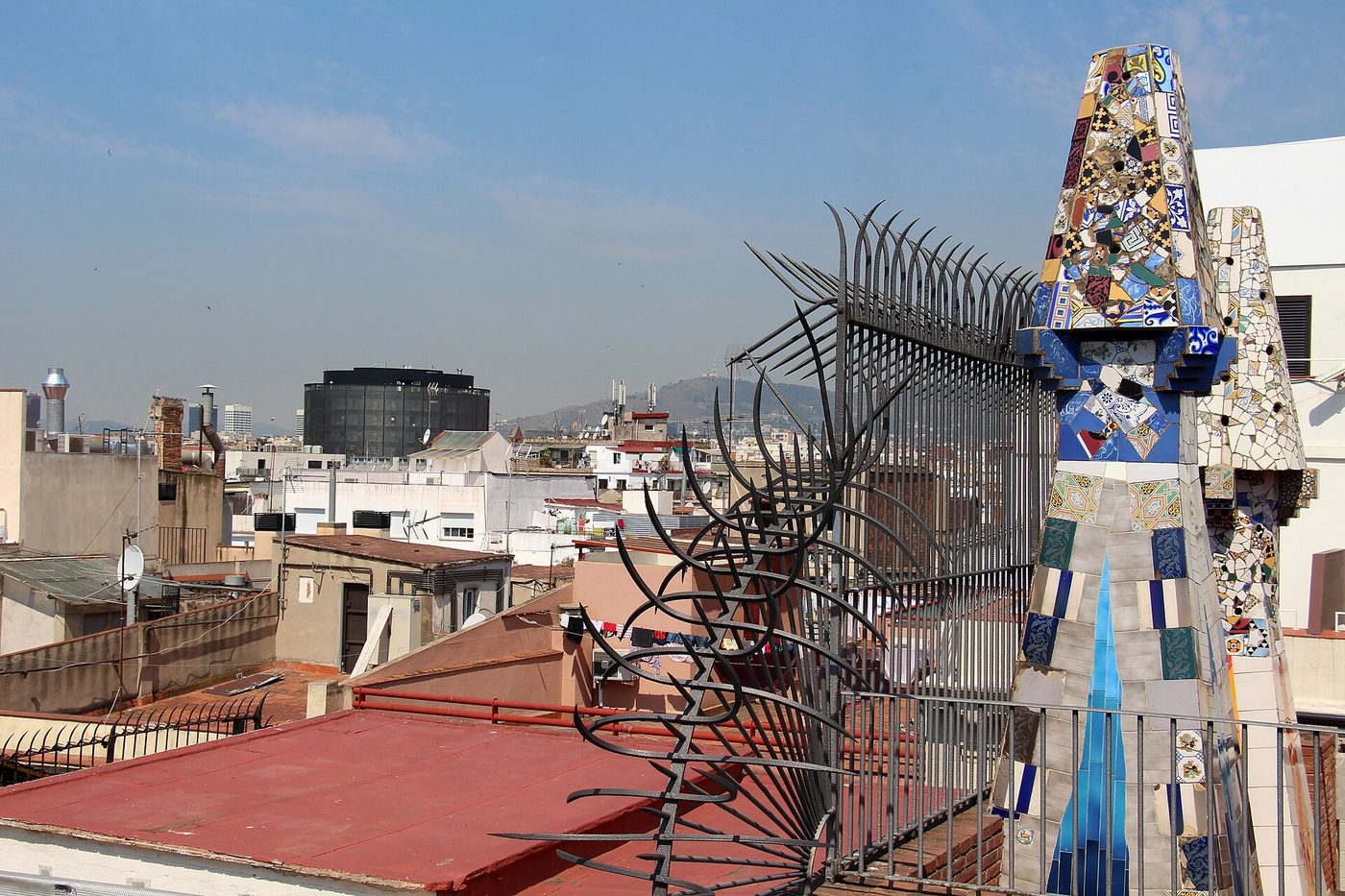
Palau Güell is the Gaudí interior that fits around your other plans, because the ticket carries no fixed slot and the whole visit takes about one to one and a half hours. It stands in a narrow Raval street about three minutes from La Rambla, so it works as a ten o'clock start or a short stop before lunch. The route runs from the stables in the basement up to a roof of twenty decorated chimneys, and the audio guide is already paid for.
Which Palau Güell ticket to buy and what it includes
The standard ticket costs €15 for adults, with the audio guide included in that price. Visitors over 65 and BCN Card holders pay €12, while ages 13 to 18, students and Carnet Jove holders pay €5, and every reduced fare asks for proof of status at the door. Children up to 12 enter free, and so do unemployed visitors, journalists and people with disabilities, again with proof.
The ticket has no time slot, which makes this the easiest Gaudí entry to improvise. Online booking is still recommended in season and at weekends, and outside those periods the desk is usually enough. Resellers such as Tiqets also list the palace, together with a Gaudí Güell Pass that adds Gaudí's crypt and Park Güell, though for a single morning the standard ticket does the job.
Every reduced fare needs proof of status and children need proof of age; unemployed visitors, journalists and people with disabilities also enter free with proof. The ticket carries no time slot, unlike the Sagrada Família or Park Güell.
Official ticket
- Audio guide
- included in the price
- Time slot
- the ticket has none
- Ticket office
- closes an hour before
Through a partner
- options with a guide or audio guide
- usually costs more than the official ticket
The visit in order: stables, main hall and roof
Start underground. Carriages once rolled through two parabolic arches straight into the stables. The columns down here flare out like mushrooms. The whole basement feels like a cellar designed by someone who disliked straight lines, and since Gaudí built the house between 1886 and 1890 for Eusebi Güell, the stables show how seriously he took even the rooms that nobody was meant to admire.
The upper floors are organised around a central hall under a dome that rises above the roofline. Light enters through small star-shaped openings, so on a bright day the ceiling looks like a night sky punched with pinholes. An organ stands in the hall. The audio guide leads you through the surrounding rooms at the pace of the tour, which suits a short visit.
Save the roof for last. Twenty chimneys stand there, each one different, each covered in trencadís, the broken-ceramic mosaic that Gaudí used here on chimneys for the first time. A lantern about 15 m high gives a view across to Montjuïc and the cathedral. In heavy rain the roof can be closed, and the visit then ends one level lower.
When to go and how to skip the queue
Doors open at ten, and arriving then gives you the house before the Rambla fills up. The ticket office closes an hour before the building does. A late afternoon plan therefore needs a margin of at least that hour, plus the time the stables, the hall and the roof take. Opening hours: Apr–Oct Tue–Sun 10–20; Nov–Mar Tue–Sun 10–17:30; ticket office closes an hour before closing; closed Mondays.
Free entry is tempting. It applies on one day a month, and booking is compulsory through the official site: first Sunday of the month, booking required on palauguell.cat. Places are limited and those Sundays draw the biggest crowds. Anyone who wants a quiet roof is better off paying €15 at ten or choosing a weekday. Closed days: 25 and 26 December, 1 and 6 January (and Mondays).
Getting there and what is nearby
Take metro line L3 to Liceu. Walk south down La Rambla and turn into Carrer Nou de la Rambla, where the entrance is at number 3 to 5. Liceu is also the name of the opera house on the Rambla, so the station is easy to spot. The official page lists the palace as accessible for people with physical disabilities.
- Casa Batlló and Casa Vicens, two more Gaudí buildings that fit into the same day.
- La Rambla and the Boqueria market, a natural breakfast stop before or after the palace.
- Plaça Reial, a short walk down the Rambla, where Gaudí also designed the street lamps.
- The Palau de la Música Catalana, a second Barcelona palace with a page of its own.


Where to next

Palau de la Música Catalana: the Guided Tour and the Concert
→Fifty minutes of tour, a hall with a skylight and seven languages

Valencia · 302 km
→The city that moved its river out of its bed and built a park in it

How well does Barcelona suit you?
→Six questions: a score for this place and others like it.
Nomadinho scores out of 100, the same ones behind “Where to go”.
If you like Barcelona
Three places with the closest scores, from any country.


Before you go
Short answers to what people ask most before setting out.
Do you need to book Palau Güell tickets in advance?
The ticket carries no time slot, so booking is not required to secure an hour. Online booking is recommended in season and at weekends, and outside those times the desk is usually enough. The one exception is the free Sunday, where booking is compulsory.
When is Palau Güell free?
It is free on the first Sunday of the month, with booking required through palauguell.cat. Children under 12 are free every day with proof of age, and so are unemployed visitors, journalists and people with disabilities who can show proof.
Is the Palau Güell roof open in the rain?
The roof is part of the visit, but in heavy rain it can be closed. On a wet day the stables and the main hall stay open to visit.
Guides that mention it

Ready for Barcelona?
Front row for the next trip
Leave your email and we'll let you know when a new destination or story goes up.